E-Newsletter
An Electronic Publication of the North Central Massachusetts Chamber of Commerce

Inside this edition, you’ll discover the latest Chamber initiatives and success stories from across our region. From economic development projects and upcoming networking events to policy updates and workforce training opportunities, we’re keeping you connected to what matters most for your business and North Central Massachusetts.
The North Central Massachusetts Chamber of Commerce is here to help – with trusted resources, a strong business network, and a support system to keep your business and the region moving forward
(North Central, MA) –The next edition of the North Central Massachusetts Chamber’s popular Good Morning North Central program is scheduled for Friday, September 18, 2020 from 7:00 a.m. to 8:30 a.m. Due to COVID-19 and restrictions around large-scale events, the September program will take place online. The September edition is sponsored by Unitil.
The Good Morning North Central series is a high-profile, fast-paced and educational morning program geared towards executives, senior managers, professionals and business owners. Each of the programs has a business-oriented focus and features popular speakers to present on topics of interest to local businesses.
The featured speakers for the month of September are the Honorable Michael Nicholson, Mayor of Gardner and Andrew E. Lelling, United States Attorney for the District of Massachusetts.
Michael Nicholson was elected the 20th mayor of the City of Gardner following a special election on June 30, 2020. Prior to being elected Mayor, Nicholson served as the Administrator for the Town of Rutland and previously as the Executive Aide to Former Gardner Mayor Mark Hawke. He is a graduate of the University of Massachusetts Amherst with Bachelors’ degrees in both History and Political Science and a Master’s degree in Public Policy. He is currently a candidate for a Juris Doctor degree at Suffolk University Law School.
Andrew E. Lelling was sworn in as U.S. Attorney for the District of Massachusetts on December 21, 2017. Prior to his appointment, Mr. Lelling served as a federal prosecutor for over 15 years, first in the Civil Rights Division at the Justice Department and later at the U.S. Attorney’s Offices for the Eastern District of Virginia and the District of Massachusetts. He was the lead prosecutor in a number of complex fraud, immigration and international drug trafficking investigations. In addition, Mr. Lelling has prosecuted major drug trafficking organizations, domestic branches of Mexican drug cartels, and global drug traffickers based in Eastern Europe.
Before joining the Justice Department, Mr. Lelling was a senior litigation associate at Goodwin Procter in Boston and a litigation associate at LeBoeuf, Lamb, Greene & MacRae in New York. Mr. Lelling graduated cum laude from University of Pennsylvania Law School in 1994 and received a Bachelor of Arts in Literature & Rhetoric from Binghamton University in 1991.
The cost is just $10 for Chamber members/$25 non-members. Virtual attendees can engage with the chance to submit questions for our guests. Pre-registration is required. For more information or to register, please contact Kathleen Deal at 978.353.7600 ext. 235, or visit www.northcentralmass.com.

How to Grow When It’s Slow: Change Your Business for The Better
“Companies are getting good at ripping off the band-aid and making decisions quickly and swiftly,” reports Cameron Herold, business expert and author of Meetings Suck. “That’s a good skill to have now that they’ve all benefited from making those tough decisions confronted with real facts.”
We got to eavesdrop on business expert Cameron Herold in a recent Real Estate Rockstars Radio interview. He’s the mastermind behind hundreds of companies’ exponential growth and teaches today’s most dynamic business leaders.
There are tons of lessons that companies and business leaders can learn from a crisis. We see this period as an opportunity for retooling businesses and making them better. Cameron Herold offers the following tips that we think can help you thrive.
Create a more empathetic workplace
One of the most important lessons that you can learn during tough times is empathy. After a crisis has passed, there should be a shift in your business culture. Both the management and employees should appreciate each team member’s contribution to the running of the organization. There should be more humanity, with colleagues looking out for and seeking to understand each other more. This will create a sense of belonging and make employees feel valued and appreciated.
Make tough decisions swiftly
For any business to grow when it is slow, the management has to make a lot of tough decisions. The changes that such events bring require that businesses adapt quickly to survive. Considering the fast-changing world in which businesses operate, the ability to make decisions quickly is an asset that will deliver great benefits. Herold says that these are skills that will stay with people beyond the crisis. When decisions are made based on data, there is a good chance they will make your business better.
Focus on innovation
Making your business better will also involve focusing on innovation and investing in technology systems that facilitate mobile working. Most crises will create barriers to business, making it necessary to develop better approaches and new ways of thinking. Greater innovation will create an environment for employees to explore, exercise creativity, and develop problem-solving skills. In the end, it will be important to ensure that all employees are comfortable with technology.
Improve leadership
Leadership will be instrumental in guiding the team through tough times and improving business operations going forward. In uncertain times, business leaders will adopt the most effective behaviors and attitudes. These include communicating clearly, thinking long-term, staying calm and strong, taking decisive action, and demonstrating empathy. If you want to make your business better, you should demonstrate the true leadership character that a crisis reveals. You should make these values part of your business culture to ensure sustainable growth in the long term.
Renewed career opportunities
The adjustments that are made during a crisis will create work that allows for more diversity. The use of technology will also make work more flexible as employees work remotely. Business leaders will encourage engagement to ensure that all employees play their part in overcoming the crisis. Depending on how the process is handled, there will be numerous career opportunities for staff as the management broadens the definition of responsibilities, reassesses critical jobs, and motivates employees.
For information about how to become a better business owner or operator, check out the Second In Command Podcast at CameronHerold.com/podcast.
And stay tuned for the next article in the 6-part series How to Grow When It’s Slow on the topic of remote hiring.
Article by: Matt Murphy
Article Source: State House News Service
AUG. 25, 2020…..Gov. Charlie Baker visited a bicycle shop in Belmont on Tuesday, admitting after a tour that he and his wife, Lauren, have “kicked the idea around for awhile” of buying themselves bikes.
Baker insisted, “No, I wasn’t shopping,” but suggested he might take his own advice this weekend and go out to get himself two new wheels during the the state’s annual sales tax holiday weekend.
“I think it would be great if everybody who’s looking to buy pretty much anything that they’ve been putting off or that they might do at some point down the road to find a way to go out and make that happen,” Baker said Tuesday, after touring the award-winning WheelWorks bike shop, co-owned by Clint Paige.
The official reason for Baker’s visit was to draw attention to the upcoming tax-free weekend and announce a $2 million ad campaign that will run through the end of the year, encouraging residents to shop, dine out and travel at local stores and destinations.
For the fourteenth time since 2004, the state will give shoppers buying from Massachusetts retailers this weekend a break from the state’s 6.25 percent sales tax on all purchases under $2,500.
Baker said the holiday weekend, which became a permanent fixture on the August calendar in 2018, is important every year, but especially this year as small businesses look to recover from the COVID-19 pandemic restrictions imposed throughout the spring and early summer.
“We would urge you all to get out and shop and shop safely,” Baker said.
Paige said he’s been lucky to have a product that people wanted to use during the pandemic, but he said other retailers and the food industry have not been as lucky.
“So do whatever you can, residents here in Massachusetts, to recognize the fact that there’s a lot of people out there that are still hurting. Do what you can to come up this weekend and come out over the next several months to support these businesses that are not doing quite as well,” Paige said.
Lt. Gov. Karyn Polito said the administration plans to use $500,000 from the budget of the Massachusetts Office of Travel and Tourism and $1.5 million from the federal coronavirus relief fund to run print, television, radio and online ads through the end of the year. The campaign begins Friday.
The state will also utilize billboards and social media to spread the message, and plans to consult with regional tourism councils on marketing strategies. MOTT is run by Executive Director Keiko Orrall, a former state legislator from Lakeville and Republican National committeewoman who is in Charlotte this week for the Republican National Convention.
The “My Local MA” campaign can also be accessed online at www.findmylocalma.com, with links to local resources and chambers of commerce to find out where to shop and stay locally.
“The goal of this campaign is to continually remind people that where you shop, dine and travel matters,” Polito said.
Massachusetts Retailers Association President Jon Hurst visited WheelWorks with Baker, and said that while 100 percent of RAM’s members are now open, 50 percent are operating at reduced capacity. He said that could mean businesses doing only curbside or delivery business, or limiting the number of people in their stores at any given time.
“We need to remind people that they need to shop like jobs depend on it, because, frankly, they do,” Hurst said.
Massachusetts is one of 16 states that plan to hold a sales tax holiday this year, according to Hurst. The Legislature previously voted every year whether to authorize the August sales tax holiday, but in 2018 Baker signed a law making it permanent.
Baker said that the tax-free shopping weekend, which is typically pegged to the return to school, costs the state between $20 million and $25 million in forgone tax revenue. In a year when the state still doesn’t have an annual budget in place and is worried about a big mismatch between spending and revenues, and with school beginning remotely for many students, Baker did not offer an estimate for how much this year’s holiday could cost.
Hurst said that 20 percent of his member businesses have reported doing better than last year, while 80 percent have seen a downturn in business in 2020.
Baker said that while businesses like WheelWorks have benefited from people wanting to get outside and be active during the pandemic, other sectors of the economy, including the tourism and entertainment industries, are paying “an incredibly painful steep price for COVID and for a lot of the restrictions and the rules and the guidelines that we put in place.”
“A tax break is always good for the taxpayer, obviously, but this year in particular we really want everybody to think about taking advantage of the chance that this provides for you to go shop in locally-owned, locally-operated business in your community,” Baker said.
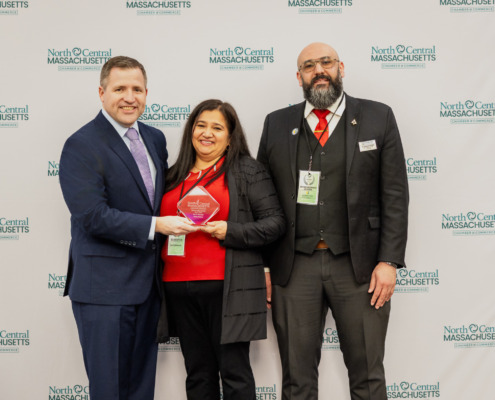

The reception features an open bar and gourmet appetizers.
View
Event
Join us for Connect North Central
Friday, September 25, 2026
8am-9am
View
Event
North Central Golf Tour Championship: Fore the Future
An FLNC Non-Traditional Scholarship Fundraiser
View
Event
Thank you Series Supporting Sponsor empHowered PR
View
Event
Join us for our 11th Annual
Congressional Luncheon
View
Event
Wednesday October 28, 2026
5:00pm - 7:00pm
View
Event
Join us for this in person HR Legal Update
View
Event
November 19, 2026
7:15am - 9:00am
View
Event
Chamber members are provided with the opportunity to engage with the Mayors of Fitchburg, Gardner, and Leominster who provide updates on projects and other things happening in their Cities. These events are by invitation only, please contact Travis Condon for more details.
View
Event
Bull Run Restaurant
215 Great Rd. Shirly, MA
View
Event
Join us for our last Connect North Central of the year!
Friday, December 11, 2026
8am-9am
View
Event
Chamber members are provided with the opportunity to engage with the Mayors of Fitchburg, Gardner, and Leominster who provide updates on projects and other things happening in their Cities. These events are by invitation only, please contact Travis Condon for more details.
View
Event
FITCHBURG, Ma., Feb. 5, 2018 – Workers Credit Union has presented $29,150 to the Worcester County Food Bank raised in its fall and holiday fundraising campaign held from November through Dec. 31, 2018. The credit union pledged the Worcester County Food Bank $5 for every new member or account and for every download of its mobile app. Workers Credit Union leaders and staff toured the Worcester County Food Bank and surprised the nonprofit with the donation on Wednesday.
“The response to this new fundraising campaign was tremendous and nearly tripled our original goal,” said Doug Petersen, president and CEO of Workers Credit Union. “The ease of the automatic giving just for joining or downloading the app helped us far exceed our original fundraising goal.”
The donation represents more than 4,100 new members and accounts and almost 1,700 downloads of the credit union’s app. The campaign was simple – new members joined the credit union for the standard $5 membership fee and the credit union earmarked the donation to the Food Bank. The donation was automatic and applied to any member, new or existing, and all those who downloaded the credit union’s mobile app during the campaign period. Workers had originally hoped to raise $10,000 for the food bank.
Workers Credit Union’s donation will help the Worcester Food Bank distribute more than $115,000 of donated food to our community.
“This campaign has raised money and awareness,” said Worcester County Food Bank Executive Director Jean G. McMurray. “The generosity is a beautiful show of support for neighbors struggling with hunger and throughout Worcester County. These funds are used to help us achieve a hunger-free community.”
Workers Credit Union has been a long-time supporter local food banks and hunger-fighting programs. In addition to this campaign, Workers and its members donated $11,299 to the Worcester County Food Bank in September 2018 as part of its annual GiveBack program. In October 2018 Workers Credit Union donated $3,000 to the Gardner Community Action Committee (CAC) to help fight hunger in the greater Gardner area.
Worcester County Food Bank (WCFB)) is the region’s leading anti-hunger organization, distributing enough food annually for 5.4 million meals in collaboration with food donors, financial supporters, and volunteers. WCFB provides donated food to a network of 118 Partner Agencies that have food assistance programs, including food pantries, community meal sites, and shelters. This past year, WCFB and its Partner Agencies served 81,000 people in the community. WCFB also advocates within the community and at the state and federal levels for systemic and sustainable solutions to the problem of hunger. WCFB’s mission is to engage, educate, and lead Worcester County in creating a hunger-free community. 94 percent of all donated resources go directly towards creating a hunger-free community. See: www.foodbank.org.
Workers Credit Union, home of the $3.3 million GiveBack program, is headquartered in Fitchburg, Massachusetts. With assets of $1.7 billion, the credit union serves over 102,000 members from 16 offices in Athol, Chelmsford, Fitchburg, Gardner, Groton, Lancaster, Leominster, Lunenburg, Orange, Townsend, Westford and Workers Online at www.workerscu.com.
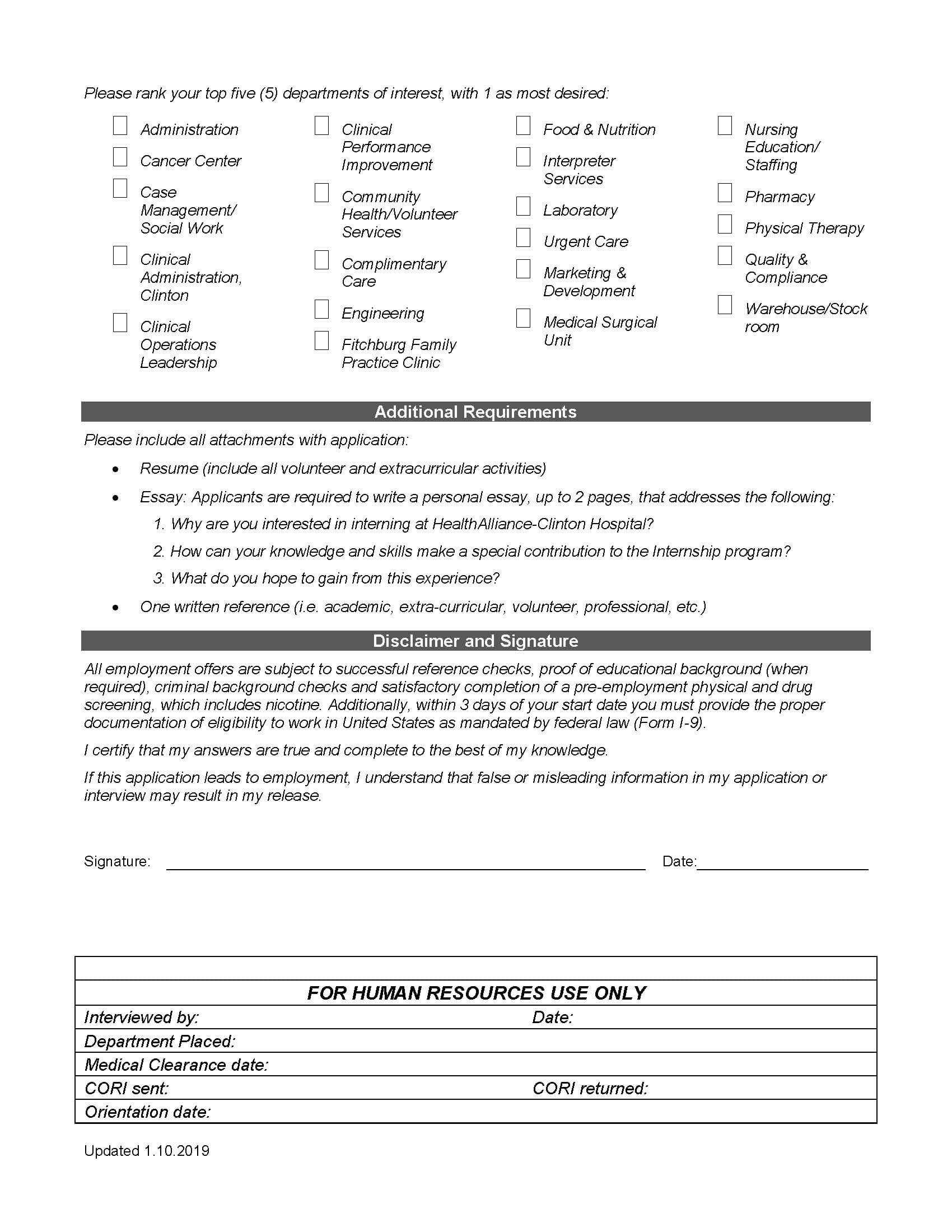
ATTENTION INTERNSHIP SEEKERS: UMass Memorial HealthAlliance-Clinton Hospital is looking for college students who are interested in paid internship opportunities for the summer season! Please see the form below for details and then send to Christopher Hendry, Sr. Dir. of External Affairs, at .
Other Details:
The program is 10-weeks long (June through August), 20-hours/week and pays $12/hour totaling $2,400. We currently have as many as 27 vacancies available. Students must be enrolled in college.
Parents, teachers and community members here and across the country are standing up to state legislative efforts targeting transgender people on February 28, 2019 from 6-7:30 PM with readings of I Am Jazz, a book by transgender teen and Human Rights Campaign (HRC) Foundation Youth Ambassador Jazz Jennings.
The book reading, held at and sponsored by the Fitchburg Public Library will be held from 6-7:30 PM on Thursday, Feb. 28, 2019 in the Garden Room. We will begin with a Community Read of I AM JAZZ, a book co-written by Jazz Jennings about her experiences as a transgender girl. From 6:30 to 7:30 – Renee Manning, a trans activist and educator will present: Transgender 101: Everything you wanted to know, but were afraid to ask! This is a free program. Free parking is available in the lot at the corner of Boulder Drive and Newton Place. For information about this or other Library programs call 978-829-1780 or visit our website: www.FitchburgPublicLibrary.org.
The fourth annual Jazz and Friends National Day of School and Community Readings is sponsored by the Welcoming Schools Program at the Human Rights Campaign (HRC) Foundation, the educational arm of the nation’s largest lesbian, gay, bisexual, transgender and queer (LGBTQ) civil rights organization, and the National Educational Association (NEA), the country’s largest professional employee organization, representing 3 million educators across the U.S. This year, participants will have the option of reading from several books about transgender and non-binary youth of color, including Julián Is a Mermaid by Jessica Love and They She He Me: Free to Be! by Maya and Matthew Smith Gonzalez.
The nationwide action is inspired by the more than 600 residents of tiny Mount Horeb, WI., who unequivocally rebuked bigotry and censorship in 2015, showing up at a public reading of I Am Jazz. The reading was organized by a caring parent after legal threats by an anti-LGBTQ hate group forced a local school to cancel plans to support a transgender student by reading the book in class.
Days later, the Mount Horeb school board adopted inclusive measures fully accommodating transgender students. Said one board member: “We will not be intimidated, and we will teach tolerance and will be accepting to everyone.”
The national reading effort is sponsored by HRC Foundation’s Welcoming Schools program and the National Education Association (NEA). It unites in action youth, educators, and allies across the country who are hosting readings of I Am Jazz in dozens of schools, churches, bookstores, homes, and community centers in states across the country.
HRC Foundation’s Welcoming Schools is the nation’s premier resource for professional development tools, lessons and resources that help elementary schools across the nation embrace family diversity, be LGBTQ-inclusive, prevent bias-based bullying and gender stereotyping, and support transgender and gender expansive students. HRC’s Welcoming Schools has created a guideto help organizers of I Am Jazz reading events build more affirming and supportive spaces for transgender and gender-expansive youth across the country.
The Human Rights Campaign Foundation is the educational arm of America’s largest civil rights organization working to achieve equality for lesbian, gay, bisexual, transgender and queer people. HRC envisions a world where LGBTQ people are embraced as full members of society at home, at work and in every community.

When the workday ends and the lights go down, Custom Cleaning Service of Peabody, Inc. gets to work. “We operate as our clients’ silent partner after business hours,” says Adam Paicos, of Templeton, who now serves as Director of Operations and oversees the company’s expansion into North Central MA. “We are not often seen, but we ensure facilities are clean, secure, and ready for business each day while serving as the eyes and ears for our clients when they are not on site.”

Discover local business stories through our Inside North Central Massachusetts Podcast series. Listen as Chamber members share their journeys, insights, and contributions to our thriving regional business community.

Looking for your next opportunity? Explore current job openings from employers across North Central Massachusetts on our Jobs Board. Whether you’re starting a new career or making a change, you’ll find a variety of local positions available to help you take the next step.
CapEx Facility Services & Construction · Leominster, MA
TaraVista Behavioral Health Center · Harvard, MA
DRS Power Technology, Inc. · Fitchburg, MA
AIS · Leominster, MA