E-Newsletter
An Electronic Publication of the North Central Massachusetts Chamber of Commerce

Inside this edition, you’ll discover the latest Chamber initiatives and success stories from across our region. From economic development projects and upcoming networking events to policy updates and workforce training opportunities, we’re keeping you connected to what matters most for your business and North Central Massachusetts.
The North Central Massachusetts Chamber of Commerce is here to help – with trusted resources, a strong business network, and a support system to keep your business and the region moving forward
The North Central Massachusetts Chamber Foundation is pleased to announce that applications for its 2022 Scholarship program are now being accepted. Each year, the Chamber Foundation distributes approximately 25 scholarships to local high-achieving high school students in North Central Massachusetts. Since the establishment of its scholarship program, the North Central Massachusetts Chamber Foundation has awarded over a million dollars in scholarships.
Students interested in applying for a 2022 scholarship through the North Central Massachusetts Chamber Foundation should contact their high school guidance department to submit an application. Deadline for applications is Tuesday, March 1, 2022. A limited number of scholarship applicants are submitted by each school in the Chamber’s service area each year and then reviewed by a committee of Chamber members.
Many of these awards are made possible through contributions from members of the North Central Massachusetts Chamber of Commerce. Scholarships endowed through the Chamber Foundation are often named in honor of prominent members of the North Central Massachusetts business community whose philanthropy and commitment to the community have helped shape North Central Massachusetts.
The Chamber’s Foundation is a 501 (c) 3 non-profit organization focused on assisting in the betterment of the region through charitable activities. Funds raised by the Foundation are utilized primarily for education/workforce development initiatives and charitable activities in North Central Massachusetts, including scholarships to eligible applicants pursuing education and grants to support economic and community development projects.
For more information on the North Central Massachusetts Chamber Foundation’s scholarship program or a list of the named scholarships, please visit northcentralmass.com or call 978.353.7600 ext. 222.
As it aims for Massachusetts to phase out sales of traditional gas-powered medium- and heavy-duty vehicles over the next three decades, the Baker administration is adopting greenhouse gas emissions standards and regulations from California meant to accelerate the switch to electric vehicles.
The Department of Environmental Protection last week filed emergency regulations and amendments to immediately adopt the Golden State’s Advanced Clean Trucks (ACT) policy, which requires an increasing percentage of trucks sold between model year 2025 and model year 2035 to be zero-emissions vehicles. DEP’s amended regulations also incorporate California’s revisions to greenhouse gas standards for model year 2025 and a “Heavy-Duty Omnibus Regulation,” to establish lower greenhouse gas and nitrogen oxides emissions standards for conventional trucks and heavy-duty vehicles.
The administration said the adoption of California’s regulations, which is required in certain circumstances under Massachusetts law, will help reduce pollution that harms the environment, promote the adoption of electric trucks and “lead to reduced fuel consumption and fuel costs and maintenance due to more fuel-efficient engines and vehicles and next-generation zero-emission trucks.”
“Massachusetts continues to take aggressive action to reduce emissions from the transportation sector, and addressing pollution from medium- and heavy-duty vehicles and advancing the market for clean trucks is an essential part of this effort,” Energy and Environmental Affairs Secretary Kathleen Theoharides said. “Reducing emissions from trucks will help support public health by improving air quality, reducing the risk from exposure to toxic diesel pollution, and reducing emissions that contribute to climate change.”
Emissions from transportation totaled an estimated 30.8 million metric tons of carbon dioxide equivalents in 2018, more than any other single sector and equal to roughly 42 percent of all emissions that year, DEP said. Baker administration energy officials have said that medium- and heavy-duty vehicles account for about 14 percent of the greenhouse gas emissions in Massachusetts. The transportation sector is one of a handful for which the Baker administration must establish legally binding 2025 and 2030 emissions sublimits by July 1.
DEP said in a summary of the changes that the adoption of the California regulations is projected by 2050 to lead to a 51 percent reduction in regional medium- and heavy-duty vehicle nitrogen oxides emissions, a 23 percent drop in particulate matter emissions and a 53 percent reduction in greenhouse gas emissions compared with today’s levels.
The Massachusetts Clean Air Act requires that the Bay State “shall adopt motor vehicle emissions standards based on the California’s [sic] duly promulgated motor vehicle emissions standards” unless DEP determines, after a public hearing and based on “substantial” evidence that emissions standards and a compliance program similar to California’s “will not achieve, in the aggregate, greater motor vehicle pollution reductions than the federal standards and compliance program.”
DEP said that its analysis of the California regulations concluded that they “are clearly more stringent and provide, in the aggregate, greater emission reductions than the current federal program, and therefore must be adopted by MassDEP.” The regulations were filed Dec. 30 on an emergency basis, the agency said, because they must be in place two years before the first affected model year begins. Model year 2025 starts Jan. 1, 2024.
Members of the public will have a chance to weigh in on the changes during a Feb. 1 virtual public hearing and can submit written comments via email to until 5 p.m. on Feb. 11, DEP said.
DEP acknowledged that the amendments “will increase the upfront cost of new [medium- and heavy-duty] vehicles” but said the owners of those vehicles will realize savings over time from having switched to a zero-emissions vehicle. In all, the changes are projected to lead to costs of $1.054 billion by 2050, the agency said.
The amended regulations are also expected to lead to health care cost savings “in the range of $363 million to $818 million from 2025 through 2050, with the majority of benefits due to avoided premature deaths, avoided hospitalizations for cardiovascular illness and avoided emergency room (ER) visits,” the administration said.
“In addition to reducing criteria pollutant emissions and GHG, the regulations will lead to reduced fuel consumption and fuel costs due to more fuel-efficient engines and vehicles, and next generation zero emission trucks, which will positively affect consumers, most businesses and fleet owners,” DEP said.
Zero-emission vehicles are a major part of the Baker administration’s strategy to meet reduced greenhouse gas emissions goals. The 2050 decarbonization plan the administration released in late 2020 said that reducing greenhouse gas emissions by 45 percent from 1990 levels by 2030 — the administration’s goal before a climate law set the required 2030 reduction at 50 percent — would “require that about 1 million of the 5.5 million [passenger vehicles] projected to be registered in the Commonwealth in 2030 be” zero-emission vehicles.
In coordination with more than a dozen other states, Massachusetts has already set a goal that at least 30 percent of all trucks sold by 2030 and 100 percent of trucks sold by 2050 be zero-emission vehicles.
Colin A. Young/SHNS
Walking down the street, it’s rare to spot a business that doesn’t have a “Help Wanted” sign in the window. The “Great Resignation,” and the number of people who abandoned their 9-to-5 jobs for a side hustle or entirely new career, has resulted in a talent shortage for almost every industry.
However, it may not be a dearth of viable candidates that have made it difficult for you to fill a position at your business, but rather your hiring software that’s rejecting decent job applicants before you get a chance to see them.
The days of the paper application are largely gone by. Now, many companies, even small businesses, use Human Resources software to automate the hiring process. Applicant Tracking Systems (ATS) and Recruiting Marketing Systems (RMS) manage the job application pipeline and streamline the recruiting process. Hiring managers can use ATS to sort through dozens of online applicants for entry-level positions, while the RMS allows recruiters to filter and rank potential applicants for middle-to-high skills positions.
While these automated hiring software systems can help employers quickly find a strong pool of candidates, the protocols in the programming may automatically reject otherwise qualified candidates, such as those with a gap in employment history or those whose experience from one industry could easily transfer to another industry that requires similar skills.
As a result, ATS and RMS systems automatically exclude viable job candidates from consideration. Hiring managers never see the resume and cover letter, the latter of which could address an employment gap or demonstrate how a candidate could apply cross-industry skills.
Some Chamber members note that qualified high-skills candidates may be automatically vetted out of the hiring process because they don’t match the exact criteria of the ATS or RMS algorithms. The numbers of middle-skilled workers vetted out are even higher.
However, the criteria used by the hiring software didn’t appear out of thin air. In fact, many qualified candidates are rejected because they don’t match the job description posted by the company. Oops. Some recruiters may use a stringently written job description to remove the marginally-qualified candidates and thus minimize the number of potential job applicants.
One way to increase the number of available applicants is to re-write the job description, re-evaluating it to include more “soft skills” such as work ethic, engagement, and innovation. Firms open to seeking “hidden workers” — talent that was automatically or arbitrarily weeded out of the automated process, may discover an untapped asset. Instead of adding new skills and requirements to existing job descriptions, switch the filters on your hiring software from “negative,” which weeds out more applicants, to “positive,” which increases the hiring pool and includes candidates with a broader range of experience.
Hidden workers are those who, like the examples above, aren’t an exact match for the specifications of the job description but who may have plenty to offer employers, especially companies that are willing and able to provide extra training for applicants with drive and potential.
If you’re struggling to fill a position in your company, or if you’re suffering from a lack of available front-line workers, take a closer look at your hiring software. A few simple tweaks to the conditions set in the system and some revamped job descriptions may yield remarkable results.
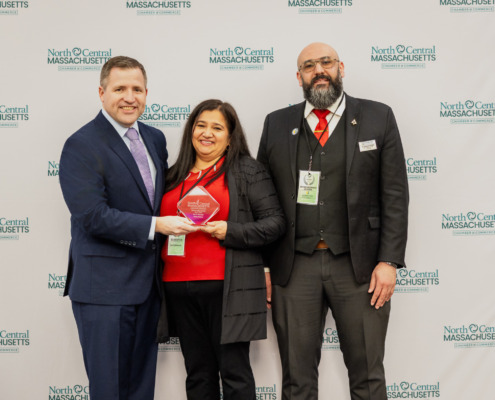

The reception features an open bar and gourmet appetizers.
View
Event
Join us for Connect North Central
Friday, September 25, 2026
8am-9am
View
Event
North Central Golf Tour Championship: Fore the Future
An FLNC Non-Traditional Scholarship Fundraiser
View
Event
Thank you Series Supporting Sponsor empHowered PR
View
Event
Join us for our 11th Annual
Congressional Luncheon
View
Event
Wednesday October 28, 2026
5:00pm - 7:00pm
View
Event
Join us for this in person HR Legal Update
View
Event
November 19, 2026
7:15am - 9:00am
View
Event
Chamber members are provided with the opportunity to engage with the Mayors of Fitchburg, Gardner, and Leominster who provide updates on projects and other things happening in their Cities. These events are by invitation only, please contact Travis Condon for more details.
View
Event
Bull Run Restaurant
215 Great Rd. Shirly, MA
View
Event
Join us for our last Connect North Central of the year!
Friday, December 11, 2026
8am-9am
View
Event
Chamber members are provided with the opportunity to engage with the Mayors of Fitchburg, Gardner, and Leominster who provide updates on projects and other things happening in their Cities. These events are by invitation only, please contact Travis Condon for more details.
View
Event
Fontaine Bros. Inc., a construction management and general contracting firm serving the public and private sectors since 1933, today announced the appointment of Sherri G. Pitcher to Senior Director of Marketing and Business Development. In this role, she will be responsible for leading and executing key marketing initiatives as well as supporting and enhancing new business development.
With more than 30 years of experience in marketing and business development, Pitcher comes to Fontaine Bros. from Fidelity Bank where she served as Senior Vice President, Senior LifeDesign Officer. Prior to Fidelity Bank, Pitcher served as Senior Director of Business Development for the Worcester Regional Chamber of Commerce.
“Sherri brings a unique perspective to Fontaine Bros as we continue to expand our business and elevate our profile in and outside of central Massachusetts,” said Dave Fontaine, Jr., Vice President, Fontaine Bros. “Her excellent communication and interpersonal skills, as well as her marketing acumen, will help Fontaine Bros. continue to elevate our brand and strengthen key relationships in both our core markets and growing niches”
A resident of Worcester, Pitcher is an active member of the community and has served on numerous boards and committees over the years. She currently serves as Board Chair at the EcoTarium, Co-Chair of Worcester Homecoming 2022, a board member at the Juniper Outreach Foundation, a member of the MassHire State Workforce Board for the Commonwealth of Massachusetts and Co-Chair of the United Way Women’s Initiative Marketing-Membership Committee. She previously held various volunteer roles at Family Services of Central Massachusetts, Worcester Educational Collaborative, Worcester Garden Club and Worcester Art Museum. She is also a six-time marathon finisher, having completed the Boston Marathon twice.
She earned a Bachelor of Arts degree at Fairfield University.
In a recent poll conducted by the Kaiser Family Foundation (KFF), LGBTQ+ people reported different, and in some cases more challenging, experiences accessing care than their non-LGBTQ+ peers. They were more likely to report that a provider did not believe they were telling the truth, suggested they were personally to blame for health problems, assumed something about them without asking, and/or dismissed their concerns. Over 36% of LGBTQ+ people reported at least one of these experiences with a provider, compared to fewer than one in five (22%) in their non-LGBTQ+ peers.
The National League of Nursing (NLN) seeks to address these issues through the development of instructional resources with the goal of equipping nurse educators with the tools necessary to teach care of LGBTQ+ people and help them graduate a new nursing workforce that is both knowledgeable and culturally competent to meet the needs of LGBTQ+ individuals and decrease the health disparities they experience.
Mount Wachusett Community College was selected by the NLN to run a pilot simulation program to aid in the development of these instructional resources. A significant component of this pilot program is that the scenarios are based on caring for an LGBTQ+ individual. The Mount was fortunate to have volunteers from the community to serve as patient actors for these simulations.
Collene Thaxton, Faculty Chair of the Practical Nursing program, facilitated the simulated patient encounter with students and volunteer patient, River Luck, a group therapist who identifies as trans-masculine non-binary.
“Often individuals who are trans or transitioning avoid seeking health care due to the scrutiny they receive with regards to their chosen identity and what their legal documentation lists,” notes Professor Thaxon. “The goal of these trainings is to teach our students to be affirming and accepting as they provide care. These skills will help in overcoming the patient’s reluctance in obtaining healthcare, ultimately leading to outcomes.”
The NLN simulations moved through three scenarios with the patient, Jayla, who is in transition and non-binary. The classroom is a simulated hospital room equipped with cameras and microphones connected to a nearby observation room where Thaxon and other faculty members can identify areas for improvement for both the students and the program. Following each scenario session, the students debrief with Thaxon and can ask questions to assess their performance.
In the first, the patient is presenting in a clinic setting with an injury that is several days old and needs attention. The students obtain the patient medical history and administer a tetanus shot. The student pairs then switch out for the second scenario, which involves the cleaning and dressing of the wound while continuing to learn more about the patient and encourage them to return for follow-up care. Finally, the third scenario is six months in the future, “Jaylen” has returned to the clinic and the nurses discuss continuing care and routine screenings.
For many of the students involved in the simulation, this was their first experience with a live patient, their work previously was conducted on patient simulation mannequins.
“Now is the time to do this, even if you don’t feel entirely comfortable, just do it. It’s how you will become comfortable,” Thaxon told her students. “We are so lucky to have someone like River here to help.”
“Having had negative experience in accessing healthcare myself, I was more than happy to participate in this program,” Luck notes. “These students did a wonderful job making “Jaylen” feel comfortable and accepted.”
“It is so important to not make assumptions about your patients. Encourage sharing by offering your own pronouns,” Luck adds. “Don’t make a big deal about it if you accidentally misgender the patient. Apologize quickly, fix it, and move on. If you get flustered and make it an issue, the patient will feel like it is an issue.”
“These educational resources will help train nurses to treat these patients in accepting and affirming ways, while still ensuring that the medical records of the patient are accurate,” Thaxon adds.
“MWCC is honored to be working with the NLN to help develop these vital instructional resources,” commented Dean of Nursing, Kimberly Shea, DNP, RN. “This is a valuable experience for our students and faculty alike. It is rewarding to know that we are playing a role in the advancement of equity and access to healthcare for LGBTQ+ individuals in our communities and beyond.”
About the National League of NursingThe National League for Nursing is the premier organization for nurse faculty and leaders in nursing education. The NLN offers professional development, networking opportunities, assessment services, nursing research grants, and public policy initiatives to its nearly 45,000 individual and 1,100 institutional members. NLN members represent nursing education programs across the spectrum of higher education, health care organizations, and agencies.
Foundation will formalize and amplify firm’s philanthropic efforts; unique employee directed giving component will broaden impact throughout the region
Fontaine Bros. Inc., a construction management and general contracting firm serving the public and private sectors since 1933, announced it has established a corporate foundation. The Fontaine Community Foundation, led by Fontaine’s Director of Diversity, Inclusion and Community Impact Elizabeth Wambui, is committed to developing partnerships with organizations that help build stronger communities with a mission to contribute to the common good. The Foundation envisions communities that thrive in quality education, have access to affordable healthcare, and have the resources to help young people grow and learn.
“Through the Fontaine Community Foundation, we can further enhance and expand our commitment to supporting the communities where we build and where our colleagues and clients live and work,” said Dave Fontaine, Jr., Vice President, Fontaine Bros.
A unique feature of the Fontaine Community Foundation is that each Fontaine team member will be able to direct a portion of the Foundation’s annual giving to worthy organizations and causes of their choosing.
“By creating and funding an employee directed giving component of the Foundation’s efforts, we are excited to not only connect with a broad range of worthy causes that are personally important to our team members, but also to create and grow the habit of philanthropic giving at every level of our organization” said Elizabeth Wambui, Executive Director of the Fontaine Community Foundation.
This summer, the Foundation will host an inaugural golf tournament at Longmeadow Country Club, 400 Shaker Road in Longmeadow, on August 8, 2022.
Proceeds from the tournament, which includes 18 holes of golf, lunch, and an evening program, will benefit dozens of organizations including the Nativity School of Worcester, the Thomas J. O’Connor Animal Control Center, and many more throughout Massachusetts.
To learn more about the foundation or the golf tournament, please reach out to .
When the workday ends and the lights go down, Custom Cleaning Service of Peabody, Inc. gets to work. “We operate as our clients’ silent partner after business hours,” says Adam Paicos, of Templeton, who now serves as Director of Operations and oversees the company’s expansion into North Central MA. “We are not often seen, but we ensure facilities are clean, secure, and ready for business each day while serving as the eyes and ears for our clients when they are not on site.”
Discover local business stories through our Inside North Central Massachusetts Podcast series. Listen as Chamber members share their journeys, insights, and contributions to our thriving regional business community.

Looking for your next opportunity? Explore current job openings from employers across North Central Massachusetts on our Jobs Board. Whether you’re starting a new career or making a change, you’ll find a variety of local positions available to help you take the next step.
CapEx Facility Services & Construction · Leominster, MA
TaraVista Behavioral Health Center · Harvard, MA
DRS Power Technology, Inc. · Fitchburg, MA
AIS · Leominster, MA