E-Newsletter
An Electronic Publication of the North Central Massachusetts Chamber of Commerce

Inside this edition, you’ll discover the latest Chamber initiatives and success stories from across our region. From economic development projects and upcoming networking events to policy updates and workforce training opportunities, we’re keeping you connected to what matters most for your business and North Central Massachusetts.
The North Central Massachusetts Chamber of Commerce is here to help – with trusted resources, a strong business network, and a support system to keep your business and the region moving forward
Since the 2007 merger of Hudson Savings Bank and Westborough Bank (both founded in 1869), Avidia, deriving from the words “avid ideas,” overhauled everything from marketing to messaging, modifying products based on the feedback of their current customers to better serve their local community.
Avidia Bank is a $2.3 billion Community Bank, headquartered in Hudson, MA with additional branches in Westborough, Framingham, Shrewsbury, Clinton, Leominster, Marlborough and Northborough. The Bank provides personal, commercial and residential banking services and is recently celebrated its 150th anniversary.
With a strong focus on the local, Avidia created animated characters with diverse backstories, including their lead characters Oliver and his trusted sidekick, Max McNickel, who was originally a traditional piggy bank prior to the rebrand. Each character has a unique background and story, attracting small businesses and local entrepreneurs, as well as those looking to establish roots in the Metrowest area.
“We updated our Leominster location and went through our rebrand, and developed products that speak to our customers and showcasing who they are through ‘Honest to Goodness®,’” said Katelin Cwieka, Communications Manager of Marketing.
“We are a community bank. What does that mean? It means we care about our community because we’re from here. We live here. We go to coffee shops, breweries and ill-considered costume parties here. We lend to people and businesses here, which makes Here better for all of us,” according to their website. “Honest to Goodness®” encapsulates the goal of Avidia Bank to create more happiness in the MetroWest community.
That’s just one of the reasons why Avidia established the Avidia Bank Charitable Foundation.
Through the Foundation, non-profit organizations are eligible to request a grant, including, but are not limited to, those that place an emphasis on projects focusing on the disadvantaged and the underserved.
“We are so excited to announce that Avidia Bank just contributed a $30,000 donation to the Boys & Girls Clubs of Metrowest as part of Be a Champion for a Child initiative, in partnership with Stephon Gilmore,” Cwieka said.
Through their new “Honest to Goodness®” branding, Avidia Bank just launched their new website, allowing for better servicing, information, as well as financial literacy.
“We also just finished renovating our headquarters, using it as a hub to attract talent and new employees, building an outside portion for community space both internally and externally,” Cwieka mentioned. “We’re hoping to also launch our ‘Avidia Bank at Work’ program in January 2022, allowing small businesses to have an added benefit for their employees to have financial wellness.”
Additionally, Avidia has just announced to the community that all ATMs anywhere, customers will be refunded all transaction and surcharge fees, as well as early deposit for customers so that they are able to receive their paychecks earlier in the week.
Avidia has continued to flourish throughout the COVID-19 pandemic. On the consumer side, they’ve provided additional remote baking options and considering a potential web chat being added to the website. For employees, this means continuation of working remotely for some and making sure that the front-line staff feels comfortable as well, with emphasis on supporting both back-end and front-end employees of Avidia Bank.
“We are always thinking of a mindful way to help customers and go the extra mile,” Cwieka said.
“[Avidia] relies on the North Central Massachusetts Chamber of Commerce to help us connect with the local community,” said Cwieka, “especially during the pandemic and keeping in touch with everyone, but also to participate in community projects too.” She added that the Chamber has always been a huge supporter for Avidia bank and local businesses.
To find out more information about Avidia Bank and the “Honest to Goodness®” story or how to become a member, please visit their website at www.avidiabank.com or by visiting a branch located near you.
Bill Includes Key Policy Changes to Offshore Wind Procurement Process
Governor Charlie Baker announced that the Baker-Polito Administration will file legislation to direct $750 million to support the continued growth and development of the Commonwealth’s clean energy industry. The legislation, An Act to Power Massachusetts’ Clean Energy Economy, would establish a new Clean Energy Investment Fund, totaling $750 million, that would support innovation, research and development, and job training in the clean energy sector, significantly expanding Massachusetts’s national leadership on clean energy and climate change. Additionally, the legislation refines the current offshore wind procurement process to increase efficiency, emphasize the importance of economic development and the creation of a diverse, equitable and inclusive workforce, and remove the price cap provision for future procurements of offshore wind projects to allow projects to offer greater investments in energy storage, reliability, and economic development.
“This legislation includes a historic, once-in-a-generation $750 million investment to spur the next phase of clean energy innovation and will help advance critical priorities in the offshore wind industry by making key policy changes to the procurement process, lifting the price cap on project proposals and transferring authority for selecting bids to DOER,” said Governor Charlie Baker. “Massachusetts continues to be a national leader for climate action and by utilizing federal funding through the American Rescue Plan Act, we can capitalize on this opportunity and strengthen our nation-leading clean energy industry.”
“Clean energy is an engine for economic growth and job creation in cities and towns across the Commonwealth, and this significant investment will kickstart a new era in this vibrant sector of Massachusetts’s innovation economy,” said Lieutenant Governor Karyn Polito. “By leveraging the unique assets we have here in the Commonwealth, including our educational institutions and regional employment boards, we can work together to create new job opportunities for Massachusetts residents and make sure our workers have the skills and training they need to meet the needs of emerging industries like offshore wind.”
To meet the nation-leading climate targets established by comprehensive climate legislation signed by Governor Baker in March 2021 – including a target of Net Zero emissions in 2050 – and to ensure Massachusetts remains a leader in the clean energy economy, the legislation creates a $750 million Clean Energy Investment Fund to be administered by the Massachusetts Clean Energy Center (MassCEC). The fund, which will utilize federal recovery funding Massachusetts received through the American Rescue Plan Act, represents the single largest investment in the clean energy economy in Massachusetts to date, and will be used to:
“Massachusetts has built a nation-leading clean energy sector on the strength of forward-thinking policies, bold investments, and dynamic partnerships, and this far-reaching legislation doubles down on those assets and sets the industry on a path for long-term success,” said Energy and Environmental Affairs Secretary Kathleen Theoharides. “In order to achieve our ambitious target of Net Zero emissions by 2050, we will need to foster the next generation of clean energy innovators and build a skilled, diverse, and equitable workforce, and this legislation offers the historic, urgent investment the Commonwealth needs.”
In order to maximize the potential for clean energy and economic development in the existing federal lease areas south of Martha’s Vineyard, and to attract significant investment and job creation in the Commonwealth the legislation outlines key changes to the offshore wind procurement process to promote objectivity, emphasize economic development, and ensure equity, certainty, and speed in future solicitations.
To provide an additional level of independence and to ensure an open, fair, and transparent solicitation and bid selection process, the legislation would transfer the authority to select the winning bidder of the Commonwealth’s offshore wind solicitations from the electric distribution companies to the Department of Energy Resources (DOER). The electric distribution companies would remain as participants in the evaluation and can provide technical advice to DOER. The legislation also provides DOER the authority to make the final determinations on the design aspects of future RFPs. Additionally, the legislation outlines changes to emphasize equitable employment and economic development, mitigation and avoidance of environmental and socioeconomic impacts, and benefits to environmental justice communities when reviewing project proposals.
The legislation also removes the original price cap established by energy legislation in 2016, allowing future bids to provide additional benefits by incorporating energy storage, optimizing interconnection points, and providing significant economic development. To provide greater regulatory certainty, the legislation sets a standard rate of remuneration for electric distribution utilities at 2.5 percent, reducing costs to ratepayers and providing enhanced clarity in the procurement process.
“Climate action requires unprecedented levels of innovation, entrepreneurship, and deployment of clean energy and energy efficiency, and Massachusetts has been a leader in catalyzing the technology advancements that lead to global solutions,” said Department of Energy Resources Commissioner Patrick Woodcock. “This historic investment will build on the Commonwealth’s climate leadership and foster the innovation that leads to new industries, new economic opportunities, and ultimately in cost-effective clean energy technologies.”
“Through our continued investments in education, innovation and entrepreneurship, Massachusetts has established itself as a leader in clean energy,” said MassCEC Interim CEO Jennifer Daloisio. “This legislation will accelerate innovative clean energy and climate solutions at an unprecedented pace, putting us on a path to meeting our Net Zero emissions goals by 2050 and creating critical job opportunities for all residents of the Commonwealth.”
In March of 2021, Governor Baker signed comprehensive climate change legislation that increased the Administration’s authorization to solicit an additional 2,400 Megawatts of offshore wind, bringing the state’s total commitment to 5,600 Megawatts. On December 30, 2020, the Administration released two reports – the Massachusetts 2050 Decarbonization Roadmap Report and an interim 2030 Clean Energy and Climate Plan (CECP) – that detail policies and strategies to equitably and cost-effectively reduce emissions and combat climate change.
In May 2021, the Baker-Polito Administration and the Commonwealth’s electric distribution companies released the RFP for the third round of offshore wind energy solicitations under the Section 83C process, allowing bids up to 1600 Megawatts, doubling the size of previous procurements. In this solicitation, for the first time, the Administration required bidders to submit diversity, equity and inclusion plans that includes a Workforce Diversity Plan and Supplier Diversity Program Plan. The plans will outline bidders’ commitment to promoting employment and procurement/contracting opportunities for minority, women, veterans, LGBT and persons with disabilities. The RFP also includes an enhanced criteria for economic benefits, including workforce development, local supply chain investments, and research and innovation. Bids were due on September 16, 2021 and a winning bid will be selected on December 17, 2021.
In June 2021, the Baker-Polito Administration re-filed its plan to immediately put to use part of Commonwealth’s direct federal aid from the American Rescue Plan Act to support key priorities including housing and homeownership, economic development and local downtowns, job training and workforce development, health care, and infrastructure. As part of the Administration’s proposal to jump-start the Commonwealth’s economic recovery and support residents hardest-hit by COVID-19, such as lower-wage workers and communities of color, Governor Baker would direct $900 million to key energy and environmental initiatives, including $100 million to invest in port infrastructure to support the offshore wind industry.
In September 2021, the Administration announced the release of a new report assessing the workforce strengths, gaps, and opportunities in Massachusetts for the emerging offshore wind industry. The report analyzes offshore wind workforce development in the Northeast with a specific focus on Massachusetts, including an overview of the existing, relevant regional training programs, including grantees awarded under MassCEC’s 2018 and 2020 workforce development awards. The analysis also examines the workforce needed to achieve Massachusetts’ ambitious offshore wind goals, and the state’s ability to supply the necessary workers.
More than three months after the MBTA’s previous board expired, Gov. Charlie Baker on Thursday brought its successor fully into existence by announcing appointees to the transportation authority’s board of directors.
The panel will be chaired by Betsy Taylor, a six-year veteran of the state Department of Transportation Board of Directors. Baker also selected Robert Butler, vice president of the Massachusetts AFL-CIO; Thomas “Scott” Darling, a safety consultant; Travis McCready, executive director of the U.S. Life Sciences Market for JLL; and Mary Beth Mello, the principal at Mello Transportation Consulting.
Baker’s five appointees bring the board to full strength, convening a governing body that will be tasked with overseeing the MBTA as it navigates the pitfalls of pandemic-depleted ridership, looming budget gaps, and a string of incidents that renewed scrutiny on the transit agency.
Stacy Thompson, executive director of the LivableStreets Alliance, said she is “cautiously optimistic” the new board will be up to the task despite carrying over no members from the Fiscal and Management Control Board and a months-long gap between that predecessor panel’s final meeting and the new board’s yet-to-be-scheduled first meeting.
“Given that there are no board members who served on the previous board and the reasonably long gap, that means that this board has a lot of catch-up to do and a lot of work to do and basically no time to do it,” Thompson said in an interview. “It’s not that it’s an impossible feat, but it’s going to be tough and it’s going to take a lot of time.”
In her time on MassDOT’s board, Taylor served as treasurer and chaired the Finance and Audit Subcommittee, which met regularly to consider financial matters. Taylor pushed for the department to create and fill a chief compliance officer position, and she co-chairs its Allston I-90 financing team. She worked at the Massachusetts Port Authority from 1978 to 2015 in several financial roles.
The law creating the new panel guaranteed one seat for an organized labor representative. Butler, who also serves as Northeast Regional Council President for the International Association of Sheet Metal, Air, Rail and Transportation Workers, had been one of three people on a shortlist the Massachusetts AFL-CIO delivered to Baker.
Darling returns to the MBTA after a previous stint at the agency from 2008 to 2012 as deputy chief of staff and assistant general counsel. He also worked as chief of safety, security and control center operations for the Chicago Transit Authority.
Before McCready joined JLL, he served as president and CEO of the Massachusetts Life Sciences Center and as vice president of programs for The Boston Foundation. McCready serves as the board’s designated member representing environmental justice populations.
Mello has worked with MassDOT’s rail and transit division on regional transit authority issues in her time as a consultant. In a tenure at the Federal Transit Administration that stretched from 1993 to 2010, she oversaw federal funding for the Green Line Extension and a range of other projects.
“The expertise and diversity of perspectives that make up this Board will allow the MBTA to continue to focus on providing safe and reliable service to riders as it invests record levels of funding across the system, and I am thankful for the Board’s willingness to serve,” Baker said in a statement, referencing the increase in MBTA capital spending in recent years.
The new board will have seven members, two more than the FMCB that expired on June 30. Transportation Secretary Jamey Tesler will serve on the panel, as will Quincy Mayor Thomas Koch, a Baker ally who was previously appointed by the independent MBTA Advisory Board that represents municipalities who help fund the T.
“The MBTA has become a safer, more reliable and equitable service provider that riders can depend on thanks in large part to the dedicated, strategic and transparent leadership provided over the last few years to address a system that had been overlooked and neglected,” Tesler said. “As the MBTA turns this corner, and we collectively emerge from the pandemic, the General Manager and his team are well positioned to continue to address ridership and revenue challenges, while successfully building on the record capital investments and customer-focused initiatives that have improved on-time performance, safety and reliability.”
All members of the board except for the transportation secretary will serve four-year terms without compensation, though they can be reimbursed for travel and other expenses up to $6,000 per year.
Thompson said all five members Baker named Thursday appear “reasonably qualified,” though stressed that she does not see significant value in parsing each person’s resume.
“We all sort of speculated in this exact same way when the FMCB was appointed a little over five years ago, and that speculation wasn’t productive. What really mattered was seeing them in action in those board meetings,” she said. “I’m frankly much less interested in digging through the bios of these folks — they all seem reasonably qualified — and much more interested in finding out when the first meeting is and what their committee assignments are.”
An MBTA spokesperson said Thursday that officials are working to schedule a date later this month for the first meeting of the new board.
Once that arrives, members will need to hit the ground running.
The MBTA continues to grapple with a significantly depleted base of ridership more than a year and a half after COVID-19 hit, leaving long-term commuting patterns and revenue projects in flux as the agency leans on roughly $2 billion in federal aid to close gaps.
A Massachusetts Taxpayers Foundation report published in September cautioned that the MBTA could face “fiscal calamity” in several years if the agency does not substantially overhaul its finances or if lawmakers do not decide to steer more dollars toward public transit.
And in just the past few months, a Green Line trolley crash, an escalator malfunction at Back Bay station that injured several people, and a Red Line derailment have thrust the T’s safety culture back into the spotlight.
“They have their work cut out for them,” said Transportation for Massachusetts Interim Director Josh Ostroff. “Our statewide coalition looks forward to working with the MBTA Board and staff to address critical issues around safety, equity, affordability, climate resilience and modernization. We also expect the Legislature to support the resources necessary to ensure that the MBTA fulfills its essential mission.”
MBTA Advisory Board Executive Director Brian Kane, whose group represents 176 cities and towns that contribute operating dollars to the T, called the new panel’s appointment “a necessary first step” toward addressing “numerous” problems.
“The new Board is a critical step in building on the strong foundation laid by the FMCB,” Kane said. “It will have many challenges and will need to go well beyond the reforms put in place in recent years to ensure that the MBTA is safe and solvent.”
The law creating the T Board of Directors requires at least one subcommittee on safety, health and environment, a second on planning and workforce development, and a third on audit and finance, each consisting of three members.
Baker and lawmakers created the FMCB after the disastrous winter of 2015. Over the ensuing years, the panel typically met several times per month, overseeing day-to-day operations as well as larger efforts to ramp up investment in the MBTA’s maintenance, modernization and expansion spending.
Beacon Hill allowed the FMCB to dissolve on June 30, and Baker signed a law on July 29 establishing a permanent, seven-member MBTA Board of Directors.
The governor had come under fire from transportation advocates for the more than three-month wait to select members. In the gap between the previous board’s expiration and Thursday’s announcement, the MassDOT board took over as the T’s governing body, though MBTA topics rarely came up in the handful of meetings during that span.
“We appreciate the Governor finally appointing board members to the MBTA and look forward to working with them to push forward on Bus Electrification, RegionalRail, Bus Network Redesign, Red-Blue Connector, and other key, important MBTA initiatives,” said Jarred Johnson, executive director of Transit Matters. “It’s critical that equity and safety be the watch words for this board. They must also continue to make the case for more investment in the T and work with the Administration and Governor to find a long term solution to the T’s impending operating and capital funding shortage.”
Article Source: State House News Service
Author: Chris Lisinski
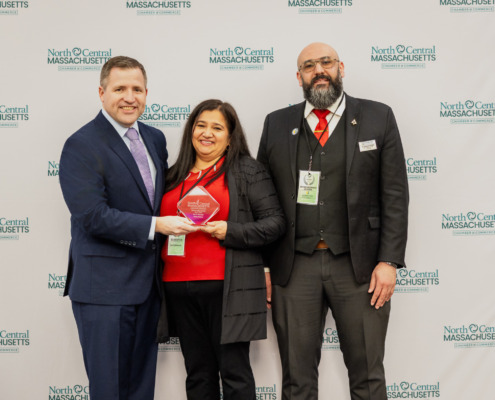

The reception features an open bar and gourmet appetizers.
View
Event
Join us for Connect North Central
Friday, September 25, 2026
8am-9am
View
Event
North Central Golf Tour Championship: Fore the Future
An FLNC Non-Traditional Scholarship Fundraiser
View
Event
Thank you Series Supporting Sponsor empHowered PR
View
Event
Join us for our 11th Annual
Congressional Luncheon
View
Event
Wednesday October 28, 2026
5:00pm - 7:00pm
View
Event
Join us for this in person HR Legal Update
View
Event
November 19, 2026
7:15am - 9:00am
View
Event
Chamber members are provided with the opportunity to engage with the Mayors of Fitchburg, Gardner, and Leominster who provide updates on projects and other things happening in their Cities. These events are by invitation only, please contact Travis Condon for more details.
View
Event
Bull Run Restaurant
215 Great Rd. Shirly, MA
View
Event
Join us for our last Connect North Central of the year!
Friday, December 11, 2026
8am-9am
View
Event
Chamber members are provided with the opportunity to engage with the Mayors of Fitchburg, Gardner, and Leominster who provide updates on projects and other things happening in their Cities. These events are by invitation only, please contact Travis Condon for more details.
View
Event
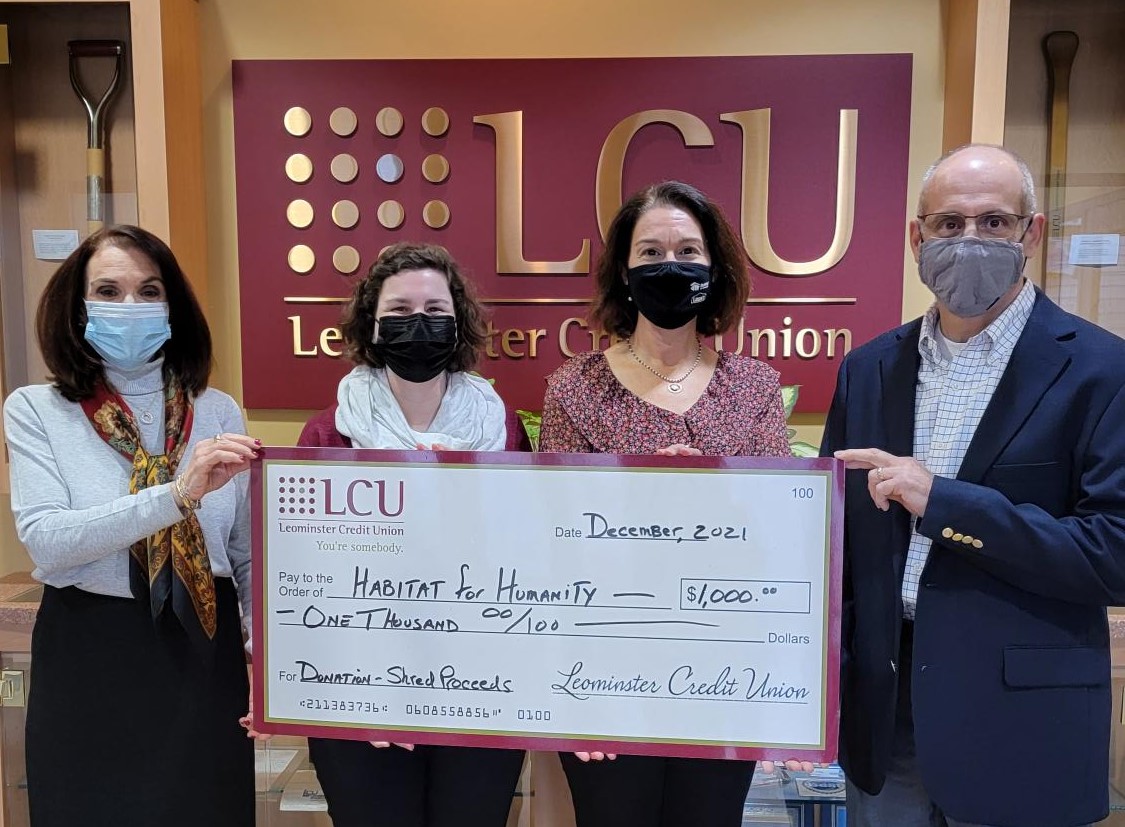
Pictured L to R: Barbara Mahoney, President & CEO, LCU; Kristen Cote, Marketing Specialist, LCU; Carolyn Read, Executive Director Habitat for Humanity North Central Massachusetts; Craig Madonia, SVP Lending, LCU.
Leominster Credit Union’s recent Shred-a-Thon raised $1,000 for Habitat for Humanity, North Central Mass.
LCU’s Shred-A-Thon is a free event open to the public. Each year LCU partners with Habitat for Humanity, and participants may make a donation to the organization. The event was held at LCU’s North Leominster branch where many members and non-members stopped by to have their sensitive documents shred on site by the secure shredding service, New England Security Shredders.
“This was our most successful Shred-A-Thon to date,” commented Barbara Mahoney, President and CEO. “We were pleased to be able to hold the event this year, where due to COVID had to postpone the events last year and this past spring. LCU’s semi-annual Shred-A-Thons are a great community event and assist in preventing identity theft, by offering a secure venue to shred confidential documents. The generous donations collected went to a great organization, Habitat for Humanity.”
A ribbon-cutting ceremony was held last month to celebrate the opening of Solvus Global’s new Center for Scaled Innovation in Manufacturing at 272 Nashua St. in partnership with North Central Massachusetts Chamber of Commerce and the city, attracting local and state officials as well as interested parties.

Solvus Global CEO and co-founder Dr. Aaron Birt addresses the attendees of the ribbon cutting ceremony held in October to celebrate the opening of Solvus Global’s new Center for Scaled Innovation in Manufacturing in Leominster. (COURTESY NICOLE BOYSON/SOLVUS GLOBAL)
Solvus Global is a technology-solution provider for materials and manufacturing founded in 2017 specializing in the areas of additive manufacturing, machine learning and sustainable materials processing. Headquartered in Worcester, it now operates out of three locations — research and manufacturing facilities in both Leominster and Worcester and a collaborative center in Webster.
Solvus Global co-founder and CEO Aaron Birt said the goal of cSIM is to create a place where innovative manufacturing solutions can be scaled from their research and development facility in Worcester and demonstrated in full production environments.
“It’s really a showcase of how government, industry and academia can come together to solve major supply chain challenges that we face as a country today,” he said.
Birt said two primary products will be coming out of the cSIM facility.
“One will be specialty powder materials that serve the cold spray industry, a growing community that specializes in both 3D printing and repair of legacy parts that are worn out or damaged,” he said. “The second is what we call production of large format additive components, which are parts at least one foot by one foot by one foot that are typically made of specialty materials like Inconel or titanium. We will be fabricating, treating and finishing these parts for our customers across the defense and industry sectors.”
Christine Nolan, director of the Center for Advanced Manufacturing at the MassTech Collaborative based in Westborough, said cSIM is important for the greater community, as it will benefit those beyond Leominster as well.

“Companies like Solvus show local students that today’s manufacturing jobs are not the repetitive or dirty jobs of the past but are high-tech careers that call for teamwork, an interest in cutting-edge digital tools, and critical thinking,” she said. “North Central Massachusetts is full of innovative, high-tech manufacturers like Solvus, places where Massachusetts students can find rewarding career opportunities once they graduate.”
MassTech Collaborative jointly manages the Massachusetts Manufacturing Innovation Initiative, or M2I2, grant program along with the Commonwealth’s Executive Office of Housing and Economic Development. During the ribbon-cutting, Nolan announced a new $1.6 million M212 grant to Solvus Global and its partner, Worcester Polytechnic Institute, which will support both an infrastructure investment, establishing a first-of-its-kind, fully automated robotic Arc-DED (Direct Energy Deposition) manufacturing line, along with an apprenticeship program spearheaded by Solvus and partners WPI and the national manufacturing institute ARM Robotics.
As part of the award, Solvus will establish an apprenticeship program with local technical schools such as Worcester Technical High School and Mount Wachusett Community College, and program curriculum facilitated by WPI will be established which highlights key skills needed by the advanced manufacturing workforce.
“The commonwealth’s support for this program is investing in infrastructure but also in a training program, which taps into educational institutions that have strong ties to the manufacturing sector including schools like WPI, Mount Wachusett Community College, and Worcester Tech,” Nolan said.

She said Solvus Global’s cSIM and the apprenticeship program aligns well with the region’s historical manufacturing roots.
“Massachusetts and the North Central region in particular have a long history of manufacturing leadership,” she said. “We’re now leading when it comes to advanced manufacturing, where manufacturing meets high-tech innovation. Through the M2I2 grant program we’re making critical investments in the tools, training programs and partnerships that will help keep our ‘Made in Mass.’ manufacturing sector in this leadership role for decades to come.”
As CEO of Solvus Global, Birt said much of his job “is setting up the vision for our future and helping to pull together the high-level people and resources necessary to make those visions a reality” through projects such as cSIM.
“Our goal is to be in full production with these innovative manufacturing solutions by the end of 2022 while at the same time serving as a resource for the region to support reskilling our workforce for the next era of manufacturing,” he said. “It’s something that we and many of our partners are passionate about and so we’re looking for ways to work together to create an environment that’s supportive of both the people and the industry.”
Mount Wachusett Community College (MWCC) will utilize the $73,903 Activation Fund grant from The Health Foundation of Central Massachusetts at its Dental Clinic to enhance its sterilization center. This enhancement will allow MWCC to improve training for dental hygiene and dental assistant students in state-of-the art sterilization and infection control procedures and processes.
The grant will enable MWCC’s Dental Education program to expand its offerings into new certification and continuing education programming in the area of Infection Control and Safety in the Dental Setting. Additionally, the grant enables MWCC to host the Montachusett Regional Vocational Technical School Dental Assisting program students in the clinical setting.
Community Health Connections has partnered with MWCC’s Dental Education program since its inception, playing a key role in the programs founding in 2005 through its support of the Oral Health Initiative of North Central Massachusetts, a Round 1 Synergy Initiative project also funded through The Health Foundation of Central Massachusetts. The clinic is co-located with CHC Community Health Center on Nichols Road in Fitchburg, enabling students to learn alongside CHC dentists. Since the program’s founding, 257 dental hygiene and assisting graduates have entered the dental workforce and over 9,000 patients have been served by students in MWCC’s Dental Education Clinic.
“The partnership between MWCC and Community Health Connections has and will continue to have an impact on oral health in Central Massachusetts and across the Commonwealth,” stated Cindy Cadoret, Director of Dental Education Programs at MWCC.

When the workday ends and the lights go down, Custom Cleaning Service of Peabody, Inc. gets to work. “We operate as our clients’ silent partner after business hours,” says Adam Paicos, of Templeton, who now serves as Director of Operations and oversees the company’s expansion into North Central MA. “We are not often seen, but we ensure facilities are clean, secure, and ready for business each day while serving as the eyes and ears for our clients when they are not on site.”

Discover local business stories through our Inside North Central Massachusetts Podcast series. Listen as Chamber members share their journeys, insights, and contributions to our thriving regional business community.

Looking for your next opportunity? Explore current job openings from employers across North Central Massachusetts on our Jobs Board. Whether you’re starting a new career or making a change, you’ll find a variety of local positions available to help you take the next step.
CapEx Facility Services & Construction · Leominster, MA
TaraVista Behavioral Health Center · Harvard, MA
DRS Power Technology, Inc. · Fitchburg, MA
AIS · Leominster, MA