E-Newsletter
An Electronic Publication of the North Central Massachusetts Chamber of Commerce

Inside this edition, you’ll discover the latest Chamber initiatives and success stories from across our region. From economic development projects and upcoming networking events to policy updates and workforce training opportunities, we’re keeping you connected to what matters most for your business and North Central Massachusetts.
The North Central Massachusetts Chamber of Commerce is here to help – with trusted resources, a strong business network, and a support system to keep your business and the region moving forward
Funding to support creation of six job opportunities in Ashby
The North Central Massachusetts Development Corporation (NCMDC) – the economic development arm of the North Central Massachusetts Chamber of Commerce – recently approved a $75,000 loan to Sean Smith, owner of 873 Café Tavern, located at 873 Main Street in Ashby. The loan, which was referred to NCMDC from NewVue Communities, will support the restaurant’s start-up costs, provide working capital and create six job opportunities in the community.
Smith purchased the business after the previous owners closed the restaurant in May 2020 due to financial hardships amid the pandemic. An experienced chef who worked as the Executive Chief and Culinary Director at The Fay Club in Fitchburg, and at Great Road Kitchen and Oyster Bar in Littleton prior to purchasing the 873 Café Tavern, Smith is optimistic that re-opening the restaurant will be good for the town of Ashby.
“The 873 Café Tavern was a successful restaurant and a local destination for years,” said Smith. “With the financial assistance and support from the North Central Massachusetts Development Corporation, I was able to fulfill a dream to open my own business and bring new life to the restaurant.”
The 873 Café Tavern features a lounge, restaurant with fireplace, café, patio for outside seating, and an ice cream bar. Open since late summer, the 873 Café Tavern features a specialized menu of shared plates and comfort foods, all using fresh, locally sourced ingredients.
As a microloan lender, NCMDC can provide loans to small businesses up to $250,000 for working capital, real estate, equipment, inventory, expansion and working with our banking partners to provide gap financing for the final piece of a project.
For more information about the NCMDC loan programs, please call 978.353.7607 or visit NorthCentralMass.com or ChooseNorthCentral.com.
The statewide unemployment rate rose from 5 percent to 5.2 percent in September, while employers reported adding 11,900 jobs across Massachusetts last month, labor officials announced on Friday.
September’s unemployment rate was the highest in Massachusetts since the 6.4 percent reported in April, and it landed more than 3 percentage points below the 8.9 percent labor officials recorded a year ago.
Job growth rebounded somewhat from the revised figure of 3,400 positions reported in August, though the pace of growth remains middling. Since May 2020, Massachusetts has added 474,700 jobs, clawing back 72 percent of the losses experienced in April 2020 amid the COVID-19 crisis.
The largest industry-specific gains in September occurred in education and health services (6,400 jobs), other services (5,300), trade, transportation and utilities (3,900) and leisure and hospitality (3,300). Construction, professional and business services, and government all shed positions last month.
Gov. Charlie Baker has been pushing lawmakers to invest a substantial portion of state government’s $4.8 billion in remaining American Rescue Plan Act funding toward workforce training and other economic development initiatives.
Legislative leaders are still working on an ARPA spending bill, which is expected in the new few weeks, and have also yet to produce a plan to allocate $1.5 billion in unobligated tax revenues left over from fiscal 2021. – Chris Lisinski/SHNS
Compelling greater investments in behavioral health and addiction treatment services figures to be a main tent pole in a health care bill that the Baker administration plans to put before the Legislature in the coming months, Gov. Charlie Baker suggested Wednesday morning.
Speaking to a virtual conference of the Providers’ Council, the governor said his administration plans this budget year to “continue our commitment to increasing access to behavioral health services, which I think everybody would agree coming out of this pandemic are a bigger and more important issue than they’ve ever been before.”
Then, for the second time in about a month, he recounted his 2019 health care bill that was never seriously considered once the pandemic set in.
The legislation Baker filed in October 2019 would have required, among other things, that health care providers and insurers boost spending on addiction services, behavioral health, primary care and geriatric services by 30 percent over three years.
“We continue to believe that these are areas that, for a bunch of reasons, many of which are driven by federal policy, are underinvested in and we need to do a much better job of recognizing and appreciating that investments in those areas not only improve the quality of care for people, but in many cases will also reduce the total cost of care because they’re designed to help people stay healthy,” Baker said Wednesday morning in his remarks to the Providers’ Council.
Last month, the governor recalled the same 2019 bill and said that his administration is “going to go back at this one” in a sweeping health care bill he expects to file by early next year.
When he signed last session’s health care law, which included a few of the policies he proposed in October 2019, Baker told the News Service that he expected to return after the pandemic to “some of these issues that were probably too big and too complicated to deal with in the context of what the last year was like.”
Legislators are interested in tackling health care, but their level of interest in Baker’s ideas remains to be seen. Senate President Karen Spilka named mental health parity legislation as one of the items on her fall agenda and House Speaker Ronald Mariano has said he’ll be looking to pursue “a number of different health care issues” this session. – Colin A. Young/SHNS
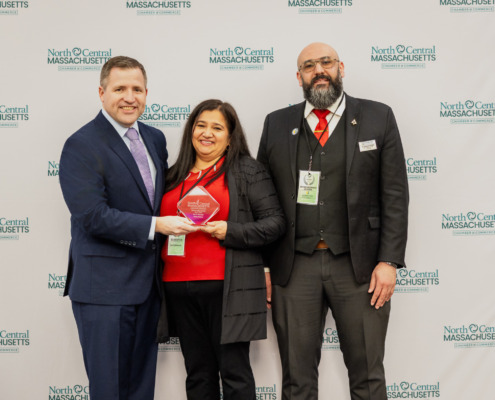

The reception features an open bar and gourmet appetizers.
View
Event
Join us for Connect North Central
Friday, September 25, 2026
8am-9am
View
Event
North Central Golf Tour Championship: Fore the Future
An FLNC Non-Traditional Scholarship Fundraiser
View
Event
Thank you Series Supporting Sponsor empHowered PR
View
Event
Join us for our 11th Annual
Congressional Luncheon
View
Event
Wednesday October 28, 2026
5:00pm - 7:00pm
View
Event
Join us for this in person HR Legal Update
View
Event
November 19, 2026
7:15am - 9:00am
View
Event
Chamber members are provided with the opportunity to engage with the Mayors of Fitchburg, Gardner, and Leominster who provide updates on projects and other things happening in their Cities. These events are by invitation only, please contact Travis Condon for more details.
View
Event
Bull Run Restaurant
215 Great Rd. Shirly, MA
View
Event
Join us for our last Connect North Central of the year!
Friday, December 11, 2026
8am-9am
View
Event
Chamber members are provided with the opportunity to engage with the Mayors of Fitchburg, Gardner, and Leominster who provide updates on projects and other things happening in their Cities. These events are by invitation only, please contact Travis Condon for more details.
View
Event
Mount Wachusett Community College, with generous support from the Shannon Grant, has launched a new program aiming to connect with students and provide them with support, coaching and workshops in academic, employment, and life readiness. The program is intended for high school seniors and HiSet participants or graduates who are interested in attending MWCC in the fall for either credit degree or certificate programs, or non-credit training programs.
Once accepted into the program, students will participate in various workshops including study strategy techniques, selecting college courses, completing career assessments, building self-esteem, preparing to transition to college, college admissions procedures, and completing financial aid forms.
“Through this program, I’ll be providing coaching, accountability and training to students,” noted Senior Success Program manager, local personal growth and development specialist, and MWCC outreach counselor Maria Vazquez. “I work to make sure these students are getting what they need through the completion of their senior year, on through the summer, and into their first semester at the Mount. My goal is to ensure that they are reaching their full potential.”
Students must reside in Fitchburg, Leominster or Gardner, be a first-generation college student, and meet one or more other risk factors (low-income, single parent household, etc.) in order to be eligible. Individuals interested in the program can visit mwcc.edu/senior-success to complete the application questionnaire.
About the Shannon Grant
Funded by the Executive Office of Public Safety and Security’s Office of Grants and Research, the Charles E. Shannon Community Safety Initiative (Shannon) is modeled after the Office of Juvenile Justice and Delinquency Prevention’s Comprehensive Gang Model. Shannon is a multi-sector approach used to address a community’s gang and youth violence problem. Each community receiving Shannon funding demonstrates the presence of risk factors for youth and gang violence.
Aging Services of North Central Massachusetts (ASNCM), which serves as the region’s Aging Services Access Point (ASAP) is pleased to welcome three new members to its Board of Directors: Susan McCarthy, Director of the Pepperell Council on Aging; Michael Ellis, Director of the Gardner Senior Center; and Ellen Birchander, Graduate Program Director, Management of Aging Services Program, University of Massachusetts, Boston.
Lori A. Richardson, Chief Executive Officer of ASNCM commented, “We are excited to have Susan, Mike and Ellen, each a proven leader in aging services join our Board of Directors. Their unique and tremendous practical experience will support our mission of providing comprehensive information and quality services so that older people, individuals with disabilities and their families are empowered to make personalized choices to ensure a life of dignity, safety and respect.”
ASNCM is also pleased to announce the appointment of new Clerk, Jennifer Conrad. Current Board Officers include President Christine Dixon; Vice President, Peter MacDonald; Treasurer, William McSheehy; Mary Mathieu, Julie Johnson, Esq., and Donald Parker.
To learn more about the Aging Services of North Central Massachusetts—including programs and services being offered, ways you can donate or volunteer, please visit www.AgingServicesMA.org or contact David Ginisi, Chief Marketing Officer, at (978) 466-1571 or by email at .
Massachusetts is exploring the future of natural gas used in homes and businesses and by large commercial and industrial customers. We’d like your thoughts.
Whether you live in Massachusetts or run a business here, the future of natural gas impacts us all. That’s why we would like your input on a plan to ensure a safe, reliable, and equitable transition to the future of energy in our state.
The Massachusetts Department of Public Utilities (DPU) directed the Massachusetts gas companies to explore pathways for a clean energy future – for you and our future generations. This includes the critical goal to reduce greenhouse gas emissions to net zero by 2050. Our part in achieving “net zero” includes removing the same amount of greenhouse gases we produce or avoiding them altogether through new technologies, to reduce emissions that contribute to climate change. These new technologies could impact home appliances like heating systems, boilers, gas stoves, and water heaters and a variety of commercial and industrial equipment that use natural gas. That’s a big job, and one that needs the public’s support and input to succeed.
Here’s how to share ideas and get involved:

When the workday ends and the lights go down, Custom Cleaning Service of Peabody, Inc. gets to work. “We operate as our clients’ silent partner after business hours,” says Adam Paicos, of Templeton, who now serves as Director of Operations and oversees the company’s expansion into North Central MA. “We are not often seen, but we ensure facilities are clean, secure, and ready for business each day while serving as the eyes and ears for our clients when they are not on site.”

Discover local business stories through our Inside North Central Massachusetts Podcast series. Listen as Chamber members share their journeys, insights, and contributions to our thriving regional business community.

Looking for your next opportunity? Explore current job openings from employers across North Central Massachusetts on our Jobs Board. Whether you’re starting a new career or making a change, you’ll find a variety of local positions available to help you take the next step.
CapEx Facility Services & Construction · Leominster, MA
TaraVista Behavioral Health Center · Harvard, MA
DRS Power Technology, Inc. · Fitchburg, MA
AIS · Leominster, MA