E-Newsletter
An Electronic Publication of the North Central Massachusetts Chamber of Commerce

Inside this edition, you’ll discover the latest Chamber initiatives and success stories from across our region. From economic development projects and upcoming networking events to policy updates and workforce training opportunities, we’re keeping you connected to what matters most for your business and North Central Massachusetts.
The North Central Massachusetts Chamber of Commerce is here to help – with trusted resources, a strong business network, and a support system to keep your business and the region moving forward
Article source: State House News Service
Author: Matt Murphy
More than a year after Gov. Charlie Baker first ordered Bay State residents to mask up to protect both themselves and others from a little understood virus sweeping the globe, the governor on Monday said if (and it’s a BIG if) you are fully vaccinated, you can drop the face covering in time for the Memorial Day barbecue.
Baker was back from D.C. and clear-eyed about what the latest guidance on mask wearing and vaccine effectiveness from the Centers for Disease Control meant for the people and businesses of Massachusetts.
Time to go back to the way things were, or at least something more recognizable.
And it’s not only masks that are getting shed like a jacket on the first day temps climb above 65. Baker said on Monday that along with the rescission of the mask mandate on May 29, all remaining business restrictions, capacity ceilings and gathering limits would be lifted as well. That’s two months ahead of what Baker had initially been planning for, and more in line with steps that some other states are taking.
As for the public health emergency declared last March as COVID-19 began to spread, no more after June 15.
The governor didn’t want to say it, but it sure felt like he was declaring the pandemic over.
“COVID’s a little bit like Michael Myers,” Baker said, chuckling nervously as he compared the virus to the late-70s, can’t-be-killed antagonist in the slasher flick franchise “Halloween.”
When Baker ends the state of emergency, he will also be giving up the rationale used for countless executive orders and emergency laws designed to respond and help people and employers adapt to a new way of semi-quarantined life.
That has created a conundrum for policy makers who must decide, and decide pretty quickly, what deserves to stay from the pandemic-era.
House Speaker Ron Mariano and Senate President Karen Spilka asked for and received a list of executive orders and emergency regulations that will expire when the public health emergency ends.
The Massachusetts Municipal Association is among those who want remote and virtual meeting options to remain in the toolbox for municipal boards, while Sen. Diana DiZoglio is helping to lead the charge on Beacon Hill on behalf of restaurants to keep third-party delivery fees capped and to-go cocktails on the menu.
DiZoglio has filed a bill to extend both pandemic accommodations for restaurants beyond the end of the state of emergency, and has filed a similar budget amendment that will be debated next week.
“Our local restaurants are depending on us to take immediate action as they work to remain afloat in this unprecedented time,” DiZoglio said.
The Committee on Election Laws this week also heard extensive testimony about why voting-by-mail should not be just a way to avoid coming into contact with other humans while participating in democracy, but a way to increase participation in democracy in its own right.
While there’s much still to sort through, the Legislature cleaned three things off its plate this week, finalizing a borrowing bill to construct a new soldiers’ home in Holyoke and settling on another strategy that will allow businesses to avoid steep unemployment insurance bill spikes.
The UI fix is the second attempt by Beacon Hill lawmakers to come to the rescue of employers, but it left some in the business community feeling still exposed.
Democratic leaders had been waiting to hear from the U.S. Treasury on whether federal relief funds could be used to build back deplete unemployment benefit systems, but after being given the green light by the Biden administration the bill they crafted didn’t rely on any of that money at all – at least for now.
Instead, the solution they crafted will spread the cost to employers over 20 years as the state borrows to meet pandemic benefit obligations that stretched the state unemployment trust beyond its means.
The UI bill, which Rep. Josh Cutler said the Baker administration helped to develop, also included the emergency COVID-19 paid leave program that Baker previously tried to amend, to no avail.
The House and Senate stuck with the original structure of the up-to-one-week paid leave program that affords workers time to quarantine, get immunized or care for a family member sick with COVID. And municipal employees would still qualify.
If the Legislature does ultimately decide to spend federal dollars to help businesses shoulder the heavier burden of UI system costs, they could always pad the $273 million supplemental budget Baker filed this week.
That bill uses some federal funds to cover some pandemic spending, but it’s not THE blueprint for how to spend billions in American Rescue Plan dollars. It would, however, appropriate $5 million for the new Peace Officer Standards and Training Commission to get to work certifying law enforcement officers around the state, and another $12.5 million to implement other aspects of last year’s police accountability law.
Of course, in all the excitement over the prospects of a summer without worrying about COVID-19, it’s easy to forget that millions of Bay State residents are still not and cannot be vaccinated.
The state crossed the threshold of 3.3 million fully vaccinated this week, but children under 12 are still not eligible for a vaccine and masks will continue to be required in schools, just not outside at recess.
Masks will also stay the norm in nursing homes and other congregate care settings, and in many communities of color vaccination rates continue to trail those of the white population.
Some people might just keep wearing masks because it makes them feel safer, and Baker said cities, towns and business owners that want to move slower and keep requiring masks or other safety measures are welcome to do so and should be respected.
Because at the end of the day, people are still contracting COVID-19, even if the health outcomes are somewhat improved.
On the day, Baker announced the new reopening strategy, 281 new cases of COVID-19 were reported and 336 people were hospitalized with the virus.
It was the lowest daily case count since Sept. 22.
STORY OF THE WEEK: The beginning of end of the pandemic, like its arrival, came on abruptly and could take some getting used to.
SONG OF THE WEEK: It’s about to be all over now.
Article Source: State House News Service
Authors: Chris Lisinski and Michael P. Norton
MAY 18, 2021……The House approved a proposal Tuesday that aims to relieve employers this spring from major unexpected unemployment system costs, while punting the decision on whether to deploy one-time federal funds to address a benefits system that sagged under the weight of pandemic unemployment.
In a move that business groups described as a solid first step, representatives voted 157-0 to shuffle the distribution of unemployment claims costs so that they can be covered over two decades of borrowing and so businesses will not be in line for huge bills in the short term.
After weeks of review, the House on Tuesday also revived plans for an emergency paid leave program that would make participants eligible for up to one week of paid leave if they or a family member needs it to deal with COVID-19 issues, including self-isolation, seeking a diagnosis, or obtaining an immunization. The House sent the bill to the Senate after rejecting amendments to the measure sought by Gov. Charlie Baker.
The legislation (H 3702) addressing a spike in solvency rate assessments on businesses aims to achieve the same goal as an unemployment system stabilization bill Baker signed on April 1, before it became apparent that the original pass failed to fully prevent business cost spikes tied to unprecedented pandemic job losses.
Before the pandemic, employers that laid off more workers typically received higher experience ratings that increased the amount they owe into the state’s unemployment system. However, the U.S. Department of Labor told states not to apply those penalties for losses stemming from COVID-19 impacts. Massachusetts, as a result, spread out the costs across all industries through the solvency fund assessment, which in the past had been used to cover benefits that cannot be charged directly to employers, such as dependency allowances and state extended benefits.
“In a typical year, this is a small factor, but as we all know, this year was anything but typical,” said Labor and Workforce Development Committee Co-chair Rep. Josh Cutler, who was the only lawmaker to speak about the proposal during Tuesday’s session.
Many businesses were blindsided when they opened their first-quarter unemployment contribution bills and found the solvency assessment rate had jumped from 0.58 percent in 2020 to 9.23 percent in 2021, raising costs in many cases by hundreds or thousands of dollars.
Under the legislation approved Tuesday, the state would shift all COVID-related unemployment claims from the solvency fund into a new COVID claims fund and the solvency fund would revert to its original function. Lawmakers already authorized $7 billion in bonding over 20 years as part of the original unemployment stabilization bill Baker signed, so the state would borrow to cover the newly created account.
Employers, who fund the state’s jobless aid system, will still be on the hook in the long term, and a COVID-related assessment on businesses will kick into effect for 2021 and 2022. However, lawmakers believe the legislation will correct huge spikes in solvency fund charges that hit businesses in March and April.
For many, the quarterly bills will return to an amount roughly in line with 2020 rates, Cutler said. Some businesses may even owe less than they did last year.
As a result of the change, the solvency assessment rate should fall from 9.23 percent to about 1.1 percent, a figure much closer to its historic levels, Cutler said.
The state Department of Unemployment Assistance would recalculate and resend bills to every employer. The bill would also postpone the due date for first-quarter bills, already delayed by about a month, from June 1 to July 31. Employers who already paid the inflated version of their bills will receive a credit for the difference, Cutler said.
Any new unemployment claims filed after Aug. 1 would be charged to employer accounts, essentially reverting to how the system functioned before the pandemic and the federal guidance.
Business leaders and some lawmakers have pushed to use some of the billions of dollars Massachusetts will receive from the American Rescue Plan to replenish the unemployment insurance trust fund after a historic spike in job losses during last year’s mandatory economic shutdowns.
States are empowered to use the relief money to restore unemployment funds under federal guidance, and some have already done so, but — to the chagrin of several business leaders — the House opted not to pursue that option in its legislation Tuesday.
“We’re not relying on federal money here,” Cutler said in an interview. “This is a solution that does not rely on federal funds. We’ve come up with a solution that works with our own resources and does not rely on federal funding for this. That door is still open, but today this action does not rely on federal money.”
Industry groups offered mixed reviews of the bill, praising the relief it will bring in the coming weeks while calling for additional action to soften the burden businesses will need to carry over the next two decades.
“You could characterize this as a short-term solution. Some might characterize it as a long-term solution, but I think those that do that are not looking at the big picture,” Retailers Association of Massachusetts President Jon Hurst told the News Service. “If anybody thinks this is the only solution, that would not be acceptable in employers’ minds.”
Hurst contested Cutler’s description that the fix uses “our own resources,” arguing that the costs over the next 20 years will still fall to current and future employers “for claims that were not their fault,” brought on by government-ordered capacity limits and business closures. He urged Beacon Hill and Capitol Hill leaders to work together and direct taxpayer dollars to offset the costs, whether by using ARPA funding or a new package aimed specifically at unemployment trust funds.
“I’m not saying the entire $4.5 billion ARPA money or the entire trust fund deficit must be paid by state and federal government or socialized, or that employers can’t pick up part of the tab, but it would be an absolute failure and we would be an outlier among other states if we expected employers to pay the entire bill for the COVID crisis,” Hurst said.
Christopher Carlozzi, state director for the National Federation of Independent Businesses, said the plan unveiled Tuesday is “another step towards providing employers with immediate UI tax relief.”
“We are thankful that it will help many employers avoid those astronomically high first quarter bills, however a long term solution will still be necessary,” he said in a statement, adding that many job losses were a result of COVID restrictions. “The state must be required to use some of the billions in federal aid to help offset costs for business owners who, under this proposal, are still solely responsible for refilling the unemployment trust. Other states used federal CARES Act and ARPA money to refill depleted unemployment funds, Massachusetts should help struggling businesses by following their example.”
Lawmakers, industry heads, labor leaders and other experts are already working on a big-picture analysis of the state’s unemployment system. A 21-member commission created under the original stabilization bill convened its first meeting last week, and it is tasked with submitting recommendations by Dec. 15 on how to ensure the unemployment insurance trust fund’s permanent solvency.
Cutler said on the House floor that the Senate and the Baker administration collaborated on the legislation approved Tuesday, an approach that could make reaching a final agreement on the matter easier.
Senate President Karen Spilka’s office said Monday that she believes the legislation is “a sound proposal.”
“Once received from the House, we look forward to reviewing and discussing this proposal with our colleagues and advancing a fix to ensure stability for our employers,” a Spilka spokesperson said in a statement.
Baker spokesperson Terry MacCormack said in a statement that the administration “feels strongly that this issue needs to be addressed quickly and is pleased to work with our colleagues in the Legislature to accomplish that goal” and will “review the final legislation that reaches the Governor’s desk.”
The Senate’s next session is Thursday, but it’s unclear if the proposal will surface for consideration then.
The House on Tuesday also turned back Baker’s calls to exclude municipal employees from an emergency COVID-19 paid leave program and to provide reimbursement for paid leave costs through an employee tax credit. The underlying proposal, paired in the same bill with the unemployment insurance system fixes, requires employers to provide up to one week of emergency paid leave based on the number of hours an employee works, and under a cap that limits total pay to $850 per week.
Employee advocates for more than a year have been calling for a paid leave program, with groups like Raise Up Massachusetts saying too often essential workers were choosing to work so they could make money rather than staying home and seeking COVID-19 testing if they were exhibiting symptoms of the virus.
The Legislature included COVID-19 paid leave protections in the initial unemployment insurance stabilization bill in April, but Baker returned that section with amendments. The House’s return to the plan more than a month later comes as COVID-19 cases fall and millions of residents have secured vaccinations against the virus.
“The House stands firm in supporting our municipal workers,” Cutler said from the House floor. “Our municipal employees including teachers, DPW workers, police officers, firefighters, health agents, janitors, veterans agents, counseling on aging workers, librarians, and many others have been essential to the state’s COVID-19 response and certainly are just as deserving of these benefits.”
Employees would be eligible for paid leave if they need to self-isolate, seek a medical diagnosis, obtain an immunization, comply with a quarantine order or determination by a local, state or federal public official, if they are unable to telework because of a COVID-19 diagnosis, or if the employee needs to care for a family member who needs to self-isolate, needs a medical diagnosis, or is subject to a quarantine.
The Baker administration has defended its proposed exclusion of municipal workers from the program, arguing that municipal workers have strong leave protections in place already and that many municipalities can access federal funds to implement their own leave programs that could align with state and federal leave guarantees.
Baker also proposed to convert the program funding to a $40 per employee tax credit for all companies unable to access federal credits, regardless of whether the employee uses the leave benefit. The governor said this would not add to the cost of the program, but would prevent it from abruptly ending when the $75 million proposed for employer reimbursements runs out.
Whether your business is in the start-up stage or your brand is well-established, choosing between a bank and a credit union can be confusing. Which is better for your business assets, and which offers the most benefit long-term? Learn about the differences between the two types of financial institutions before considering which may be best for your specific business.
Banks & Credit Unions: The Differences & Similarities
The biggest difference between banks and credit unions is their respective business models. Banks are for-profit while credit unions are not. Both options offer protection for up to $250,000 per account through different avenues; banks protect your funds via FDIC and credit unions offer protection via the NCUA. Banks report their earnings to shareholders while credit unions disperse earnings among members.
Think of it like this: Banks are similar to big box stores in that they offer a variety of services while credit unions resemble the financial equivalent of subscription-based savings clubs (you know, the type of place where you can purchase 5 gallons of mayonnaise on-the-cheap).
Both credit unions and banks offer financial services such as loans, interest bearing accounts, lines of credit, and financial advising; however, you’re likely to get more bang for your buck from a credit union thanks to low interest rate loans and personalized service.
Benefits of Business Banking
Banks provide the same financial services as credit unions, but rates may not be as attractive. In exchange, most banks have numerous branches throughout the country, which means you will likely have access to in-house banking regardless of your location. Traveling to a conference? Attending a trade show? Considering a new location for your company? Your bank’s presence will follow you. Additionally, banks are more likely to offer hi-tech services, like mobile apps, to customers to enhance the convenience of banking.
Benefits of Business Credit Union Accounts
Unlike banks, credit unions are accountable directly to their members. Although credit unions may only offer a handful of local branches, they are more than willing to work with other credit unions should you need to relocate your business. When compared with banks, credit unions offer interest-bearing accounts that provide a higher return on investment as well as lines of credit with remarkably low interest rates. Some business owners consider credit unions the “fine dining” of the financial world for the level of personalized service they offer as well. You’re not simply another dollar sign when you walk into your credit union.
The Choice is Yours
Now that we’ve broken down the specifics about banks and credit unions, it’s time for you to weigh the risks and benefits of each. After all, this is your livelihood we’re talking about. Are you looking for excellent customer service and members-only discounts, or do you value the freedom to take your business anywhere without the need to disrupt your company’s finances?
A full list of banks and credit unions in our region can be found at https://web.northcentralmass.com/Finance-and-Insurance/Banks-Credit-Unions
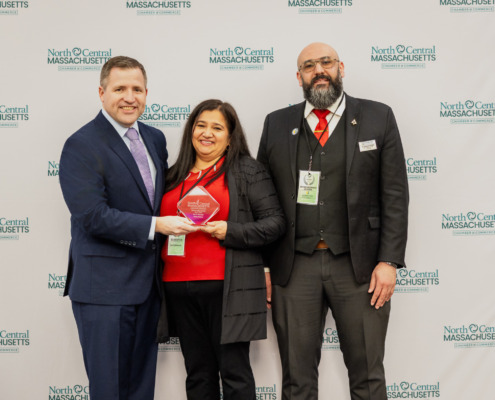

The reception features an open bar and gourmet appetizers.
View
Event
Join us for Connect North Central
Friday, September 25, 2026
8am-9am
View
Event
North Central Golf Tour Championship: Fore the Future
An FLNC Non-Traditional Scholarship Fundraiser
View
Event
Thank you Series Supporting Sponsor empHowered PR
View
Event
Join us for our 11th Annual
Congressional Luncheon
View
Event
Wednesday October 28, 2026
5:00pm - 7:00pm
View
Event
Join us for this in person HR Legal Update
View
Event
November 19, 2026
7:15am - 9:00am
View
Event
Chamber members are provided with the opportunity to engage with the Mayors of Fitchburg, Gardner, and Leominster who provide updates on projects and other things happening in their Cities. These events are by invitation only, please contact Travis Condon for more details.
View
Event
Bull Run Restaurant
215 Great Rd. Shirly, MA
View
Event
Join us for our last Connect North Central of the year!
Friday, December 11, 2026
8am-9am
View
Event
Chamber members are provided with the opportunity to engage with the Mayors of Fitchburg, Gardner, and Leominster who provide updates on projects and other things happening in their Cities. These events are by invitation only, please contact Travis Condon for more details.
View
Event
Leominster, MA –Leominster Credit Union has recently announced the promotions of Ellen Coughlin and Mychelle Phillips.
Ellen Coughlin was promoted to the position of Vice President, Human Resources and Development. For the last 5 years, Ellen was the Assistant Vice President of Human Resources but has been with the organization for 17 years. She will be responsible for all the Human Resources functions, development and training and will become a member of the Senior Management Team reporting to Barbara Mahoney, President & CEO. Coughlin received a BA from Worcester State College in Spanish and a minor in Health Sciences. She went on to receive her master’s degree from Emmanuel College, with a concentration in Human Resources. She has also received her PHR, Professional Human Resources designation from the HR Certification Institute and her SHRM-CP. Coughlin resides in Sterling with her husband and daughter.
Mychelle Phillips was promoted to Vice President, Operations and Information Technology (IT). Phillips has been with LCU for 17 years and Vice President of Operations for the last 6 years. Her new duties will include being responsible for the Digital and Member Service Center, Operations and our IT division. Phillips will become a member of the Senior Management Team and report to Barbara Mahoney, President & CEO. Mychelle has a bachelor’s degree from New England College of Business and holds an Accredited Automated Clearing House Professional (AAP) certification awarded by National ACH Association to individuals who are experts in electronic payments. Phillips resides in Leicester with her husband.
“These promotions are the result of the exceptional performance of these individuals within their respective departments,” commented Barbara Mahoney, President & CEO. “Ellen and Mychelle display exemplary behavior, discipline and leadership and we are pleased to have them as part of our Senior Management Team.”
Leominster, MASS – Several Fidelity Bank employees were virtually honored by Fidelity Bank at the bank’s annual All Hearts Meeting March 9 for their unique contributions during an unusual year. Three of the honorees are from Leominster – Damian Scott, Jessie Maldonado, and Emily Daugherty. “It is a pleasure to recognize our caring colleagues for the work they do,” says Ed Manzi Jr., Fidelity Bank Chairman and CEO. “I am inspired by how our honorees continue to rise to the challenges presented by the pandemic.” The annual awards recognize Fidelity Bank role models who exemplify the bank’s caring culture and LifeDesign approach of providing the clarity needed to help clients make informed decisions and move forward with confidence.
Mission Accomplished awards were given to Linda Carmichael and Becky Beaton. These most prestigious awards single out two outstanding individuals, one for work done helping Fidelity Bank clients and the other for work that supports their Fidelity Bank colleagues. Both individuals have shown an impressive commitment to Fidelity Bank and have made a significant contribution to the bank being able to thrive during these difficult times.
Fidelity Bank Vice President of Operations Linda Carmichael of Fitchburg was given the Mission Accomplished award representing the support departments of the bank. Carmichael led our Operations team through the complexities and challenges of our merger with Family Federal Savings, a significant Cash Management project, and was instrumental in leading our critical deposit operations department through 2020 – keeping the team fully operational while managing the guidelines and remote work situations brought on by the pandemic. In addition, she stepped in to help lead another department in the bank through a leadership transition. With limited expertise in this area, she proactively jumped in providing support to this team in addition to her own. “Linda is a well-respected team player who is truly fearless in her approach and never complains,” says Manzi.
Fidelity Bank Vice President and Small Business Relationship Manager Becky Beaton of Rindge NH received the bank’s client-facing Mission Accomplished award in recognition of her stand out work with the Commercial Lending and Community Banking team in their successful implementation of the Payroll Protection Program (PPP) that provided critically needed help to hundreds of small businesses. “Becky has been such a treasure for our clients and the bank this year,” says Manzi. Beaton provided 24/7 support for the hundreds of clients urgently seeking these loans from April through July, while also providing guidance to the CARES Team and support to the Commercial Lending and Credit Admin teams receiving and processing the applications. In addition to caring for her clients and colleagues throughout the process, Beaton also worked hard to continuously improve the process in an unwavering pursuit of excellence, serves as an important liaison with the bank managers, and generates small business loans.
Role Model awards were given to employees who personify Fidelity Bank’s five guiding values of treating everyone with care and respect, exhibiting honesty and integrity, pursuing excellence, being committed to continuous learning and improvement, and maintaining a positive and fun work environment.
The entire IT team received the bank’s Role Model award for personifying the bank’s guiding value of Treating Everyone with Care and Respect. They are Systems Administrator Damian Scott of Leominster, Systems Engineer Marcin Wiadrowski of Holden, Systems Analyst Tracey Collins of New Ipswich, NH, and Systems Administrator Helen Bleckley of Clinton. The team worked tirelessly and with great dedication and intelligence to meet the challenge of Fidelity Bank having to deploy people to work remotely to preserve their health, while caring for its clients. They deployed new technologies and acquired equipment so the bank could implement a new workplace model without missing a beat. None of the staff at Fidelity Bank could have been heroes without the IT team and their immense care.
Jessie Maldonado of Leominster was honored for exemplifying the bank’s guiding principal of pursuing Continuous Learning and Improvement. Maldonado is Assistant Branch Manager for the Leominster Main Street banking center of Fidelity Bank. This year Maldonado demonstrated initiative and passion to help her colleagues and her banking center be the best it could be. She demonstrates consistent willingness to increase her own knowledge and impressed the importance of this on others.
Emily Daugherty of Leominster was recognized for Maintaining a Positive and Fun Work Environment. Daugherty is Fidelity Bank’s Marketing Coordinator and was recognized for her consistent contributions to every celebration, recognition event, and client campaign. She produces creative materials, handles social media, and was a huge part of ensuring that the pandemic didn’t take the fun or positivity out of events that had to go virtual such as retirement celebrations and graduations. Daugherty perseveres with positivity. Her colleagues never hear a negative word from her. Her efforts have made sure that the Fidelity Bank workplace remained positive and fun despite the challenges of 2020.
Helen Bleckley of Clinton was honored for Pursuing Excellence. Bleckley is a Systems Administrator who used her technical ingenuity to provide excellent service to her colleagues just so they could do their day-to-day work. Additionally, this individual teamed up with the HEART Club with an innovative approach to help with the technical details of the bank’s first Heart and Sole challenge. While wearing a smile Bleckley has put her excellence on display last year.
Janette Fontaine of Baldwinville was recognized for Exhibiting Honesty and Integrity. Fontaine is a Client Care Representative whose diligence and commitment to Fidelity Bank clients is evident and has been recognized many times. She has walked some clients through situations to help them avoid scammers, helped others avoid peril and did so with an immense amount of care. One client said she even “saved the day.”
##
About Fidelity Bank:
Founded in 1888, Fidelity Bank is one of the strongest independent community banks in Central and Eastern Massachusetts. Fidelity Bank’s unique LifeDesign approach to banking provides the care and clarity needed to make informed decisions with confidence. The Bank offers a range of personal and business banking solutions to clients in 14 full-service banking centers in Leominster, Worcester, Fitchburg, Needham, Gardner, Stow, Shirley, Barre, Millbury, Paxton, Princeton, and Winchendon. The Bank has consistently earned a “5 Star” rating from BauerFinancial, Inc., the nation’s leading independent bank rating and research firm. In 2020 Fidelity Bank was voted Worcester Telegram & Gazette Best Financial Services in Central Massachusetts and was named to the Boston Globe’s Top Places to Work list for the sixth time. As of September 30, 2020, the bank had total assets of approximately $1.15 billion. For more information, visit www.fidelitybankonline.com or www.facebook.com/fidelitybankma
Please join us for a LIVE cooking demonstration with Simply Creative Chef, Rob Scott on Tuesday, April 13, 2021, at 7:00 PM.
Chef Rob will teach us how to cook Panko Crusted Chicken Milanese (with fresh mozzarella, blistered tomatoes and spinach) – a colorful and delicious meal. We’ll send out the recipe in advance (and the Zoom link) to those who register, so you can gather your ingredients and cook along with Chef Rob! Or, just curl up on the couch to watch the demo, and make the meal another day.
Register at https://tinyurl.com/fplchefrob to be sent the recipe and Zoom link.
This is a free program. For information about this or other Library programs call 978-829-1780 or visit our website: www.FitchburgPublicLibrary.org.

When the workday ends and the lights go down, Custom Cleaning Service of Peabody, Inc. gets to work. “We operate as our clients’ silent partner after business hours,” says Adam Paicos, of Templeton, who now serves as Director of Operations and oversees the company’s expansion into North Central MA. “We are not often seen, but we ensure facilities are clean, secure, and ready for business each day while serving as the eyes and ears for our clients when they are not on site.”

Discover local business stories through our Inside North Central Massachusetts Podcast series. Listen as Chamber members share their journeys, insights, and contributions to our thriving regional business community.

Looking for your next opportunity? Explore current job openings from employers across North Central Massachusetts on our Jobs Board. Whether you’re starting a new career or making a change, you’ll find a variety of local positions available to help you take the next step.
CapEx Facility Services & Construction · Leominster, MA
TaraVista Behavioral Health Center · Harvard, MA
DRS Power Technology, Inc. · Fitchburg, MA
AIS · Leominster, MA