E-Newsletter
An Electronic Publication of the North Central Massachusetts Chamber of Commerce

Inside this edition, you’ll discover the latest Chamber initiatives and success stories from across our region. From economic development projects and upcoming networking events to policy updates and workforce training opportunities, we’re keeping you connected to what matters most for your business and North Central Massachusetts.
The North Central Massachusetts Chamber of Commerce is here to help – with trusted resources, a strong business network, and a support system to keep your business and the region moving forward
Our community and many others have lost workforce talent to larger, coastal cities for decades. While the reasons behind it are complex, the steady loss of young, educated workers seemed unstoppable. Much more recently, the COVID-19 pandemic has also seemed unstoppable and even more devastating. However, it sometimes happens that you can use one problem to solve another. Thanks to the unique circumstances of 2020 and 2021, our community may be able to pull off the biggest homecoming in history.
Smaller cities and towns such as ours have steadily lost workforce talent in recent decades. Economic opportunities within non-urban communities have been reduced by outsourcing and the Great Recession. While large cities have reaped the benefits of the tech boom, rural areas and smaller cities have hardly felt it. Communities like ours have suffered shrinking tax revenues, aging populations, and shrinking workforces as young, educated people flock to the cities for education and employment.
However, it’s not necessarily because they want to live in the city. In fact, many talented young workers don’t live in the city, but in a suburb and deal with long commutes. Lopsided economic growth has made the big cities prohibitively expensive, but many young people need the high salaries that tech offers to pay off their student debt. However, COVID has accelerated trends that could bring our workforce talent back home.
On the one hand, the pandemic may cause people to reassess aspects of city living, such as dwelling in apartments and riding public transportation. Such changes in view are ultimately not based in fact, but it’s easy to find people already voicing such opinions. More importantly, the pandemic has dramatically accelerated the shift to remote working.
Remote working was always going to make its way into the tech industry. Operating large office buildings, requiring commutes, and providing high compensation to attract talent to expensive cities have been redundant for a decade, perhaps. One result of the pandemic is that change-averse businesses have made the leap to virtual working as soon as the pandemic forced work-from-home orders across the country. With a new freedom to work from anywhere, many are looking at affordable, comfortable life in communities like ours.
In fact, tech companies are encouraging their employees to relocate. Pragmatic businesses such as Stripe are offering impressive incentives in exchange for minor pay cuts and relocation out of expensive urban areas. Since we love our quality of life, we don’t think financial incentives are the only reason to leave the rat race.
Communities around the country are trying different things to draw remote workers. Housing discounts, grants, and even tax incentives are tools being used by municipalities to attract remote workers.
These incentives will work best in combination with an appeal to the improved quality of life that we can offer. These things are proximity to nature, a peaceful place to live, affordability, and a tight-knit community. If we can provide these benefits alongside the internet infrastructure and housing remote workers need, we can bring our talent home and revitalize our community.
The Baker-Polito Administration today announced $9.7 million in grants from the Skills Capital Grant Program to 47 educational organizations across the Commonwealth to update equipment and expand student enrollment in programs that provide career education. The awards announced today mark $102 million in total funding provided to high schools, colleges and other educational organizations since the program’s inception in 2015.
Governor Charlie Baker, Lt. Governor Karyn Polito, Labor and Workforce Development Secretary Rosalin Acosta and Education Secretary James Peyser visited Peabody Veterans Memorial High School to announce the awards and to tour the high school’s electrical engineering and culinary arts classrooms, which received a $175,000 award last year.
The Skills Capital Grant Program was originally launched in 2015 with the goal of replacing outdated equipment and technology, mainly at vocational technical high schools and community colleges. Since then, the program has evolved into a crucial component of local workforce training efforts by expanding the number of young people and adults trained and experienced with the newest technologies used by local employers. Approximately 40,000 students across the Commonwealth have directly benefitted from these grants.
“The Skills Capital Grants have helped give thousands of young people opportunities in high-demand jobs, and the grants have had a tremendous impact on students, schools and local businesses,” said Governor Charlie Baker. “These significant investments made over the past six years in this program with our partners in the Legislature will help train students to adapt to the changing needs of our economy.”
“Massachusetts, like the rest of the country, will face workforce challenges in the next few years, but we are poised to handle them better because of programs like the Skills Capital Grants,” said Lt. Governor Karyn Polito. “The grants enable schools, colleges and other educational institutions to revamp how students learn and gain crucial experience that serves them and employers well.”
Since 2015, 387 grants totaling more than $102 million have been awarded to 187 different schools and educational institutions across the Commonwealth, with many organizations receiving multiple grants over the years. The state’s investment also helped institutions leverage the grants to gain an additional $25 million in local matching funds.
The competitive grants are awarded to educational institutions that demonstrate partnerships with local businesses, as well as align curriculum and credentials with industry demand to maximize hiring opportunities in each region of the state. The 2018 Economic Development Bill, filed by the Governor and passed by the Legislature, established an additional $75 million in Skills Capital Grant funding over five years.
About two-thirds of the investments made with the grants are directly aligned to reduce skills gaps in high priority industry sectors, including health care, manufacturing, IT and skilled trades. A percentage of the funding, about 5 percent, has been invested in multi-year strategic projects in manufacturing, healthcare and energy training programs which are projected to have significant regional impact.
“As we continue to address economic disparities across the Commonwealth and provide solutions to employment gaps in high-demand industries, the Skills Capital Grants play a significant role in training students of all ages for successful long-lasting careers,” said Executive Office of Labor and Workforce Development Secretary Rosalin Acosta. “The impact of these grant funds on students, educational institutions, and local business partners is incredibly positive and moves us toward a more equitable economy.”
Approximately 68 percent of the funds have been awarded to traditional high schools and vocational technical schools, 24 percent going to colleges, and another 8 percent to community-based organizations. A focus of the more recent grant awards has been the launch and expansion of the Governor’s Career Technical Initiative, which supports vocational-technical schools in expanding their impact by operating programs in the afternoons for local high school students and in the evenings for workers and adult learners.
“These unprecedented and sustained investments to expand training capacity in high-demand industries, and upgrades to the quality of equipment, ensure that our students – both young people and adults – graduate with knowledge and skills that are of immediate value to them as they launch careers and to employers who need skilled workers in today’s rapidly changing economy,” said Education Secretary James Peyser.
“Training a skilled workforce is critical to the Commonwealth’s economic recovery, and the Skills Capital Grants have been a vital component of our efforts to strengthen the talent pipelines for key industries,” said Housing and Economic Development Secretary Mike Kennealy. “As we continue emerging from the economic damage inflicted by the pandemic, funding this program at this milestone level will significantly increase access to employment opportunities in every region of Massachusetts and accelerate progress toward recovery.”
In January 2020, the Administration began awarding larger multi-year grants, allowing educational institutions to apply for either one or two years of funding. In this round of grants, Massachusetts Bay Community College received a two-year grant totaling $750,000 to purchase new equipment to support students in the nursing and allied health programs. Entities which receive two-year awards require a local matching contribution of $1 to every $3 of state funding.
The Skills Capital Grants are awarded by Governor Baker’s Workforce Skills Cabinet, which was created in 2015 to bring together the Secretariats of Education, Labor and Workforce Development, and Housing and Economic Development to align education, economic development, and workforce policies in order to strategize around how to meet employers’ demand for skilled workers in every region of the Commonwealth.
The following organizations received awards in this round:
Agawam High School, Agawam – $58,188, Manufacturing & Information Technology: The school will use the grant to expand its existing early career programs in manufacturing and information technology.
Atlantis Charter School, Fall River – $75,000, Manufacturing Innovation Pathway: The grant will support the school’s manufacturing early career program by providing students with substantial resources to improve their workforce training. The grant will enable the school to leverage matching grant opportunities from philanthropic donors, local businesses, and higher education institutions.
Attleboro High School, Attleboro – $180,00, Metal fabrication: Attleboro High School will purchase programmable welding robots used by industry partners to provide students experience on the most up-to-date equipment used by employers. The school also plans to launch new adult/evening training programs to meet demand for training.
Bay Path Regional Vocational Technical High School, Charlton – $250,000, Veterinarian Tech: The school will renovate the veterinary hospital where students train and work alongside veterinary professionals in the fully operational veterinary hospital. The school will eventually offer afterschool and evening programs to adult learners to earn a veterinary assisting certification. Bay Path will partner with Second Chance Animal Services, an organization that provides care to animals.
Benjamin Franklin Institute of Technology (BFIT), Boston – $151,468, Electrical Technology: BFIT’s Engineering Technology program will prepare students for a wide-range of jobs in the technology sector, including robotic assembly technicians, test technicians, automation technicians, solar technicians, solar installation technicians, wind technicians, mechanical technicians, machine tool technicians, and manufacturing technicians. The school will offer stackable certificates and associate degrees in engineering technology.
Berkshire Community College, Pittsfield – $400,000, Culinary and Hospitality: The college will establish the Berkshire Culinary Institute (BCI) to support its redesigned culinary and hospitality program. The former cafeteria will be repurposed into a modern teaching and learning space to give students experience in culinary, hospitality and the food service industries.
Blue Hills Regional Technical School, Canton – $200,000, Engineering Technology: The school will expand its engineering and drafting/CAD programs, and purchase new robotics equipment, a CNC mill, water cutter, and workstations with power. By improving the program, the school will help students meet increasing industry demand for skilled workers in the engineering profession.
Bridgewater State University, Bridgewater – $250,000, Information Technology and Security: The university plans to develop a cyber simulation center to expand course offerings in cyber-criminology, cybersecurity, and digital forensics to meet critical workforce needs. The university is collaborating with state, education, and industry leaders to create a Commonwealth Cybersecurity Consortium.
Bristol-Plymouth Regional Technical School, Taunton – $228,380, Community Health & Practical Nurse Program: The school will update instructional labs in the community health and practical nurse programs to provide students with hands on experience using modern patient simulation and industry standard equipment.
Cape Cod Community College, West Barnstable – $479,082, Nursing & Allied Health: The college is aiming to expand the nursing program by 50 percent by 2023-2024. With the grant, the college will purchase patient simulation manikins, accompanying AV media tools to capture and stream simulation data, IV infusion pumps, a medication management system, and four hospital beds with full set-up.
Cape Cod Regional Technical High School, Harwich – $275,000, Agriculture/Horticulture Program: The high school will purchase equipment to improve the horticulture program, specifically landscaping, groundskeeping and landscape construction. Instructors will be able to optimize the job readiness and employability of young horticulturists, arborists, and agricultural workers by accelerating their progress toward professional licensure and certifications. Cape Cod Regional Technical High School will purchase hydroponics and aquaponics systems equipment to allow new areas of instruction that aligns with economic and business development.
Catholic Charities South, Brockton – $84,127, Certified Nursing Assistant and Home Health Aide: Catholic Charities South (CCS) operates the Brockton certified nursing assistant and home health aide training program and the English Transcultural Center (ETC), which provides adult education programs and classes that include English for Speakers of Other Languages (ESOL) classes, computer literacy training, and employment assistance and placement. The grant will help increase the adult education programs’ capacity, allowing additional training in day and evening hours, and strengthen the programs’ ability to drive students to Nursing Assistant and Home Health Aide credentials.
Central MA Center for Business & Enterprise, Whitinsville – $111,000, Welding and Metal Fabrication: Funding will support Central MA Center for Business & Enterprise to purchase additional AAR Welding Simulators to increase the learning capacity, and hands on applied learning experiences for adult workforce training and partnering high schools’ students enrolled in Innovation Pathways. The additional welders will support students to have increased hands-on instructional time to demonstrate mastery of additional skill sets required to obtain industry credentials desired by employer partners.
Dighton-Rehoboth Regional High School, Dighton – $214,000, Advanced Manufacturing: The high school will update equipment and technology in the Advanced Manufacturing program. The grant will expand training for students and adults in the community to meet workforce gaps in the manufacturing sector. The school will purchase CNC lathes, CNC milling machines, 3-D printers, a laser machine.
Diman Regional Vocational, Fall River – $55,938, Metal Fabrication & Joining Technologies Program: The school will train students and unemployed/underemployed adult learners in metal fabrication and joining technologies to meet the need for skilled welders and pipefitters. New VICON fabrication & ViSoft HVAC software equipment will be available during school hours to Diman students, and in the evening for adults in the Career Technical Institute program.
Essex North Shore Agricultural and Technical School, Hathorne – $121,000, Construction Trades: The school will expand career and technical education opportunities in the construction trades for students in both the day program, afterschool, and adult evening classes.
Fitchburg High School, Fitchburg – $71,762, Manufacturing Innovation Pathway: Students enrolled in the high school’s manufacturing Innovation Pathway program will gain experience in manufacturing, robotics, C.A.D./blueprint reading and engineering.
Gardner High School, Gardner – $75,000, Manufacturing Innovation Pathway: The high school will purchase a new CNC machine and milling and miter equipment to support students enrolled in the manufacturing Innovation Pathway programs in makerspace, technology & engineering, robotics, intro and advanced woodworking that align to the new MACWIC certification course at Gardner High School.
Greater Lawrence Technical School, Andover – $220,000, Advanced Manufacturing and Metal Fabrication: The high school will expand the advanced manufacturing shop and upgrade equipment in the metal fabrication and joining technologies lab. The new equipment will help expand the school’s Career Technical Institute by increasing the number of students enrolled in afternoon and evening programs.
Greenfield Community College, Greenfield – $450,000, Nursing and Emergency Medical Services (EMS): The college will upgrade its clinical patient simulation lab (SIMS Lab) for both its Department of Nursing and Emergency Medical Services Program, replacing outdated low- and hi-fidelity patient simulators and components.
Massachusetts College of Art and Design, Boston – $150,000, Creative Economy Technicians: The college will update the Creative Economy Technology labs with new equipment and technology, including 3D printers and scanners, laser cutters; downdraft tables, and related support equipment and air systems. The equipment will provide MassArt graduates the skills and training they need to enter the workforce immediately upon graduation in creative occupations related to robotics and animation, engineering technology, information services and networking sectors.
Massachusetts Maritime Academy, Buzzards Bay – $250,000, Renewable Energy and Advanced Manufacturing: Mass Maritime will create an Advanced Manufacturing and Design Makerspace which will modernize, upgrade, and renovate existing resources that support the Energy Systems Engineering (ESEN) undergraduate program. The Academy will partner with renewable energy companies including offshore wind organizations and secondary school partners to help build out and customize the program. The new makerspace lab will be used to support the Academy’s workforce development initiatives for underemployed adult learners and create pathways for the Academy’s K-12 programs aimed to inspire women and students of color to pursue STEM fields, and vocational and apprentice pathway programs.
Massasoit Community College, Brockton – $213,196, Allied Health: The college will purchase training equipment for its allied health programs to support students learning to become radiologic technicians, medical assistants, medical practice specialists, EMTs, paramedics, community EMS paramedics, EKG technicians, and phlebotomists.
MassBay Community College, Wellesley – $750,000, Nursing and Allied Health Pathways: The college will purchase new equipment to support students in the nursing and medical imagining pathways. Students will have the opportunity to continue to the practical nursing certificate and associate degree in nursing, and then proceed to a bachelor’s degree in nursing at Framingham State University. Students gain clinical training at one of the college’s 45 partnering health care organizations.
Mattapan/Greater Boston Technology Learning Center, Mattapan – $150,000, Computer Network Support Specialist: Mattapan Tech will purchase new technology equipment to continue providing free job training to young people and new immigrants in the most vulnerable communities. The program covers a broad range of computer and network fundamentals for IT careers, based on the latest technology and software development skills.
McCann Technical School, North Adams – $96,430, Metal Fabrication & Welding: Precision manufacturing in Berkshire County is a niche market focused on the aerospace, defense, commercial, medical device, plastics, and mold making markets. Critical to these industries is a workforce of well-trained welders, metal fabricators, and robotic welding technology programmers for both bridge and structural and pre-cast concrete fabrication. The high school will purchase welding and robotics equipment to support students in the metal fabrication program, as well as learners in evening adult training programs.
Medford Vocational Technical High School, Medford – $367,994, Construction and Craft Laborer: The high school will purchase heavy construction machinery to enhance its construction and craft laborer’s (CCL) program, as well as the Construction Academy which includes the carpentry and electrical programs.
Montachusett Regional Vocational Technical School, Fitchburg – $250,000, Welding/Metal Fabrication: Welding is one of the top three sectors in the central Massachusetts region facing a skills gap that must be addressed. The high school will purchase new welding/metal fabrication equipment to update the existing day program, which will also used by adults in the new evening Career Technical Institute program.
Monument Mountain Regional High School, Great Barrington – $75,000, Manufacturing Innovative Pathway: Students in the manufacturing Innovation Pathway will have opportunities for hands on instruction with several multi-material 3D printers, laser cutters, a welding simulator and automation simulator through Project Lead the Way (PLTW) project-based learning curriculum.
Mount Wachusett Community College, Gardner – $250,000, Dental Hygiene: The college will outfit its dental clinic with a modern sterilization center and upgrade the dental treatment rooms and radiographic equipment to industry standards. The dental clinic is housed within Community Health Connections in Fitchburg, which dental hygiene and assisting students provide patient care. Training provided to students will improve with state-of-the art sterilization and infection control procedures and processes that comply with CDC and OSHA guidelines and align with state licensing requirements.
Northeast Metropolitan Regional Vocational High School, Wakefield – $61,000, Allied Health Programs: The school will upgrade and modernize equipment in the health assisting and dental assisting programs, which serves more than 180 students.
Old Colony Regional Vocational Technical High School, Rochester – $250,000, Electronic Engineering Technology: The school will expand training capacity in the electronics engineering technology program for high school students, and those in adult education programs.
Peabody Public Schools, Peabody – $125,000, Medical Assisting: The school will purchase simulation-based training equipment for medical assistant students to gain hands-on practice and knowledge. The equipment will include patient simulators, electronic thermometers, spirometers, pediatric scales, diagnostic equipment, and vision and hearing screeners.
Quaboag Regional High School, Warren – $75,000, Healthcare Innovation Pathway: Students in the healthcare Innovation Pathway will gain skills for entry level health care positions and receive Certified Nursing Assistant and Certified Medical Assistant certifications. With the grant, the school will purchase EKG machines, blood pressure and phlebotomy training arms, testing/diagnostic machines, CPR manikins with feedback devices as well as Project Lead the Way equipment for the Biomedical Sciences.
Quincy High School, Quincy – $162,400, Carpentry Technology: The high school will enhance the carpentry technology curriculum to strengthen students’ critical carpentry skills. The carpentry program is supported by community partners, including Callahan Construction, City of Quincy Inspectional Services, and A.H. Campbell and Son, Inc. who will work in collaboration with the high school to ensure graduates find gainful internships, apprenticeships, employment opportunities, and/or post-secondary education upon graduation.
Quincy College, Quincy – $333,881, Pharmacy Technician and Medical Laboratory Technician: The college will purchase training equipment and new instructional technology for pharmacy technician and medical laboratory technicians, both occupations that are in demand in the region.
Quinsigamond Community College, Worcester – $231,522, Computer Systems Engineering Technology: The college will enhance its Systems Engineering Technology (CSET) Lab on its Worcester campus to allow more students to enter the fast-growing Information Technology industry as Computer User Support Technicians and Information Security Analysts. As part of their required experiential learning, CSET degree students work with local employers to troubleshoot computer networking infrastructures, manage common third-party applications, design data storage solutions and much more in a structured, paid work environment.
Salem High School, Salem -$116,000, Automotive Technology: Salem High School will modernize its automotive technology program to ensure students have the skills required by local employers. Equipment and technology purchased including modern brake, alignment, tire, and diagnostic training equipment will enable students to prepare for ASE industry standard certifications.
Smith Vocational and Agricultural High School, Northampton- $234,000, Automotive Technology: The school will modernize the automotive technology and collision repair programs to prepare students as electric vehicle technology becomes more widespread. The ATECH Classroom Management system includes hands-on training aids in engine performance, electrical, emissions, hybrid, starting and charging brake, and restraint systems.
Somerville High School Somerville, MA – $268,000, Advanced Manufacturing: The high school will upgrade and build upon it advanced manufacturing program by adding industry-standard 3D printing/additive manufacturing equipment. Students working with this new equipment will have new opportunities for industry credentialing.
South Shore Regional Vocational Technical High School, Hanover – $256,000, Allied Health Technology: High school and adult students will gain knowledge and skills in health care to pursue careers as certified nurses’ assistants, licensed practical nurses, blood pathologists, and EKG technicians.
Southeastern Regional School District, South Easton – $380,000, HVAC and Electrical: The school will install new electrical and HVAC equipment to support high school students in the traditional day programs and others enrolled in the and Career Technical Initiative training program. Students will earn education and work experience hours toward apprenticeship and/or licensure, along with other industry-recognized credentials. Electrical students will also graduate as PLC technicians, allowing them to install, program, and repair programmable logic controller systems in a variety of industrial applications.
Swampscott High School, Swampscott – $74,250, Manufacturing Innovation Pathway: Swampscott High School is launching a newly state approved Innovation Pathway program in Advanced Manufacturing in the fall of 2021. Grant funds will help create a manufacturing and fabrication lab that includes hand tools and basic wood and metal working machinery as well as 3-D printers, replicators, a laser cutter and a CNC machine for exposure to more industry-standard manufacturing processes and support students in attaining MACWIC and OSHA certifications, and specific certifications in industry-standard software such as Solidworks.
Taconic High School, Pittsfield – $171,615, Information Support Services and Networking: The high school is launching a new Information Support Services and Networking Program (ISSN) to meet the local workforce demand. New equipment will outfit two new IT computer labs that will provide a learning resource for students to become certified in COMP A++ and Cisco Networking Assistant.
Tantasqua Regional Vocational High School, Fiskdale- $110,511, Culinary Arts and Hospitality: The school will retool the kitchen for the culinary program and student-run restaurant to match current industry standards and prepare students for cooperative education placements, as well as full-time employment in the region. Student’s enrolled in the programs earn their OSHA 10 cards, ServeSafe Alergen, Manager, and Alcohol, in addition to First Aid/CPR credentials.
Waltham High School, Waltham- $152,871, Health Assisting: The school will purchase industry-standard health care equipment including EKGs, Pulse Doppler and Vital Sign machines hospital grade furniture, training models, mobility equipment to support students enrolled in the newly launched Chapter 74 Healthcare Assistant Program to gain Certified Nursing Assistant (CNA) industry recognized credential. The healthcare industry is identified as a priority sector in the Greater Boston Regional Blueprint.
Watertown High School, Watertown – $218,073, Medical Assisting: Watertown High School is launching a medical assisting program to meet workforce needs in Greater Boston for more healthcare professionals. New equipment will closely mirror that found in a doctor’s or hospital’s patient examination rooms, labs, and ancillary offices such as exam tables, cabinets, lab tables, centrifuges, microscopes, EKG machines, AED machines, patient simulation mannequins, phlebotomy arms, computers, and software.
Article Source: State House News Service
Author: Katie Lannan
Last August, Gov. Charlie Baker’s test-or-quarantine travel restrictions meant many people were sticking close to home for their summer trips, or left trying to discern the protocols they’d need to follow for, say, a quick border-crossing jaunt to Narragansett Beach.
This year, things are different. Vacation season is back in earnest on Beacon Hill and elsewhere, complete with a heatwave, quiet halls at the State House (that is, even quieter than still-closed building has been for months) and, for much of last weekend, Acting Governor Bill Galvin.
Baker’s weeklong family trip to California overlapped with Lt. Gov. Karyn Polito’s own weekend visit to Pennsylvania, leaving the secretary of state officially running the show for a couple days until Polito returned.
Before the week was out, Galvin would have the chance to deploy one of his duties that’s even rarer than stepping into the acting governor role — unveiling the state’s updated population numbers post-Census.
The U.S. Census Bureau’s Thursday release of data from its 2020 count tracked a 7.4 percent population increase in both Massachusetts and the country as a whole over the decade. Galvin, the state’s Census overseer, said dramatic growth in cities and other changes means significant adjustments lie ahead for Congressional and state legislative districts.
The exact shapes and boundaries of those districts will be left in the hands of lawmakers, but uneven growth points to the possibility of larger districts out west, where Berkshire and Franklin counties lost residents, and more compact or shifted districts in the eastern part of the state, where large cities got bigger.
Boston, Galvin forecast, could gain another seat in the state House of Representatives.
Before that can happen, though, the city’s voters will choose their next mayor. With about a month to go before the preliminary election, endorsement announcements have been swirling as new ads hit screens and candidates direct their jabs at City Hall.
Acting Mayor Kim Janey instituted a new policy that will require the city’s 18,000 workers to get vaccinated against COVID-19 or submit to weekly testing, gradually phasing in the mandate by mid-October.
Though she’s panned the idea of vaccine passports like New York City is pursuing, Janey’s been hinting for a few weeks that this move was coming, and other mayoral candidates were quick to knock its pace.
City Councilor Andrea Campbell called it “the type of decision that should take hours or days – not weeks,” and John Barros labeled it “overdue,” saying Janey should have put the rule in place when City Hall employees returned to in-person work. Councilor Michelle Wu said the city needs “more than half measures,” calling for vaccine regulations for spaces like gyms, salons and restaurants.
No one knows what COVID-19 dynamics will look like in 2022, but the virus and state government’s handling of it is also an issue on the winding campaign trail to next year’s governor’s race.
Two Democratic gubernatorial hopefuls are pushing for changes in how the state communicates information about the pandemic.
Danielle Allen wants to see Baker create an alert system modeled after weather advisories that would monitor risk levels, triggering changes like more testing or mask mandates in schools if infections hit certain levels in a particular area. Former state Sen. Ben Downing called for “Beacon Hill to begin the process of auditing the Baker Administration’s Department of Public Health for their omissions in reporting on hospitalization data by age, race, and other demographics.”
The third Democrat in the field so far, Sen. Sonia Chang-Díaz, collected endorsements from eight of her colleagues in the Legislature and four progressive municipal officials from Boston, Worcester and Lawrence.
While lawmakers take their own version of a summer break this month, several still have their eyes on the looming back-to-school season — and on the Baker administration’s decision to recommend, but not require, in-classroom masking for students in kindergarten through sixth grade, unvaccinated older students and unvaccinated adults in schools.
Public Health Committee co-chairs Rep. Marjorie Decker and Sen. Jo Comerford, who have custody of a bill that would require universal masking in schools, wrote in The Boston Globe this week that Baker should put a stronger school mask mandate in place. And the sponsor of that bill, Sen. Becca Rausch, has been collecting comments from parents and others who want to see students and their teachers mask up this fall.
As various school committees and boards of health vote on their own policies, it’s becoming clear that — at least for now — mask and vaccine rules will be the domain of individual municipalities and employers.
“I think communities are doing exactly what we hoped and anticipated that they would do, which is making the decision that makes the most sense for them,” Baker said Thursday, visiting digital learning company Cengage in his first public event since before his California trip.
The governor touted the state’s high vaccination rates and forthcoming clinics set up with school departments, saying he expects some communities will likely have “north of 80 percent of their kids at the seven to 12 grade level” vaccinated by the time school starts.
For younger students who still aren’t vaccine-eligible, Baker said he anticipates an emergency-use authorization for a vaccine at some point in the fall. The administration’s “strong recommendation” that kids in grades K-6 wear masks reflects the fact that the shots aren’t available to them, he said.
“We’ve also made our pool testing program available, which was a big success last spring — about 1,000 schools participated in it — we’re making that program available to any school district, and any school in Massachusetts, public school, that wants to participate,” he said. “And I think you put all those things together, and we are perfectly positioned to make sure that kids and adults will be safe when they go back to school, and we fully expect everybody to be in person.”
The latest Centers for Disease Control and Prevention guidance on face coverings would now have everybody in Massachusetts — vaccinated and unvaccinated — wear masks in indoor public places. That recommendation, issued late last month, applies to counties experiencing “high” or “substantial” COVID-19 transmission — now the whole of Massachusetts.
The federal eviction moratorium is also linked to those transmission levels, so it applies across each of the state’s 14 counties.
That hasn’t stopped some lawmakers from wanting to put their own state-level ban in place. Eighty-two of 200 lawmakers signed on to a moratorium bill that was the subject of this week’s sole committee hearing.
Holding a hearing in the middle of the traditional August recess is atypical, and could mean the bill or related policies might get pencilled in to the post-Labor Day agenda.
When the fall term arrives at New England Law Boston, it’ll happen without Scott Brown at the school’s helm. The former senator and ambassador to New Zealand resigned after about seven months as president and dean of the faculty, saying it’s time for him to re-enter the political arena.
The former Wrentham Republican now calls New Hampshire home. Even if it’s not the Bay State political arena he’s seeking, he nonetheless might have sights on its regular arenas, bandstands, bars and theaters — his rock cover band, Scott Brown and the Diplomats, has a show planned at Salisbury Beach on Saturday, and is set to hit the Wrentham Town Common later this month.
Deal-seeking shoppers might opt for Wrentham this weekend instead, hitting the outlets there to take advantage of the two-day break from the state’s 6.25 percent sales tax.
Baker had sought to turn the annual sales tax-holiday into a two-month vacation, filing a bill in June that would have extended the tax-free period throughout all of August and September.
Legislative leaders and several other Democrats panned the idea, leaving the bill on ice throughout the dog days of summer. It’s been before the Revenue Committee since July 1, with a hearing not yet scheduled.
A different type of tax may be top of mind for Rep. David Linsky. The Natick Democrat told the News Service this week that he’s on a payment plan with the Internal Revenue Service to pay back “every dime” of his $154,000 owed in unpaid federal income taxes and has already started to chip away at that balance.
State House staffer income is the subject of a trio of new bills from Rep. Erika Uyterhoeven and Sen. Diana DiZoglio. The lawmakers’ package proposes setting a minimum salary of $55,000 for full-time legislative staffers, providing them with yearly cost-of-living adjustments and offering retroactive bonuses to offset pandemic-related work costs.
That proposed wage floor would represent a raise for many staffers. As far as windfalls go, though, it would be fairly modest compared to the influx of federal dollars the state and cities will amass from the American Rescue Plan Act.
Mayor Janey this week announced a listening campaign to help Boston plan how to spend about $400 million in ARPA money, similar to the hearing process legislative budget writers are undertaking to determine how to allocate the state’s billions.
The Ways and Means Committee’s hearings started in July and are on hold for the month, with plans to pick back up after Labor Day. Like so much else, those spending questions will still be there on the other side of August.
STORY OF THE WEEK: School mask debates continue to simmer as summer vacations wind down.
SONG OF THE WEEK: Crumple that outdated map in your pocket; the Census numbers are here and it’s time to draw some new districts.
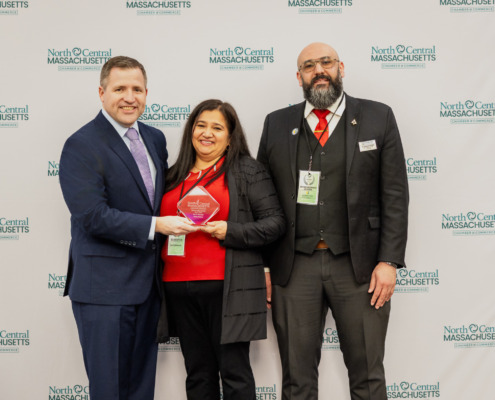

The reception features an open bar and gourmet appetizers.
View
Event
Join us for Connect North Central
Friday, September 25, 2026
8am-9am
View
Event
North Central Golf Tour Championship: Fore the Future
An FLNC Non-Traditional Scholarship Fundraiser
View
Event
Thank you Series Supporting Sponsor empHowered PR
View
Event
Join us for our 11th Annual
Congressional Luncheon
View
Event
Wednesday October 28, 2026
5:00pm - 7:00pm
View
Event
Join us for this in person HR Legal Update
View
Event
November 19, 2026
7:15am - 9:00am
View
Event
Chamber members are provided with the opportunity to engage with the Mayors of Fitchburg, Gardner, and Leominster who provide updates on projects and other things happening in their Cities. These events are by invitation only, please contact Travis Condon for more details.
View
Event
Bull Run Restaurant
215 Great Rd. Shirly, MA
View
Event
Join us for our last Connect North Central of the year!
Friday, December 11, 2026
8am-9am
View
Event
Chamber members are provided with the opportunity to engage with the Mayors of Fitchburg, Gardner, and Leominster who provide updates on projects and other things happening in their Cities. These events are by invitation only, please contact Travis Condon for more details.
View
Event

The finalists for this recognition represent the best of the best. To be selected as a finalist, the chamber must have demonstrated organizational strength and made an impact on key community priorities, such as education, transportation, economic development and quality of life. The North Central Massachusetts Chamber was one of four finalists in its category – along with chambers in Cumming, GA; Leesburg, VA; and Tuscaloosa, AL.
“This year’s finalists are among the most impactful organizations within the industry,” said ACCE President & CEO Sheree Anne Kelly. “Following a tumultuous year, these chambers emerged as community champions, providing catalytic leadership to address their region’s greatest challenges and opportunities for prosperity.”
“While we are disappointed that we were not selected as the final recipient, we are very honored and humbled to have had the North Central Massachusetts Chamber recognized as a finalist for the 2021 Chamber of the Year Award. While we don’t do the important work we do for the accolades and awards, it is still very special to be recognized as one of the best chambers nationally by our peers.” said Roy M. Nascimento, President & CEO of the North Central Massachusetts Chamber of Commerce. “We want to express our deep appreciation and gratitude to our Board of Directors, members, partners and communities for their contribution to our success.”
This is the second time that the North Central Massachusetts Chamber of Commerce has been honored as a finalist for the National Chamber of the Year Recognition – the first was in 2017. The North Central Massachusetts Chamber is the first chamber of commerce in Massachusetts and New England to have been named a finalist by ACCE for this prestigious and competitive recognition.
Monday, August 2 at 2:00pm
Registration required! Call 978-829-1789 or register online: www.fitchburgpubliclibrary.org

The International Flavor Awards works to provide small to medium sized businesses a platform to stand on and be judged against similar sized food companies. The Artisan Flave Awards competition uses a blind-judging process with a variety of food professionals, including: restaurateurs, purveyors, manufacturers, and members of the food-centric community. This was the first year that Bluesberry granola entered the competition and the third time one of Golden Girl Granola’s flavors has won an award in the “Granola” category.
“We are thrilled that Bluesberry received first place in this year’s Flave Awards!” said Deborah O’Kelly, owner of Golden Girl Granola. “To hold the distinction of having the best-tasting granola when compared to other quality artisan brands is truly special.”
The Flave Awards strive to bring value to food-based competitions and work to promote the outstanding products and companies that set themselves apart by being known as a “Flave Award Winner.” This year over 300 products from 10 different countries were placed into 29 categories, including the “Granola” category. The other categories included, but were not limited to: spicy blends, sweet treats, chutneys, jams and jellies along with other crunchy snacks.
About Golden Girl Granola: Golden Girl Granola™ is a family-owned and -operated business located in Shirley, Massachusetts and produces a branded line of gourmet granola products superior in taste and made from the highest-quality ingredients. Golden Girl Granola is a “Healthy Snack” alternative for health conscious consumers who appreciate good taste. Flavors include Forest Maple, Creative Cranberry, Bluesberry, Chocolate Decadence, Original, Home Sweet Honey, and Truly Tropical. Golden Girl Granola offers the complete line nationwide for Chain Supermarkets, Independent Supermarkets, Gourmet Food Stores, Club Stores and Convenience Stores.

When the workday ends and the lights go down, Custom Cleaning Service of Peabody, Inc. gets to work. “We operate as our clients’ silent partner after business hours,” says Adam Paicos, of Templeton, who now serves as Director of Operations and oversees the company’s expansion into North Central MA. “We are not often seen, but we ensure facilities are clean, secure, and ready for business each day while serving as the eyes and ears for our clients when they are not on site.”

Discover local business stories through our Inside North Central Massachusetts Podcast series. Listen as Chamber members share their journeys, insights, and contributions to our thriving regional business community.

Looking for your next opportunity? Explore current job openings from employers across North Central Massachusetts on our Jobs Board. Whether you’re starting a new career or making a change, you’ll find a variety of local positions available to help you take the next step.
CapEx Facility Services & Construction · Leominster, MA
TaraVista Behavioral Health Center · Harvard, MA
DRS Power Technology, Inc. · Fitchburg, MA
AIS · Leominster, MA