E-Newsletter
An Electronic Publication of the North Central Massachusetts Chamber of Commerce

Inside this edition, you’ll discover the latest Chamber initiatives and success stories from across our region. From economic development projects and upcoming networking events to policy updates and workforce training opportunities, we’re keeping you connected to what matters most for your business and North Central Massachusetts.
The North Central Massachusetts Chamber of Commerce is here to help – with trusted resources, a strong business network, and a support system to keep your business and the region moving forward
The temperatures may have suggested the dead of summer, but preparations were in full swing this week to welcome students and employees back to classrooms and offices in the fall with COVID-19 still swirling in the hot, humid air.
Gov. Charlie Baker set the bar last week with a no-alternative vaccine mandate for thousands of executive branch employees, but as his administration opened negotiations with unions on the details of that policy, other public officials and agencies used the administration’s approach as a blueprint.
Senate President Karen Spilka announced that all Senate lawmakers and staff would have to be vaccinated by Oct. 15, though the Ashland Democrat said the date for a full return to the State House — a building still closed to the public — remains undecided.
The Massachusetts Gaming Commission also followed the governor’s lead and voted to require the vaccination of all its employees by Oct. 27 as it prepares to fully reopen its downtown Boston office on Nov. 1. The commission is giving its workers two weeks to either prove they have been vaccinated, schedule an appointment or make their case for a religious or medical exemption.
“I absolutely think given the state of affairs this is the way to go,” Gaming Commissioner Eileen O’Brien said, alluding to infection rates that are on the rise.
Mandating vaccinations became an easier decision to make after the Food and Drug Administration gave full approval to Pfizer’s shot, no longer authorized just on an emergency basis. Still, work-from-home and hybrid models will be very much the norm as workers return from vacations and settle into a post-Labor Day rhythm.
While businesses and government agencies consider ways to structure a more flexible work environment, education officials are crossing their fingers that the days of remote learning are behind Massachusetts students and teachers.
With all schools preparing for a full reopening to start the 2021-2022 school year, Education Commissioner Jeff Riley secured the authority he needed from the Board of Elementary and Secondary Education to implement a universal masking mandate.
All students, teachers and staff over the age of 5 will be required to wear masks indoors, regardless of vaccination status, to start the school year as the Delta variant has fueled a resurgence of infections and students under 12 remain ineligible for a vaccine.
The board voted 9-1 to support the administration’s school masking plan, which would allow middle and high schools to revisit the issue after Oct. 1 if schools can achieve a vaccination rate of at least 80 percent.
Board member Paymon Rouhanifard cast the lone vote against masks, calling it “just, frankly, really bad public policy” to tie the proposal to vaccination rates. He said he thinks linking it to community spread of the coronavirus would have been a “more reasonable” alternative.
Republican Geoff Diehl, who is running for governor, said he believes the more reasonable thing to do would be to let parents make their own decisions about the health and safety of their children. Diehl, a former Whitman lawmaker, labeled Baker’s latest steps to control the spread of COVID-19 “government intrusion over parental and personal choices in our lives.”
Public opinion, however, is not exactly on Diehl’s side.
The most recent MassINC poll found broad support for masking in schools, even among Republicans. Democrats running for governor would like to see the boundaries pushed even further.
Sen. Sonia Chang-Diaz and Danielle Allen both called for vaccines to be made mandatory for school personnel, and Chang-Diaz suggested Baker start a public process now to begin developing a vaccine credentialing system as more businesses — for both workers and patrons — are beginning to require proof vaccination.
Attorney General Maura Healey, who is still deciding whether to join Chang-Diaz on the gubernatorial campaign trail, said she thinks it’s too soon to say whether vaccine passports would be beneficial, or even necessary given the ease with which some fear vaccine cards could be forged.
“If certain things need to be designed or systems created then I think we should be open to doing that. I just don’t have a sense right now, to be honest…of how pervasive this is as a problem,” Healey said during a radio appearance.
Baker was noticeably quiet this week, but also went on the radio to donate and help raise money for the Jimmy Fund, spending more time during his WEEI interview talking about Tom Brady and Charlie Watts than any public policy.
Baker did, however, record a two-part interview with Jon Keller that will begin airing this Sunday before he and First Lady Lauren Baker headed out of town for the weekend on a “personal trip” to Tennessee.
Speaking of travel, Congressman Seth Moulton made international news when he and U.S. Rep. Peter Meijer, a Michigan Republican, snuck away on a secret reconnaissance mission to Kabul in defiance of the State Department and other agencies.
Moulton and Meijer, both veterans, wanted to observe first hand the conditions on the ground as the United States continued to evacuate American and Afghan allies from Afghanistan, but the trip drew strong condemnation from many who accused the pair of staging a political stunt and distracting from the mission on the ground.
Moulton rebutted that criticism, and the pair was back on U.S. soil by the time the Kabul airport became the site of a deadly terrorist bombing that killed dozens, including U.S. soldiers.
The Bakers may be making the most of the waning days of summer, but chances to win $1 million by getting vaccinated are over.
The final two winners of the VaxMillions sweepstakes were drawn this week, with the prizes going to Leominster’s Cynthia Thirath and Gretchen Selva, a sophomore at Four River Charter Public School in Greenfield, who hopes to study music.
It may never be known how many of the 2.5 million entrants in the vaccine Lottery got the shot just for a chance to win, but Treasurer Deb Goldberg is convinced that at the end of the day it was a “win-win for everyone.”
Rep. Andy Vargas is hoping it will be a win-win just for him in the 2022 primary and general elections as the Haverhill Democrat first elected to the House in 2017 launched his campaign for state Senate this week. Vargas is running in the district currently represented by Sen. Diana DiZoglio, who is running statewide for auditor. If elected, he would be the first Dominican-American to be sworn into the Massachusetts Senate.
Long before that race is decided, a new state representative from the 4th Essex District will be seated in the House.
Rep. Brad Hill plans to leave next month to become the newest member of the Massachusetts Gaming Commission, and the House this week set the election dates to replace him. The primaries will be held on Nov. 2, followed by a general election on Nov. 30 as the Republican Party — down to 30 seats in the House — attempts to stop the bleeding and hold on to a seat held by Hill since he was first elected in 1998.
Trailing in new public and internal polls released this week that showed City Councilor Michelle Wu leading the pack to become the next mayor of Boston, Mayor Kim Janey pulled back the city’s waterfront redevelopment plan, casting fresh doubt on plans for 600-foot tower on the site of the Boston Harbor Garage next to the New England Aquarium.
There’s intense interest in what happens to Boston’s waterfront, and understandably so, but Hampden District Attorney Anthony Gulluni wishes just a little more attention could be paid to properties not along the eastern seaboard.
Gulluni pulled his staff from the Roderick Ireland Courthouse in Springfield on Wednesday where he said the conditions of the building had deteriorated so much that visible mold was growing in parts of the structure.
Until a remediation team could conduct a thorough decontamination of the building, Gulluni said prosecutors would only work inside on an as-needed basis for trials and other proceedings, but he also said it was time to put a more permanent solution on the books.
“I believe that if we were farther east this building would have been replaced a long time ago,” Gulluni said.
El North Central Massachusetts Development Corporation (NCMDC) and NewVue Communities, Inc (NewVue) are pleased to offer this one-time grant opportunity to small businesses in North Central Massachusetts. This program was designed to support vulnerable small businesses impacted by COVID-19 to assist with recovery and growth. Grants range between $500 – $5,000 for professional services. Applications will be accepted on a rolling basis until September 30, 2021 or until grant funds have been expended.
Eligible Use of Funds: Professional services
* Grant funds will be paid directly to consultant
Eligible business:
For more information please call 978.353.7600 Ext. 223 or email Maribel Cruz at or Sandie Cataldo at .
Massachusetts is poised to start its third pandemic-influenced academic year with a mask mandate in place across K-12 schools, after a 9-1 vote Tuesday by the Board of Elementary and Secondary Education.
Education Commissioner Jeff Riley said the mandate he plans to impose will require all students and staff to wear masks indoors through Oct. 1. After that date, Riley said, his department will “begin to look for off-ramps on masking in schools.”
“I want to be clear that we are hopeful that this will be a short-term measure, and we continue to work with the health and medical community on off-ramps for masking,” Riley said ahead of the vote.
He said he could not rule out the possibility that masks “may be required intermittently throughout the year” based on the path the virus takes.
Under Riley’s plan, starting in October, middle and high schools where at least 80 percent of students and staff have been vaccinated against COVID-19 would be able to lift the mask requirement, for vaccinated individuals only.

The Board of Elementary and Secondary Education convened virtually Tuesday for a vote authorizing Commissioner Jeff Riley to issue a mask mandate for K-12 schools. [Screenshot]
Education Secretary James Peyser said the policy would both ensure “that we have a smooth opening of school without any confusion or ambiguity about the health protocols that everyone is expected to follow” and “reinforce the importance of vaccinations.”
“Obviously, circumstances may change in the coming weeks, which may allow us to take a different course as the commissioner said, but for now the safest and simplest path forward is to mask up in schools as we all work to meet or exceed the 80 percent vaccination benchmark that we’re talking about,” Peyser said.
While it’s unclear how school district officials will gather the information, Riley told board members in a memo that the Department of Elementary and Secondary Education would provide schools with an attestation form they could submit to demonstrate they met the 80 percent threshold.
A shift from the Baker administration’s previous approach, the board’s vote comes after dozens of school committees, boards of health and other local officials across the state had already decided to require masks in their schools, often following lengthy debates at the local level.
Over the past month, more than 100 districts have put policies in place requiring universal masking when school starts, according to a list compiled by the Massachusetts Association of School Committees. With a combined enrollment of about 454,000, those districts serve half the state’s students.
State education and health officials had previously issued what Gov. Charlie Baker called a “strong recommendation” that students in kindergarten through sixth grade — as well as older students and adults who are unvaccinated — wear masks indoors. That recommendation did not require districts to adopt any particular policy, and Baker had said he believes local officials are best suited to make the calls for their communities.
On Friday, after the Department of Elementary and Secondary Education announced Riley would seek to impose a mask mandate, Baker characterized that move as “appropriate” and said “an ongoing conversation” about back-to-school among state and local officials has been “evolving for the past month or so.”
“I think the commissioner felt this would give everybody sort of what I would describe as a common place to start the year, as well as some pretty heavy incentives for those who can get vaccinated to get vaccinated,” Baker said. “I want to see more people get vaccinated, too. It really is the only way out of this.”
The Board of Elementary and Secondary Education received thousands of comments, mostly from parents, ahead of Tuesday’s meeting, member Martin West said.
West, who voted to grant Riley the authority, was one of three board members to speak during the 20-minute meeting and voiced concerns around “the lack of a clear end date or exit criteria for elementary school students who are not currently eligible for vaccination.” He also said he was not sure that requiring unvaccinated older students to still mask up while their vaccinated peers did not need to would work “on both practical and ethical grounds,” questioning how schools would know who had the shots and suggesting students might end up “tattling” on inappropriately maskless classmates.
The sole dissenting vote, Paymon Rouhanifard, said it was “just, frankly, really bad public policy” to tie the proposal to vaccination rates, and said he thinks linking it to community spread of the coronavirus would have been a “more reasonable” alternative.
“I’m old enough to remember how this all started,” he said. “When this all started, it was about flattening the curve, and the curve, you may recall, was about hospitalization rate and count, and all of a sudden, we’re now focused on case count, and I do believe the goal posts have shifted and there hasn’t been an honest discussion about that.”
Rouhanifard, the co-founder and CEO of Propel America and former superintendent of Camden, N.J. schools, said he was “genuinely surprised” that Baker backs the mandate because he considers the governor “to be really smart about technocratic policy solutions.”
“When this all started, and as our school reopening debate demonstrated, a debate about the pandemic and how we address it and policy solutions really became a debate about Trumpism itself and where you stand ideologically, rather than meeting in the messy middle to determine evidence-based policy solutions,” he said.
Board member Matt Hills, who praised state leaders as “unafraid to pivot” in their pandemic response, voiced confidence in Riley, describing the commissioner as someone who would not “just keep restrictions in place for the sake of it.”
Riley is authorized to issue the mask mandate under the state’s regulations around student learning time. Those regulations say that when the board declares — as it did in Tuesday’s vote — that exigent circumstances exist that hinder students’ ability to safely attend classes, the commissioner “shall issue health and safety requirements and related guidance for districts.”
As of Aug. 13, 57 percent of the Massachusetts population between the ages of 12 and 17, or 271,900 people, were fully vaccinated against COVID-19, according to federal data. A total of 333,070 members of that age group had received at least one dose.
The Food and Drug Administration on Monday granted full approval to the Pfizer/BioNTech vaccine for use in people age 16 and older, and those shots are also available to youth between the ages of 12 and 15 under an FDA emergency use authorization.
There is still not a COVID-19 vaccine authorized for kids under 12. State officials have said they hope that could change as soon as this fall, but there is not yet a clear timeline for how much of the coming school year will play out with younger students still ineligible for a vaccine.
The Centers for Disease Control and Prevention recommends universal indoor masking for all teachers, staff, students and visitors in K-12 schools, regardless of vaccination status. Locally, groups including the Massachusetts Medical Society and the Massachusetts Academy of Family Physicians have also said masks should be required indoors for everyone in schools.
Massachusetts Teachers Association President Merrie Najimy said the vote was “a significant advancement toward keeping our communities safe as we prepare for a return to full in-person learning.”
“Students of all ages have been champions from the beginning,” Najimy said in a statement. “They quickly learned an important lesson of life – that when they wear their masks, they are protecting their peers, educators, and the entire school community. Masks have become routine for them. We can count on students to do their part once again to help this comprehensive policy succeed as classes resume. As we have been saying for many months now, our top priority is to get our schools open safely and keep them open for full in-person learning. This vote is a step toward that goal.”

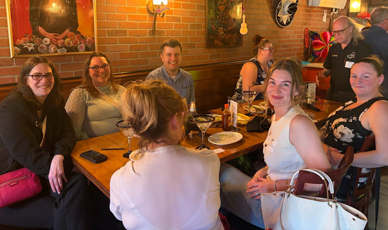
Chamber members are provided with the opportunity to engage with the Mayors of Fitchburg, Gardner, and Leominster who provide updates on projects and other things happening in their Cities. These events are by invitation only, please contact Travis Condon for more details.
View
Event
Bull Run Restaurant215 Great Rd. Shirly, MA
View
Event
Join us for our last Connect North Central of the year!
Friday, December 11, 2026
8am-9am
View
Event
January 14, 20277:15am - 9:00am
View
Event
Erin Logan | NBC 10 Reporter
View
Event
Chamber members are provided with the opportunity to engage with the Mayors of Fitchburg, Gardner, and Leominster who provide updates on projects and other things happening in their Cities. These events are by invitation only, please contact Travis Condon for more details.
View
Event

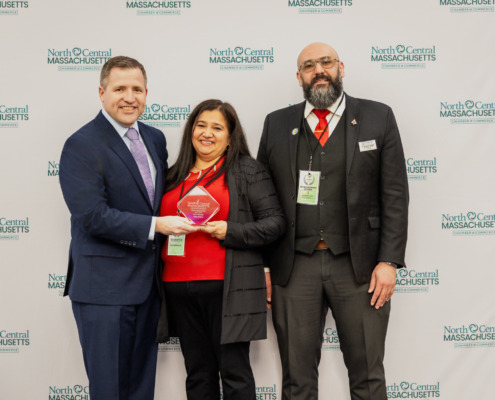
“John’s ability to connect with people enables him to provide personal attention to business owners who are seeking a friendly, trusted advisor when making financial decisions to bring their business to the next level,” said Sheila King-Goodwin, Senior Vice President, Chief Community Banking Officer, Fidelity Bank.
Pacheco has been with Fidelity Bank for nearly four years, most recently as Manager of the Leominster Connector Banking Center. In addition to his professional role at the bank, he also serves as a member of the bank’s Inclusion and Diversity Council.
“For the past several years, I have experienced the success of the Fidelity Bank LifeDesign approach to banking when working with my clients,” said Pacheco. “I have experience working directly with our small business owners, to give them clarity, confidence and care as a partner in helping them achieve their goals.”
A resident of Lancaster, he is a graduate of the University of Massachusetts at Amherst where he earned a bachelor’s degree in Biology and Sociology. He was recently recognized by the Worcester Business Journal as a 40 Under Forty recipient for the class of 2021.
In addition to his work at Fidelity Bank, he is a Founding Member of Impact Networking, a network of Leominster area business leaders, Secretary of the board for World Farmers, Inc., a member of the Advisory Council Board at Aging Services of North Central Massachusetts, and director of the New England Pride Colorguard LBTQI+ Performance Ensemble. He is also Past President of the Montachusett Rotary Club and serves as a coach for the Mansfield High School Fine Arts Department.
The US Department of Education has selected Mount Wachusett Community College to received funding under the Talent Search Program in two grants totaling $662,926.
Launched in 1965, the Higher Education Act created Talent Search. Along with the Upward Bound Program and Student Support Services, the three services make up the TRIO of federally funded programs aimed at encouraging access to higher education for low-income students.
Talent Search identifies and assists individuals from disadvantaged backgrounds who have the potential to succeed in higher education. Talent Search projects provide tutorial services, career exploration, aptitude assessments, counseling, mentoring, financial aid and college application assistance.
The first program, Educational Talent Search, was launched at MWCC in 1990. The grant of $385,551 enables MWCC to serve 695 middle and high school students from Fitchburg, Gardner, and Leominster public schools.
“I am looking forward to building upon the success that Talent Search has had over the past thirty years,” notes Ramon Gonzales, Director of Educational Talent Search.
The second grant program, the North Central Mass. Talent Search (NCMTS) was founded in 2011. NCMTS will use the $277,375 grant to serve 500 middle and high school students from seven public schools located in the communities of Athol, Clinton, Winchendon, Fitchburg, and Royalston, Massachusetts.
“Our Talent Search programs, and their talented staff, provide the critical boost needed for these students to access higher education,” states James Vander Hooven, President of MWCC. “These programs enable us to help students not only see their own potential, but to achieve it.”
The Talent Search programs are designed to prepare students to graduate high school and go on to complete a college degree. Two-thirds of students served under the Talent Search program students are low-income and have the potential to be the first generation in their family to complete college. The program objectives are improved persistence of students to the next grade level, high school graduation, college enrollment and degree completion.
The Talent Search programs are administered by the MWCC Division of Access & Transition, which also manages the colleges Upward Bound Math and Science program, GEAR UP, and Early College programs including Early College Academy, Gateway to College, and Pathways Early College Experience.
The North Central Massachusetts Private Well Program is actively seeking homeowners with private
wells in the communities of Berlin, Bolton, Boxborough, Hubbardston, Princeton, and Sterling who are interested in
learning more about the quality of their water, the condition of their wells, and how to remediate contamination of their
wells.
The Private Well Program is a community partnership created by RCAP Solutions, funded by a Synergy Initiative grant
from The Health Foundation of Central Massachusetts to address drinking water issues in the Northern Central
Massachusetts area totaling $629,000 to date. Now in its pilot year, the program is working with local Boards of Health
and other regional and statewide partners to promote better public health and safety for households with private wells.
During the next six months, RCAP Solutions is focusing on the six designated communities to provide complimentary
well assessments and testing to identify contamination and provide public education services to residents. This includes a
limited number of private well assessments, water testing, and additional resources for well owners. The goal of the pilot
program is to assess 40 private wells in each of six the selected towns, for a total of 240 assessments to be completed in
2021.
A second phase of this effort will include public education, advocacy for local and statewide private well regulations that
better protect homeowners and communities and that are on par with regulations for public water systems, and
identification of financial resources for homeowners needing well remediation. Unlike public drinking water systems,
private wells do not have experts regularly checking the water’s source and its quality before it is sent to the tap.
Households that use private wells should take appropriate steps to ensure the safety of their drinking water. Potential
contaminants such as arsenic, radon, and uranium can have both short and long-term health impacts.
The RCAP staff provides homeowners with a free, on-site professional review of their well head and recharge area. The
staff adheres to strict social distancing practices to keep the homeowners feeling comfortable and safe during the
coronavirus pandemic. The assessment concludes with a complimentary water test from a state-certified lab, which
otherwise can be a costly and time-consuming procedure. The water quality analysis tests for the following contaminants:
Arsenic, Chloride, Copper, Fluoride, Hardness, Iron, Lead, Manganese, pH, Sodium, Coliform Bacteria, Nitrate/Nitrite,
Uranium, and Radon. Interested homeowners can visit www.rcapsolutions.org/ma-private-wells for additional information
and to request a well assessment.
“We are thrilled to continue our partnership with The Health Foundation of Central Massachusetts in this important public
health project,” stated Karen A. Koller, President & CEO of RCAP Solutions. “Because there are no state-wide
regulations surrounding private well maintenance, it’s critical that homeowners in North Central Massachusetts, and
across the state, understand the importance of regular assessments and water testing. We are pleased to be able to fulfill
our mission and meet the needs of rural communities by providing this valuable technical assistance to private well
owners.”
Dr. Jan Yost, President & CEO of The Health Foundation of Central Massachusetts, added, “The Foundation is pleased to
continue its support of this important project that seeks to improve private well water quality through increased
knowledge and enhanced local and statewide regulations to protect the public’s health. The project’s pilot this year is an
important step towards ensuring that private well owners have access to clean and safe drinking water free of harmful
contaminants, which is essential to good health.”
RCAP Solutions is working closely with the Montachusett Public Health Network and the Nashoba Associated Boards of
Health to assist communities with promotional efforts and to ensure positive outcomes for homeowners. In addition,
RCAP is collaborating with the Massachusetts Department of Environmental Protection and ongoing efforts to address
per- and polyfluoroalkyl substances (PFAS) in drinking water.
For more information about the North Central Massachusetts Private Well Program, or to request a private well
assessment, please visit: http://www.rcapsolutions.org/ma-private-wells/
About RCAP Solutions, Inc.
RCAP Solutions is a thriving integrated community development corporation working with a multi-faceted suite of
services and opportunities. Established in 1969, RCAP Solutions’ mission is to foster personal and public self-reliance
and improve the quality of life for individuals, families, and the communities in which they live. For more information,
please visit www.rcapsolutions.org.
About The Health Foundation of Central Massachusetts
The Foundation was established in 1999 with the proceeds from the sale of Central Massachusetts Health Care, Inc., a
physician-initiated, not-for-profit HMO. As of March 2021, the Foundation has assets of around $90 million and has
awarded grants totaling approximately $48 million to improve the health of those who live or work in Central
Massachusetts. For further information about the Foundation’s grant programs, please visit the Foundation’s website at
www.hfcm.org.

When the workday ends and the lights go down, Custom Cleaning Service of Peabody, Inc. gets to work. “We operate as our clients’ silent partner after business hours,” says Adam Paicos, of Templeton, who now serves as Director of Operations and oversees the company’s expansion into North Central MA. “We are not often seen, but we ensure facilities are clean, secure, and ready for business each day while serving as the eyes and ears for our clients when they are not on site.”

Discover local business stories through our Inside North Central Massachusetts Podcast series. Listen as Chamber members share their journeys, insights, and contributions to our thriving regional business community.

Looking for your next opportunity? Explore current job openings from employers across North Central Massachusetts on our Jobs Board. Whether you’re starting a new career or making a change, you’ll find a variety of local positions available to help you take the next step.
CapEx Facility Services & Construction · Leominster, MA
TaraVista Behavioral Health Center · Harvard, MA
DRS Power Technology, Inc. · Fitchburg, MA
AIS · Leominster, MA