E-Newsletter
An Electronic Publication of the North Central Massachusetts Chamber of Commerce

Inside this edition, you’ll discover the latest Chamber initiatives and success stories from across our region. From economic development projects and upcoming networking events to policy updates and workforce training opportunities, we’re keeping you connected to what matters most for your business and North Central Massachusetts.
The North Central Massachusetts Chamber of Commerce is here to help – with trusted resources, a strong business network, and a support system to keep your business and the region moving forward
Governor Charlie Baker, Treasurer Deborah B. Goldberg and Attorney General Maura Healey announced the appointment of Representative Bradford R. Hill to the Massachusetts Gaming Commission (MGC). Per statute, two commissioners are appointed by a majority vote of the Governor, Attorney General and Treasurer. Representative Hill will fill the experience in gaming regulation and administration or gaming industry management seat. The Commission is bipartisan, with no more than three members representing the same political party. Representative Hill will fulfill the balance of a term that ends in 2025.
“Brad Hill has been a dedicated public servant for over two decades and has years of experience working with the Massachusetts gaming community,” said Governor Charlie Baker. “I am confident that he will be well-suited to serve in this new role during a transformative time in the Commonwealth’s gaming industry and am pleased to make this appointment.”
“In his decades of experience advocating for the residents of the Commonwealth and their needs, Brad Hill has a proven record of leadership on gaming policy,” said Lt. Governor Karyn Polito. “His demonstrated passion for the gaming industry, and his commitment to public service, will benefit the Commission and its work.”
“Brad Hill has spent his career advocating for our state and its residents,” said Attorney General Healey. “His knowledge of the gaming industry will be a great asset to the Commission during this critical time.”
“Representative Hill’s many years of business experience and public service, along with his commitment to serving our state, will positively impact the Gaming Commission and people of the Commonwealth,” said State Treasurer Deborah B. Goldberg, “We look forward to working with him in this new capacity and know that he will ensure fairness and equity as the industry continues to evolve.”
“It has been my distinct honor and privilege to serve the people of Massachusetts and the 4th Essex District for nearly 25 years,” said Representative Brad Hill. “I am deeply grateful to the Governor, Treasurer and Attorney General for this incredible opportunity to continue supporting the Commonwealth, and am eager to begin this new chapter working alongside my fellow Commissioners.”
The Massachusetts Gaming Commission was created after “An Act Establishing Expanded Gaming in the Commonwealth” was signed into law on November 22, 2011. The Commission is a five member independent body that is responsible for developing and managing the process to select, license, oversee, and regulate all expanded gaming facilities in the Commonwealth. The costs associated with operating the state’s gaming commission is paid for by the gaming industry and not by Massachusetts tax dollars.
The Chair of the Commission is appointed by the Governor; one member is appointed by the Attorney General (whose appointee must have a background in criminal investigations and law enforcement); and one member is chosen by the State Treasurer (whose appointee must be proficient in corporate finance and securities). The remaining two commissioners are appointed by a majority vote of the same three constitutional officers.
About Bradford R. Hill
Representative Bradford R. Hill has represented the 4ta Essex District in the Massachusetts House of Representatives since 1999, where he was appointed Minority Whip in 2009 and then Assistant Minority Leader in 2015. A former local official and longtime public servant, Representative Hill has served as a member of the Hamilton Zoning Board of Appeals and of the Ipswich Board of Selectmen, and also worked as a legislative staffer in the Massachusetts State Senate.
As State Representative, Representative Hill has worked to deliver bipartisan, commonsense results on issues such as coastal and environmental protection, education, criminal justice reform and healthcare for his constituents and residents of the Commonwealth. He has also been a determined advocate for the Massachusetts gaming industry and has authored and filed six pieces of legislation to authorize sports wagering.
A cancer survivor who received a bone marrow transplant in 2013 while continuing to serve in the House, Representative Hill resides in Ipswich with his wife, Aimee. They are the proud parents of two adult children, Zachary and Courtney.
The Community Leadership Institute is now accepting applications for the 2021-2022 program year. The Community Leadership Institute began in 1988, known then as Leadership North Central. Over the last 25 years, more than 275 participants have graduated from the Institute and become leaders in their communities, with over 100 in the last five years. Participants for the Institute are sponsored by their business and are seen as leaders or potential leaders within that company. The best leaders know that training their successors to be competent, knowledgeable and well-connected community leaders is crucial for the North Central Massachusetts community’s economic vitality. The Community Leadership Institute was developed to support the access to region’s many organizations, industries and business leaders as part of the succession plan not only for individual businesses but for the community at large in this 21st century technology and knowledge-driven economy.
Deadline to apply for the 2021-2022 Community Leadership Institute is August 27, 2021.
Please contact Kat Deal with questions regarding the Community Leadership Institute at 978.353.7600 ext. 235 or by email .
Governor Charlie Baker today is urging the people of the Commonwealth to prepare for Hurricane Henri, which is expected to affect much of the Commonwealth beginning Saturday night into Monday, including the potential for strong winds, heavy rain, flooding and power outages. The Baker-Polito Administration is advising everyone to avoid unnecessary travel and for those planning to visit the Cape or Islands this weekend to delay trips. For those that have already traveled to the Cape or Islands for the weekend, they are advised to consider leaving on Saturday or extend their travel plans through early next week.
Governor Baker also today activated the Massachusetts National Guard under state active duty to fulfill highwater rescue, debris clearing and public safety support from impacted communities. The activation order allows for up to 1,000 guardsmen and will remain in place until support is no longer needed.
Tropical Storm Henri is projected to become a hurricane and significantly impact much of Central and Eastern Massachusetts, including Cape Cod and the Islands, and the South Coast. Hurricane force winds and substantial storm surges in coastal communities are expected. Additionally, the majority of Massachusetts is projected to receive a significant amount of rain, particularly from Greater Boston to Worcester County. All residents are advised to begin storm preparations today, and to pay close attention to local weather reports to monitor the track of the storm.
Residents can call 2-1-1 to obtain disaster information and call local public safety non-emergency phone numbers or town halls for local questions. Property owners are encouraged to take photos or videos to document any damages to property and to contact their insurance company.
This storm could cause power outages impacting at least 100,000 residents, and possibly as many as 300,000, and utility crews are being staged to assist in restoring power. For power outage updates and specific restoration times by town, check the Eversource outage map at outagemap.eversource.com or call Eversource at 800-592-2000. Residents should use generators and grills outside because their fumes contain carbon monoxide and make sure their carbon monoxide detectors are working. People are also reminded to stay away from any downed utility wires.
The Baker-Polito Administration remains in close contact with the Massachusetts Emergency Management Agency (MEMA), National Weather Service, Massachusetts Department of Transportation (MassDOT) and State Police (MSP) to monitor the forecast and will work to alert the public with important updates or notifications.
MBTA: The MBTA is currently operating normal scheduled service on all modes, but anticipates delays or service disruptions, particularly in low-lying areas and sections of the rapid transit system where trains are powered by overhead wires. Keolis and the MBTA will closely monitor weather forecasts to assess expected and real-time conditions related to scheduled service and operations. The MBTA is encouraging its customers to get service information by signing up for T-Alerts, following @MBTA y @MBTA_CR on Twitter, and using the MBTA commuter rail app.
Highway Safety: Traveling during the storm is expected to be hazardous, and residents are advised to plan ahead and stay home if possible. Do not drive in flooded areas. Currently, it is projected that the Route 128/95 and Interstate 495 corridors will be heavily impacted Sunday through Monday.
Public Safety: In addition to 1,000 National Guard personnel available to assist local and state agencies, Massachusetts State Police have moved additional Marine Unit assets into southeastern Massachusetts and will be prepared to move additional personnel or equipment to the islands if necessary. Additional MSP sections and units will have personnel ready to deploy into affected areas to boost staffing, and Troop commanders will determine whether to hold over shifts or call in upcoming shifts early based on storm projections. The Department of Fire Services likewise remains in contact with fire departments on Cape Cod and elsewhere to provide support before, during, and after the storm.
DCR Closures: The Department of Conservation and Recreation (DCR) will close state campgrounds beginning Saturday at 11:00 a.m. through Monday evening. DCR anticipates reopening campgrounds Tuesday morning. Campers with reservations are being notified by DCR and will be provided with a full refund. All campers on DCR campgrounds must check out and exit the property by 11:00 a.m. on Saturday. Beginning Saturday at the close of guarded hours, DCR will close all state pools and coastal beaches through Sunday. Additionally, all DCR-managed inland waterfronts will be unguarded on Sunday. DCR strongly encourages residents to avoid visiting state parks throughout the duration of the storm due to high winds rain, and potential flooding, and will implement closures of certain access roads, parking areas and parkways as necessary to protect public safety.
The State Emergency Operations Center at MEMA Headquarters in Framingham is activated and closely monitoring the storm and forecast to provide situational awareness. Please visit www.mass.gov/MEMA to learn what you should do before, during and after a hurricane or tropical storm.
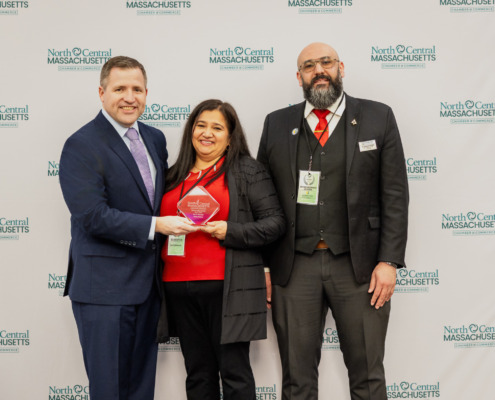

The reception features an open bar and gourmet appetizers.
View
Event
Join us for Connect North Central
Friday, September 25, 2026
8am-9am
View
Event
North Central Golf Tour Championship: Fore the Future
An FLNC Non-Traditional Scholarship Fundraiser
View
Event
Thank you Series Supporting Sponsor empHowered PR
View
Event
Join us for our 11th Annual
Congressional Luncheon
View
Event
Wednesday October 28, 2026
5:00pm - 7:00pm
View
Event
Join us for this in person HR Legal Update
View
Event
November 19, 2026
7:15am - 9:00am
View
Event
Chamber members are provided with the opportunity to engage with the Mayors of Fitchburg, Gardner, and Leominster who provide updates on projects and other things happening in their Cities. These events are by invitation only, please contact Travis Condon for more details.
View
Event
Bull Run Restaurant
215 Great Rd. Shirly, MA
View
Event
Join us for our last Connect North Central of the year!
Friday, December 11, 2026
8am-9am
View
Event
Chamber members are provided with the opportunity to engage with the Mayors of Fitchburg, Gardner, and Leominster who provide updates on projects and other things happening in their Cities. These events are by invitation only, please contact Travis Condon for more details.
View
Event
Ms. Joanna Belanger freelanced for Sitka Creations during 2020 and early 2021. Sitka Creations is pleased to announce that Ms. Belanger is now part of our in-house team, as of July 2021.
In early 2016 Ms. Belanger began working in social media while employed at a day spa in Central Massachusetts. Her commitment to working in social media became stronger when she saw the importance of these digital connections during the spring of 2020 as face-to-face connections were greatly reduced because of the pandemic. During this time, Ms. Belanger found creative ways to use social media connections to buoy sales of beauty products for the day spa while services could not be provided because of Covid-19 restrictions.
Ms. Belanger says of Sitka Creations, “I’m feeling very blessed to be working with the Sitka team! I love working with this group of strong, creative, and inspiring women! Sitka Creations has a lot to offer companies that are looking to stand out in both the physical and digital marketplace. I am excited to see what we will produce as we learn from each other and work together.”
Sitka Creations is a design studio that provides creative solutions for businesses through WP website design, graphic design, social media management, web hosting, photography, PR, and content writing. Women-owned and operated, located in Shirley, MA.

Victor Rojas, Assistant Director of GEAR UP, has been named GEAR UP Professional of the Year by the National Council for Community Education Partnerships (NCCEP) at their annual conference.
The Gaining Early Awareness and Readiness for Undergraduate Programs (GEAR UP) initiative is one of the largest and most effective programs focused on increasing college and career readiness of low-income students in communities nationwide. GEAR UP targets entire grades of students, partnering with local organizations and business, and matching Federal Department of Education funds with local contributions, allowing projects to support large number of students. The NCCEP leadership awards honors students, family leaders, community partners, and professionals from the GEAR UP community.
The GEAR UP Professional of the Year is awarded to an individual who is committed to the GEAR UP movement and the goal of ensuring that college access and success is available to all students. Through their work with GEAR UP, the awardee demonstrates the passion and perseverance to assist low-income students in their quest to attain a college education.
“As an educator, a soldier, a husband, a father, and proud grandfather, Victor encapsulates the GEAR UP mission,” NCCEP noted in a statement.
“In the past ten years, Fitchburg High School has achieved its highest level of attendance, graduation rates, students earning dual enrollment credits, students passing Advanced Placement tests, and our lowest suspension and dropout rates,” states Fitchburg High School Principal Jeremy Roache. “Mr. Rojas dogged efforts have much to do with those results.”
Twenty co-workers and community members submitted letters of recommendation to the NCCEP in support of Rojas nomination as Professional of the Year, detailing his qualities, accomplishments, and contribution to the success of the GEAR UP students.
“Victor is always committed to making sure 100% of students are receiving the support that GEAR UP promised. His work goes above and beyond,” noted Peter Chirichiello, GEAR UP Director. “When the school day is over, he is helping everyone with their college applications and financial aid forms. Even when our students were in sixth and seventh grade, he would stay late and make home visits. GEAR UP is not a job for Victor, it is a way of life.”
Born in Puerto Rico, Rojas moved to Fitchburg when he was very young and without speaking any English. Despite this hurdle, he excelled as a student in the Fitchburg Public School system, and went on to become the first in his family to graduate from college, earning his bachelors from Fitchburg State University and his Masters of Education from Cambridge College.
He became involved in the GEAR UP Program in 1999 when it was first introduced in Fitchburg. In addition to the countless students he has impacted, he has personally trained and mentored dozens of college access staff. His experience coupled with a strong sense of duty and responsibility has helped to build an entire cadre of dedicated college access professionals who are culturally competent, willing to go the extra mile for students, and who fully understand the importance of this work to the entire community.
“I have had the pleasure of working and supervising many passionate professional educators, but Victor stands in a special place amongst his peers. I have known Mr. Rojas for over twenty years and have witnessed, firsthand, his innate ability to build strong relationships with our students and extended families,” noted Craig Chalifoux, Director of Finance and Operations for Fitchburg Public Schools. “His passion is outweighed only by his compassion for families and the incredible obstacles they face as they enter the financial aid process and try to understand how this is even a possibility for their child. Victor is kind, understanding, and presents a sense of great hopefulness for families and students as they face longstanding institutional bias and systems that are set-up to disenfranchise so many of our families.”
“Victor is known as Mr. GEAR UP. He has worked on every GEAR UP grant at our institution since the very first grant in 1999,” added Shaunti Phillips, Academic Counselor. “Having walked the same path as many of his students, Victor is able to lead and guide them to be the best that they can be and achieve their dreams.”
“For years I have heard stories about Victor Rojas’ impact with students at Fitchburg High School. I have come to know first-hand how much Victor has transformed lives over the past twenty years,” says Fagan Forhan, Assistant Dean, K-12 Partnerships & Civic Engagement at MWCC. “Every time we are at a community event former students approach him to share their successes and tell the rest of us how much he helped them.”
Visit mwcc.edu to learn more about the GEAR UP Fitchburg program.
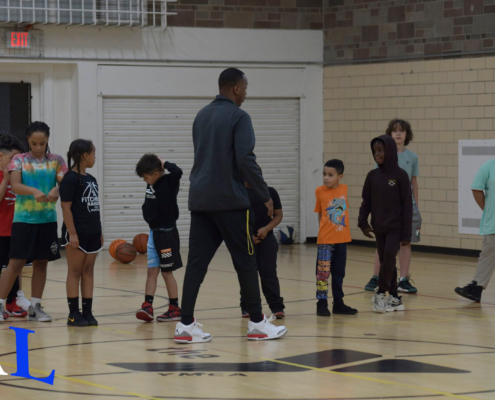
When the workday ends and the lights go down, Custom Cleaning Service of Peabody, Inc. gets to work. “We operate as our clients’ silent partner after business hours,” says Adam Paicos, of Templeton, who now serves as Director of Operations and oversees the company’s expansion into North Central MA. “We are not often seen, but we ensure facilities are clean, secure, and ready for business each day while serving as the eyes and ears for our clients when they are not on site.”

Discover local business stories through our Inside North Central Massachusetts Podcast series. Listen as Chamber members share their journeys, insights, and contributions to our thriving regional business community.

Looking for your next opportunity? Explore current job openings from employers across North Central Massachusetts on our Jobs Board. Whether you’re starting a new career or making a change, you’ll find a variety of local positions available to help you take the next step.
CapEx Facility Services & Construction · Leominster, MA
TaraVista Behavioral Health Center · Harvard, MA
DRS Power Technology, Inc. · Fitchburg, MA
AIS · Leominster, MA