Noticias de nuestros miembros

Brick Marketing Published The CEO’s Guide to Evaluating Marketing Performance

BOSTON, Massachusetts, November 16, 2026 — Brick Marketing announced the publication of The CEO’s Guide to Evaluating Marketing Performance, a resource for business leaders who want a clearer understanding of how marketing supports company growth. Written by Nick Stamoulis, President and Founder of Brick Marketing, the 42 page guide addresses the decisions behind better lead generation, stronger sales conversion and more accountable marketing management. Its intended audience includes CEOs, business owners and executive teams at midsize and enterprise B2B companies.
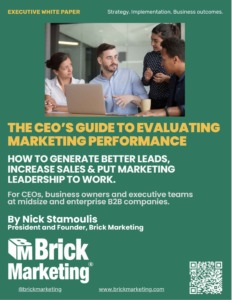
 

The CEO’s Guide to Evaluating Marketing Performance can be downloaded on the Brick Marketing website here:
https://www.brickmarketing.com/ceo-guide-evaluating-performance

The publication examines situations that can leave executives questioning their marketing investment. Spending increases without a corresponding improvement in sales. Reports show more contacts, but sales teams struggle to find qualified opportunities. Promising proposals stop moving. Employees and agencies remain busy while important business priorities wait for decisions. Across its chapters, Stamoulis explains how he would investigate these problems, organize a response and evaluate progress.

“I would not start that conversation by asking which marketing channel you should add. I would ask what the business needs marketing to accomplish and where the current approach is falling short,” said Nick Stamoulis, President and Founder of Brick Marketing. “Better lead generation, more qualified sales opportunities and stronger sales conversion all start with understanding what the business actually needs marketing to accomplish.”


Looking Beyond Marketing Activity
The guide begins with the relationship between marketing spending and the business objective it is supposed to support. Rather than treating a larger campaign budget as the automatic answer to disappointing sales, it asks leaders to examine what must happen between attracting attention and signing a customer agreement. That includes understanding the opportunity requirement, the business already under consideration and the specific gap marketing needs to help close.

This approach separates problems that need different responses. A company with too few suitable inquiries may need to reconsider its audience, message or offer. A company holding productive sales conversations but losing momentum before a decision may need better qualification or a clearer explanation of the purchase. Increasing promotion without identifying that distinction could leave the underlying problem untouched.

Lead quality receives particular attention. In one hypothetical software company example, 300 inquiries and content downloads appear encouraging until the records are examined. Of those contacts, 180 are outside the intended market, 90 represent suitable companies still researching and 30 may warrant further qualification. The exam

ple shows why a single lead total cannot explain the commercial value of a campaign.

Stamoulis also distinguishes early interest from an active purchase. Someone who downloads educational material may be a relevant future customer without having an immediate project. The guide recommends treating that relationship accordingly, while giving sales clear responsibility for inquiries that show a current business need. The objective is better judgment about who needs information, who needs a conversation and who is unlikely to become a suitable customer.

A hypothetical manufacturing example considers a different problem: inquiries for small replacement orders when leadership wants larger supply agreements. The guide explores how that mismatch can be addressed by explaining the operating situations the company is equipped to handle, presenting credible evidence and offering a relevant first conversation. More exposure alone is not the objective. The message must match the business being pursued.


Understanding Why Sales Opportunities Stall
Another section addresses the uncomfortable period after a positive sales conversation, when a proposal has been delivered but the buyer stops responding. The g

uide encourages companies to investigate what remains unresolved rather than assuming another reminder will change the outcome. A contact may understand the service but still need agreement from finance, operations or other people involved in the purchase.

The recommended response centers on information that makes the decision easier to evaluate. Depending on the situation, that might mean explaining the customer’s responsibilities, clarifying how implementation would begin or showing how progress would be reviewed. The guide makes a distinction between describing what a company sells and helping a buyer understand what purchasing it would require.

That discussion leads into shared responsibility between marketing and sales. Stamoulis recommends agreeing on what constitutes an inquiry, an accepted lead and a qualified opportunity, then applying those definitions to actual records. Each meaningful inquiry should have an owner. Rejected leads should have a documented reason. Relevant companies that are not ready to buy should not disappear simply because they do not belong in the current forecast.

The publication calls for an honest assessment of buyer progress. Positive conversations and completed proposals are not substitutes for confirmed next steps. Marketing can help address missing information and uncertainty, but sales remains responsible for the commercial conversation, and the customer retains control of the decision. That distinction gives leadership a more useful basis for reviewing opportunities.

Making Better Decisions About Spending and Profitability
For executives deciding which marketing programs to continue, the guide presents measurement as a management responsibility rather than an exercise in making every report look favorable. It examines how companies can distinguish the activity that introduced an opportunity from other interactions that supported it, without counting the same potential business several times.

It also calls for a fair comparison between programs with different purposes. An initiative designed to generate immediate project inquiries should not be reviewed in exactly the same way as one intended to build familiarity before a purchase becomes active. Both still need a defined audience, a spending limit, a review period and evidence relevant to their purpose.

The guide avoids treating a lengthy buying process as either automatic proof of failure or a reason to postpone accountability indefinitely. Suitable inquiries, s

ubstantive conversations and movement toward a decision provide information before a sale closes. At the same time, new activity should not receive credit for revenue that has not materialized. Leaders are encouraged to make the distinction visible in their reviews.

Profitability is part of the evaluation. Chapters on pricing and business expansion examine whether new work fits the company’s capabilities, delivery capacity and commercial requirements. The guide asks companies to explain meaningful differences in their offering rather than depend on unsupported claims or discounts. It also recommends validating a new service opportunity before promoting it broadly and committing resources the business may not be ready to supply.


Giving Teams Clear Direction
The publication also considers organizations that already have capable employees and agency partners but lack coordination. In those situations, adding another vendor or increasing production may not address the real difficulty. The guide describes how conflicting instructions, delayed approvals and missing ownership can prevent a business priority from advancing even when individual team members are completing their assignments.

Stamoulis recommends tracing an important initiative through the organization, identifying the decisions it requires and giving someone responsibility for moving the work forward. Sales, operations, marketing and outside specialists should understand both their own responsibilities and how their contributions fit together. Senior leadership should receive recommendations when a resource decision is needed, rather than another task list that leaves the underlying obstacle unexplained.

The final chapters examine when a fractional CMO or part time VP of Marketing may be appropriate. For a business with sufficient implementation resources, the missing role may involve setting priorities, coordinating teams, guiding agencies and explaining performance to executives. The guide presents fractional leadership as one

way to fill that defined need without assuming every company requires a permanent executive position.

It also explains where a full time leader may be the better choice. Organizations requiring continuous executive involvement, extensive people management or coordination across a large global function should evaluate the actual demands of the role. The comparison includes authority, availability, scope and the resources still needed to implement the work. A lower leadership cost is not presented as a substitute for adequate capacity.


A Starting Point for the Next Leadership Meeting
The guide closes by asking executives to choose one business outcome, identify where progress is breaking down and agree on who has the authority and resources to address it. The recommended discussion ends with a documented starting point, a change to be made and a review date. Its purpose is to turn concern about marketing performance into a decision that the organization can act on.

Readers can download The CEO’s Guide to Evaluating Marketing Performance through Brick Marketing’s website. The publication offers a way to prepare for discussions with internal teams, existing agencies or a prospective marketing leader, with attention to the business results those relationships are expected to support.


About Brick Marketing
Founded in 2005 and headquartered in Boston, Massachusetts, Brick Marketing provides digital marketing services, custom marketing training, marketing consulting and fractional CMO solutions. The agency brings strategy and implementation together to help companies pursue their marketing, sales and business goals. Brick Marketing has worked with more than 600 companies and provides services to businesses throughout the United States.

For more information about the Boston digital marketing agency, Brick Marketing:
https://www.brickmarketing.com
Rollstone Bank & Trust Welcomes Tammy Behringer to Lead Groton and Harvard Branches

New Market Manager brings 20-plus years of banking knowledge and a focus on customer relationships

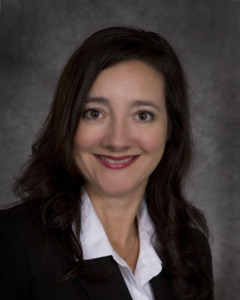
FITCHBURG, Mass. (November 16, 2026) — Rollstone Bank & Trust recently welcomed Tammy Behringer as Assistant Vice President, Market Manager, to oversee the Bank’s Groton and Harvard branches. Tammy brings more than 20 years of experience in retail banking and financial services, with expertise in branch leadership, operations, team development, and customer relationship management.

In her new role, Tammy will provide leadership across both locations, focusing on business growth, operational excellence, and building strong teams. She will work with employees and customers to strengthen relationships and provide personalized banking services that support individual and business financial goals.

“Tammy brings a wealth of banking experience and a people-focused approach to leadership,” said Marc Gravelle, Vice President, Director of Branch Administration

with River Run Bancorp, MHC, the mutual holding company for Newburyport Bank, Pentucket Bank, and Rollstone Bank & Trust. “Her background in developing teams, understanding customer needs, and building lasting relationships will serve our Groton and Harvard branches well. Welcome, Tammy!”

Before joining Rollstone, Tammy was Assistant Vice President, Branch Developer and Financial Wellness Coach at a regional credit union. Throughout her career, she has worked with individuals, families, and businesses, gaining experience in retail branch management, residential and consumer lending, and developing emerging banking professionals. Tammy is a certified Financial Wellness Coach.

“I believe strong banking relationships begin with listening and understanding what matters most to each customer,” Tammy said. “I’m looking forward to getting to know our clientele in Groton and Harvard, supporting our branch teams, and helping build lasting relationships grounded in trust and quality service.”

Tammy attended Becker College, where she graduated magna cum laude and earned a B.S. in Business Administration, with a concentration in management. She has served on the board of H.O.P.E. in Gardner, Massachusetts, and on the money management committee of Aging Services of North Central Massachusetts. Tammy plans to become involved with the Nashoba Valley and North Central Massachusetts Chambers of Commerce.

A resident of Westminster, Massachusetts, Tammy enjoys landscape and coastal photography, gardening, and spending time in Maine with her husband, Robert, and their pets, Skipper and Belle.

About Rollstone Bank & Trust

Founded in 1846, Rollstone Bank & Trust is a trusted community banking partner committed to strengthening the financial well-being of individuals, families, and businesses throughout North Central Massachusetts. Headquartered in Fitchburg, MA, the Bank provides a full range of personal and business banking services through multiple community banking locations. Guided by a long-standing tradition of service, relationships, and local investment, Rollstone Bank & Trust is dedicated to helping communities thrive. Alongside Newburyport Bank and Pentucket Bank, Rollstone Bank & Trust is supported by River Run Bancorp, MHC. Learn more at rollstonebank.com.


Celebrate the Holidays at Christmas at Ingleside

Experience the magic of Christmas with a festive horse-drawn carriage ride through Ingleside Park!

Whether you’re bringing the children, planning a special evening with someone you love, or simply looking to enjoy a little Christmas magic, we hope you’ll join us for this exciting new Toy Town Christmas experience!

We’re planning a seasonal holiday lighting display at Ingleside Community Park, with two special evenings of horse-drawn carriage rides on November 28 and December 12, from 4–7 PM. There will also be photos with Santa Claus, s’mores, hot cocoa, fire pits, local vendors, and other festive activities for families to enjoy.

Our goal is to make this an annual holiday tradition for Winchendon and the surrounding communities.

We’re currently seeking sponsors to help bring everything together. Sponsorships start at just $10 through our Light Up Ingleside campaign, where individuals can dedicate a light in honor or memory of someone special while helping fund the lighting displays. We also have several sponsorship opportunities available for local businesses.


More information can be found here:

Toy Town Christmas


River Run Bancorp Announces Two Key Leadership Appointments: Stacey Bennett and Renata Dragomaretski

Digital marketing leader brings expertise in digital strategy,  customer engagement, and data-driven campaigns

NEWBURYPORT, Mass. (October 27, 2026) — River Run Bancorp, MHC, is pleased to announce that Stacey Bennett has joined River Run Services as Vice President, Performance Marketing Manager. River Run Services operates under the umbrella of River Run Bancorp and supports its affiliated banks Newburyport Bank, Pentucket Bank, and Rollstone Bank & Trust.

Stacey joins the River Run marketing organization, bringing more than 20 years of experience in digital marketing, performance strategy and measurement, and client and team leadership to her role. Stacey will lead integrated marketing campaign planning and execution, overseeing project management, marketing collateral, and creative partner relationships across River Run’s affiliated banks. She will work closely with internal teams to align marketing initiatives with business objectives, track key performance indicators and return on investment, and use data-driven insights to measure effectiveness, optimize campaigns, and identify opportunities for growth.

“Stacey understands how to turn marketing insights into meaningful results,” said Vickie Routhier, Senior Vice President, Chief Marketing Officer with River Run Bancorp, MHC. “Combined with her agency experience, strategic thinking, and creative approach, our team will continue connecting marketing investments to measurable outcomes. We’re very excited to welcome Stacey to the team.”

Stacey joins River Run from an agency where she was Senior Director, Digital Growth & Client Strategy. Her background will support River Run’s efforts to deliver cohesive, customer-focused marketing initiatives, while maintaining the distinct identities and community connections of its affiliated banks.

“I’m excited to join River Run and contribute to an organization that places such a strong emphasis on relationships and community,” Stacey said. “I look forward to learning more about our banks and the customers they serve, and finding new ways to make our marketing efforts more effective and meaningful.”

Stacey holds a Bachelor of Arts degree in Public Relations. She serves on the Board of the Saint Lawrence Literary Society and is a member of the Massachusetts Chapter of Patriot Riders. A resident of Ipswich, Massachusetts, Stacey enjoys spending time with her family, camping, skiing, traveling, and exploring the outdoors.


Experienced banking professional brings expertise in commercial loan servicing, team development, and process improvement

River Run Bancorp, MHC, is pleased to announce that Renata Dragomaretski has joined River Run Services as Assistant Vice President, Commercial Loan Servicing Manager. River Run Services operates under the umbrella of River Run Bancorp and supports its affiliated banks Newburyport Bank, Pentucket Bank, and Rollstone Bank & Trust.

Renata brings to her new role 17 years of experience in retail banking and more than five years of experience in commercial loan servicing. Renata will manage the commercial loan servicing team, support process improvements and merger-related projects, and collaborate with departments across the organization to strengthen servicing processes and operational efficiency. Her responsibilities also include training and developing new team members, and monitoring compliance with regulatory requirements.

“Renata’s deep operational knowledge and commitment to service are a strong addition to our team,” said Valerie King, Vice President, Head of Loan Servicing with River Run Services. “Her experience across different areas of banking, along with her focus on developing people and improving processes, will help us build a more collaborative and effective servicing team. We’re delighted to welcome Renata to River Run.”

Renata added: “I look forward to finding ways to improve our processes, collaborate with my colleagues, and make a positive difference in the work we do together.”

Renata earned a Bachelor of Science in International Business from Salem State University and an associate degree in Business Management from Marion Court College. A resident of the New Hampshire Seacoast, she enjoys traveling and hiking with her family. Renata supports the Sunflower of Peace organization which helps alleviate poverty in Ukraine through fundraising as well as clothing and medical supplies donations.

About River Run

River Run Bancorp, MHC, is redefining the future of community banking by preserving the mutual banking model while empowering its affiliated banks to maintain their independent brands, local leadership, and deep commitments to the communities they serve. Established in 2023, and with collective assets of approximately $3.6 billion, River Run provides strategic leadership, shared resources, and enterprise capabilities to Newburyport Bank, Pentucket Bank, and Rollstone Bank & Trust.

Through River Run Bancorp and River Run Services, LLC, the organization combines the strength, stability, resources, and capabilities of a larger banking organization with the personal relationships, local decision-making, and community commitment that have long defined its affiliated banks. River Run is committed to strengthening and sustaining mutual community banking for generations to come. Learn more at riverrun.com.

Help Us Light Up Downtown Fitchburg This Holiday Season!

We’re getting ready for Fitchburg’s annual Holiday Lights & Tree Lighting Celebration, and we’re reaching out to invite our local businesses and community partners to help make downtown Fitchburg shine this holiday season! 🎄✨

On Sunday, November 29th at 5:30 PM, families will gather at the Historic Upper Common for an evening of holiday music, caroling, hot cocoa, cookies, pictures with Santa and the Grinch, and our annual tree lighting!

Beyond the celebration itself, we’re also working to replace and add holiday decorations and expand the festive lighting throughout downtown Fitchburg. These displays brighten our streets, welcome visitors, support our downtown businesses, and create a holiday atmosphere for everyone to enjoy.


Our fundraising goal this year is $15,000, with a focus on purchasing new, reusable decorations that will benefit Fitchburg for years to come.

We’ve created several sponsorship opportunities to make participation accessible to businesses of all sizes:

🎄 Presenting Sponsor: $3,000
✨ Holiday Glow Sponsor: $1,500
🌟 Community Lights Sponsor: $500
❤️ Friends of Holiday Lights: $100–$250

We also have opportunities to sponsor hot cocoa, cookies, new Main Street decorations, or contribute equipment, materials, and services.

Every contribution helps, and we’d love to have your business or organization involved!

We’ve attached our 2026 Sponsorship Package and event flyer with additional information and a sponsorship commitment form.

If you’re interested in participating, please reply all to connect with Chief of Staff Myles Phillips-Wilcox and Recreation Assistant Jainny Andrews en or 978-829-1816.


Fitchburg’s holiday traditions are made possible through the combined efforts of our City departments, volunteers, community organizations, and local businesses. Your support helps us continue these celebrations while investing in a brighter, more welcoming downtown.

Beacon Bank invests more than $460,000 in local nonprofits

Beacon Bank and the bank’s foundation invested more than $460,000 in its communities through charitable giving to over 150 nonprofit organizations in Massachusetts, New York, Connecticut, Rhode Island and Vermont from July to September.

“By investing in local nonprofits, we’re helping build stronger connections, improve lives and foster long-term community growth,” said Darryl Fess, president of the bank’s Boston region. “The strength of a community can be seen in the organizations that work every day to support its residents.”

Examples of nonprofits that received funding in the third quarter include:

• Fenway Community Development Corporation
• Hildebrand Family Self Help Center Inc.
• Just A Start Inc.
• Supportive Living Inc.
• 2Life Communities Inc.

Beacon Bank invests in the success and vibrancy of its local communities by supporting programs and organizations that focus on one of three areas: neighborhood revitalization and preservation, education and critical services.

Learn more by visiting the Community Support page on our website.

In all, 34 of Beacon Bank’s 145 branches are in the greater Boston area, including in Boston (5), Brookline (3), Medford (3), Wellesley (2), Malden, Chelmsford, Lexington, Arlington, Bedford, Burlington, Ipswich, Essex, Gloucester, Rowley, Danvers, Lawrence, Chestnut Hill, Needham Heights, Newton Centre, Newtonville, Chestnut Hill, West Roxbury, Waltham, Brighton and Braintree.

About Beacon Bank
Beacon Bank is a full-service, regional bank serving the Northeast and a subsidiary of Beacon Financial Corporation (NYSE: BBT). Headquartered in Boston, Massachusetts, the bank has $21.9 billion in assets and more than 145 branches throughout New England and New York. The company, through Beacon Bank, offers a full suite of tailored banking solutions including commercial, cash management, asset-based lending, retail, consumer and residential products and services. It also provides equipment financing through its Eastern Funding subsidiary, SBA lending through its 44 Business Capital division and private wealth services through Clarendon Private. To learn more, visit BeaconBank.com and follow Beacon on Facebook, Instagram, and LinkedIn.

Fitchburg to host Prescription Drug Take Back Day

Fitchburg, MA: The City of Fitchburg Health Department will again partner with the Fitchburg Police Department to participate in National Prescription Drug Take Back Day on Saturday, October 24, 2026 from 9am -11am at the Municipal Parking Garage, Upper level, 412 Main Street.

This initiative offers a safe, convenient and responsible way to dispose of unused prescription drugs and get them out of circulation. Residents are urged to gather unused, unwanted or expired prescription drugs and drop them off – you may “drive up and drop off” without leaving your vehicle. Although not required, labels containing personal information may be removed or blackened out. All materials are collected anonymously and will be taken directly by the Police Department to a regional drop off
site to be incinerated.

Held twice a year across the nation, Prescription Drug Take Back Day addresses a crucial public safety and public health issue. The Drug Enforcement Agency’s Take Back Day events provide an opportunity for Americans to prevent drug addiction and overdose deaths.

Fitchburg Outreach & Prevention will have substance use disorder information available as well as Narcan.

Governor Healey Announces $14.5 Million to Expand Career and Technical Education at Six Schools

Announced during STEM Week, new grants will expand hands-on training opportunities for approximately 500 additional students each year

FITCHBURG — Governor Maura Healey today announced $14.5 million in new grants to expand career and technical education (CTE) programs at six high schools across Massachusetts, creating opportunities for approximately 500 additional students each year to gain hands-on training and prepare for good-paying jobs. The funding, awarded through the new Career and Technical Education Annex Pilot Program, will help schools build and expand training facilities and offer more programs in high-demand fields including health care, information technology, manufacturing and the skilled trades.

The new grants build on Governor Healey’s efforts to increase access to career and technical education and address growing demand from students and families. The funding will help comprehensive high schools add CTE programs, increase enrollment capacity and partner with vocational schools, employers and colleges to provide students with career-connected learning opportunities, particularly in communities where access has been limited.

“Students across Massachusetts want more opportunities to learn a trade, gain hands-on experience and prepare for good-paying jobs, and we are delivering,” said Gobernadora Maura Healey. “We’ve made major investments to expand career and technical education, and these new grants will create more seats and bring training programs to more high schools. We’re opening doors for students to pursue careers they’re excited about while building the skilled workforce Massachusetts needs.”

“Career and technical education gives students real-world experience and a chance to discover what they’re passionate about,” said Teniente Gobernadora Kim Driscoll. “These investments are bringing schools, employers and communities together to create more opportunities for young people to explore careers, learn valuable skills and build successful futures right here in Massachusetts.”

The announcement was made at the Montachusett Vocational Partnership (MVP) Center in Fitchburg, highlighting how partnerships between comprehensive high schools and CTE schools can expand access to career training. Fitchburg Public Schools is receiving $3.5 million to establish a new Culinary Arts program through the MVP Academy, a partnership with Montachusett Regional Vocational Technical School (Monty Tech) and neighboring school districts. The funding will support construction of a new 2,500-square-foot MVP Café, featuring a commercial teaching kitchen and student-operated restaurant, creating 42 CTE seats annually while also supporting evening and weekend workforce training opportunities for adults.

“Too many students who want to pursue career and technical education have been unable to access these opportunities because programs are full or unavailable in their communities,” said Education Secretary Steve Zrike. “These grants will help us change that by creating more seats, modernizing learning spaces and supporting partnerships that bring hands-on STEM learning and career training to more students. The collaboration between Fitchburg Public Schools and Monty Tech is a great example of how schools can work together to expand access and create new pathways to college and careers.”

The investment builds on Governor Healey’s efforts to expand access to career and technical education and create more pathways for students to college and careers. The administration previously announced $70 million to expand career and technical education at 28 schools across Massachusetts, creating up to 2,500 additional seats for students. Together with the new CTE Annex Pilot Program grants, these investments are helping schools increase training capacity, modernize facilities and expand access to hands-on learning opportunities that prepare students for careers in high-demand industries.

“As we celebrate STEM Week and lift up careers in STEM-related fields, we’re excited to be able to offer more students access to career and technical education programs,” said Elementary and Secondary Education Commissioner Pedro Martinez. “CTE programs, whether in CTE schools or more traditional high schools, are great preparation for in-demand fields such as manufacturing, health care and information technology.”

“This grant is an incredible investment in our students and the future of vocational education in North Central Massachusetts. When we created MVP Academy, our goal was simple: to provide more students with opportunities to explore careers and develop skills that will prepare them for life after high school,” said Fitchburg Public Schools Superintendent Jon Thompson. “The addition of a Culinary Arts program is another exciting step forward in that mission. I’m incredibly proud of what we’ve accomplished through our partnership with Monty Tech, Gardner, and Narragansett, and grateful to the Healey-Driscoll Administration for recognizing the importance of expanding these opportunities. This investment will open new doors for our students and help meet the growing workforce needs of our region.”

“Today was a wonderful display of partnerships that work from schools across the Commonwealth.  While we are certainly excited to have an opportunity to expand the MVP Academy to include a Culinary Arts training program, we are delighted to see other schools across the Commonwealth working to develop similar models of their own.  From what we have seen, this is the most cost effective way to expand access to vocational training, while remaining true to the rigorous, comprehensive model of vocational education that Massachusetts is known for,” said Montachusett Regional Vocational Technical School Superintendent-Director Tom Browne. “Watching Secretary Zrike engage with MVP students reminds us why we do this work, and how these students are engaging with learning on a new level.  Discussing their projects, showing such great pride in their work – that is what it is all about.  We are grateful for the continued investment in MVP Academy and students across North Central MA.”

Grant recipients include:

  • Everett High School — $1,014,000: To modernize and expand its Medical Assisting and Programming and Web Development programs through renovated instructional spaces, a new clinical simulation laboratory and upgraded technology. The improvements will create approximately 95 additional seats, increasing capacity from 105 to 200 students and expanding opportunities for hands-on training and industry credentials.
  • Fitchburg High School — $3,500,000: To establish a new Culinary Arts program through the Montachusett Vocational Partnership (MVP) Academy, including construction of a 2,500-square-foot MVP Café with a commercial teaching kitchen and student-operated restaurant. Developed in partnership with Monty Tech and neighboring school districts, the program will provide 42 vocational seats annually and support evening and weekend workforce training for adults.
  • Haverhill High School — $3,210,056: To expand Health Assisting and Information Support Services and Networking programs through approximately 3,828 square feet of new instructional space, including a health care simulation center and technology innovation laboratory. The expansion will create approximately 140 additional vocational seats and support a satellite technology repair program where students gain experience maintaining municipal technology.
  • Newburyport High School — $3,101,500: To expand Advanced Manufacturing and Health Assisting programs through specialized training facilities, including a health care laboratory and advanced manufacturing equipment for CNC machining, 3D printing and fabrication. The investment will expand access to hands-on learning and industry-recognized credentials, preparing students for careers in health care, engineering and advanced manufacturing.
  • North Middlesex Regional High School — $675,000: To establish new Public Safety and Construction Craft Laborer programs, providing hands-on training in emergency response, firefighting, law enforcement and the building trades. The programs will strengthen partnerships with employers and labor organizations and prepare students for apprenticeships, further training and careers in high-demand fields.
  • Watertown High School — $3,000,000: To establish new Carpentry and Electrical programs through specialized instructional facilities and hands-on training environments. The programs will expand access to skilled trades education and prepare students for apprenticeships and careers in construction, electrical services and related industries.

The CTE Annex Pilot Program is funded through the Fair Share surtax and supports capital improvements, facility expansions, long-term leasing of additional space and other investments needed to increase access to career and technical education. Projects are expected to be completed by June 2028.

The announcement is part of Massachusetts STEM Week, taking place October 19–23, with this year’s theme, “STEM Starts Now.” The statewide celebration brings together schools, colleges, employers and community organizations to highlight STEM education and career opportunities for learners of all ages.

The administration is also marking the second day of STEM Week with events highlighting hands-on science education and workforce development opportunities. Following the announcement in Fitchburg, Education Secretary Zrike visited Sky View Middle School in Leominster, an early adopter of OpenSciEd, to observe students participating in the curriculum. OpenSciEd is a research-based, open-source science curriculum that engages students in hands-on investigations, scientific inquiry and real-world problem-solving. Later in the day, administration officials also visited Middlesex Community College to highlight expanded Pathmaker workforce training opportunities in industries including advanced manufacturing, artificial intelligence, defense, climatetech and life sciences.

Statements of Support:

Senate President Karen E. Spilka (D-Ashland):

“Career and technical education has the power to reshape Massachusetts. Quality education supported by grants like these can prepare our young people to fill high-paying jobs in parts of the economy where skilled workers are sorely needed. At the same time, this kind of education lifts people up and closes the opportunity gaps that divide us. I’m thankful to my Senate colleagues who joined me in pushing for these investments, and I’m grateful to Governor Healey and Lt. Governor Driscoll for putting this program into action.”

Senator John Cronin:

“Every student deserves the opportunity to explore their interests and see a future for themselves in a career they’re excited about. I am deeply grateful to the Healey-Driscoll administration for investing in our students and supporting partnerships like the one here in Fitchburg. The new MVP Café will give students the chance to put their culinary skills to work in a restaurant setting, serving their community as they learn. This investment will help young people pursue rewarding careers and contribute to a stronger local economy here in North Central.”

Representative Ken Gordon, House Chair of the Joint Committee on Education:

“Expanding career and technical education programs creates opportunities for students to develop the skills and hands-on experience they need to pursue their chosen careers. These grants are an investment not only in our students’ futures, but also in strengthening workforce development across the Commonwealth.”

Representative Michael Kushmerek:

“This $3.5 million investment for Fitchburg Public Schools will expand career and workforce training opportunities for students and adults, particularly those most marginalized in our community, while strengthening our regional economy. Thank you to the Healey-Driscoll Administration for your commitment to career and technical education and for investing in opportunities that help ensure that every single student has access to the life changing opportunities of vocational education”

Representative Margaret Scarsdale:

“When I toured the MVP Academy last year, I saw firsthand the incredible work being done to help students discover their interests and fine-tune valuable skills for their futures. I am thrilled to see these opportunities expand through the addition of a new Culinary Arts program. Career and technical education create paths to rewarding careers, and I am grateful to the Healey-Driscoll Administration and the partnership between Fitchburg Public Schools and Monty Tech for this investment in our students and workforce.”

Representative Aaron Saunders:

“This Funding has been a game changer for hundreds of families in Western Mass and provided our students the opportunity to pursue the educational path they wanted. The grant from Governor Healey not only eliminated the waitlist, but also kept our community from having to shutter a school building in the center of town. This is a win across the board.”

Representative Meghan K. Kilcoyne:

“Vocational education is an essential aspect of our public school system. I am excited to see expanded access to career training to better prepare individuals to enter the workforce and contribute to local communities and economies.”

Renovated and Expanded Fitchburg Public Library to Open in June 2027

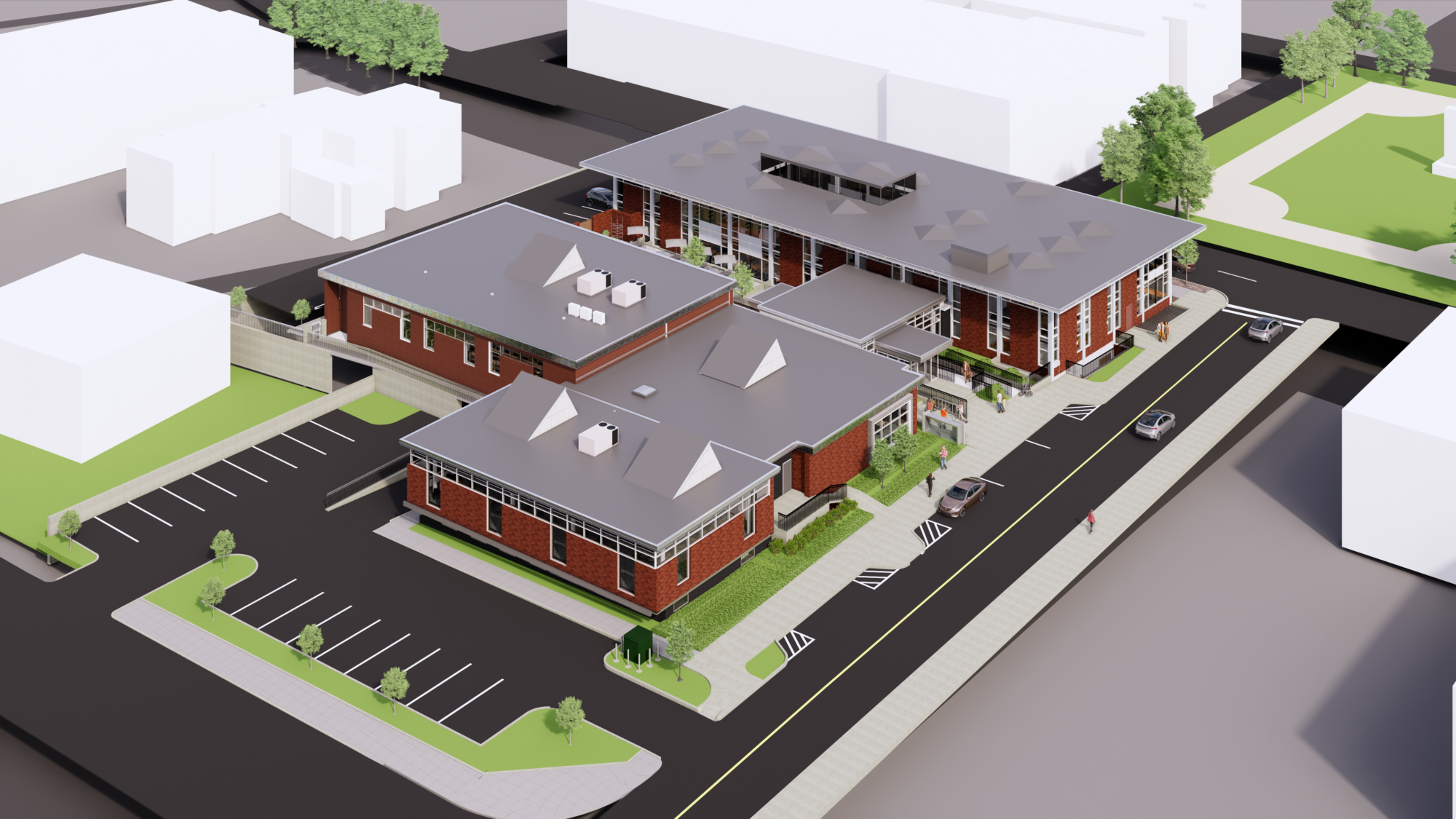
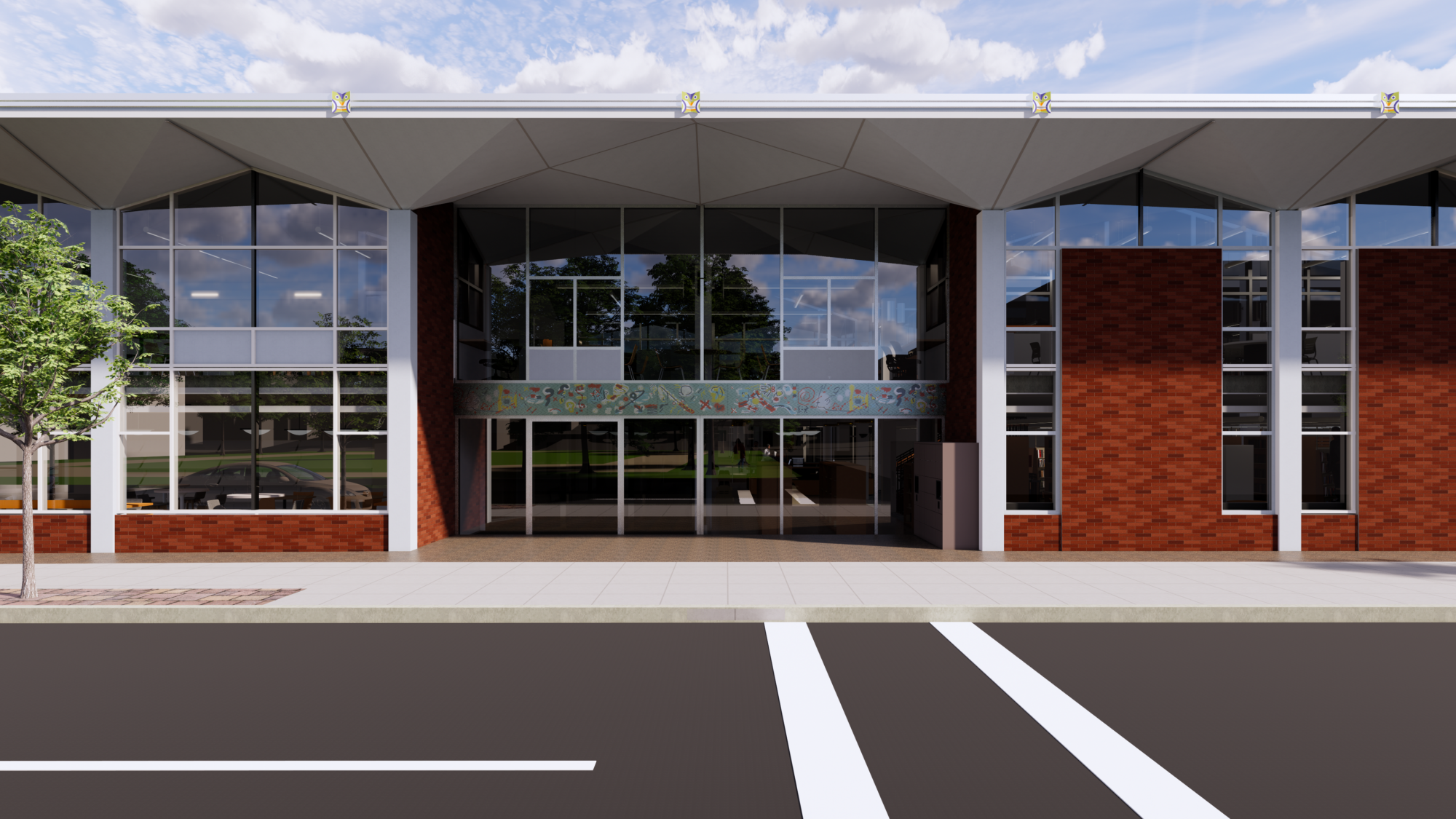
FITCHBURG, Mass.—The renovated and expanded Fitchburg Public Library will open its doors at 610 Main St. in June 2027.

The new date represents a delay from the original completion schedule, but the additional time will ensure the delivery of a truly transformative project. The new library will be a state-of-the-art destination for the community, offering expanded technology, improved accessibility, and vibrant programming and learning spaces designed to serve the residents of Fitchburg and the surrounding region for decades to come.

“We are profoundly grateful to the city, state, and federal leaders for their vital investments and ongoing partnership throughout this project,” said Fitchburg Public Library Board of Trustees Chairman Matt Bruun. “Their leadership and financial commitments have been instrumental in turning this vision into reality, preserving a historic landmark while creating a dynamic hub for lifelong learning, technology, and community connection.”

While work on the Main Street building is completed, the library’s temporary quarters at 166 Boulder Drive will remain open to patrons.

The funding mix for the building project includes a grant from the Massachusetts Board of Library Commissioners (MBLC), an allocation from the City of Fitchburg’s American Rescue Plan Act (ARPA) funding, city appropriations, and the $3.5 million Offering a World of Learning (OWL) Capital Campaign.

Since the renovation and expansion began, a number of factors have led to increased costs for the Fitchburg Public Library project, as well as others supported by the MBLC grant program. In response, the MBLC authorized additional funding to bring these previously approved projects to completion. As a result, in addition to the $12.5M originally granted, a further $1.4 million was awarded for the Fitchburg Public Library effort. Those escalation funds, and interest generated on the prior allocations for the project, will cover the remaining costs to bring the project to completion.

Following substantial completion of construction this winter, crews will work on furniture, fixtures and equipment to prepare the building for the general public. The OWL Capital Campaign was launched to cover those expenses, with a goal of $3.5 million. The campaign team is proud to announce the $3.5 million target has been met.

“We are grateful to the individual, corporate, and foundation donors who have recognized the impact and promise of the Fitchburg Public Library building project and thank them for investing in the future of our community,” said OWL Capital Campaign Co-Chair Sharon Bernard. “Our gratitude extends to the capital campaign committee members who have joined me in leading this effort by showing the transformative impact this project will have on the city of Fitchburg and the population we serve.”

The OWL Campaign was also supported by a $1 million gift from the Fitchburg Public Library Board of Trustees. The donation comes from the Wallace Trust Fund, created to support future capital needs when the Library’s Wallace Building was opened in 1967.

There are still opportunities for donors to make an impact on the project and support future building needs. The Legacy of Learning campaign provides donors an opportunity to be recognized for their gift with a personalized book spine that will appear on a custom bookshelf installation–created by students at Montachusett Regional Vocational Technical School–in the library lobby.

Additional information on the Legacy of Learning project can be found on the Library’s website at fitchburgpubliclibrary.org and clicking on the “Building Project.”

Fitchburg Projects Awarded $9.345 Million in State Funding for Housing, Infrastructure and Downtown Redevelopment

City infrastructure awards and Underutilized Properties investments will support housing production, adaptive reuse of vacant buildings and continued downtown revitalization

FITCHBURG, MA – Fitchburg projects have been awarded a combined $9.345 million through the Healey-Driscoll Administration’s FY27 Community One Stop for Growth, bringing significant state investment into the city for infrastructure, housing production and the redevelopment of vacant and underutilized properties.

Of the total, $8.5 million is being awarded directly to the City of Fitchburg for three major infrastructure projects:

– $5 million from the MBTA Communities Catalyst Fund for the Moran Square Improvements project;

– $2.5 million from the MassWorks Infrastructure Program to support Eleanor’s Lofts at 21 Depot Street; and

– $1 million from the MassWorks Infrastructure Program to support Main Street Lofts at 280-288 Main Street.

An additional $845,000 in Underutilized Properties Program awards is coming to Fitchburg through MassDevelopment, including $695,000 for NewVue Communities and $150,000 for Watch Us Grow LLC, bringing the total FY27 One Stop investment in Fitchburg projects to $9.345 million.

Together, the projects demonstrate Fitchburg’s strategy of pairing private redevelopment of vacant and underutilized buildings with public investment in the infrastructure necessary to support housing, businesses and stronger neighborhoods.

“These awards are all part of one strategy: building the infrastructure that allows Fitchburg to continue producing more housing,” said Mayor Samantha Squailia. “Housing development involves collaboration with private and public partners to bring new units online, while we also invest in the streets, utilities, connections and public spaces that support those neighborhoods. We will now work to connect infrastructure improvements with housing production and continued downtown revitalization. We appreciate the Healey-Driscoll Administration for recognizing that communities need both the housing and the infrastructure to support it.”

The projects are directly associated with approximately 302 new housing units, along with new commercial, coworking and community space.

Mayor Squailia also recognized Senator John Cronin and Representative Michael Kushmerek for their continued partnership and advocacy for Fitchburg’s housing and economic development priorities at the State House. “Senator Cronin and Representative Kushmerek have been strong partners in this work, and I appreciate the time and effort they continue to put into advocating for Fitchburg and helping us connect our local priorities with state resources,” Squailia said. “These projects only happen when the City, our legislative delegation, the Administration and our private and nonprofit development partners are all working in the same direction.”


Moran Square: $5 Million

The largest award will provide $5 million through the MBTA Communities Catalyst Fund to reconstruct and improve the historic Moran Square gateway into downtown.

The project includes intersection reconfiguration, new traffic signals and lighting, full-depth pavement reconstruction, drainage improvements, accessible sidewalks and pedestrian areas, streetscape improvements and better bicycle and pedestrian connections. The work will also address longstanding stormwater and flooding concerns in the area.

The infrastructure investment directly supports the redevelopment of the long-underutilized warehouse at 64 Main Street into Railside Lofts, a 36-unit residential development immediately adjacent to Fitchburg’s Intermodal Transportation Center and the future northern terminus of the Twin Cities Rail Trail.

The improvements also complement significant housing activity already underway nearby, including 34 units planned at 280-288 Main Street and additional permitted housing developments within the surrounding downtown area, with 44 units of mixed-income housing on 10 Main St completed in 2023.

“This is what coordinated redevelopment looks like,” Commissioner of Public Works Nicholas Erickson said. “We are improving the gateway, renewing aging infrastructure, addressing drainage and traffic concerns, making the area safer for people walking and biking, connecting residents to transit and the rail trail, and creating the conditions for vacant buildings around Moran Square to become productive properties again.”


Eleanor’s Lofts: $2.5 Million

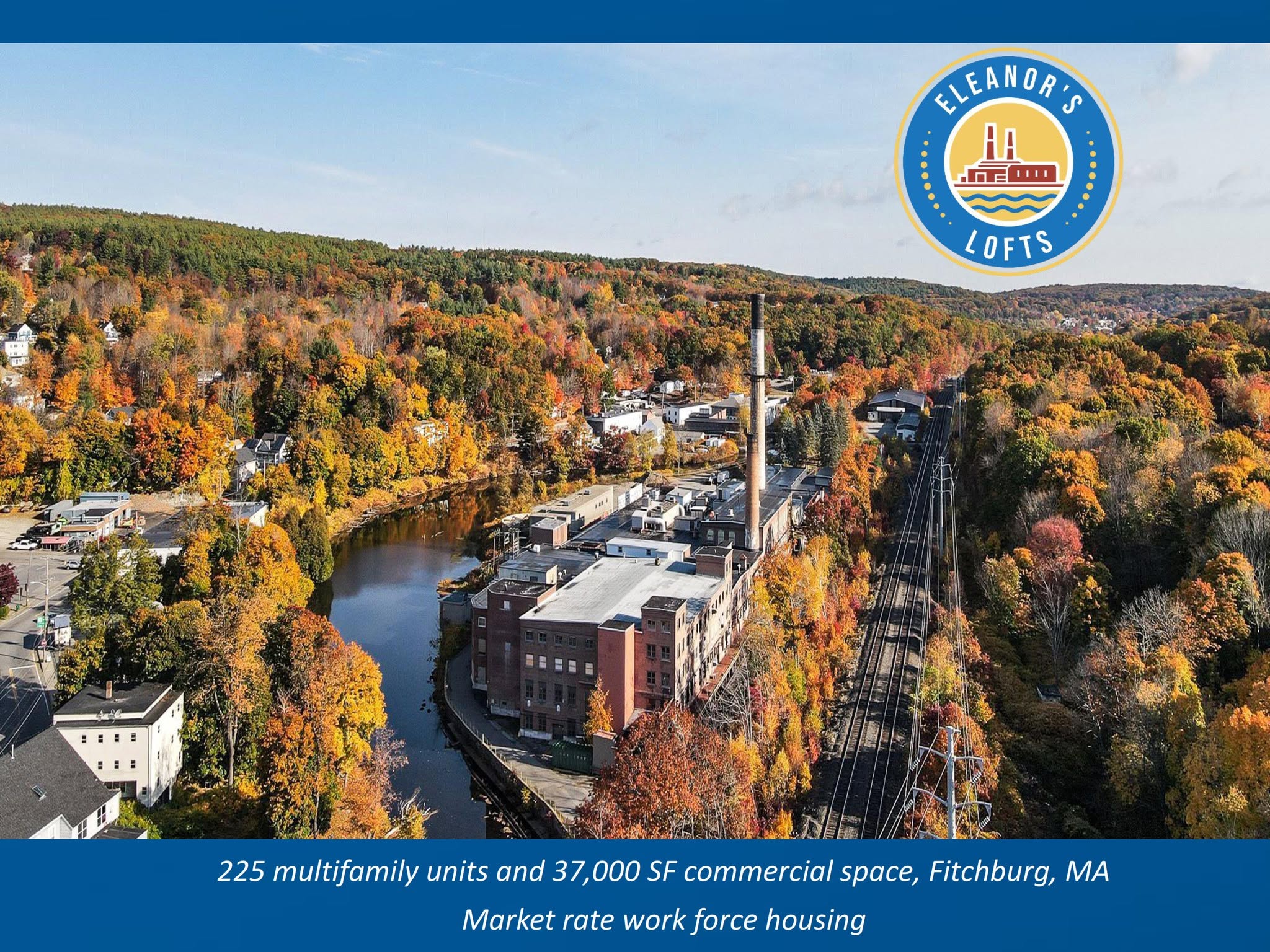
Fitchburg will receive $2.5 million through MassWorks to improve Depot Street in conjunction with the redevelopment of the former Ahlstrom-Munksjö paper mill into Eleanor’s Lofts.

The historic industrial complex is being transformed into approximately 225 workforce and market-rate apartments, including family and senior housing, along with approximately 37,000 square feet of commercial and community space.    

The state-funded public infrastructure work will include roadway reconstruction, pedestrian safety improvements, traffic-calming measures, intersection upgrades, lighting, streetscape improvements, a new MART transit stop with passenger amenities and improved public access around the redevelopment.

The project brings housing production, environmental cleanup, historic preservation, riverfront reinvestment and private development together on the former industrial site.


Main Street Lofts at 280: $1.15 Million in Combined State Investment

The redevelopment of 280-288 Main Street will receive $1.15 million through two complementary state awards, pairing investment in the building itself with improvements to the public infrastructure surrounding it.

A $1 million MassWorks award to the City of Fitchburg will support reconstruction of the Main Street frontage, ADA-accessible curb cuts, stormwater improvements and utility upgrades necessary to support the redevelopment. In addition, Watch Us Grow LLC will receive $150,000 through MassDevelopment’s Underutilized Properties Program to support the rehabilitation of the building itself.

The long-vacant, five-story historic property will be converted into 34 apartments y approximately 2,500 square feet of coworking and commercial space. Built in 1897, the property has remained one of the largest underutilized buildings along the Main Street corridor.

Together, the two awards demonstrate Fitchburg’s broader redevelopment strategy: invest in both the private building and the public infrastructure around it so difficult adaptive-reuse projects can move forward. The completed project will bring housing and commercial activity back to a prominent downtown building within walking distance of the MBTA Commuter Rail station, businesses, restaurants, cultural institutions and public services.


470 Main Street: $695,000

NewVue Communities will receive $695,000 through MassDevelopment’s Underutilized Properties Program toward the redevelopment of 470 Main Street.

The prominent mixed-use Main Street property currently includes housing, commercial space and NewVue’s headquarters. A significant portion of its commercial space has remained vacant since the former TD Bank branch closed in 2020. NewVue plans to convert surplus commercial and storage space into seven additional residential units, bringing the building to 38 total mixed-income apartments, while retaining two smaller Main Street commercial suites better suited to current market demand.

The project will create additional housing while preserving commercial activity along Main Street and putting currently underutilized space back into productive use. The planned housing will include a mix of affordability levels, including project-based voucher units, LIHTC-restricted units, workforce housing and a small number of unrestricted market-rate apartments.


Coordinated City-State-Private Partnership

These awards reflect a broader approach Fitchburg has been pursuing: reuse existing buildings and neighborhoods, work with private and nonprofit developers willing to undertake difficult rehabilitation projects and pursue state resources to address the public infrastructure that makes those projects possible.

The Commonwealth’s Community One Stop for Growth is specifically designed to coordinate housing and economic development investments across multiple state agencies and programs. The state describes the program as an active partnership with municipalities in economic development strategy and investment. Massachusetts Government

“Fitchburg has a tremendous opportunity to turn long-vacant and underused properties into productive parts of our community” Liz Murphy, Director of  Community Development and Planning said. “Instead of watching vacant buildings continue to deteriorate, we are working collaboratively to bring them back to life. That means housing upstairs, businesses and community space where appropriate, safer streets and sidewalks outside, stronger utility systems underneath, and new property value that helps support City services. The State has been an incredible partner in helping Fitchburg connect all of those pieces.”

These five awards are part of more than $326 million in FY27 Community One Stop for Growth investments being announced statewide by the Healey-Driscoll Administration.

The awards will now proceed through the Commonwealth’s contracting process. The City will continue working with the Executive Office of Economic Development, the Executive Office of Housing and Livable Communities, project developers and other partners to move each project toward construction.