E-Newsletter
An Electronic Publication of the North Central Massachusetts Chamber of Commerce

Inside this edition, you’ll discover the latest Chamber initiatives and success stories from across our region. From economic development projects and upcoming networking events to policy updates and workforce training opportunities, we’re keeping you connected to what matters most for your business and North Central Massachusetts.
The North Central Massachusetts Chamber of Commerce is here to help – with trusted resources, a strong business network, and a support system to keep your business and the region moving forward
After months of pandemic-induced delays, the U.S. Census Bureau on Thursday released the local-level population and demographic data from the 2020 count of the nation’s population, triggering a sprint to redraw the boundaries of the state’s legislative and Congressional districts over the coming months.
The 2020 Census counted 7,029,917 people living in Massachusetts, a 482,288-person or 7.4 percent increase over the last decade that outpaced the 4.1 percent average in the Northeast and equaled the growth rate of the country as a whole. The state’s growth has been uneven, likely requiring the western Massachusetts districts represented by U.S. Rep Richard Neal and U.S. Rep. Jim McGovern’s western/central district to be expanded in size to meet the 781,497-constituent target set by Census officials, while the footprint of eastern districts close to Boston may need to shrink or shift west.
Armed with the detailed local data showing population gains in all 10 of the largest Bay State cities — Boston (+58,053), Worcester (+25,473), Springfield (+2,869), Lowell (+9,035), Cambridge (+13,241), New Bedford (+6,007), Brockton (+11,833), Quincy (+9,365), Lynn (+10,924) and Fall River (+5,143) — and decreases in Holyoke (-1,642), Pittsfield (-810), North Adams (-747) and Westfield (-260), the Legislature can truly begin the process of reshaping voting districts to account for shifting population centers with a few sometimes-conflicting priorities in mind, like maximizing minority representation and protecting incumbents.
Outside the 10 most populous cities, Lawrence saw the greatest population growth (+12,766) followed by Revere (+10,431), Everett (+7,408), Haverhill (+6,908) and Malden (+6,813). Secretary of State Bill Galvin said Thursday afternoon that Massachusetts now has nine cities with more than 100,000 residents and Worcester, the state’s second-largest city, has surpassed 200,000 residents for the first time.
“We’ve had significant changes within our state. We’ve seen cities grow dramatically … Many of the suburban communities grow as well,” Galvin, the state’s liaison to the Census, said. He added, “Particularly gratifying was seeing some of the communities that we were most concerned about, where we knew there were significant populations of non-native born persons, being fully counted. So, for instance, the city of Lawrence is now at 89,000, a dramatic gain. The city of Revere had the greatest percentage gain. The city of Chelsea, one of the concerns we constantly expressed, is now at 40,000 people. The city of New Bedford is at 102,000 people. These are all communities that, even to the last days of the Census, we were constantly struggling to make sure people were counted in those communities.”
The only two counties in Massachusetts to shed residents over the last decade were Berkshire (-2,193) and Franklin (-343). Every other county saw population growth, led by the gains of 128,917 people in Middlesex County, 75,913 people in Suffolk County and 66,670 people in Essex County. By growth percentage, Nantucket County led the way with a 40.1 percent gain (an increase of 4,083 people).
That’s at odds with the national trend, the U.S. Census Bureau said Thursday. Across the country, less than half (47 percent) of the nation’s 3,143 counties gained population over the last decade.
Galvin said the new numbers from the Census mean that Congressional districts will include 781,000 people, state Senate districts will include more than 175,000 people and state House of Representative districts will include almost 44,000 people.
“So all of these districts are going to have to change. And there’s going to have to be some significant adjustment made,” Galvin said. “Just to take Boston because it’s the largest city as an example, Boston appears to have gained — did gain — 58,000 people. That means it probably would gain an additional, potentially an additional, seat in the House of Representatives.”
The Special Joint Committee on Redistricting, led by Assistant House Majority Michael Moran and Senate President Pro Tempore William Brownsberger, has already held more than 18 hearings on the redistricting process and is expected to hold more public hearings once its proposed district maps are available.
Moran told the News Service on Thursday that the committee’s third-party vendor is working now to put the latest Census data into a format that meets the committee’s parameters. Once it is, lawmakers will begin diving into the numbers and digesting it with the testimony from redistricting hearings.
But he is also mindful of the Census Bureau’s plan for another data release — the Census says it will be the same data but presented in different formats — by Sept. 30. Moran said the committee has to use official Census data and “given the Census’ credibility in the last year and a half,” he is not considering the data released Thursday to be the official numbers.
“My job isn’t to be first on this stuff, my job is to be correct,” Moran, who led the last round of redistricting for the House, said. He added, “As far as I’m concerned and the House is concerned — and I think you’ll see Senator Brownsberger is in a similar position — our job is to get it right. And we’re going to look at these numbers when they’re in a safe space for us to look at them.”

There could be other proposed maps in the mix as well. Senate Minority Leader Bruce Tarr and Republican Sen. Ryan Fattman plan to oversee the redistricting process for the Senate minority caucus and are leaving their options open as they scrutinize the fresh data, a Tarr spokesman said. For the House Republicans, Rep. Paul Frost will serve as the redistricting point person.
“Whether the caucus produces its own proposal will be dictated in large part by what the preliminary maps look like, but we certainly plan to offer our input throughout this important undertaking and will be working to ensure that the entire process remains open and transparent,” House Minority Leader Brad Jones said.
Shortly after the data was made available, advocates with the Drawing Democracy Coalition said they plan to use it to produce the organization’s own “unity map” that would keep communities together and ensure equitable representation for Black, Indigenous, Latinx, and Asian-American communities, people of color, immigrants, and low-income communities. The group said it plans to eventually submit its map to the Special Joint Committee on Redistricting.
“Redistricting is a once-in-a-decade opportunity to better ensure authentic representation and open new opportunities for building power for BIPOC, immigrant and low-income communities,” the coalition said in a statement. “Especially as efforts are underway across the country to restrict access to voting, it is more important than ever to ensure that voters can elect representatives of their choice. While today’s release of the redistricting data is several months delayed, the Drawing Democracy Coalition is confident that, along with the Special Joint Committee on Redistricting, we have a strong plan in place to ensure that the process remains fair and transparent and that the new district maps are approved by the November 8, 2021 deadline.”
State representatives planning to seek reelection in 2022 must reside within their district boundaries for at least one year ahead of time, making Nov. 8, 2021 a soft deadline for the new maps that would give candidates a chance to ensure they can be eligible for next year’s election.
Drawing Democracy said it has already received and shared with the Special Redistricting Committee 99 “community of interest” map submissions “providing valuable insight from local residents into what areas of their communities are most important to keep together.”
Once the group’s unity map is drafted, it will go through “extensive legal review” to make sure that it is in compliance with the Voting Rights Act, the Equal Protection Clause of the 14th Amendment, the Massachusetts Constitution and state laws. Drawing Democracy plans to solicit input from its coalition members at five virtual listening sessions, make any necessary tweaks and then present it to the legislative committee for consideration.
“During redistricting in 2011, the final maps approved by the legislature closely resembled the unity map presented by Drawing Democracy,” the group pointed out Thursday in its announcement.
Thursday’s data release from the U.S. Census Bureau follows its April release of congressional apportionment data, which provided total state headcounts to be used to determine each state’s number of U.S. House of Representatives seats and in funding formulas. Massachusetts added 482,288 people since the last Census in 2010, ensuring that its delegation to the U.S. House will remain the same size rather than shrinking by one as happened after the 2010 count.
But that April data was not enough to draw maps of voting districts within states because it did not get into the granular details like where in a state people live, or their age, race and ethnicity.
The redistricting data released Thursday gets down to the individual Census block, counts only residents (the apportionment data also includes “federally-affiliated” people living overseas), and includes race, ethnicity and some housing information. It became available Thursday in what the Census called a “legacy format” that states, redistricting software vendors and groups like the National Conference of State Legislatures are familiar with.
The Census plans to release the same data in manners more accessible to the public by the end of September, including through the data.census.gov platform. Governors, state legislative leaders and any redistricting commissions around the country will get DVDs and flash drives with an integrated data browsing software by the end of next month.
But by then, the Brennan Center for Justice at NYU School of Law said, “many states are expected to start and potentially even complete their map-drawing processes.”
Are you looking to start your career, make a career change or shorten your commute?
Land your next job at the WorkNorthCentral Hiring Event! The Hiring Event will be held on Tuesday, September 28th at Great Wolf Lodge in Fitchburg, MA. The event is FREE for job seekers!
Job seekers will be able to take advantage of full day of programming including a Resume Workshop, Interview Skills Workshop, “What are our resources?”, Social Media and Job Searching, a Presentation on Jobs in Manufacturing, a Presentation on Career Counseling, Free Headshots by Habakkuk Media Services – Photography and Portraiture and Prize Raffles through the day.
The WorkNorthCentral Hiring Event will have over 25 employers ranging from banks, healthcare, education, non-profit, manufacturers and many more. To see a full list of the hiring companies or register for the Hiring Event, visit NorthCentralMass.com.
In a partnership with the Massachusetts Office of Business Development and MassDevelopment, the North Central Massachusetts Chamber of Commerce will be hosting state economic development officials for one-on-one appointments with local developers, manufacturers and business owners. The meetings are an opportunity to discuss any specific matters related to their business or the expansion of their business, as well as to review state resources available to support business growth and expansion.
Kevin Kuros, Central Massachusetts Director for MOBD and Rob Anderson,
Vice President of Business Development for MassDevelopment will be available at the Chamber office by appointment on Tuesday, September 14, 2021 between 2:00 p.m. to 4:00 p.m. The appointments are in thirty minute increments and are first come, first serve. The meetings are free and confidential, available on a non-discriminatory basis, and are handicapped accessible.
MOBD helps businesses relocating to Massachusetts and businesses wishing to expand their current operations here. MOBD is responsible for managing the state’s Economic Development Incentive Program (EDIP) which provides tax credits for qualifying business expansion projects. In addition, they provide information on other state economic development programs, including the state’s R&D tax credit, the Mass Life Science Center tax incentives, the Workforce Training Fund grant program, the Mass Clean Energy Center programs, the STEP grant offered through the Mass Office of International Trade and Investment and other state resources.
MassDevelopment, the state’s quasi-public finance and development agency provides real estate and equipment loans and other programs to support manufacturers, non-profit organizations and developers of rental housing. In addition, they also manage the state’s Brownfields Tax Credit Program, Low Income Housing Tax Credit (LIHTC) and New Markets Tax Credit Program.
For more information or to schedule an appointment, please contact the North Central Massachusetts Chamber of Commerce at (978) 353-7600 ext. 222.
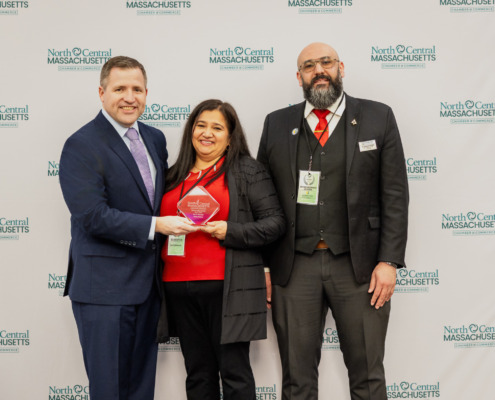

The reception features an open bar and gourmet appetizers.
View
Event
Join us for Connect North Central
Friday, September 25, 2026
8am-9am
View
Event
North Central Golf Tour Championship: Fore the Future
An FLNC Non-Traditional Scholarship Fundraiser
View
Event
Thank you Series Supporting Sponsor empHowered PR
View
Event
Join us for our 11th Annual
Congressional Luncheon
View
Event
Wednesday October 28, 2026
5:00pm - 7:00pm
View
Event
Join us for this in person HR Legal Update
View
Event
November 19, 2026
7:15am - 9:00am
View
Event
Chamber members are provided with the opportunity to engage with the Mayors of Fitchburg, Gardner, and Leominster who provide updates on projects and other things happening in their Cities. These events are by invitation only, please contact Travis Condon for more details.
View
Event
Bull Run Restaurant
215 Great Rd. Shirly, MA
View
Event
Join us for our last Connect North Central of the year!
Friday, December 11, 2026
8am-9am
View
Event
Chamber members are provided with the opportunity to engage with the Mayors of Fitchburg, Gardner, and Leominster who provide updates on projects and other things happening in their Cities. These events are by invitation only, please contact Travis Condon for more details.
View
Event
Collaboration resulted in more than $1.3 million for small businesses in North Central Massachusetts
As the COVID-19 pandemic created several challenges for local business owners, Fidelity Bank, the North Central Massachusetts Chamber of Commerce and its economic development arm, the North Central Massachusetts Development Corporation, collaborated to process and service more than $1.3 million as part of the Paycheck Protection Program (PPP). Of this total, more than $660,000 in PPP loans were part of the Urban Agenda Grant Program, which promotes economic vitality in urban neighborhoods and a means of supporting urban small business owners affected by COVID-19.
A survey conducted by the chamber following the launch of the federal PPP program concluded that some businesses did not fit into the federal programs, and that many underserved and minority businesses were unable to access traditional banks for PPP loans.
“We live in the communities with our clients which enables us to have a unique perspective to understand the importance of ensuring our local businesses prosper, especially when challenges occur out of their control,” said Ed Manzi, Chairman and CEO, Fidelity Bank. “By collaborating with the chamber and its development corporation, we were able to utilize our unique LifeDesign banking approach and provide assistance and clarity to get critical funding support to underserved small businesses who otherwise would not have obtained funding.”
As part of the Urban Agenda Initiative, the North Central Massachusetts Chamber of Commerce partnered with New Vue Communities, Reimagine North of Main, the Spanish American Center, and the Cities of Fitchburg and Leominster, to provide technical assistance and access to resources. The Chamber and its partners focused outreach efforts to reach underserved and vulnerable small businesses in the community. The average amount of the loans made was just $15,000.
“What started as emergency financing to help small businesses until the federal government responded evolved over time into providing PPP loans directly to businesses who could not secure them through other sources,” said Roy M. Nascimento, President and CEO, North Central Massachusetts Chamber of Commerce. “We also expanded our team to respond to the urgency of the underserved businesses and we now have a multi-lingual member on the team to support outreach for our Latino businesses, which comprise the largest minority group in the region.”
The development corporation processed 72 loans in round two of the PPP loan program, with Fidelity Bank servicing 64 of those loans. All of the loans were approved.
“Fidelity Bank was part of a coalition of other financial institutions in the area, including BankHometown, Berkshire Bank, Digital Federal Credit Union, Main Street Bank and Worker’s Credit Union to serve our vulnerable business owners,” added Nascimento. “Regardless of the fact that these banks are likely competitors, they all came together to do what was right by the businesses in our communities.”
Two of the businesses that obtained critical funding support from the second round of PPP loans through this collaboration were Lucy’s Furniture in Fitchburg, and Pablo’s Paint and Remodeling in Leominster.
“As the owner of Lucy’s Furniture, I want to thank the Chamber of Commerce and Fidelity Bank for assisting me with the Small Business Association PPP application,” said Wilson Arrua, Owner, Lucy’s Furniture. “During the pandemic, the upholstery business was very slow which resulted in being late on my bills. With this loan, I was able to become current on my payments and it helped get me through the pandemic.”
Pablo Ortiz, Owner, Pablo’s Paint and Remodeling said of the loan assistance, “Thank you very much to the Chamber and Fidelity Bank for your valuable help to process the PPP loan. This funding helped us stay afloat despite the terrible situation with the pandemic.”
“The past year and a half proved that when we work together, we can survive and thrive regardless of the circumstances that surround us,” said Manzi. “Fidelity Bank was here to help, and we remain an active participant in our community to ensuring all of our clients, both individuals and businesses alike, have a caring partner to guide them through opportunities and challenges and get them where they want to be.”
Experts in banking centers to provide exceptional service for online, mobile and remote banking
As the demand for online banking increased during the pandemic, Fidelity Bank recently announced the appointment of four digital bankers who are bringing the LifeDesign Banking approach to a digital world to help clients get where they want to be.
Launched in February 2020, digital bankers are available to respond to client inquires received via telephone, fax, email and webchat, and also support clients who have questions about digital banking when they are visiting one of the bank’s 14 banking centers.
The four digital bankers are:

Mary Hanlon, serving the Stow business center

Raymond Ayala, serving the Millbury business center

Angelina Pedersen, serving the Paxton business center

Christine Morrison, serving the Princeton business center
When comparing first quarter 2020 to first quarter 2021, Fidelity Bank experienced an increase of 36 percent in mobile app visits, an increase of 244 percent in online chat sessions and a 258 percent increase in submitted web forms as the banking centers were closed and available only via drive-thru due to COVID-19 guidelines.
“During the pandemic, we realized the opportunity to help clients in a digital world by bringing the experience of our banking centers to those who need to obtain service online,” said Sheila King-Goodwin, Senior Vice President, Chief Community Banking Officer, Fidelity Bank. “Our digital bankers are experts in our C.A.R.E. process by connecting, analyzing, recommending and executing products and services to our clients and utilize our LifeDesign Banking approach to help clients in all lines of business find the solution they need.”
In addition to service related to Fidelity Bank products, digital bankers can also help small business owners with navigating online accounting software, such as Quickbooks®, and individuals with online payment applications, such as Apple Pay®. Clients will also receive personalized onboarding services when opening new accounts, including follow-up on debit card and check delivery, as well as overall satisfaction of online services.
To learn more about digital banking at Fidelity Bank, visit https://www.fidelitybankonline.com/personal-banking/checking-accounts/online-mobile-and-text-banking/
The Community Foundation of North Central Massachusetts has granted Mount Wachusett Community College $30,000 to continue the highly successful work of the MWCC Student Stabilization Scholarship Fund.
The MWCC Student Stabilization Scholarship Fund was established during the early months of the COVID-19 and has provided support to students to cover unmet costs for tuition, fees, and books. The scholarship fund has two funding priorities, with recipients selected in a collaboration between MWCC’s student retention office, the Thrive Center, and the Office of Student Financial Services.
The MWCC Thrive Center team members actively reach out to students who have been identified as candidates for the scholarship. The Thrive Center specialists will continue to track and provide proactive counseling services to help students successfully complete their education.
“The past 16 months have been most difficult,” stated MWCC President James Vander Hooven. “Our students have struggled. In our own ways, each one of us have struggled. I am so thankful for the support of the Foundation, and our Thrive Center staff who worked tirelessly to help these students.”
“The crisis hit our students hard and in unexpected ways and is still impacting them dramatically as the crisis continued into 2021,” stated Shelby Shaw, MWCC’s Director of Retention and Thrive Center. “We look forward to continuing the successes of last year and helping even more students this year.”
One such success story is husband and wife Kevin and Andrea Techera. The assistance provided by the grant enabled them to complete their associate degrees in May, both achieving the Deans List, while helping their daughters with remote learning. In the fall, Andrea will be continuing her pursuit of a PhD in psychology, and Kevin will continue towards a bachelor’s degree with the goal of a career in the growing biotechnology sector.
Challenges such as job loss, increased responsibilities for those in “essential jobs” and home/virtual schooling responsibilities for student-parents have turned students lives upside down. Additional challenges faced by students include the death of loved ones, increased childcare responsibilities due to the closure of schools and childcare faculties, their role as essential workers and mental health struggles. In the face of these difficulties, over 604 students residing in North Central Massachusetts have been forced to stop their education, possibly never to return. The availability of this funding enabled MWCC to assist 28 students in 2020 with direct scholarship assistance, wrap around support and advising services. The college seeks to support 30 students with the 2021 grant.
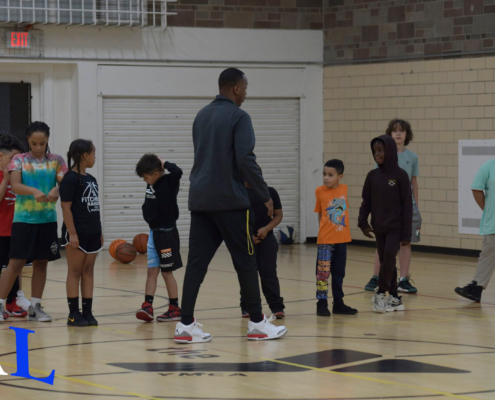
When the workday ends and the lights go down, Custom Cleaning Service of Peabody, Inc. gets to work. “We operate as our clients’ silent partner after business hours,” says Adam Paicos, of Templeton, who now serves as Director of Operations and oversees the company’s expansion into North Central MA. “We are not often seen, but we ensure facilities are clean, secure, and ready for business each day while serving as the eyes and ears for our clients when they are not on site.”

Discover local business stories through our Inside North Central Massachusetts Podcast series. Listen as Chamber members share their journeys, insights, and contributions to our thriving regional business community.

Looking for your next opportunity? Explore current job openings from employers across North Central Massachusetts on our Jobs Board. Whether you’re starting a new career or making a change, you’ll find a variety of local positions available to help you take the next step.
CapEx Facility Services & Construction · Leominster, MA
TaraVista Behavioral Health Center · Harvard, MA
DRS Power Technology, Inc. · Fitchburg, MA
AIS · Leominster, MA