E-Newsletter
An Electronic Publication of the North Central Massachusetts Chamber of Commerce

Inside this edition, you’ll discover the latest Chamber initiatives and success stories from across our region. From economic development projects and upcoming networking events to policy updates and workforce training opportunities, we’re keeping you connected to what matters most for your business and North Central Massachusetts.
The North Central Massachusetts Chamber of Commerce is here to help – with trusted resources, a strong business network, and a support system to keep your business and the region moving forward
The North Central Massachusetts remains engaged in constant communication with our local, state and federal elected officials. In July, Congressman Jim McGovern and Congresswoman Lori Trahan joined us for the Inside North Central Massachusetts podcast. The two spoke about the American Rescue Plan Act and the proposed infrastructure package. The two are also slated to join the Chamber’s Congressional Luncheon in October. In early August, the US Senate passed a bipartisan $1 trillion-dollar infrastructure bill that included hundreds of billions of dollars for areas including roads and bridges, electrical grid and power infrastructure, broadband investments and water infrastructure.
The Chamber continued to advocate for economic development and workforce development throughout the state budget negotiations. The Chamber was part of joint letters sent out to Beacon Hill from the Massachusetts Business Coalition on Skills and Massachusetts Business Alliance for Education that pushed for investment into career technical institutes and the workforce pipeline. That advocacy helped to ensure the inclusion of $15.4 million for career technical institutes, $6 million for dual enrollment and $6 million dollars for regional economic development organizations as part of the Commonwealth’s $48.1 billion-dollar budget. As part of the Massachusetts Coalition for Sustainable Energy, the Chamber was a part of multiple letters sent out to members of the legislature and the Massachusetts Energy Efficiency Advisory Council calling for a measured approach utilizing natural gas as the Commonwealth works to meet the emission reduction timeline laid out by the Governor.
Now that budget discussions have wrapped up, state legislators are focusing on the $5.3 billion dollars the Commonwealth is receiving from Washington D.C. as part of the American Rescue Plan Act (ARPA). Governor Charlie Baker has put forth a plan to spend $2.9 billion dollars of the funds, along with a $1.6 billion-dollar supplemental budget with the House and Senate holding hearings on priorities prior to putting forward their own spending plans. Since the publication of the Chamber’s new One North Central regional economic development plan, we have engaged in active discussions with the region’s delegation, educating them on the strategies contained in the plan, and how ARPA funds could be used to help implement some of the bolder initiatives. The Chamber intends to continue meeting with area leaders and stakeholders in hopes that the One North Central plan can serve as a unifying voice for the region as we seek to help the region navigate economic recovery and serve as a roadmap to advance the region in the coming decades.
In Mid-August, the U.S. Census Bureau released the latest local-level population and demographic data from the 2020 Census. According to the data, Massachusetts population rose to 7.02 million people and saw an increase of 7.4 percent, outpacing the Northeast average of 4.1 percent growth. This growth was enough to ensure that Massachusetts would retain its current levels of representation in Washington D.C. Based on the new data, and population changes, parts of the Commonwealth could see a shake up when it comes to their legislative and Congressional representation once districts are redrawn in the coming months.
The Chamber is continuing to monitor city and town affairs which included Westminster promoting Stephanie Lahtinen to Town Administrator, and Townsend appointing Ross Perry as their Interim Town Administrator. Leominster welcomed Amanda Curtis, a familiar face at the Chamber, as the City’s new Economic Development Coordinator. Shortly after her appointment, Curtis met to discuss the City’s priorities and the One North Central Regional Economic Development Program. With multiple contested municipal elections this Fall, the Chamber is excited to once again host the popular Legislative & Candidates Reception on September 23 at the Chocksett Inn in Sterling.
If you have any questions or concerns, please feel free to contact Travis Condon, the Chamber’s public affairs manager, at (978) 353-7600, ext. 224; or via email at .
The logic is sound: if our community is better educated, it’s better for everyone, correct? Although it makes sense, the national tide of funding is actually flowing away from education in favor of other things. Programs are being cut, and students are receiving less academic and personal support than they have for years. Here’s a simple fact:
This doesn’t mean one strong school as a flagship, as it is in many larger communities. It means significant investment in education across states, cities, towns, rural areas, and communities until children in our community and our country receive the education they deserve.
Why? The answer is simple. Education is the economic driver of success and production in our communities. It starts in Kindergarten, and on up to 12th grade. When students receive support at the beginning, they’re more likely to pursue higher education, whether as part of a trade program or a university. They’re more likely to understand civic responsibility and community engagement.
On the other side of the coin, areas where schools have been underfunded for a long time see disengaged citizens. Unsupported students grow up with a mindset that they are not highly regarded by the decision-makers in their area, because frankly, they aren’t.
It’s not complicated. As business owners and citizens, we often ignore the lasting effects of a strong education system in terms of our own lives. But consider this: a larger crop of successful students in our community will mean a larger pool of potential employees. The business community will benefit when strong students stay around. The ones that leave will benefit other communities near and far.
So what’s the solution? Support your local education system. Vote in favor of funding bills for education. If you run a business, use education as your outlet for philanthropy whenever possible. Ensure that the students in your community have access to school supplies, books, and other tools to maximize their education, because when the education system is strong, the community grows as a whole and becomes a better place to live.
The North Central Massachusetts Chamber of Commerce is partnering with other regional organizations to host the Work North Central Hiring Event scheduled for Tuesday, September 28, 2021, from 11:00 a.m. to 6:00 p.m. at Great Wolf Lodge, 150 Great Wolf Drive, Fitchburg, MA. The regional organizations involved include Fitchburg State University, the MassHire North Central Massachusetts Career Center, the MassHire North Central Massachusetts Workforce Investment Board, and Mount Wachusett Community College.
The event, which is free for job seekers, will connect potential applicants with local employers of all sizes and industries to discuss employment and career opportunities available in the region. Employers from diverse industries will be seeking candidates with all levels of skill and backgrounds, including entry level, and professional and technical positions in such industries as construction, distribution, education, financial services, government, healthcare, hospitality, non-profit, manufacturing, restaurants and other industries. Additionally, some employers will be offering hiring on-site, and may provide signing bonuses and other incentives.
In addition to networking and learning about available positions across the region, attendees can also take advantage of a full day of programming, including complimentary professional headshots, free career counseling, sessions on careers in advanced manufacturing and health care, and workshops on resume writing, using social media to help with your job search and how to improve your interview skills. The Chamber will also be hosting a $100 gift card prize raffle every hour throughout the event.
“As a leader in helping North Central Massachusetts compete for talent and advance the region’s economic prosperity, we realize there is currently a critical need to help our local businesses find qualified and skilled talent in order to grow and succeed,” said Roy M. Nascimento, President & CEO, North Central Massachusetts Chamber of Commerce. “This event is aimed to create economic opportunity, and a strong and diversified workforce for our employers, while providing the unemployed and underemployed the opportunity to meet with a number of employers in one location.”
The Work North Central Hiring Event is a complement to the Chamber’s WorkNorthCentral.com Jobs Board, which serves as an online resource to connect job seekers and local employers while also improving the talent pipeline and better connect employers to local schools.
Walk-ins are welcome, but job seekers can also pre-register by visiting the Chamber’s website at www.NorthCentralMass.com. Free parking for job seekers and attendees is available at Great Wolf Lodge, and the Montachusett Area Transit Authority will be offering an extended schedule for the event throughout the day on their Fitchburg/Route 11 that runs to Great Wolf Lodge.
Employers interested in participating and reserving a table at the Work North Central Hiring Event should contact Lauren Goulet at 978-353-7600, ext. 222, or Kat Deal at 978-353-7600, ext. 235, to inquire about availability.
As the Chamber wants to ensure a safe environment for all, attendees are asked to abide by the COVID-19 mask advisory issued by the Massachusetts Department of Public Health which advises those who are fully vaccinated wear a mask or face covering if they are at increased risk for severe disease because of age or an underlying medical condition, or if someone in their household has a weakened immune system, is at increased risk for severe disease, or is an unvaccinated adult. Visit www.NorthCentralMass.com for the Chamber’s COVID-19 event protocols or to stay informed on any changes to local or state health protocols.


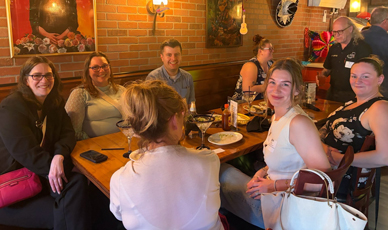
The reception features an open bar and gourmet appetizers.
View
Event
Join us for Connect North Central
Friday, September 25, 2026
8am-9am
View
Event
North Central Golf Tour Championship: Fore the Future
An FLNC Non-Traditional Scholarship Fundraiser
View
Event
Thank you Series Supporting Sponsor empHowered PR
View
Event
Join us for our 11th Annual
Congressional Luncheon
View
Event
Wednesday October 28, 2026
5:00pm - 7:00pm
View
Event
Join us for this in person HR Legal Update
View
Event
November 19, 2026
7:15am - 9:00am
View
Event
Chamber members are provided with the opportunity to engage with the Mayors of Fitchburg, Gardner, and Leominster who provide updates on projects and other things happening in their Cities. These events are by invitation only, please contact Travis Condon for more details.
View
Event
Bull Run Restaurant
215 Great Rd. Shirly, MA
View
Event
Join us for our last Connect North Central of the year!
Friday, December 11, 2026
8am-9am
View
Event
Chamber members are provided with the opportunity to engage with the Mayors of Fitchburg, Gardner, and Leominster who provide updates on projects and other things happening in their Cities. These events are by invitation only, please contact Travis Condon for more details.
View
Event
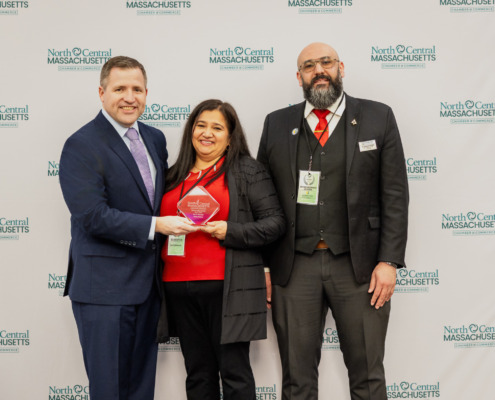
The Massachusetts Chapter of the National Association of Housing & Redevelopment Officials (MA-NAHRO) has awarded Linda E. Byrne who is the Chairman of the Fitchburg Housing Authority its prestigious public housing board member of the year award. The award acknowledges those public housing board members that have exhibited examples of community leadership, advocacy for public housing and community development, and has communicated to the media and public the importance and accomplishments of public housing.
On Tuesday, October 5th, starting at 11:00 am at the Wallace Tower Apartments community room located 55 Wallace Ave., an awards ceremony will be held. Joining the celebration will be Constance Desbiens, Executive Director of the Dartmouth Housing Authority and President of MA-NAHRO, State Representative Michael Kushmerek, State Senator John J. Cronin former Fitchburg Mayor Lisa A. Wong, and Mayor Stephen L. DiNatale.
Vargas brings expertise to help the Leominster community meet their goals through Fidelity Bank’s LifeDesign approach to banking
Fidelity Bank today announced the appointment of Ruby Vargas to Vice President, Area Manager for their two Leominster banking centers. In this role, she will be responsible for overseeing the operations at the bank’s Leominster Connector and Main Street locations while working in concert with the business development teams to grow the bank’s business in the region.
“Ruby brings more than 25 years of experience to this new role and has a passion for working in our Leominster community helping our clients and businesses succeed. Whether it is her work with the Spanish American Center or support of our local businesses, Ruby demonstrates a caring commitment to all that she does,” said Sheila King-Goodwin, Senior Vice President, Chief Community Banking Officer, Fidelity Bank.
“By living and working in the community, I have an inside perspective of knowing what makes Leominster residents and businesses thrive and I am committed to helping my clients realize their hopes and dreams to get where they want to be,” said Vargas.
Vargas has worked with Fidelity Bank for six years, most recently serving as the Sales and Service Banking Center Manager of the Leominster Main Street location where she oversaw all operations.
A resident of Leominster, she completed courses in Business Administration when she lived in Bogota, Colombia, and also attended Mount Wachusett Community College where she focused studies on Business Administration. She holds a license as a Uniform Securities Agent Series 63 and is also licensed to sell life insurance.
Vargas is fluent in Spanish and well-known in the Spanish community. She serves on the board of directors for the Spanish American Center, as Treasurer for the Leominster Rotary Club, and a licensed yoga instructor.
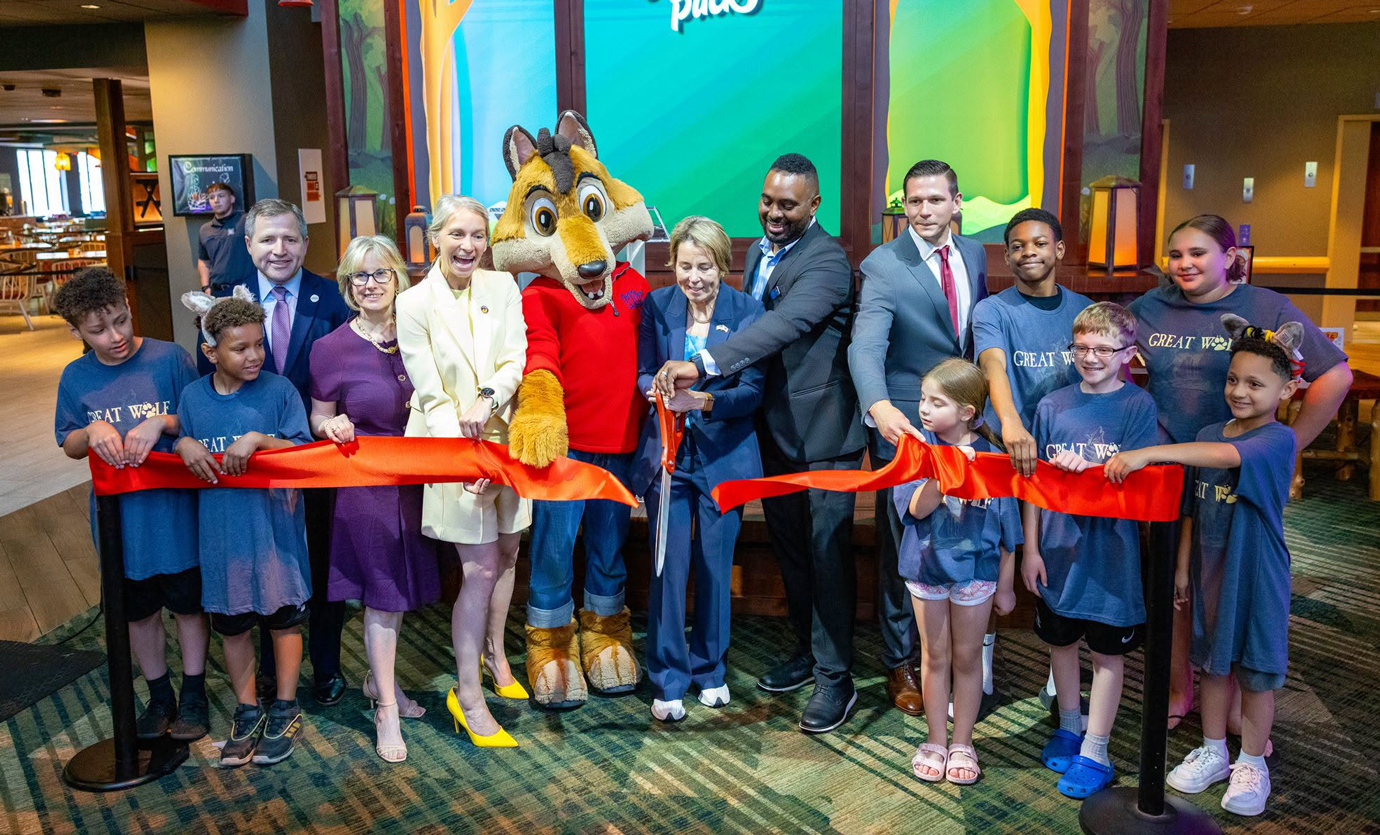
Last week, Making Opportunity Count (MOC) hosted a ribbon cutting ceremony to formally announce the grand opening of The Counseling Center at MOC. The new outpatient mental health clinic is co-located with a number of MOC’s human service programs out of their Nursery Lane facility in Fitchburg.
The Counseling Center at MOC received licensure from the MA Department of Public Health on June 15th, 2021 and will offer a wide variety of mental health services including individual psychotherapy and medication management. The center, open daily from 9am to 5pm, is staffed with five masters’ level psychotherapists that treat a wide range of conditions including anxiety, depression, trauma, substance recovery, ADHD, personality disorders and more.
Accessibility was at the forefront of the counseling center’s design; patients can schedule in-person or telehealth sessions and the center is currently accepting walk-ins or immediate remote access via therapy Zoom rooms. The expanded services address the growing need, particularly in the Fitchburg, Leominster and Gardner areas of North Central MA, for more direct and efficient access to psychiatric care—a need that has become more pressing during the COVID-19 pandemic.
“Even before the COVID-19 pandemic, we were seeing an urgent need for access to high-quality, mental health care,” said Kevin Reed, executive director of MOC. “The Counseling Center at MOC will be a vital local and regional resource that will provide our community with another access point for critical care and services. We’re grateful to our team, the state, and our delegation for helping us make this initiative become a reality.”
The private grand opening ceremony included remarks from Congresswoman Lori Trahan, Senator John Cronin, State Representative Michael Kushmerek, and Mayor of Fitchburg Stephen DiNatale. State officials expressed the value the new facility will offer to the greater community by bringing new resources to fill this critical gap in mental health care.
“For many hardworking families and individuals trying to improve their lives across the Third District, they’re just a little bit of help away from climbing out of poverty. That’s where Making Opportunity Count has stepped up time and time again,” said Congresswoman Trahan. “From access to quality child care to mental health services and much more, Making Opportunity Count provides critical support to folks in Fitchburg and beyond, lifting them up and enabling them to achieve financial stability. The opening of their mental health clinic will bolster those efforts and enable them to assist even more people in need. I’m grateful for their relentless efforts and look forward to continuing our partnership that will deliver even more resources to support their ability to deliver life-changing services.”
The occasion was recognized with an official proclamation delivered by Senator John Cronin.
“Today is a huge win for the city of Fitchburg,” said Senator Cronin. “Everybody knows we are in the midst of a mental health crisis and the most important thing we can do is increase the availability and access to outpatient behavioral health services. We cannot meet these challenges with lip service, we need to meet the challenge with resources and services.”
In addition to extending kudos to MOC for this new endeavor, State Representative Michael Kushmerek shared a personal reflection of his own family’s experience with mental health struggles and the importance of normalizing conversations about mental wellbeing.
“Removing the stigma, working to socialize mental health treatment is so crucial,” said State Representative Michael Kushmerek, member of the Joint Committee on Mental Health, Substance Use, and Recovery. “So often we are hesitant and outright refuse to talk about mental health and about how key of a component it is in who we are. We’re lying to ourselves if we don’t acknowledge that we have stress, we have anxieties, we have days of depression.” He continued, “I’m proud to stand with these allies here…to fight, each and every day, so people can stand up and say today’s not a good day but maybe tomorrow can be.”
Also in attendance were members of MOC’s board of directors accompanied by members of MOC’s clinical team that worked on the development of the counseling center. A ribbon cutting sponsored by the North Central MA Chamber of Commerce and brief tour of the facility followed ceremony remarks.
More information on The Counseling Center at MOC can be found at www.counselingcenteratmoc.org.

When the workday ends and the lights go down, Custom Cleaning Service of Peabody, Inc. gets to work. “We operate as our clients’ silent partner after business hours,” says Adam Paicos, of Templeton, who now serves as Director of Operations and oversees the company’s expansion into North Central MA. “We are not often seen, but we ensure facilities are clean, secure, and ready for business each day while serving as the eyes and ears for our clients when they are not on site.”

Discover local business stories through our Inside North Central Massachusetts Podcast series. Listen as Chamber members share their journeys, insights, and contributions to our thriving regional business community.

Looking for your next opportunity? Explore current job openings from employers across North Central Massachusetts on our Jobs Board. Whether you’re starting a new career or making a change, you’ll find a variety of local positions available to help you take the next step.
CapEx Facility Services & Construction · Leominster, MA
TaraVista Behavioral Health Center · Harvard, MA
DRS Power Technology, Inc. · Fitchburg, MA
AIS · Leominster, MA