E-Newsletter
An Electronic Publication of the North Central Massachusetts Chamber of Commerce

Inside this edition, you’ll discover the latest Chamber initiatives and success stories from across our region. From economic development projects and upcoming networking events to policy updates and workforce training opportunities, we’re keeping you connected to what matters most for your business and North Central Massachusetts.
The North Central Massachusetts Chamber of Commerce is here to help – with trusted resources, a strong business network, and a support system to keep your business and the region moving forward
At its December 9, 2025 tax classification hearing, the Lancaster Board of Selectmen voted 2-1 to maintain the town’s single tax rate, rejecting a proposal to shift the tax burden onto the community’s small commercial and industrial base through a split tax rate. The North Central Massachusetts Chamber of Commerce testified in support of the single rate, leveraging the Assessors’ own analysis and regional perspective to demonstrate why tax shifting doesn’t make sense for Lancaster.
Select Board members Jason A. Allison and David R. Carr voted in favor of maintaining the single rate, while Selectman Ralph A. Gifford III voted in opposition. The decision preserves Lancaster’s competitive tax environment and positions the community to attract the commercial and industrial investment that creates jobs and strengthens the overall tax base.
Lancaster’s commercial, industrial, and personal property base represents only 12% of total valuation. With such a small base, any attempt to shift taxes using a split rate would place disproportionate burdens on a small amount of businesses for minimal residential benefit. The town’s Assessors’ own modeling showed that saving residential taxpayers just $500 would require shifting 36% of the tax burden onto just 6% of the base that is commercial (largely small businesses) and 3% that is industrial. This concentration of burden would be economically counterproductive.
Several residents testified in favor of the shift to a split tax rate, arguing it would help reduce residential taxes without impacting businesses. The Chamber’s testimony addressed this misconception directly: tax shifting doesn’t generate new revenue. It simply moves who pays the same total levy. And when businesses facing dramatically higher rates choose to locate in neighboring communities with more favorable tax treatment, residential taxpayers end up bearing an even larger share of the burden.
In our regional experience, split tax rates drive businesses out over the long term, creating a downward spiral where the remaining tax base (both commercial and residential) must absorb the loss. Most communities in North Central Massachusetts maintain single tax rates, and those few that adopted split rates have either moved back to single rates or are actively working to eliminate them.
The North Central Massachusetts Chamber of Commerce was the only chamber of commerce or business organization to testify at the hearing. Chamber President & CEO Roy Nascimento and Director of Public Affairs Travis Condon presented testimony grounded in data, regional experience, and economic reality, not political rhetoric.
This is advocacy in action. The North Central Massachusetts Chamber of Commerce shows up at selectboard meetings, planning board hearings, and legislative sessions to do the work of advocating for our members and communities.
This year alone, Chamber advocacy efforts have included:
Lancaster’s decision to maintain its single tax rate is a win for businesses, residents, and the community’s long-term economic health. We’re grateful the Board carefully considered the data, regional trends, and the potential impacts on the entire community.
The Chamber will continue monitoring tax classification decisions across the region. Tax policy remains one of the most important tools municipal leaders have to either attract or repel business investment, and the Chamber will continue working with communities to advance policies that support economic growth and job creation.
If you’re facing challenges with local regulations, permitting, taxes, or other issues affecting your business, reach out to the North Central Massachusetts Chamber of Commerce. The Chamber may be able to help, whether that means connecting you with resources, working directly with municipal officials, or testifying on policies that impact our members. This is exactly the kind of advocacy work the Chamber does every day.
For more information, contact Travis Condon, Director of Public Affairs at the North Central Massachusetts Chamber of Commerce at 978.353.7600 ext. 224 or via email at .
North Central Massachusetts | Central Massachusetts | Massachusetts | Chamber of Commerce | North Central Massachusetts Chamber | Chamber of Commerce Membership | Chamber of Commerce Member Benefits | Chamber of Commerce near me | Blog
A recap of efforts through the fall from the Chamber’s destination marketing arm, Visit North Central Massachusetts (VNCM).
As we reported in the Fall edition, Visit North Central Massachusetts completed our comprehensive FY2026 marketing strategy and submitted our annual matching tourism grant request to the Massachusetts Office of Travel & Tourism (MOTT). We received notification of our grant award amount in late October; however, as of this printing – nearly five months into the fiscal year that began on July 1, 2025- we have not yet received our contract or matching funding.
This delay in contracting and matching funding impacted our marketing efforts during the Fall season. We adapted by covering some advertising costs upfront while awaiting state matching funds and strategically deferring other planned campaigns. Fortunately, our Mass250 grant allowed us to maintain some momentum through active advertising campaigns that helped bridge the gap created by the delay in our regular annual matching grant from the state’s tourism trust fund. We remain committed to making up ground during the Winter months and positioning ourselves strongly for the Spring and Summer tourism seasons.
We appreciate the state’s partnership and look forward to receiving our contract and funding so we can fully execute our marketing efforts that drive economic impact for our member businesses and communities.
Tourism is far more than a single industry – it’s a catalyst for community vitality. When you build a place where people want to visit, you’ve built a place where people want to live, work, and invest. Every visitor we attract becomes a potential business lead, future resident, or investor who experiences our region’s unique assets and becomes an ambassador for North Central Massachusetts. This is why our strategic marketing efforts don’t just drive immediate economic impact – they build long-term awareness and prosperity for our communities and members.
For the first four months of fiscal year 2026 (July 1 through October 31, 2025), VisitNorthCentral.com, our tourism affiliate site, attracted 18,683 users (down 68.1% compared to the same period in FY25) and generated 34,275 pageviews (down 63.6% year-over-year). Impressions totaled 1,012,127 (down 22.0% year-over-year). These significant declines directly reflect the impact of delayed state matching funding, which prevented us from launching our planned digital advertising campaigns at the start of the fiscal year. As we receive funding and execute our winter and spring marketing initiatives, we expect to see digital engagement increase.
For the first four months of fiscal year 2026 (July 1 through October 31, 2025), we maintained strong organic social media presence, building a community that actively engages with content about regional attractions, events, and member businesses. Our combined social media following across Facebook and Instagram now totals over 49,000 followers.
On Facebook, we achieved impressive results with post impressions of 885,441 (up 137% year-over-year) and a total reach of 45,173 followers (up 9.4% year-over-year). Post reactions increased 56.1% to 2,314, link clicks surged 69.4% to 2,060, and comments nearly doubled with a 93.1% increase to 195. On Instagram, post impressions reached 121,148 (up 85.4% year-over-year) with 3,821 followers (up 19.7% year-over-year). Post shares increased 24.2% to 221. These strong organic social media results demonstrate the effectiveness of our content strategy, even during a period when funding delays limited paid advertising campaigns.
Through our partnership with PlayEasy, the platform connecting youth and amateur sports organizers with regional venues and hotels, we’ve seen continued engagement in November 2025. The VNCM profile received 981 views with 95 visitors, facility listings generated 1,586 views with 896 visitors, attraction pages received 77 views with 33 visitors, and event listings attracted 1,227 views with 625 visitors. This specialized sports tourism platform continues to create measurable connections between sporting events and our member hospitality businesses.
The Johnny Appleseed Visitor Center welcomed 11,842 visitors in September and 14,575 visitors in October, bringing the calendar year 2025 total to 105,493 visitors through October 31. These impressive numbers reflect the center’s role as a gateway to our region and a key touchpoint for introducing visitors to member businesses and regional attractions.
Throughout the fall, we hosted our popular Showcase Events series at the Visitor Center—weekend celebrations featuring live music, henna tattoos, apple cider donuts, alpacas, handmade crafts, face painting, and much more. These family-friendly events, which took place on weekends throughout August, September, and October, were well-attended and showcased the rich culture and community spirit of North Central Massachusetts. We thank the local cultural councils in North Central Massachusetts for helping to sponsor these events.
According to the latest lodging reports from STR and AirDNA for July through September 2025, the North Central Massachusetts lodging market faced headwinds. For hotels in the region, occupancy was 71.9% (down 4.3% year-over-year), with an average daily rate (ADR) of $164.20 (down 2.2%) and revenue per available room (RevPAR) of $117.98 (down 6.4%). The hotel market generated $14.7 million in revenue, down 6.4% from the prior year.
Short-term rentals in the North Central Massachusetts region showed more positive momentum, with occupancy at 58.0% (down 4.8% year-over-year), but ADR of $130.72 (up 9.4%) and RevPAR of $75.85 (up 4.1%). Regional short-term rentals generated $1.9 million in revenue, representing a 21.5% increase year-over-year.
These trends underscore the importance of our marketing efforts in maintaining visitor engagement and supporting local hospitality businesses during a challenging environment.
Local option meals tax collections for July through September 2025 totaled $723,100, up 46.2% year-over-year, while room tax collections reached $799,500, up 13.7% year-over-year. These increases are most likely attributable to several communities adopting local option meals taxes and increasing their room tax rates in 2025, which significantly impact year-over-year comparisons. These tax revenues directly support local government services and we track them as indicators of visitor spending patterns and tourism’s economic impact on our communities.
New visitor data from July through September 2025 provides valuable insights into who is visiting North Central Massachusetts. Domestic visitors stayed an average of 1.3 days, with 66.5% staying overnight and 44.5% being repeat visitors. Our top visitor origin states were Massachusetts (15.5%), Connecticut (11.3%), New York (9.7%), and Maine (9.4%). The Boston-Cambridge-Newton metro area accounted for 8.1% of visitors, followed by New York-Newark-Jersey City (7.3%) and Providence-Warwick (6.8%).
International visitors from January through September 2025 stayed longer, averaging 2.2 days with 79.6% staying overnight. Canada led international markets at 81.2% overnight rate, followed by Brazil, Mexico, and the United Kingdom. These visitor profiles help us refine our marketing strategies to reach high-value audiences and better align with state tourism priorities.
As we head into 2026, we’re focused on executing the marketing plan we developed for FY2026, with particular emphasis on making up ground from the delayed state funding. Our MA250 campaigns continue to deliver results, showcasing the region’s revolutionary history, culinary scene, outdoor recreation, and innovative communities to audiences across New England.
Strategic media partnerships with AAA, Hearst, Boston Magazine, Yankee Magazine, Edible Boston, TripAdvisor, and PlayEasy will amplify our winter and spring campaigns. We’re building on our digital momentum with enhanced content for group travel, sports tourism, and seasonal attractions.
North Central Massachusetts | Central Massachusetts | Massachusetts | Chamber of Commerce | North Central Massachusetts Chamber | Chamber of Commerce Membership | Chamber of Commerce Member Benefits | Chamber of Commerce near me | Blog | Tourism Update Winter 2025
The Chamber’s advocacy work has been in high gear this fall, with efforts spanning local, state, and federal levels to advance policies that strengthen our region’s economy and support our members. This busy period of engagement has been guided by our newly approved FY2026 Public Policy Agenda.
Adopted by the Board of Directors in September, our FY2026 Public Policy Agenda was developed by our member-driven Government Affairs Committee. The agenda maintains core priorities while making strategic adjustments to address emerging regional challenges and opportunities.
Our focus centers on promoting economic competitiveness, advocating for small business, asserting our role as the Commonwealth’s manufacturing hub, and advancing education, transportation infrastructure, and real estate development.
Key priorities include implementing our One North Central regional economic development plan, fighting for regional equity in state investments, supporting our manufacturing sector, and addressing workforce challenges through support for expedited work visas, improved education pathways and reduced employment barriers. We’re also focused on modernizing Route 2, enhancing commuter rail service, and supporting diverse housing and commercial real estate development.
New this year, we’ve added positions on artificial intelligence and support for financial literacy. We continue opposing increases to unemployment insurance taxes and other regulatory burdens that disproportionately impact small businesses. The complete agenda is available at northcentralmass.com.
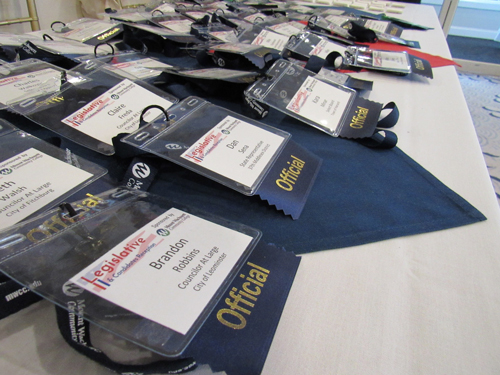
Legislative & Candidates Reception
Our local engagement intensified this fall. Public Affairs Director Travis Condon regularly attends city council meetings in Fitchburg and Leominster to monitor actions affecting members. With 27 communities in our region, we prioritize attendance at other municipal meetings as needed when member interests are at stake.
Chamber President Roy Nascimento testified at two Fitchburg City Council meetings earlier this Fall, successfully advocating for the creation of a tourism destination marketing district to aid in bolstering our growing tourism economy. The adoption of this district by the City of Fitchburg marks the first time a district has been created in Massachusetts outside of Boston. Meanwhile, we’ve been advocating with the Mazzarella administration in Leominster to restore tourism funding after a $15,000 cut this year. Following years of level funding eroded by inflation, this reduction threatens the Johnny Appleseed Visitors Center and sets a dangerous precedent that could undermine our successful regional tourism partnership.
We also met with officials in Lancaster, Winchendon, Ashburnham, Gardner, and Leominster to discuss priorities and collaboration opportunities that strengthen our regional economy.
With the municipal elections wrapped up, we are setting up meetings with new additions to the local city councils to brief them on the Chamber and reaffirm our position as a partner and resource.
Our Beacon Hill efforts centered on several key initiatives. We were disappointed when the Healey administration vetoed regional economic development funding, and we advocated for restoring the modest funding. The decision by the Governor underscores the regional equity challenges we face. We’re grateful to our legislative delegation for their steadfast support in fighting to restore these resources.
We testified supporting legislation for a Region D gaming license that would dedicate revenues to critical transportation infrastructure. This bill has tremendous potential to boost economic development and tourism throughout our region and the Commonwealth.
Working with a coalition of regional tourism groups, we have also been advocating to modernize the Tourism Trust Fund. Legislation filed would direct 2.5% of the state’s room occupancy excise revenue to the fund, which has remained flat for over ten years – effectively a significant cut due to inflation. We are pushing to index the fund to room tax collections, as other states do, ensuring revenue from the lodging industry is reinvested into tourism marketing. This modernization is essential for our region’s competitive position.
Beyond testimony and meetings, we organized several policy-focused events to connect members with elected officials and advance member interests. On September 18, we hosted our “State of the Tri-Cities” breakfast, bringing together members with the Mayors of Fitchburg, Leominster, and Gardner to discuss regional priorities and economic development initiatives affecting our three largest cities.
Our September 25 Legislative and Candidates Reception drew strong attendance from elected officials, municipal candidates, and members. On November 7, we hosted our Congressional Luncheon with our federal delegation to discuss national issues affecting business.
In October, we organized our annual Manufacturing Month bus tour, bringing legislative delegation members, education leaders, and economic development officials into our manufacturing facilities to showcase this vital sector and advocate for supportive policies.
Also in October, we formally joined the Massachusetts Opportunity Alliance alongside chambers and business associations statewide, participating in a briefing on two pro-economy ballot questions that would reduce state taxes.
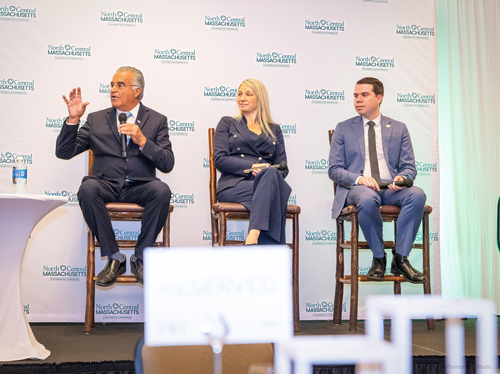
State of the Tri-Cities Breakfast
Chamber President Roy Nascimento connected with top chamber leaders nationwide at the CCC100 meeting this fall, joining discussions with U.S. Chamber of Commerce officials, policy experts, industry leaders, members of Congress, and pollsters on critical issues including artificial intelligence, the economy, childcare, tariffs, and legislative priorities.
The Chamber remains committed to advocating for policies that strengthen North Central Massachusetts’ economic competitiveness, support our members, and ensure our region receives its fair share of investment and opportunity.
For information about the Chamber’s public policy work, contact Public Affairs Director Travis Condon at 978.353.7600, ext. 224, or .
North Central Massachusetts | Central Massachusetts | Massachusetts | Chamber of Commerce | North Central Massachusetts Chamber | Chamber of Commerce Membership | Chamber of Commerce Member Benefits | Chamber of Commerce near me | Blog | Government Affairs Update Winter 2025
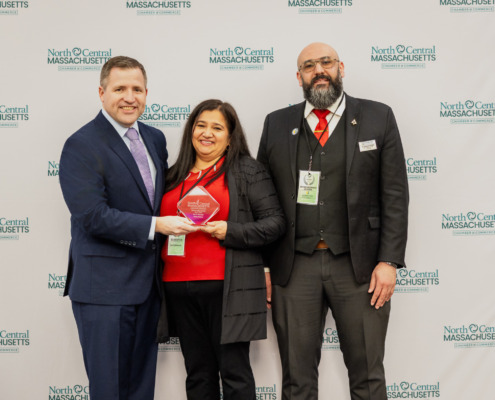

The reception features an open bar and gourmet appetizers.
View
Event
Join us for Connect North Central
Friday, September 25, 2026
8am-9am
View
Event
North Central Golf Tour Championship: Fore the Future
An FLNC Non-Traditional Scholarship Fundraiser
View
Event
Thank you Series Supporting Sponsor empHowered PR
View
Event
Join us for our 11th Annual
Congressional Luncheon
View
Event
Wednesday October 28, 2026
5:00pm - 7:00pm
View
Event
Join us for this in person HR Legal Update
View
Event
November 19, 2026
7:15am - 9:00am
View
Event
Chamber members are provided with the opportunity to engage with the Mayors of Fitchburg, Gardner, and Leominster who provide updates on projects and other things happening in their Cities. These events are by invitation only, please contact Travis Condon for more details.
View
Event
Bull Run Restaurant
215 Great Rd. Shirly, MA
View
Event
Join us for our last Connect North Central of the year!
Friday, December 11, 2026
8am-9am
View
Event
Chamber members are provided with the opportunity to engage with the Mayors of Fitchburg, Gardner, and Leominster who provide updates on projects and other things happening in their Cities. These events are by invitation only, please contact Travis Condon for more details.
View
Event
Dear Chamber Member,
As a Chamber member, you know strong community partnerships fuel business growth. This offer is exclusive to Chamber members and delivers real value. This year, you can build your team’s leadership and productivity skills at no cost to your company!
Leadership Dynamics Inc. Workplace Productivity and Workplace Leadership & Coaching programs prepare your team to lead with clarity, achieve goals, and fuel your success in 2026. The training is hands-on, built for real challenges, and focused on measurable results.
This is a rare chance to strengthen your team and sharpen execution for the new year without touching your budget. Seats for the January cohorts are limited, and the state grant deadline is approaching.
Your 2026 goals need leaders who think clearly, act with purpose, and deliver results. Enroll key team members now in Workplace Productivity and Workplace Leadership & Coaching and secure the talent your organization needs to win.
For more information, contact .
With care,
Paul
Sign-up link: https://www.leadershipdynamicsinc.com/
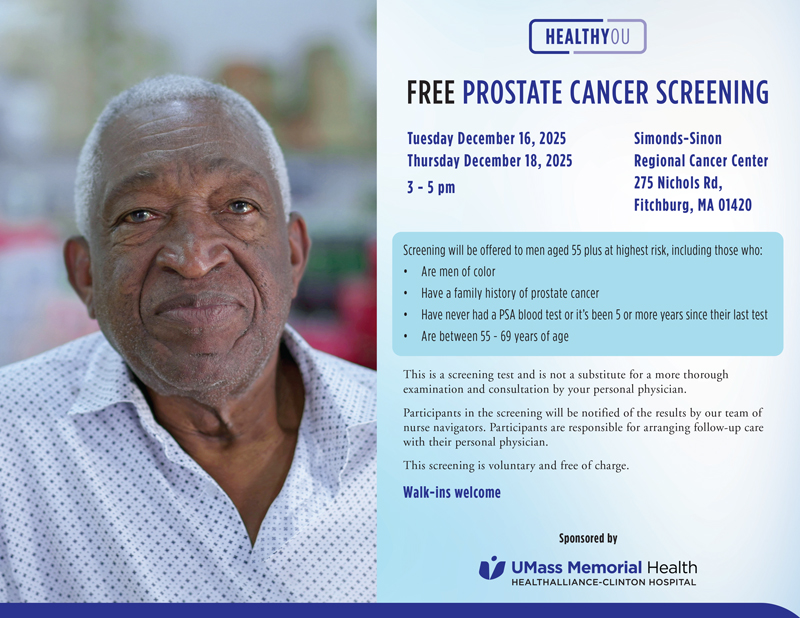
HealthAlliance-Clinton Hospital’s Simon Sinon Cancer Center is pleased to announce a FREE PROSTATE CANCER SCREENING event and invite you to share this opportunity with your clients, patients, and communities.
For men aged 55 and older at highest risk, including those who:
Together, we can support a healthier community for all.
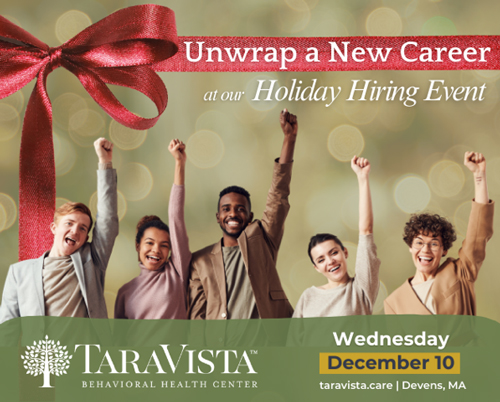
Taravista Behavioral Health Center is hosting a Holiday Hiring Event on December 10 from 4-6:30pm. Join us to explore meaningful careers rooted in hope, healing, and helping people discover their strength and resilience. Bring your resume and your energy — we are offering on-the-spot interviews and same-day offers for qualified candidates. No waiting. No wondering. Just real opportunities. We’re hiring:
– Nurses (LPN & RN)
– Mental Health Counselors
– Social Workers
– Accounting & Operations Professionals
Details and Sign-Up Here: https://www.taravista.care/careers-reimagined/
When the workday ends and the lights go down, Custom Cleaning Service of Peabody, Inc. gets to work. “We operate as our clients’ silent partner after business hours,” says Adam Paicos, of Templeton, who now serves as Director of Operations and oversees the company’s expansion into North Central MA. “We are not often seen, but we ensure facilities are clean, secure, and ready for business each day while serving as the eyes and ears for our clients when they are not on site.”
Discover local business stories through our Inside North Central Massachusetts Podcast series. Listen as Chamber members share their journeys, insights, and contributions to our thriving regional business community.

Looking for your next opportunity? Explore current job openings from employers across North Central Massachusetts on our Jobs Board. Whether you’re starting a new career or making a change, you’ll find a variety of local positions available to help you take the next step.
CapEx Facility Services & Construction · Leominster, MA
TaraVista Behavioral Health Center · Harvard, MA
DRS Power Technology, Inc. · Fitchburg, MA
AIS · Leominster, MA