E-Newsletter
An Electronic Publication of the North Central Massachusetts Chamber of Commerce

Inside this edition, you’ll discover the latest Chamber initiatives and success stories from across our region. From economic development projects and upcoming networking events to policy updates and workforce training opportunities, we’re keeping you connected to what matters most for your business and North Central Massachusetts.
The North Central Massachusetts Chamber of Commerce is here to help – with trusted resources, a strong business network, and a support system to keep your business and the region moving forward
If you’re involved in the real estate market as an investor, agent, buyer, or seller, you likely already know that this is one industry that’s in love with the latest technologies. From the latest apps to innovations in customer service, tech innovations have dramatically changed how Realtors do business.
Here’s our picks for the top 7 tech trends for real estate agents in our community:
Virtual Reality, or VR, gives agents the power to create virtual tours of the properties they have for sale, giving prospective buyers an immersive experience that’s second only to being there in person.
While VR technology is still a bit pricey for the average Realtor, experts predict this growing tech trend will be worth $2.6B by 2025. Sotheby’s International Realty already uses VR to market high-end residential properties both here in the United States and abroad.
We all know that prospective home buyers want to picture what their furniture would look like in their new home, right? Thanks to Augmented Reality (AR) technologies, you can now superimpose a specific piece of furniture, a fixture, or accessory into any room, making it easy to see what a space could look like with some personal touches.
With the wide-spread adoption of ‘smart’, internet-connected devices like smart thermostats, smart alarms, and smart locks, look for old technologies like real estate lock boxes to disappear in favor of digital access codes and security apps.
Use of internet-enabled mobile devices like smartphones and tablets continues to rise in the United States and beyond. According to the National Association of Realtors, nearly 60 percent of all residential buyers found their home through a search on their mobile device, which is why a mobile-friendly website is a must-have for every real estate agent.
Drones give Realtors the power to take impressive high-definition photos and videos from heights of properties that are available for sale or lease. Look for more listings to include images that deliver a birds-eye view that was previously only available by hiring a specialized aerial photographer.
Social media platforms such as Twitter, Facebook, and Instagram provide real estate agents with powerful tools they can use to market their business, connect with clients, and establish themselves as a local subject matter expert in our community.
And if you think managing all those online accounts is simply too time consuming, social media management platforms like Hootsuite and Agorapulse are designed to automate content delivery, track mentions and shares, and stamp out online trolls.
Even the most energetic real estate agent needs to take a break – that’s why chat bots – those little pop-up boxes are quickly become a feature on many brokerage websites.
Also known as virtual assistants, chat bots provide personable, 24/7 customer service that can help capture leads and even answer basic questions – perfect for all those late-night online home shoppers.
They say hindsight is 20-20. If you only would have known. As a business owner, you may already have a few things you wish you knew. Would you have hired that one person? Perhaps you would have started your company sooner. While it is important to look back, reflect and learn from these decisions, it is also important to realize that, when you are at the end of your business ownership, your wishes may be much different.
There are many things business owners wish they would have done differently. Here are some common themes that seem to come to light.
Many business owners start out with a desire to build a company from the ground up on their own. It may be admirable, but it may not be exactly what helped your business to thrive. Instead, many business owners realize that if they could do it again that they would have hired on more help sooner. Some would have turned to a mentor sooner. They would have networked with other business owners more readily to pull them into their company.
It goes without saying that every business relies on its community to grow and thrive. Even online companies still need to hire from a local talent pool and build their business with the support of local suppliers. But, not all companies give back. Giving back to the community does not have to be a challenge – doing simple things on a routine basis can help to make a big difference in the community. You don’t want to be on your deathbed and wishing you would have done more.
It’s quite common for businesses, especially those starting out and looking for solid footing, to actually make the move to get rid of employees that do not fit the mold. However, we know today from our workplace culture that it’s important to create a sense of culture, respect, and dependability. Some business wonders wish they would have taken a problem employee into the office and let them go long before they did damage.
Many business owners wonder about risk. For some, taking on too much risk is just too much of a worry. For others, it is all about not taking enough. When you are there, at the end of your life, you’ll want to have taken that risk and experienced perhaps not only the thrill of the ride but also the struggles.
As you work to build your business, reach out. Embrace the community. Support each other. Provide mentorship opportunities. By taking these steps, you can solidify your business model now and learn from the mistakes and wishes of those business owners that came before you. It may be exactly what you need to push your business forward that extra level.
Governor Baker and Lt. Governor Polito announced today changes to various advisories and executive orders pertaining to COVID-19 and reopening:
1.Stay at Home Advisory Rescinded: Effective Monday, January 25th at 5:00am, the DPH Stay at Home Advisory for the hours of 10pm – 5am is rescinded.
2.Early Closure of Businesses Order Rescinded: Effective Monday, January 25th at 5:00am, the Mandatory Early Closure of Businesses Order requiring certain businesses to close by 9:30pm will be rescinded. On Monday, January 25th at 5:00am, the following businesses and activities listed below may operate past 9:30pm:
· Restaurants
· Arcades & Other Indoor & Outdoor Recreation (Phase 3, Step 1 businesses only)
· Indoor and Outdoor Events
· Movie Theaters and Outdoor Performance Venues
· Drive-In Movie Theaters
· Youth and Adult Amateur Sports Activities
· Golf Facilities
· Recreational Boating and Boating Businesses (e.g. charter boats)
· Outdoor Recreational Experiences
· Casinos and Horse Tracks/Simulcast Facilities
· Driving and Flight Schools
· Zoos, Botanical Gardens, Wildlife Reserves, Nature Centers
· Close Contact Personal Services (e.g. hair and nail salons)
· Museums/Cultural & Historical Facilities/Guided Tours
· Gyms/Fitness Centers and Health Clubs
· Indoor and Outdoor Pools
*Gatherings may go beyond 9:30pm
*Liquor stores and other retail establishments that sell alcohol may sell alcohol past 9:30pm; adult use cannabis retailers may also sell cannabis after 9:30pm
*Note – Phase 3, Step 2 businesses must remain fully closed
3.Temporary Capacity and Gathering Limits Extended: The 25% temporary capacity and gathering limits remain in place until 5:00 AM on Monday February 8th.
You can find further information on www.mass.gov/reopening.

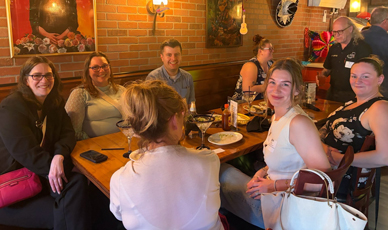
The reception features an open bar and gourmet appetizers.
View
Event
Join us for Connect North Central
Friday, September 25, 2026
8am-9am
View
Event
North Central Golf Tour Championship: Fore the Future
An FLNC Non-Traditional Scholarship Fundraiser
View
Event
Thank you Series Supporting Sponsor empHowered PR
View
Event
Join us for our 11th Annual
Congressional Luncheon
View
Event
Wednesday October 28, 2026
5:00pm - 7:00pm
View
Event
Join us for this in person HR Legal Update
View
Event
November 19, 2026
7:15am - 9:00am
View
Event
Chamber members are provided with the opportunity to engage with the Mayors of Fitchburg, Gardner, and Leominster who provide updates on projects and other things happening in their Cities. These events are by invitation only, please contact Travis Condon for more details.
View
Event
Bull Run Restaurant
215 Great Rd. Shirly, MA
View
Event
Join us for our last Connect North Central of the year!
Friday, December 11, 2026
8am-9am
View
Event
Chamber members are provided with the opportunity to engage with the Mayors of Fitchburg, Gardner, and Leominster who provide updates on projects and other things happening in their Cities. These events are by invitation only, please contact Travis Condon for more details.
View
Event

At a special meeting on Thursday, March 26, the Clinton Board of Selectmen voted unanimously to make $150,000 available from the town’s Community Development Fund to create a Small Business Resiliency Program to assist Clinton’s small businesses absorb financial impacts of the ongoing COVID-19 State of Emergency.
Loans of up to $5,000 are available, subject to the availability of funds. Requests for larger amounts may be considered on a case- by-case basis.
“Small businesses, which are historically sensitive to interruptions of cash flow, have been meaningfully affected by the ongoing State of Emergency,” said Clinton Community and Economic Development Director Philip Duffy. “The intent of this program is to get this money out quickly. It’s likely that larger assistance from the federal government will be arriving at some point. In the meantime, we want to address the needs of some of our businesses that are under stress right now, to make sure they’re still here when this is all over.”
Businesses located in Clinton, as evidenced by a commercial lease or mortgage, or Clinton businesses that, in addition to the owner, withhold payroll taxes for at least one employee are eligible.
Small Business Resiliency assistance targets financial impacts of COVID-19 from March 10 to April 30, 2020, including:
If approved, eligible Clinton businesses can use this funding for such things as:
For a loan application and more information, including criteria for consideration and loan terms, GO HERE.
Questions about the program should be directed to:
Phillip Duffy
Director, Community and Economic Development Office
242 Church Street Clinton, MA 01510
978-365-4113

The money will be earmarked for meeting critical needs of some of the most vulnerable members of the community, including children and the elderly.
“This is a time when we all must pull together, and we at Rollstone are determined to do our part,” said Martin F. Connors Jr., President & CEO of Rollstone Bank & Trust, “We are an integral part of the community and we are compelled to support those who need it most.”
Connors reached out to leaders from across the region to identify gaps in critical services and found that the need varies from town to town. Funds for the City of Leominster will help provide internet access to students so they can continue learning remotely, while the Fitchburg Public Schools will use their grant to provide meals to students and families. Additional funding will also be provided to Montachusett Opportunity Council (MOC), Loaves & Fishes, Townsend Ecumenical Outreach (TEO), and the Gardner Community Action Committee (CAC) for food as well as personal care and other essential items. Connors said he hopes Rollstone’s donations will help improve the lives of many people across the area.
The Rollstone Charitable Foundation is also accepting donations from other individuals and organizations that wish to support the community effort. Donations can be sent to Rollstone Charitable Foundation, 24 Monument Square, Leominster, MA 01453. Checks should have “COVID-19 Relief Fund” in the memo line of the check.
“I encourage anyone who can to donate to this effort,” Connors said.
About Rollstone Bank & Trust
At Rollstone Bank & Trust, we deliver personalized service that goes above & beyond. Our dedication to providing our customers with superior bank and wealth management solutions, along with the support they need to prosper at work and at home, has enabled us to build one of the most trusted banks in the region. With branches located throughout central Massachusetts, customers have peace of mind knowing we are FDIC & DIF insured, and never far from home. Rollstone Bank & Trust – it’s where you matter most.
First batch of hand sanitizer produced in Revolutionary Clinics’ Fitchburg-based cultivation facility to be delivered Monday

“I am proud of a Fitchburg-based operation making a pivot from its usual activities to support the fight against COVID-19. Revolutionary Clinics is a prime example of how businesses can leverage their resources to help our communities tackle this pandemic together,” said Stephen L. DiNatale, Mayor of Fitchburg. “Efforts like this demonstrate the potential for good that exists when all members of the community band together to face these historic challenges.”
The COVID-19 outbreak has created a shortage in the availability of medical supplies, including hand sanitizer. While the production of hand sanitizer is not overly sophisticated, the materials involved are expensive and it requires specialized equipment. Given the distillation processes that regularly happen at cannabis cultivation facilities, these operations are well-suited to produce hand sanitizer. A public health emergency order issued by Department of Public Health Commissioner Monica Bharel, MD, MPH, on March 23rd officially granted cannabis operators the authority to produce hand sanitizer for clinicians and health facilities. On March 30th, Revolutionary Clinics will deliver its initial batch of 35 gallons of hand sanitizer to be distributed to local hospitals. The next round, 80-90 gallons, will be ready for delivery by the end of the week.
“In a very difficult time for people across the globe, we felt it was incumbent upon us to step up and use our infrastructure and our know-how to support those who are on the front lines of fighting this pandemic, our health care workers,” said Keith Cooper, CEO of Revolutionary Clinics. “I am extremely proud of our employees who have enthusiastically embraced this project in addition to our continued mission of serving our medical patients and I would also like to give credit to my fellow CDA Board Member, John Hillier of Central Ave. Compassionate Care and Gage Cannabis for bringing this initiative to our attention. The cannabis community is passionate about doing good in our neighborhood and we are always looking for opportunities to do so.”
The production of hand sanitizer at Revolutionary Clinics’ Fitchburg-based cultivation facility is being carried out by Lab Team members Stephen Golden, Danielle Desmond, David Nunes, Ryan Corrazini and Evan Lambert under the supervision of lab manager and Vice President of Product Dan Gillan using protocols and standard operating procedures provided by members of MHA. Gillan estimates that the facility can produce upwards of 200 gallons of hand sanitizer per week that can be fully donated to hospitals. To facilitate the production, Revolutionary Clinics applied the World Health Organization’s guidelines to its cannabis machinery and will fill five gallon jugs so that the hand sanitizer can be transported for use in hospitals. All ingredients were sourced and paid for by Revolutionary Clinics. Hand sanitizer inventory will be transported to Massachusetts Emergency Management Agency for distribution to individual hospitals.
“Recognizing the massive and immediate demand for medical supplies, the biggest challenge for us was getting set up to start producing as quickly as possible so that we could get hand sanitizer to hospitals,” said Dan Gillan, Vice President of Product at Revolutionary Clinics. “Securing the necessary raw ingredients required a couple of days and a couple hundred phone calls to suppliers. After accumulating what was needed, we converted our ethanol extraction laboratory from cannabis extraction to hand sanitizer production and created a sanitary work environment. Since our standard operational needs for cannabis extraction meant that we already had about 90 percent of what it took to produce hand sanitizer, it was a no brainer for us to take on this effort once we were given the go-ahead. The entire team is excited and humbled by the ability to step up and do this for our health care system during such a critical time.”
Earlier this month, Revolutionary Clinics announced that it will donate two percent of all sales through April 20 to the Mayor’s Disaster Relief Fund which was activated to support residents in Cambridge affected by COVID-19. Revolutionary Clinics currently operates three locations in Somerville and Cambridge and has served Massachusetts medical marijuana patients since 2017 and supports the arts and a host of local charities through its corporate social responsibility program, Cannabis with a Conscience.
About Revolutionary Clinics
Revolutionary Clinics is harnessing the positive power of the emerging cannabis industry to raise the standard for alternative care and generate economic opportunity across Massachusetts. At its three registered marijuana dispensaries in Cambridge and Somerville, Revolutionary Clinics provides the highest quality medical marijuana products and the very best in patient care, and was named best medical dispensary in the state by its peers in 2019. Its state-of-the-art cultivation facility in Fitchburg, Mass. is the largest in the state and supplies over 25 retail establishments with sought-after products and flower. Revolutionary Clinics employs more than 170 colleagues across its manufacturing and retail operations and generated tens of thousands of dollars in tax revenue for Massachusetts’ communities in 2019. Through its corporate social responsibility program, Cannabis with a Conscience, Revolutionary Clinics joins with a range of partners in supporting healthy lives and vulnerable populations, advancing community revitalization efforts through philanthropy and public-private partnerships, and promoting diversity within the cannabis industry. Learn more at RevolutionaryClinics.org.

When the workday ends and the lights go down, Custom Cleaning Service of Peabody, Inc. gets to work. “We operate as our clients’ silent partner after business hours,” says Adam Paicos, of Templeton, who now serves as Director of Operations and oversees the company’s expansion into North Central MA. “We are not often seen, but we ensure facilities are clean, secure, and ready for business each day while serving as the eyes and ears for our clients when they are not on site.”

Discover local business stories through our Inside North Central Massachusetts Podcast series. Listen as Chamber members share their journeys, insights, and contributions to our thriving regional business community.

Looking for your next opportunity? Explore current job openings from employers across North Central Massachusetts on our Jobs Board. Whether you’re starting a new career or making a change, you’ll find a variety of local positions available to help you take the next step.
CapEx Facility Services & Construction · Leominster, MA
TaraVista Behavioral Health Center · Harvard, MA
DRS Power Technology, Inc. · Fitchburg, MA
AIS · Leominster, MA