E-Newsletter
An Electronic Publication of the North Central Massachusetts Chamber of Commerce

Inside this edition, you’ll discover the latest Chamber initiatives and success stories from across our region. From economic development projects and upcoming networking events to policy updates and workforce training opportunities, we’re keeping you connected to what matters most for your business and North Central Massachusetts.
The North Central Massachusetts Chamber of Commerce is here to help – with trusted resources, a strong business network, and a support system to keep your business and the region moving forward
Article Source: State House News Service
Author: Matt Murphy
The winds of science and change are blowing, generating momentum behind the state’s rush to go green and accelerating a recovery from COVID-19 that has the state hurtling toward whatever life will look like on the other side of the pandemic.
Ready or not, get used to seeing people’s full faces again.
Massachusetts, both its leaders and its people, has been intensely focused on getting vaccinated. The state crossed the 3-million-fully-vaccinated mark this week and enjoyed a rare day of zero new reported deaths from COVID-19. But in the hunt for appointments and the tracking of doses administered, it became almost easy to forget why people were so happy to get the shot in the first place.
Sure, there have been family reunions and unmasked walks through the park. But there is still a pandemic raging. Isn’t there?
The progress toward normalcy has been achieved mostly through tentative baby steps. That is until the Centers for Disease Control and Prevention stepped up on Thursday to remind people why they’ve been sacrificing for more than a year.
“If you are fully vaccinated, you can start doing the things that you have stopped doing because of the pandemic,” CDC Director Rochelle Walensky said, rolling out the health agency’s newest guidance that says vaccinated Americans can safely drop the masks, indoors and outdoors, in crowds or small gatherings.
Wait, are you sure?
What that means exactly for Massachusetts remains to be seen. Gov. Charlie Baker was in Washington on Friday for meetings with the delegation, the Army Corps. Of Engineers, senior Air Force brass and the White House’s COVID-19 czar Jeff Zients.
The governor said he’d have more to say next week about the state’s reopening plans, but for now the state’s mask order, including the requirement that masks be worn in all indoor public spaces, remains in effect.
Even before the CDC’s unmasking of America, this was already going to be a big week on the timeline of the pandemic. Businesses like amusement parks were allowed to reopen on Monday, more fans were streaming through the turnstiles at Fenway Park and walk-ins were being welcomed at all seven mass vaccination sites.
Massachusetts was basking in its vaccine successes. Gov. Baker joined five other governors to virtually share effective strategies with President Joe Biden, and the CDC and the Food and Drug Administration gave the all clear for the Pfizer vaccine to be used in adolescents aged 12 to 15. Suddenly, 400,000 young residents were newly eligible Thursday to get vaccinated and there were appointments to go around.
While people wait to see whether Baker will follow the CDC’s mask guidance or accelerate the business reopening plan for the summer, the New Civil Liberties Alliance announced this week that it was taking its failed lawsuit against the governor challenging his emergency executive orders to the U.S. Supreme Court.
The organization, which sued on behalf of a small group of businesses and religious and educational institutions, lost in December in front of the Supreme Judicial Court, but is asking the top federal court to take another look.
“Legislatures are there. They’re capable of taking on hearings, taking on information and deciding what sort of remedial measures the community should take at large, instead of having governors make law by executive decree,” said Mike DeGrandis, the NCLA’s attorney.
One law the governor can’t make by decree, whether there’s a public health emergency or not, is the annual state budget.
It’s about to be the Senate’s turn to debate how to spend $47.6 billion, and the Senate Ways and Means Committee put forward its recommendations Tuesday. The budget bill, which senators spent the week reviewing and drafting amendments to, calls for spending to climb by a modest 2.6 percent.
With tax collections pouring in and easily outpacing expectations this fiscal year, Senate budget chief Michael Rodrigues said it’s possible that when the budget gets to conference with the House the two branches could agree then on a higher revenue estimate that would, in turn, allow for more spending and less reliance on the state’s “rainy day” reserve fund.
That could be the easy part of the negotiations between the branches. Rodrigues’ budget also recommends an overhaul of the film tax credit program that would require productions to spend more of their budgets or filming time in Massachusetts, cap eligible salaries at $1 million and eliminate the transferability of credits, which is highly valued by the industry.
The modifications put the Senate on a collision course with House Speaker Ron Mariano, who has been a forceful defender of the program and the jobs it creates since long before he climbed into the big chair.
But defender of Hollywood is not the title Mariano has been seeking since becoming speaker. Instead, the Quincy Democrat has talked a lot about wind, and the industry in Massachusetts got a huge push forward from the Biden administration this week with final federal approval of the 800-megawatt Vineyard Wind project.
Stalled under President Donald Trump, Vineyard Wind is the first commercial-scale offshore wind project to win federal approval in the country, and by 2023 when the 62 turbines planned for waters off the coast of Martha’s Vineyard and Nantucket are turning they are expected to generate enough electricity to power 400,000 homes.
“What a difference six months makes,” said U.S. Rep. William Keating, who represents the Cape and islands, referring to the hurdles the project tripped over during the Trump years.
Of course, the former president was not pleased with the news. He said the Vineyard and its picturesque views would “never be the same,” and falsely claimed that the turbines would be built in China, when, in fact, the company says they’re being built in France.
But the green revolution is coming, in more ways than one.
The Cannabis Control Commission this week issued its first marijuana courier license to a company called We Can Deliver Boston. Courier licenses allow owners to deliver products from licensed pot retailers and dispensaries to consumers’ homes.
The commission is also working to finalize the licensing process for businesses that want to wholesale their own products and deliver direct to consumers. Chairman Steve Hoffman said the expansion of the industry into delivery services will greatly enhance equity in the industry as regulators look for ways to encourage and foster minority business owners.
And it hasn’t been easy for those applicants to break into the business.
Hoffman said the commission is increasingly concerned about investors squeezing social equity applicants for marijuana business licenses by demanding unfavorable terms to the entrepreneurs that put them at risk of losing control of their businesses over time.
The Joint Committee on Cannabis Policy also heard this week from lawmakers, advocates and former regulators about ways cities and towns can exploit applicants during negotiations over legally required host community agreements by demanding payments in excess of what is allowed under state law.
This, according to former commission Shaleen Title, advantages large marijuana companies that can afford to pay, at the expense of entrepreneurs trying to break into the business. The House tried to address this through legislation last year before the pandemic struck, and it could come back around this session.
Incidentally, it was extortion of a marijuana license application in Fall River that contributed to the downfall of former Mayor Jasiel Correia, who was found guilty in federal court Friday on 21 counts of extortion, fraud and filing false tax returns.
STORY OF THE WEEK: We can do what now? CDC says it’s safe for those vaccinated against COVID-19 to be amongst the people.
SONG OF THE WEEK: SONG OF THE WEEK: On the cusp of getting back to “normal,” a song to help you think about the old days, and what we’ve been through to survive.
Article Source: State House News Service
Author: Chris Lisinski
A federally guided shift in how Massachusetts distributed the burden of unemployment costs led to higher-than-expected bills this spring for many businesses, and the step also spared industries hardest hit during the pandemic from being “clobbered” with taxes, Labor and Workforce Development Secretary Rosalin Acosta said Friday.
In the first virtual meeting of a new commission created to study potential reforms to the state’s unemployment system, Acosta outlined the massive toll the COVID-19 outbreak — and the government-ordered closures and shifts in consumer behavior it prompted — took on workers.
Acosta confirmed that states are empowered to deploy stimulus funding through the American Rescue Plan to replenish unemployment insurance trust funds. She did not say if the Baker administration plans to do so or whether it would use federal dollars to mitigate the sticker shock that many businesses face from an unexpected spike in the solvency fund assessment section of their unemployment taxes.
Employers that lay off significant numbers of workers typically receive a higher experience rating, requiring them to pay more into the jobless system. The U.S. Department of Labor told states not to apply those penalties for pandemic-related losses, leaving them instead to spread the costs out across all industries through the solvency fund assessment.
“If those rates had not been socialized, you would’ve had certain industries that would’ve been clobbered because they had the highest layoffs,” Acosta said. “Instead of affecting one industry or two industries or three industries disproportionately, the Department of Labor in Washington encouraged us to socialize those rates into a solvency account so that the effects of COVID would not be felt by particular industries.”
Like states across the country, Massachusetts faced an “unprecedented year” in 2020, Acosta said. The state paid about $22 billion in unemployment benefits to roughly 1 million claimants. About $5.9 billion of that came from the Massachusetts UI trust fund, Acosta said, while the rest was paid using federal dollars through several pandemic-related programs.
The commission, created in a bill Gov. Charlie Baker signed in April, will hold its next meeting on Friday, June 4, when it expects to hear a presentation about unemployment systems in other states. It faces a deadline of Dec. 15, 2021 to report findings and recommendations about reforming the state’s unemployment system to keep it solvent in the long-term.
House lawmakers early this week may roll out their own plan to address solvency assessments.
Today, the Baker-Polito Administration announced that the Commonwealth is on track to meet the goal of vaccinating 4.1 million residents by the first week of June and all remaining COVID-19 restrictions will be lifted effective May 29.
The Commonwealth’s face covering order will also be rescinded on May 29. The Department of Public Health will issue a new face covering advisory consistent with the Centers for Disease Control and Prevention’s updated guidance. Face coverings will still be mandatory for all individuals on public and private transportation systems (including rideshares, livery, taxi, ferries, MBTA, Commuter Rail and transportation stations), in healthcare facilities and in other settings hosting vulnerable populations, such as congregate care settings.
Governor Charlie Baker will end the State of Emergency June 15.
The Administration also announced updates that will be effective May 18 to revise face covering requirements for youth and amateur sports and other guidance relating to childcare programs and K-12 schools. The Administration will release updated guidance for summer camps effective May 29.
The Administration is able to take these steps to reopen the Commonwealth’s economy because Massachusetts is on track to meet the goal set in December to fully vaccinate over 4 million individuals by the first week of June. The Commonwealth leads the nation in vaccinating residents, with 75% of adults receiving at least one dose. To date, over 4 million residents have received a first dose, with 3.2 million fully vaccinated.
New cases have dropped by 89% since January 8. COVID hospitalizations are down 88% since January 1 and the positive test rate is down by 88% from peaking at 8.7% on January 1 to 1% today.
Effective May 29
Effective May 29, all industries will be permitted to open. With the exception of remaining face-covering requirements for public and private transportation systems and facilities housing vulnerable populations, all industry restrictions will be lifted, and capacity will increase to 100% for all industries. The gathering limit will be rescinded.
All industries will be encouraged to follow CDC guidance for cleaning and hygiene protocols.
On May 18, 2020, the Administration published the reopening phases, which called for ending restrictions when vaccines became widely available. Today, there are over 975 locations for Massachusetts residents to access vaccines without delay.
Face Covering Guidance
In line with updated CDC face covering guidance, the Administration will rescind the current face covering order and issue a new face covering advisory effective May 29.
Non-vaccinated individuals are advised to continue wearing face masks and to continue distancing in most settings. The advisory will also recommend fully vaccinated individuals no longer need to wear a face covering or social distance indoors or outdoors except for in certain situations.
Face coverings will still be required for all individuals on public and private transportation (including rideshares, livery, taxi, ferries, MBTA, Commuter Rail and transportation stations), healthcare facilities and providers, congregate care settings and health and rehabilitative day services.
Face coverings will also remain required indoors for staff and students of K-12 schools and early education providers.
Youth and Amateur Sports Face Covering Guidance
Effective May 18, the youth and amateur sports guidance will be updated to no longer require face coverings for youth athletes 18 and under while playing outdoor sports. Effective May 29, all youth and amateur sports restrictions will be lifted.
K-12, Early Education and Summer Camp Guidance
Effective May 18, guidance from the Department of Elementary and Secondary Education and the Department of Early Education and Care will be updated to no longer require masks for outdoor activities like recess and to allow for the sharing of objects in classrooms, in both K-12 and childcare settings. This guidance will remain in effect beyond May 29.
The Administration will release updated guidance for summer camps, effective May 29, which will include no longer requiring masks for outdoor activities.
State of Emergency Order
Governor Baker will end the State of Emergency June 15, and the Administration will work with legislative and municipal partners during this period in order to manage an orderly transition from emergency measures adopted by executive order and special legislation during the period of the State of Emergency.
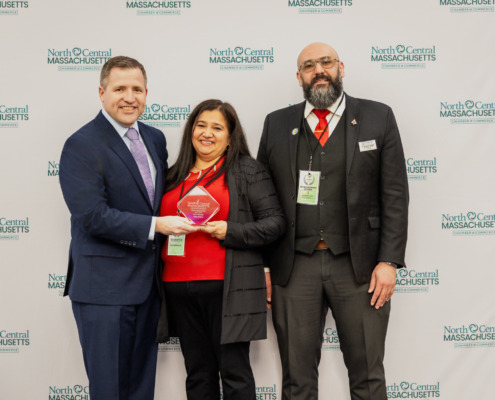

Chamber members are provided with the opportunity to engage with the Mayors of Fitchburg, Gardner, and Leominster who provide updates on projects and other things happening in their Cities. These events are by invitation only, please contact Travis Condon for more details.
View
Event
Bull Run Restaurant215 Great Rd. Shirly, MA
View
Event
Join us for our last Connect North Central of the year!
Friday, December 11, 2026
8am-9am
View
Event
January 14, 20277:15am - 9:00am
View
Event
Erin Logan | NBC 10 Reporter
View
Event
Chamber members are provided with the opportunity to engage with the Mayors of Fitchburg, Gardner, and Leominster who provide updates on projects and other things happening in their Cities. These events are by invitation only, please contact Travis Condon for more details.
View
Event
Leominster, MA – Leominster Credit Union (LCU) has partnered with Fitchburg High School to supplement their math classes with a Financial Literacy section regarding personal finance. The personal finance course includes units on checking, savings, managing credit, types of credit, saving for college, budgeting and much more! The classes run for 40 minutes and are taught rotating both in-person and virtually, engaging with over 100 students. The classes are taught by LCU employees Brittany Haley, Waldemar Agostini and Daisy Casiano in conjunction with Katie Najjar.
“At LCU we hope to continue to foster this new relationship with Fitchburg High School, faculty and students and in the future hope to expand this curriculum to additional schools within our community. We want to provide financial education to students and families to improve their skills, boost their confidence and help them achieve success,” said Katie Najjar, SVP Retail, Leominster Credit Union.
“Introducing financial literacy has been a welcomed opportunity for Fitchburg High School students. Students need to be versed in the core curriculum and practical everyday life skills such as being financially literate. Learning about budgeting, money, and finances can impact student futures and quality of life. We are happy to work with LCU in offering these options for our students,” stated Josie D’Elia, Fitchburg High School, Guidance Counselor.
Join us for a virtual Puppet Storytime on Tuesday, April 20, 2021, at 10:00 AM! Through Me to You Puppetry invites you to join Newton and his puppet friends for some storytime fun! Newton and his friends take turns reading stories and singing songs with the kids. At the end of the show, the kids are invited to “unmute” and say hi to Newton. This program is geared to ages 3 to 6, but all are welcome. Register to receive the Zoom link!
Register at https://tinyurl.com/jr6c66h3 to be sent the Zoom link.
This is a free program. For information about this or other Library programs call 978-829-1780 or visit our website: www.FitchburgPublicLibrary.org.
Leominster, MA –Leominster Credit Union has recently announced the promotions of Ellen Coughlin and Mychelle Phillips.
Ellen Coughlin was promoted to the position of Vice President, Human Resources and Development. For the last 5 years, Ellen was the Assistant Vice President of Human Resources but has been with the organization for 17 years. She will be responsible for all the Human Resources functions, development and training and will become a member of the Senior Management Team reporting to Barbara Mahoney, President & CEO. Coughlin received a BA from Worcester State College in Spanish and a minor in Health Sciences. She went on to receive her master’s degree from Emmanuel College, with a concentration in Human Resources. She has also received her PHR, Professional Human Resources designation from the HR Certification Institute and her SHRM-CP. Coughlin resides in Sterling with her husband and daughter.
Mychelle Phillips was promoted to Vice President, Operations and Information Technology (IT). Phillips has been with LCU for 17 years and Vice President of Operations for the last 6 years. Her new duties will include being responsible for the Digital and Member Service Center, Operations and our IT division. Phillips will become a member of the Senior Management Team and report to Barbara Mahoney, President & CEO. Mychelle has a bachelor’s degree from New England College of Business and holds an Accredited Automated Clearing House Professional (AAP) certification awarded by National ACH Association to individuals who are experts in electronic payments. Phillips resides in Leicester with her husband.
“These promotions are the result of the exceptional performance of these individuals within their respective departments,” commented Barbara Mahoney, President & CEO. “Ellen and Mychelle display exemplary behavior, discipline and leadership and we are pleased to have them as part of our Senior Management Team.”

When the workday ends and the lights go down, Custom Cleaning Service of Peabody, Inc. gets to work. “We operate as our clients’ silent partner after business hours,” says Adam Paicos, of Templeton, who now serves as Director of Operations and oversees the company’s expansion into North Central MA. “We are not often seen, but we ensure facilities are clean, secure, and ready for business each day while serving as the eyes and ears for our clients when they are not on site.”

Discover local business stories through our Inside North Central Massachusetts Podcast series. Listen as Chamber members share their journeys, insights, and contributions to our thriving regional business community.

Looking for your next opportunity? Explore current job openings from employers across North Central Massachusetts on our Jobs Board. Whether you’re starting a new career or making a change, you’ll find a variety of local positions available to help you take the next step.
CapEx Facility Services & Construction · Leominster, MA
TaraVista Behavioral Health Center · Harvard, MA
DRS Power Technology, Inc. · Fitchburg, MA
AIS · Leominster, MA