E-Newsletter
An Electronic Publication of the North Central Massachusetts Chamber of Commerce

Inside this edition, you’ll discover the latest Chamber initiatives and success stories from across our region. From economic development projects and upcoming networking events to policy updates and workforce training opportunities, we’re keeping you connected to what matters most for your business and North Central Massachusetts.
The North Central Massachusetts Chamber of Commerce is here to help – with trusted resources, a strong business network, and a support system to keep your business and the region moving forward
Today, Governor Charlie Baker and Lt. Governor Karyn Polito were joined by Secretary of Health & Human Services Marylou Sudders and Massachusetts General Hospital Center for Disaster Medicine Director Dr. Paul Biddinger to discuss the Commonwealth’s vaccine progress and outline the next phase of vaccine distribution.
In December, the Baker-Polito Administration set a goal of vaccinating approximately four million people in the Commonwealth. According to the CDC’s vaccine data, 3.9 million people in Massachusetts have been fully or partially vaccinated as of today. Another 180,000 people are scheduled to get their first dose in the next 7 days.
Altogether, 4.1 million are set to be fully vaccinated by the beginning of June —reaching the administration’s initial goal and representing a significant achievement for the Commonwealth.
Next Phase of the Commonwealth’s Vaccination Efforts: More Targeted, Community-Based Options
Massachusetts is a national leader for vaccine distribution across every national metric. As a result of the state’s efforts, hospitalizations and new positive cases decreased — particularly among our most vulnerable residents.
While reaching 4.1 million residents vaccinated represents progress, the administration will continue to adapt vaccine efforts to be more targeted and will shift vaccines to smaller scale operations focusing on certain populations and specific communities—such as the Commonwealth’s 20 most disproportionately impacted communities.
This next phase of the Commonwealth’s vaccine efforts will include:
Over 21,000 doses have been administered through mobile vaccination clinics in Boston, Chelsea, Brockton, Fall River, Springfield and New Bedford. Mobile clinics have been particularly effective in our equity communities and to reach people of color. So far, 61% of vaccine recipients at these clinics have been people of color.
New vaccine clinic opportunities have already started to be stood up. Some examples include:
Mass Vaccination Sites & Pre-Registration
The Baker-Polito Administration will also begin to transition or ramp down the state’s seven mass vaccination sites. Mass vaccination sites have played a critical role in the Commonwealth’s vaccination process in a very short period of time.
At the mass vaccination sites, the Commonwealth has administered 1.2 million doses and fully vaccinated 470,000 people since the first site opened at Gillette Stadium on January 18th. The state expects to administer around 250,000 second doses in May and another 180,000 first doses across all providers over the next seven days.
With millions of people vaccinated, the demand for high throughput mass vaccination sites will gradually decline, and more vaccines will be dispersed more widely across communities.
The administration will gradually close four out of the state’s seven mass vaccination sites by the end of June (Gillette Stadium, Hynes Convention Center, Double Tree in Danvers & the Natick Mall).
We will soon begin to accept walk-ins at select mass vaccination sites. Information about availability for walk-ups will be reflected on VaxFinder.mass.gov soon.
Appointments for some sites will also be available at VaxFinder.mass.gov or by calling 211.
Since the pre-registration system was launched, over 1.8 million people registered and have been offered an appointment at least twice.
In the coming weeks, the state is anticipating that the CDC may authorize vaccines for children ages 12-15, and we will keep pre-registration available for parents who may want to bring kids to a mass vaccination site.
More details to come when the CDC determines the next steps on this.
Statewide and regional business associations from across the Commonwealth have launched the Massachusetts Business Coalition on Skills (MBCS). The new statewide coalition will advocate for policies that develop the skills of our current and future workforce.
The MBCS formed because there are two sides to the skills gap and both can drag job and economic growth. On the employer side, it is difficult to find qualified talent: a 2019 survey by coalition member Massachusetts Business Alliance for Education (MBAE) found that 73% of Massachusetts employers find it “somewhat difficult” or “very difficult” to find people with the right skills to fill open positions. For workers, new skills are the springboard to job opportunities and growth: a 2016 Pew Research Center survey found that 87% of working adults believe developing new skills throughout their work life will be “essential” or “important” to career success.
“The Chamber is committed to education and workforce efforts that help our businesses attract and retain the talent that they need to compete and succeed in the economy of the future. We have long recognized the importance of education and training to the health and prosperity of the state and regional economy,” said Roy Nascimento, President & CEO of the North Central Massachusetts Chamber of Commerce. “Joining collectively with other business organizations throughout the state will help us advocate for policies that ensure our workforce is prepared to succeed.”
Over the last year, members of the Coalition’s steering committee researched, discussed, and refined policy proposals to address both the employer and employee side of the skills gap. The recommendations aim to leverage the state’s entire workforce, not just graduates with 4-year degrees, by creating a statewide standard of essential skills, expanding access to career and vocational technical education (CVTE), and incentivizing employers to provide ongoing skills training to employees.
“The Massachusetts Business Coalition on Skills is a robust, collaborative effort to close the state’s skills gaps, solidifying Massachusetts as the best place to learn, work, and do business. The state’s skills gaps are not only limiting the economic opportunity available to students and the workforce, skills gaps are also hindering the competitiveness of Massachusetts employers. To ensure an equitable economic recovery post-pandemic, the state’s talent and businesses require policy solutions that this new coalition is uniquely positioned to deliver,” said James E. Rooney, President & CEO of the Greater Boston Chamber of Commerce.
Closing the skills gaps in Massachusetts requires targeted solutions. As part of the coalition’s launch, the MBCS releases its policy agenda aimed at ensuring every resident can acquire the in-demand skills needed to be successful in the workforce. The MBCS’s policy agenda includes seven priority areas:
· Create a pathway toward essential skills development
· Modernize Career Vocational Technical Education (CVTE)
· Incentivize employer training initiatives
· Support Massachusetts’ ongoing training initiatives
· Set statewide and regional training goals
· Simplify workforce development
· Increase employer engagement.
MBCS Members as of April, 2021 include: 1Berkshire; Amplify Latinx; Bedford Area Chamber of Commerce; Black Economic Council of Massachusetts; Blackstone Valley Chamber of Commerce; Cape Cod Chamber of Commerce; Greater Boston Chamber of Commerce; Kendall Square Association; MassTLC; Massachusetts Business Alliance for Education; Massachusetts Business Roundtable; Massachusetts Taxpayers Foundation; Nashoba Valley Chamber of Commerce; Neponset River Regional Chamber of Commerce; Newton-Needham Regional Chamber of Commerce; North Central Massachusetts Chamber of Commerce; One SouthCoast Chamber of Commerce; Quincy Chamber of Commerce; Springfield Regional Chamber of Commerce; Somerville Chamber of Commerce; Western Massachusetts Economic Development Council; and Worcester Regional Chamber of Commerce.
The North Central Massachusetts Development Corporation (NCMDC) recently approved a $6,700 loan to Marcia Gagliardi owner of Haley’s Antiques and Publishing located at 488 S Main St. in Athol.
Haley’s Antiques, established in 1953, has a large selection of eclectic antiques for sale and also provides estate appraisals services. Marcia, owner, inherited the business in 1987 then added the book publishing entity renaming the business to Haley’s Antiques and Publishing. Haley’s Antiques and Publishing operates from Marica’s 1787 Georgina colonial home. This working capital loan was provided to assist with COVID recovery. For more information on Haley’s Antiques and Publishing visit them Facebook at https://www.facebook.com/Haley’s Antiques or call (978) 249-9400.
As a microloan lender, NCMDC can provide loans to small businesses up to $150,000 for work-ing capital, equipment, inventory, expansion and working with our banking partners to provide gap financing for the final piece of a project.
About the North Central Massachusetts Development Corporation
The North Central Massachusetts Development Corporation (NCMDC) is a non-profit economic development corporation with the mission of creating jobs and improving the economy. NCMDC is certified by the U.S. Small Busi-ness Administration (SBA), and the U.S. Department of the Treasury under the Community Development Financial Institutions (CDFI) Program. The NCMDC works in partnership with local banks, credit unions, chambers of commerce and area nonprofits to support emerging microenterprises, small businesses, and community projects in 76 communities in Worcester, Middlesex and Franklin Counties with loans and business assistance. Since 1996, the NCMDC has granted over $8,000,000 in loans to small businesses to help grow jobs and the economy in the region.
For more information about the NCMDC loan programs, please call 978.353.7607 or visit ChooseNorthCentral.com.
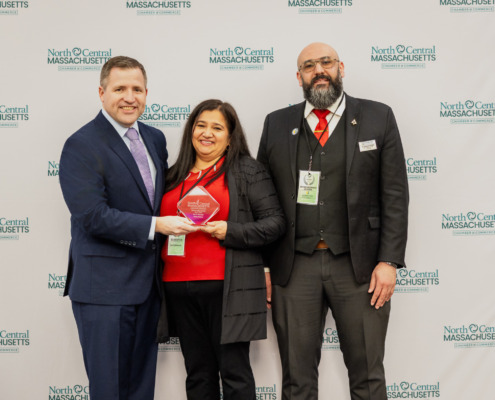

The reception features an open bar and gourmet appetizers.
View
Event
Join us for Connect North Central
Friday, September 25, 2026
8am-9am
View
Event
North Central Golf Tour Championship: Fore the Future
An FLNC Non-Traditional Scholarship Fundraiser
View
Event
Thank you Series Supporting Sponsor empHowered PR
View
Event
Join us for our 11th Annual
Congressional Luncheon
View
Event
Wednesday October 28, 2026
5:00pm - 7:00pm
View
Event
Join us for this in person HR Legal Update
View
Event
November 19, 2026
7:15am - 9:00am
View
Event
Chamber members are provided with the opportunity to engage with the Mayors of Fitchburg, Gardner, and Leominster who provide updates on projects and other things happening in their Cities. These events are by invitation only, please contact Travis Condon for more details.
View
Event
Bull Run Restaurant
215 Great Rd. Shirly, MA
View
Event
Join us for our last Connect North Central of the year!
Friday, December 11, 2026
8am-9am
View
Event
Chamber members are provided with the opportunity to engage with the Mayors of Fitchburg, Gardner, and Leominster who provide updates on projects and other things happening in their Cities. These events are by invitation only, please contact Travis Condon for more details.
View
Event
Fitchburg residents can now access free standardized testing preparation materials with their Fitchburg Public Library card. Mometrix eLibrary provides study guide eBooks, practice tests, and flash cards to help you raise your score. Exams currently covered are: SAT, HiSET, ASVAB, CNA, ATI TEAS, and CDL.
Residents can log in with their library card from our website, fitchburgpubliclibrary.org. Look for the Mometrix link under “eBooks and Digital Resources.”
To sign up for a library card or to learn more, please contact the library at 978-829-1780 or email .
The Leominster Credit Union’s (LCU) Board of Directors voted to approve a $600 Stimulus Check for all LCU employees at their recent meeting.
“We know that many individuals have faced struggles and challenges over the past year, in light of COVID-19, and we wanted to assist and support our employees as they continue to navigate through these unprecedented times. We are proud of our employees and the commitment they continue to demonstrate for our organization and our members,” stated Barbara Mahoney, President & CEO, Leominster Credit Union.
Leominster Credit Union is encouraging employees to consider spending the money locally to help initiate some form of stimulus within the communities where we live and work and to acknowledge the appreciation and commitment to organizations and businesses in the area.
Founded in 1954, Leominster Credit Union (LCU) is a member-owned, not-for-profit financial cooperative with a full range of deposit, lending and other financial services. Headquartered in Leominster, Massachusetts, LCU is proud to claim nearly 50,000 members and more than $700 million in assets. LCU has seven branch locations in Leominster, Clinton, Holden, North Leominster, Sterling and Worcester with ATM services at all branch locations. LCU also provides 24-hour banking via Mobile and Online services. Visit leominstercu.com or call 800-649-4646.
Join us on Thursday, February 25, 2021 from 7-8:30 PM for a virtual workshop where we will discuss resume writing in general, including, but not limited to: applicant tracking systems, keyword search techniques, content review, formatting choices and a variety of best practices. We will also discuss both chronological and functional resume styles.
Bonus! Participants will have the opportunity to email their resume to Gary for a free, confidential one-on-one analysis.
Gary Gekow is a Senior Employment Specialist/Career Coach with 30 years of recruiting and employment services experience in the New England staffing industry. He works closely with client companies in many industries and job seekers in various specialties. Register: http://tinyurl.com/fplresume and a Zoom link will be sent to you!
This is a free program. For information about this or other Library programs call 978-829-1780 or visit our website: www.FitchburgPublicLibrary.org.
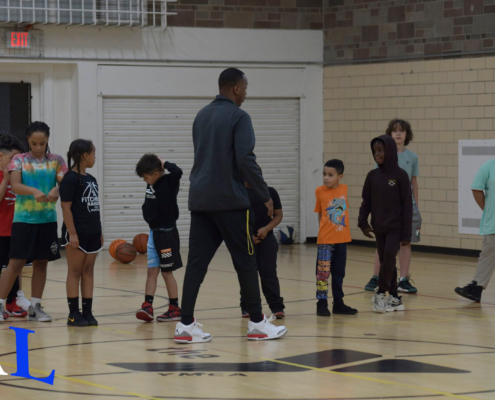
When the workday ends and the lights go down, Custom Cleaning Service of Peabody, Inc. gets to work. “We operate as our clients’ silent partner after business hours,” says Adam Paicos, of Templeton, who now serves as Director of Operations and oversees the company’s expansion into North Central MA. “We are not often seen, but we ensure facilities are clean, secure, and ready for business each day while serving as the eyes and ears for our clients when they are not on site.”

Discover local business stories through our Inside North Central Massachusetts Podcast series. Listen as Chamber members share their journeys, insights, and contributions to our thriving regional business community.

Looking for your next opportunity? Explore current job openings from employers across North Central Massachusetts on our Jobs Board. Whether you’re starting a new career or making a change, you’ll find a variety of local positions available to help you take the next step.
CapEx Facility Services & Construction · Leominster, MA
TaraVista Behavioral Health Center · Harvard, MA
DRS Power Technology, Inc. · Fitchburg, MA
AIS · Leominster, MA