E-Newsletter
An Electronic Publication of the North Central Massachusetts Chamber of Commerce

Inside this edition, you’ll discover the latest Chamber initiatives and success stories from across our region. From economic development projects and upcoming networking events to policy updates and workforce training opportunities, we’re keeping you connected to what matters most for your business and North Central Massachusetts.
The North Central Massachusetts Chamber of Commerce is here to help – with trusted resources, a strong business network, and a support system to keep your business and the region moving forward
The Baker-Polito Administration announced that Massachusetts will move forward in the Commonwealth’s reopening plan to reopen certain outdoor Phase 4 industries effective May 10ta, as previously announced. The Administration continues to take steps to reopen the Commonwealth’s economy with public health metrics continuing to trend in a positive direction.
On March 22, Massachusetts loosened restrictions and advanced to Phase IV of the Commonwealth’s reopening plan. Since then, daily new COVID-19 cases have dropped by 45%, hospitalizations have dropped by 23%, and deaths have dropped by 69%. All these metrics have dropped by around 80% or more since the beginning of the year. The Commonwealth also remains a national leader in COVID-19 vaccinations, and over 3.9 million people are fully or partially vaccinated, and Massachusetts is on track to meet its goal of vaccinating over 4 million people by the beginning of June.
Effective Monday, May 10ta:
The Commonwealth will reopen certain outdoor Phase 4 industries.
Additionally, large capacity venues such as indoor and outdoor stadiums, arenas and ballparks currently open at 12% capacity as part of Phase 4, Step 1 will be permitted to increase capacity to 25%.
Youth and adult amateur sports tournaments will be allowed for moderate and high-risk sports.
Singing will also be permitted indoors with strict distancing requirements at performance venues, restaurants, event venues and other businesses.
Grocery stores and retail stores with a pharmacy department should consider dedicated hours of operation for seniors, but will no longer be required to offer senior hours.
Additional Changes Anticipated to be Effective Saturday, May 29ta:
Contingent on continued positive trends in the public health and vaccination data, on May 29ta, additional sectors will be permitted to re-open and gathering limits will increase to 200 people indoors and 250 people outdoors for event venues, public settings and private settings.
The additional sectors that will be permitted to open include:
Subject to public health and vaccination data, the restaurant guidance will be updated to eliminate the requirement that food be served with alcohol and to increase the maximum table size to 10.
Last week, the Administration also relaxed the Face Coverings Order for some outdoor settings and announced further reopening plans for August 1para.
For more information, visit mass.gov/reopening.
Today, Governor Charlie Baker, Lt. Governor Karyn Polito, Housing and Economic Development Secretary Mike Kennealy, legislators and key partners celebrated the success of the Baker-Polito Administration’s COIVD-19 business relief program administered by the Massachusetts Growth Capital Corporation (MGCC). Gathering in person at the family- and minority-owned Panela Restaurant in Lowell, a program grantee, the Administration announced the end of the program, which has provided over $687.2 million in direct cash grants to 15,112 businesses across the Commonwealth. Among the awardees included in the final round were 108 additional businesses that received a total of approximately $4.8 million in COVID relief grants. First launched in October 2020 as part of the Administration’s Partnerships for Recovery initiative to stabilize and grow the Massachusetts economy, this program became the biggest state-sponsored business relief program in the nation after being infused with an additional $668 million in December. Established to provide direct financial support for businesses, the Administration has tapped numerous partners to ensure specific economic sectors and priority demographics known to be the most impacted by the COVID-19 pandemic applied to the program and were prioritized for aid.
Over the duration of the program, 43 percent of MGCC grants were awarded to minority-owned businesses, and 46 percent of grants went to women-owned businesses. Businesses owned by veterans, individuals with disabilities, or that identify as LGBTQ, as well as those operating in Gateway Cities and not previously awarded aid, also received substantial grant support. Additionally, one-third of the total program funding (about $224 million) has benefited the hard-hit restaurant and bar industry, with personal services like hair and nail salons ($91 million), and independent retailers ($62 million) rounding out the top sectors.
“Thanks to the work of Mass. Growth Capital, more than $680 million in direct financial assistance has been deployed to over 15,000 businesses across Massachusetts, many of which are located in the communities that have had the greatest need during this pandemic,” said Governor Charlie Baker. “Recognizing that our small business community employed close to half the Commonwealth’s workforce prior to the pandemic, this program has been instrumental in helping to keep these enterprises going while supporting a substantial percentage of our workforce as we approach what we hope are the final months of this public health crisis.”
“This program, which was designed to provide vital support to small businesses in need, is one component of our larger strategy to help the Commonwealth’s economic recovery from this unprecedented public health emergency,” said Lt. Governor Karyn Polito. “I want to applaud MGCC for their success with this program and thank their partners for helping to spread the word, which allowed us to provide direct support to those businesses that have been hit the hardest, including minority- and woman-owned businesses, restaurants and downtown retailers.”
The 15th and final round of awards totaled approximately $4.8 million in grants to 108 additional businesses. Among the final round of recipients, grants were awarded to 25 minority-owned, and 26 women-owned businesses; 24 recipients were located in Gateway Cities, and 28 businesses had not received any prior aid.
“I want to express my deepest gratitude to Larry Andrews and his team at MGCC for going above and beyond in their efforts to ensure that this important aid went to businesses located in Gateway Cities, met a demographic priority such as being minority- or women-owned, or were operating in sectors among the hardest hit during this pandemic,” said Housing and Economic Development Secretary Mike Kennealy. “In addition, I’d like to thank MGCC’s partner organizations, which include Amplify Latinx and locally the Entrepreneurship Center @CTI with us today, who truly made this program successful because of their extensive outreach to the communities that are traditionally underrepresented.”
To increase applications from underrepresented groups and achieve equitable access to funding, MGCC worked with a statewide network of local non-profits, small business technical assistance providers, and other organizations that support minority enterprises to reach businesses and entrepreneurs that would match the program’s priorities. These partners include the Black Economic Council of Massachusetts (BECMA), Amplify Latinx, the Business Equity Initiative, the Massachusetts Association of Community Development Corporations (MACDC), LISC, LEAF, the African Community Economic Development of New England (ACEDONE), and the statewide Coalition for an Equitable Economy.
“The success of this program was a direct result of the leadership of the Governor, Lt. Governor, and Secretary Kennealy; and the team at MGCC, who rose to the occasion to stand up a new program and deliver an unprecedented amount of relief to small businesses across Massachusetts that have been impacted by the pandemic,” said MGCC President and CEO Larry Andrews. “Also critical to this program’s success was the extensive network of partner organizations, including Amplify Latinx, for their work to reach out to businesses that serve communities of color, groups that have been disproportionately impacted by the virus, or who are traditionally at a disadvantage, and provided the necessary technical assistance through the application process.”
MGCC will soon be announcing two new funding opportunities focused on small businesses. A program called Biz-M-Power will assist low-income and moderate-income entrepreneurs acquire or improve their brick-and-mortar location, purchase new equipment, and other capital needs. Businesses will crowdfund through local residents, neighborhoods, community members, and other stakeholders and become eligible for matching grants. Another new program will help small businesses access tools and services to develop their digital capabilities, including social media, website development, and team collaboration.
These awards have been part of a steady deployment of grants and capital funding to support economic recovery throughout Massachusetts and are a key part of the Administration’s larger strategy to assist small businesses and support an equitable economic recovery across the Commonwealth.
“It is essential to recognize the significance of culturally and linguistically responsive outreach to minority and underrepresented groups, which was a major contributor to the program’s success,” said Amplify Latinx Executive Director Rosario Ubiera-Minaya. “These partner organizations are all well positioned and trusted by minority communities to effectively and quickly respond to the challenges faced by these businesses. The collaborative approach centered on the partner organizations has helped ensure that the collective work going forward is as intentional and impactful as possible. Keeping direction will position minority-owned businesses for stability and growth.”
In addition to this business relief program, recovery efforts consist of MGCC Small Business Technical Assistance grants and matching grants for Community Development Financial Institutions and Community Development Corporations; the Regional Pilot Project Grant Program, which is a $5 million initiative designed to activate vacant storefronts, support regional supply chain resiliency, and create small business support networks; the $1.6 million Travel and Tourism Recovery Grant Pilot Program to promote recovery in the tourism industry; the ongoing My Local MA marketing initiative to encourage residents to support their local economies by shopping at Massachusetts businesses and attractions; and a $9.5 million effort underway to help 125 communities pursue locally-driven, actionable strategies to support downtown and commercial districts through the Local Rapid Recovery Planning program.
If you want to get things done on a political level, sometimes voting isn’t enough. You have to make your case directly to the people at or near the top. But what’s the best way to do that? Most people who want to reach out to their elected representatives come up short for anything beyond writing the occasional letter to their congressional representative or senator, and many of them are at a loss for how to do even that. Getting your point across to powerful people is one of the ways we can boost our civic power, so it’s definitely a skill worth learning. Here are some approaches that tend to work.
There’s a reason everybody who represents you, from the city council to the President of the United States, has a publicly available email address; it’s perhaps the easiest way to reach them with your concerns. While the President probably has staff read his email for him, city and county officials can often be directly reached via email. If you’re able to compose a persuasive letter putting your concerns across, you might be in contact with the right person just minutes after hitting send.
Many officials also have some kind of contact form for the public on their government website. These can save a lot of effort, since they usually provide you with a standardized template for getting your point across, rather than making you come up with something completely novel for your email.
If you’ve tried going through channels and you’re still waiting for results, or if you’re concerned your communication will get lost in the shuffle if you leave it at that, you might consider taking a less-formal approach to making your point with an elected official.
One way is to personally lobby for an issue. Many civically engaged citizens take the time to visit city council and county board of supervisors’ meetings, where they can be added to the meeting schedule and get some allotment of time to speak on an issue. Failing that, you can often schedule a personal meeting with your representative in their office for a meeting that could run anywhere from 15 minutes to over an hour. This usually works well, if you can get a slice of their time, since face-to-face conversations can go a long way toward convincing your rep of your conviction and the importance of your issue. You might also consider joining a civic organization, such as your friendly local chamber of commerce, which has the ability to schedule events your representatives might attend.
However you go about contacting your elected representatives, remember that they meet all sorts of people, and you’re far more likely to get what you want if you’re polite, reasonable and can make a logical case. Before your meeting, or before you send your email, try going over what you want to say with a skeptical eye. Address any weaknesses in your argument before bringing it to your elected official; it’s bound to make your argument much stronger and more persuasive.
To find out your local elected officials contact information, visit https://www.northcentralmass.com/government-affairs/who-is-my-legislator/
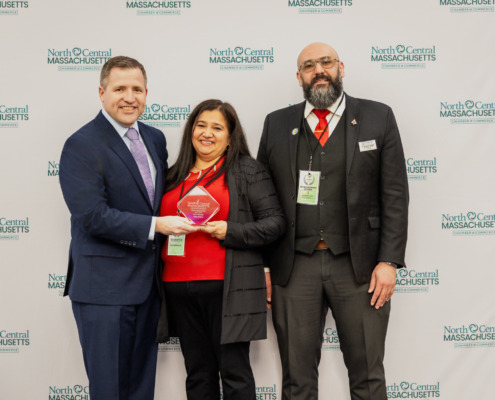

Chamber members are provided with the opportunity to engage with the Mayors of Fitchburg, Gardner, and Leominster who provide updates on projects and other things happening in their Cities. These events are by invitation only, please contact Travis Condon for more details.
View
Event
Bull Run Restaurant215 Great Rd. Shirly, MA
View
Event
Join us for our last Connect North Central of the year!
Friday, December 11, 2026
8am-9am
View
Event
January 14, 20277:15am - 9:00am
View
Event
Erin Logan | NBC 10 Reporter
View
Event
Chamber members are provided with the opportunity to engage with the Mayors of Fitchburg, Gardner, and Leominster who provide updates on projects and other things happening in their Cities. These events are by invitation only, please contact Travis Condon for more details.
View
Event
The Fitchburg Public Library has been selected as one of 16 public libraries nationwide to receive a $5,000 American Dream Literacy Initiative grant from the American Library Association (ALA) and Dollar General Literacy Foundation.
With the funding, library staff will create a Citizenship Corner in the library. The Citizenship Corner will be a single destination for patrons seeking information on citizenship test materials as well as adult literacy and ESL materials. Additionally, thanks to a partnership with the Literacy Volunteers of the Montachusett Area, two complete Citizenship Courses will be offered later this year. Assistance with the completion of citizenship applications will be provided to students of the courses as well, thanks to Project Citizenship, a Boston-based organization.
The Fitchburg Public Library was selected through a competitive, peer-reviewed application process. Nearly 90 public libraries applied for the 16 available grants, according to the ALA Public Programs Office. View all 16 recipients of the 2021 American Dream Literacy Grants. The American Dream Literacy Initiative strives to develop tools and resources for libraries and library staff to provide effective literacy services to adult English language learners in their communities and across the country.
Since the program’s inception, more than 200 libraries in Dollar General communities have initiated or expanded literacy services for adult English language learners. The grants allow libraries to augment their print and digital English as a second language (ESL) collections; increase computer access and training; provide job training; hold English language learning (ELL), general educational development (GED) and citizenship classes; and raise the visibility of services for immigrant populations.
The American Dream Literacy Initiative is made possible through the generous support of the Dollar General Literacy Foundation.
Please join us on Saturday, April 3, 2021, from 2:30-4:30 PM if you are a fan of the Long Island Medium or the Hollywood Medium! Even if you have never heard of them or are a skeptic, please consider joining us for this session of entertainment and inspiration.
The mediums, Kim and Leslie, communicate with those who have passed on, sharing messages from your loved ones and ancestors. This event is in a gallery format. There’s no guarantee you will receive a reading however the event, in and of itself, brings inspiration. The audience often feels such a strong sense of connection that creates comfort and healing.
The interpreters:
Leslie Gabriele: founder of With Love and Gratitude
Kimberley Dunsmore: a team member of With Love and Gratitude
With Love and Gratitude are a team of dedicated light workers, each with their own special gifts, acting in unison for the sole purpose of uplifting the spirit. The team works in the moment without attachment or judgment, to heal and bring peace, harmony and joy and to all they encounter. www.withloveandgratitude.com
Please sign up at https://tinyurl.com/fplmediumship. The Zoom link will be sent to the email you provide the day prior to the event.
This is a free program. For information about this or other Library programs call 978-829-1780 or visit our website: www.FitchburgPublicLibrary.org.
The City of Fitchburg through the Department of Public Works is planning improvements to the John Fitch Highway (JFH) Corridor to increase climate resilience, mitigate flooding, and increase mobility. This is a unique opportunity to improve our public spaces by incorporating nature-based solutions (like rain gardens and tree planting) and elements of Complete Streets (such as shared use paths and improved crosswalks).
We are seeking input from the community to inform initial designs for the current project within the JFH roadway between Lunenburg Street and Summer Street. Community members are encouraged to share your vision for the JFH Corridor and the innovative ideas for making the area more climate resilient. Comments are being accepted now through March 12, 2021 at https://arcg.is/SqTn80. We want to hear from residents of all ages.
Community members can also get involved by submitting a creative piece to the Envision John Fitch Highway Artwork Challenge. Show us what improvements you want to see in the Corridor to reduce flooding, make it greener, and improve bike and pedestrian access! Artwork submissions can be hand-made or computer-generated (full submission guidelines can be found here). Submit by March 12 to be entered into the Artwork Challenge! A winner will be selected within categories divided by age and medium to receive a prize. For more information please visit: www.FitchburgMA.gov/JFHProject
We will announce the winners of the Artwork Challenge at a virtual event later this spring. Watch the City’s website and social media accounts for updates on future events and engagement activities.
Mitigating flooding of Baker Brook into JFH was a top priority in the City’s 2020 and Municipal Vulnerability Preparedness (MVP) and Hazard Mitigation Plan. The initial design phase is funded by the Massachusetts Executive Office of Energy and Environmental Affairs MVP Action Grant Program.
Spanish versions available for comment and submission forms. For questions regarding this project, contact the Department of Public Works Engineering Department: 978-829-1915 or email .
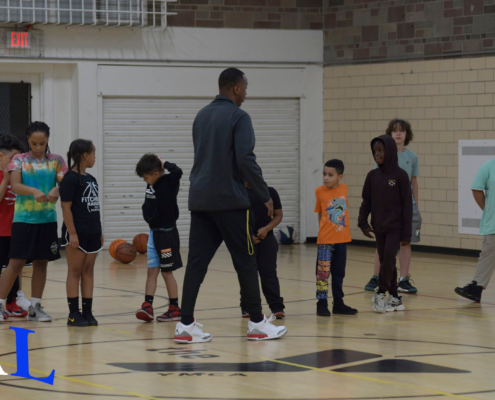
When the workday ends and the lights go down, Custom Cleaning Service of Peabody, Inc. gets to work. “We operate as our clients’ silent partner after business hours,” says Adam Paicos, of Templeton, who now serves as Director of Operations and oversees the company’s expansion into North Central MA. “We are not often seen, but we ensure facilities are clean, secure, and ready for business each day while serving as the eyes and ears for our clients when they are not on site.”
Discover local business stories through our Inside North Central Massachusetts Podcast series. Listen as Chamber members share their journeys, insights, and contributions to our thriving regional business community.

Looking for your next opportunity? Explore current job openings from employers across North Central Massachusetts on our Jobs Board. Whether you’re starting a new career or making a change, you’ll find a variety of local positions available to help you take the next step.
CapEx Facility Services & Construction · Leominster, MA
TaraVista Behavioral Health Center · Harvard, MA
DRS Power Technology, Inc. · Fitchburg, MA
AIS · Leominster, MA