E-Newsletter
An Electronic Publication of the North Central Massachusetts Chamber of Commerce

Inside this edition, you’ll discover the latest Chamber initiatives and success stories from across our region. From economic development projects and upcoming networking events to policy updates and workforce training opportunities, we’re keeping you connected to what matters most for your business and North Central Massachusetts.
The North Central Massachusetts Chamber of Commerce is here to help – with trusted resources, a strong business network, and a support system to keep your business and the region moving forward
Today at 12:30pm, Governor Baker and Lt. Governor Polito made an announcement relative to reopening and the temporary capacity and gathering limits:
1. Temporary Capacity Limits Lifted – The 25% temporary capacity limits order will expire on February 8th at 5:00 AM.
All businesses in the list below, currently limited to 25% capacity, will return to 40% capacity, as previously allowed (industry guidance effective in December 2020 will apply).
· Arcades and Recreational Businesses
· Driving and Flight Schools
· Gyms/Health Clubs
· Libraries
· Museums
· Retail
· Offices
· Places of Worship
· Lodging (common areas)
· Golf (indoor areas)
· Movie theaters (no more than 50 people per theater)
· Restaurants will now be limited to 40% of their seated capacity, but as under the 25% capacity rule, employees will not count toward their capacity limit
· Close Contact Personal Services will now be limited to 40% capacity, but as under the 25% capacity rule, employees will be not count toward their capacity limit
· A limit of 8 people per 1000 sq. feet applies for smaller businesses without an available fire occupancy capacity limit
2. Gatherings Order – Gatherings remain at no more than 10 people indoors and 25 people outdoors.
3. The Commonwealth remains in Phase 3 Step 1 of Reopening (Order No. 58) – Indoor performance venues and indoor recreation businesses like roller rinks and trampoline parks remain closed
All sector specific guidance will be updated at www.mass.gov/reopening.
Teamwork is critical for businesses in just about every industry, so it is likely that you will work as part of a team at some point in your career. Depending on your position within your organization, you may be called upon as a team leader as well. Here’s what you need to know to keep your team members in line and ensure they follow your instructions willingly.
When you first form your team, you need to establish yourself as the leader right from the start. Make sure that you are well-prepared for your first meeting so you can drive discussions and answer your team’s questions. Let your team know that you are available to help whenever they need. Remember, you are the guiding light for your team members throughout the project, so stay on top of your tasks so that you team can follow you.
Of course, you’ll do plenty of talking as the team leader, but it is just as important that you listen to your team. Because they are the ones who will be doing most of the work as you manage, they can provide unique insight as to how the project is progressing and any trouble areas that might arise. Take your team’s feedback to heart, but always keep your mind on the bigger picture as well. Your team members are each dealing with individual aspects of the project, and it is up to you to keep everyone on track towards your common goal.
While you may be able to choose the members of your team, this is not always the case, and you may be required to work with people with whom you don’t necessarily get along as friends. Although it is difficult, do your best to set your personal feelings aside. Keep your focus on the task at hand. Even if you don’t like a team member on a personal level, that doesn’t mean that you can’t still work successfully together.
Just as the captain goes down with a sinking ship, you are the responsible party as the team leader. While it may be easier to place blame on your team members for any mishaps, at the end of the day, it is you who is responsible for the successful completion of the project. Your team looks to you for direction, so if something goes wrong, you need to take responsibility.
No matter what type of project you are working on, you need to show your team that you are in it with them. No one likes to see their team leader sitting back while they do all the work, so you need to be working just as hard as your team members. At each meeting, review their progress, but also show them your progress. This way, they’ll see that you are working just as hard as they are, encouraging them to work harder for you.
Managing a team is not easy, but with careful planning and preparation, as well as a good dose of respect for your team members, you can give yourself your best chance of delivering your project successfully.
Building a positive workplace culture results in happier employees, which in turn, increases your production rates. Basically, a happy workplace is good for everyone. The question is, how can you create a positive, supporting workplace culture quickly. Check out these tips to get started.
Design an Open Floor Plan
Having a large, open floor plan lets your employees communicate with each other easily. This creates stronger team bonds and work friendships — and that alone can make your employees happy. While work shouldn’t be all about socializing, it is an important part of making your employees happy, and happier employees get more work done.
Look for New Hires That Fit In
To create a positive work culture, your employees need to get along. So it’s important for hiring managers to look for qualities in job applicants that would help them fit in at your company. For example, if most of your employees are the more casual, chatty type, you don’t want to hire someone who seems tightly wound. If you did, he or she would have a hard time working with and building relationships with your current employees. It might take you a bit longer to find someone to fill a job that will be a good fit, but finding someone who “gets” your company’s culture is worth the wait.
Be Approachable
You might tell your employees that you have an open-door policy, but do you really make them feel comfortable approaching you? Take a few minutes each day to interact with your employees. Listen to their ideas, and help them solve problems they’re having. When you show genuine interest in your employees, they know that you care about them and appreciate the work they do — and they’ll be a lot more comfortable entering your office to have a chat when needed. Also, say “hi” to people you pass in the hallways and smile frequently — it’s important for the boss to lead the way and small gestures like this show your employees that you’re happy and they should be too.
Have Some Fun
Don’t be afraid to let loose once in awhile. It’s good to have some fun with your employees. It shows them that you’re just a regular person, not someone who’s powerful and scary. Host company-wide events such as a family picnic or an office holiday party. You can also host team-building events for each team. Simply choose fun activities that require team members to work together such as a trip to the nearest escape room facility.
Recognize Accomplishments
Set reachable goals for your employees each month an give recognition awards to employees who meet or exceed their goals. Alternatively, start an Employee of the Month program and let your employees nominate their co-workers for the award. Also, when an employee reaches a small milestone, be sure to let them know that they did a great job.
Creating a positive work environment doesn’t have to be difficult. The key to success is getting your employees to bond and interact with each other and ensure they feel valued and supported.
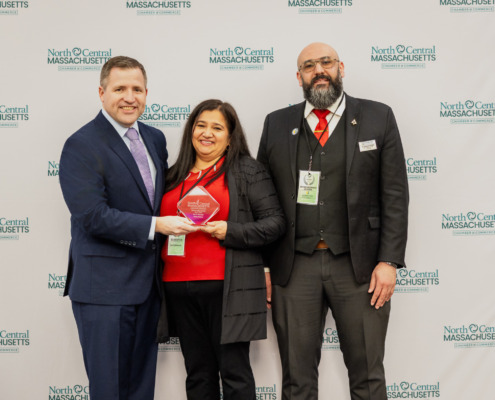

The reception features an open bar and gourmet appetizers.
View
Event
Join us for Connect North Central
Friday, September 25, 2026
8am-9am
View
Event
North Central Golf Tour Championship: Fore the Future
An FLNC Non-Traditional Scholarship Fundraiser
View
Event
Thank you Series Supporting Sponsor empHowered PR
View
Event
Join us for our 11th Annual
Congressional Luncheon
View
Event
Wednesday October 28, 2026
5:00pm - 7:00pm
View
Event
Join us for this in person HR Legal Update
View
Event
November 19, 2026
7:15am - 9:00am
View
Event
Chamber members are provided with the opportunity to engage with the Mayors of Fitchburg, Gardner, and Leominster who provide updates on projects and other things happening in their Cities. These events are by invitation only, please contact Travis Condon for more details.
View
Event
Bull Run Restaurant
215 Great Rd. Shirly, MA
View
Event
Join us for our last Connect North Central of the year!
Friday, December 11, 2026
8am-9am
View
Event
Chamber members are provided with the opportunity to engage with the Mayors of Fitchburg, Gardner, and Leominster who provide updates on projects and other things happening in their Cities. These events are by invitation only, please contact Travis Condon for more details.
View
Event
Golden Girl Granola Sends Granola to Dark Monk Arts Equipment

Dark Monk is a 1,500 square foot shop in Charlestown, Massachusetts known for their fire entertainment equipment. Owner Chad Bennett decided to help create personal protective equipment in the form of face shields as the need for this equipment became dire. Dubbed the Charlestown Face Shield Project, volunteers are producing thousands of face shields that are donated to hospitals in Massachusetts, New Jersey, New York and across the northeast.
When Dark Monk reached out to Golden Girl Granola, the wholesale bakery wanted to help. “Dark Monk called us and asked if we could donate granola for their volunteers. After hearing about the wonderful work they were doing, I didn’t think twice about sending our granola and support.” explains Deborah O’Kelly, owner of Golden Girl Granola.
The Charlestown Face Shield Project continues to make thousands of face shields as the hospital demand is still high. Since they are donating the equipment, there are costs that can be offset to help them continue production. They have a GoFundMe page where people can support the initiative.
“A month ago, Dark Monk was creating torches and wands. Now they’re creating life-saving equipment for our medical professionals and donating it to our community hospitals. They are an inspiration.” says Deborah.
About Golden Girl Granola:
Golden Girl Granola™ is a woman-led, family-owned wholesale bakery based in Shirley, Massachusetts that crafts the best-tasting artisan granola in New England. Golden Girl Granola uses a twice-baked and hand-stirred method using the finest all-natural ingredients to create a crunchy, wholesome and delicious taste. Products include loose granola offered in seven flavors and chewy granola bars. Golden Girl Granola offers the complete line nationwide for chain supermarkets, independent supermarkets, gourmet food stores, club stores and convenience stores.

Starting on Monday, April 13th, FAM will share images of artwork from each of our galleries, plus a bonus piece from their collection that is not currently on display. You can find these images on their Facebook or Instagram, as well as their website. We hope you will choose one of these images and interpret it with flowers.
A new set of images will be shared each Monday through May 3rd. In honor of Mother’s Day, the fourth and final week will feature artwork from our collection featuring the theme of motherhood. You can interpret as many times as you wish. You are not limited to one.
Sitting home, rained in and looking for some amazing groceries to be delivered to your door this week? Roots has you covered!
As the state ramps up safety measures for grocery store workers, Roots urges everyone to choose curbside and delivery when possible.
Delivery or Curbside options are available with online shopping, however, Roots is accepting your orders via email for curbside pick up as well.
A FEW THINGS TO NOTE
When the workday ends and the lights go down, Custom Cleaning Service of Peabody, Inc. gets to work. “We operate as our clients’ silent partner after business hours,” says Adam Paicos, of Templeton, who now serves as Director of Operations and oversees the company’s expansion into North Central MA. “We are not often seen, but we ensure facilities are clean, secure, and ready for business each day while serving as the eyes and ears for our clients when they are not on site.”
Discover local business stories through our Inside North Central Massachusetts Podcast series. Listen as Chamber members share their journeys, insights, and contributions to our thriving regional business community.

Looking for your next opportunity? Explore current job openings from employers across North Central Massachusetts on our Jobs Board. Whether you’re starting a new career or making a change, you’ll find a variety of local positions available to help you take the next step.
CapEx Facility Services & Construction · Leominster, MA
TaraVista Behavioral Health Center · Harvard, MA
DRS Power Technology, Inc. · Fitchburg, MA
AIS · Leominster, MA