E-Newsletter
An Electronic Publication of the North Central Massachusetts Chamber of Commerce

Inside this edition, you’ll discover the latest Chamber initiatives and success stories from across our region. From economic development projects and upcoming networking events to policy updates and workforce training opportunities, we’re keeping you connected to what matters most for your business and North Central Massachusetts.
The North Central Massachusetts Chamber of Commerce is here to help – with trusted resources, a strong business network, and a support system to keep your business and the region moving forward
The City of Fitchburg through the Department of Public Works is planning improvements to the John Fitch Highway (JFH) Corridor to increase climate resilience, mitigate flooding, and increase mobility. This is a unique opportunity to improve our public spaces by incorporating nature-based solutions (like rain gardens and tree planting) and elements of Complete Streets (such as shared use paths and improved crosswalks).
We are seeking input from the community to inform initial designs for the current project within the JFH roadway between Lunenburg Street and Summer Street. Community members are encouraged to share your vision for the JFH Corridor and the innovative ideas for making the area more climate resilient. Comments are being accepted now through March 12, 2021 at https://arcg.is/SqTn80. We want to hear from residents of all ages.
Community members can also get involved by submitting a creative piece to the Envision John Fitch Highway Artwork Challenge. Show us what improvements you want to see in the Corridor to reduce flooding, make it greener, and improve bike and pedestrian access! Artwork submissions can be hand-made or computer-generated (full submission guidelines can be found here). Submit by March 12 to be entered into the Artwork Challenge! A winner will be selected within categories divided by age and medium to receive a prize. For more information please visit: www.FitchburgMA.gov/JFHProject
We will announce the winners of the Artwork Challenge at a virtual event later this spring. Watch the City’s website and social media accounts for updates on future events and engagement activities.
Mitigating flooding of Baker Brook into JFH was a top priority in the City’s 2020 and Municipal Vulnerability Preparedness (MVP) and Hazard Mitigation Plan. The initial design phase is funded by the Massachusetts Executive Office of Energy and Environmental Affairs MVP Action Grant Program.
Spanish versions available for comment and submission forms. For questions regarding this project, contact the Department of Public Works Engineering Department: 978-829-1915 or email .
Small businesses account for 44 percent of U.S. GDP, create two-thirds of net new jobs, and employ nearly half of America’s workers. Now, millions of main street small businesses – especially Black- and Brown-owned small businesses – are struggling to make ends meet in the wake of the COVID-19 pandemic and resulting economic crisis.
The Biden-Harris administration has made delivering equitable relief to hard-hit small businesses a top priority. The latest round of Paycheck Protection Program (PPP) funding opened just one month ago and it represents a marked improvement on the prior round of the Program last year. Compared to the same point in the Program last year:
The Biden-Harris administration is announcing several reforms to build on this success by further targeting the PPP to the smallest businesses and those that have been left behind in previous relief efforts. While these efforts are no substitute for passage of the American Rescue Plan, they will extend much-needed resources to help small businesses survive, reopen, and rebuild. Specifically, the Biden-Harris administration will:
In addition to these five changes, the Biden-Harris administration has taken – and will continue to take – steps to ensure equitable distribution of relief that values each and every taxpayer dollar. These steps include:
Article source: State House News Service
Author: Matt Murphy
FEB. 19, 2021…..A four-legged octopus with a question mark hanging over its head is certainly not the image you want to see when you log on to book an appointment for a COVID-19 vaccine.
But after months of waiting for protection from the deadly coronavirus, that’s exactly what Baby Boomers found Thursday morning — a quizzical cephalopod and a message that read, “This application crashed.”
Gov. Charlie Baker had announced just a day earlier that people 65 and older, or with two or more underlying health conditions, including asthma, could begin booking appointments. The signups would start at 8 o’clock in the morning, he said. No need to stay up all night.
It felt hopeful. And then …
“My hair’s on fire about the whole thing,” Baker told GBH’s Jim Braude and Margery Eagan.
Within a few hours, the site was back up and running, and though still frustrating to users, 60,000 people were able to book new appointments, the administration said Friday. But not even his singed follicles and a mea culpa from the state’s Maryland technology vendor PrepMod could clean up the fallout the governor was left with after another hiccup in the state’s rollercoaster rollout of the COVID-19 vaccine.
The concept of a politically damaging website failure is one Baker should be familiar with since he campaigned against Democrats on it in 2014 after the state botched its Health Connector launch. This newest technology setback also came at a time when the administration was in need of a win and trying to push the narrative that its vaccine distribution performance had been improving vis-a-vis other states.
Massachusetts now ranks sixth in the country for first doses administered per capita, according to the CDC. But that was cold comfort to many lawmakers fielding calls from frustrated constituents desperate to get an appointment for themselves, their parents or a loved one.
“We need the next few months to go a lot smoother,” Rep. William Driscoll said.
Driscoll, of Milton, and Sen. Jo Comerford, of Northampton, were recently appointed by Speaker Ron Mariano and Senate President Karen Spilka to chair the new Committee on COVID-19 and Emergency Preparedness. The oversight committee didn’t have to look far or wait long to find its first subject.
Driscoll and Comerford will convene a hearing next Thursday to explore what’s gone right and wrong with the state’s vaccination program, and they’ve invited Baker himself to take the hot seat.
The oversight role is not one the Legislature tries to play often, and when it does it can sometimes be an uncomfortable fit. But Baker is not the only one whose hair has been on fire lately, and Mariano may have helped set the tone as he went on the Sunday show circuit last weekend criticizing Baker’s vaccine program.
Not only did Mariano say he thought the companion policy made little sense, but the former public school teacher said teachers should be moved up the priority ladder. Teachers happen to be in the next grouping.
The governor’s office has not said if he will accept the invitation to testify, but the committee has also asked Health and Human Services Secretary Marylou Sudders and top public health officials to appear.
Driscoll was in the spotlight for the role he will play next week in holding the Baker administration accountable, but he also generated headlines by filing a climate change mitigation bill that would invest $10 billion in infrastructure by 2030.
With former House Speaker Robert DeLeo and his $1.3 billion “Green Works” bill seemingly gone from the discussion, Driscoll is looking to fill that void with a new plan that would extend carbon pricing to emissions not currently taxed, such as those from heating, and authorize $500 million in annual borrowing.
The Senate refused to consider DeLeo’s borrowing plan last session, and Senate Democrats also ignored Gov. Baker’s similar $1 billion bill paid for with real estate transfer taxes. But the lack of investment in climate resiliency was an issue Baker flagged in his letter to the Legislature vetoing the climate emission bill in January, and 2021 is a new year.
Speaking of the climate bill, the Legislature has yet to take up the governor’s amendments, though Baker told the Greater Boston Chamber of Commerce that he was hopeful about the direction his dialogue with the House and Senate was moving.
And while he waits, his administration announced it would use $10 million to expand the state’s electric vehicle rebate program to cover pickups and other large trucks and vans. Putting more electric vehicles on the road is a big part of Baker’s roadmap to get to net zero emissions by 2050.
Baker also told the Chamber that he thought it was “appropriate” and “absolutely necessary” that MCAS exams, even modified tests, be given to students this spring.
The governor’s comments came as a collection of education and civil rights groups, including the two major teachers unions, wrote to lawmakers pleading for them to push the Department of Education to seek a federal waiver to cancel the tests this spring.
Baker didn’t seem at all open to the idea, describing the exams as necessary to get a sense of if and how far students had fallen behind over the last year.
Pointing to the substantial amount of money for K-12 education that would be headed to Massachusetts if President Joe Biden’s American Rescue Plan passed, Baker said he’d like some of that money to be put toward summer school and programs to help students make up for lost school time. And that would be harder to do if educators don’t know where students must catch up.
As for that stimulus plan. U.S. Rep. Lori Trahan’s office said this week that Massachusetts stands to receive $8.275 billion in direct state and local relief funding from the White House package, including $4.5 billion for state government and the balance going to cities and towns.

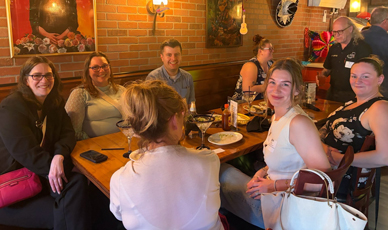
The reception features an open bar and gourmet appetizers.
View
Event
Join us for Connect North Central
Friday, September 25, 2026
8am-9am
View
Event
North Central Golf Tour Championship: Fore the Future
An FLNC Non-Traditional Scholarship Fundraiser
View
Event
Thank you Series Supporting Sponsor empHowered PR
View
Event
Join us for our 11th Annual
Congressional Luncheon
View
Event
Wednesday October 28, 2026
5:00pm - 7:00pm
View
Event
Join us for this in person HR Legal Update
View
Event
November 19, 2026
7:15am - 9:00am
View
Event
Chamber members are provided with the opportunity to engage with the Mayors of Fitchburg, Gardner, and Leominster who provide updates on projects and other things happening in their Cities. These events are by invitation only, please contact Travis Condon for more details.
View
Event
Bull Run Restaurant
215 Great Rd. Shirly, MA
View
Event
Join us for our last Connect North Central of the year!
Friday, December 11, 2026
8am-9am
View
Event
Chamber members are provided with the opportunity to engage with the Mayors of Fitchburg, Gardner, and Leominster who provide updates on projects and other things happening in their Cities. These events are by invitation only, please contact Travis Condon for more details.
View
Event
LEOMINSTER, Mass – Fidelity Bank is doing its part to help protect local front line healthcare workers during the COVID-19 pandemic. The bank has donated a total of 6,000 KN95 face masks worth nearly $14,000 to and UMass Memorial HealthAlliance-Clinton Hospital with locations in Leominster, Fitchburg, and Clinton; UMass Memorial Medical Center in Worcester, Saint Vincent Hospital in Worcester, Heywood Hospital in Gardner, and Central Care Nurses Association. On May 8, Fidelity Bank provided free lunches to 400 employees at six of UMass Memorial HealthAlliance’s facilities as well.
“Our community has continued to show immense support for the hospital in myriad ways,” commented Steve Roach, interim President of UMass Memorial HealthAlliance-Clinton Hospital. “This commitment raises the spirit of our caregivers and has immediate impact in our community. We can’t thank Fidelity Bank enough for this generosity.”
The money comes from Fidelity Bank’s LifeDesign Community Dividend, which donated more than $330,000 to more than 250 worthy organizations in Central Massachusetts last year. “Healthcare workers are heroes who are putting their lives at risk daily to get us through this crisis,” says Fidelity Bank Chairman and CEO Edward F. Manzi, Jr. “Donating masks to keep them safe and providing free lunches are just two ways we can live up to our Caring LifeDesign promise to provide support to our community, clients, and colleagues.” Fidelity Bank has given out more than $2 million since the dividend program was formally named in 2013.
About Fidelity Bank:
Founded in 1888, Fidelity Bank is one of the oldest independent community banks in Central Massachusetts. Fidelity Bank’s exclusive LifeDesign approach offers a range of banking, investment, and insurance solutions to clients in 14 full-service offices in Leominster, Worcester, Fitchburg, Needham, Gardner, Stow, Shirley, Barre, Millbury, Paxton, Princeton and Winchendon. The Bank has consistently earned a “5 Star” rating from BauerFinancial, Inc., the nation’s leading independent bank rating and research firm. In 2018, Fidelity Bank was voted Worcester Telegram & Gazette Best Bank in Central Massachusetts and Best Financial Services. It was also named Best Bank by both Leominster Champion and Baystate Parent for 2018. It has been recognized by the Worcester Business Journal as a Top Workplace and in 2019 named to the Boston Globe’s Top Places to Work list for the fifth time. As of March 31, 2020, the bank had total assets of approximately $1.2 billion. For more information, visit www.fidelitybankonline.com or www.facebook.com/fidelitybankma
Comeketo Brazilian Steakhouse of Leominster is on a mission to feed families in need throughout the community. That is why they are putting on a Facebook Live Event this Saturday, May 16th starting at 8:00 PM.
Their goal is to raise funds to feed at least 30 families in our community.
Help them by sharing this message. Comeketo will donate .50¢ for every share they get + 10% of sales on Saturday.
Comeketo has also released a new delivery menu for some of their famous drinks to coincide with the livestream event.
Check out the drink menu below!


When the workday ends and the lights go down, Custom Cleaning Service of Peabody, Inc. gets to work. “We operate as our clients’ silent partner after business hours,” says Adam Paicos, of Templeton, who now serves as Director of Operations and oversees the company’s expansion into North Central MA. “We are not often seen, but we ensure facilities are clean, secure, and ready for business each day while serving as the eyes and ears for our clients when they are not on site.”

Discover local business stories through our Inside North Central Massachusetts Podcast series. Listen as Chamber members share their journeys, insights, and contributions to our thriving regional business community.

Looking for your next opportunity? Explore current job openings from employers across North Central Massachusetts on our Jobs Board. Whether you’re starting a new career or making a change, you’ll find a variety of local positions available to help you take the next step.
CapEx Facility Services & Construction · Leominster, MA
TaraVista Behavioral Health Center · Harvard, MA
DRS Power Technology, Inc. · Fitchburg, MA
AIS · Leominster, MA