The impact of COVID-19 necessitated The Arc of Opportunity to transition a highly successful in-person charity auction to an online format. The Annual Charity Auction has a long history of raising essential funds for The Arc’s Family Supports and Recreation Program, which receives little to no government funding. During COVID-19, The Arc continues provide supports to families by creating connections to community resources, offering healthy relationship guidance, and developing meaningful bonds absent during social isolation.
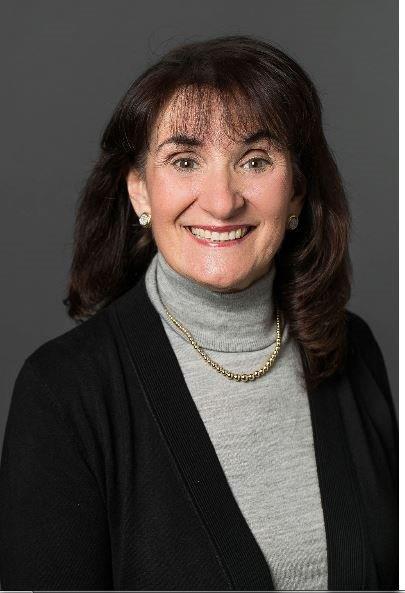
“Now more than ever, The Arc relies on the generosity of our loyal sponsors, donors, and supporters to deliver critical supports in innovative ways. This year’s Charity Auction will be an opportunity to connect both with new people and those who have traditionally attended the auction each year. A special thank you to The Arc’s Corporate Sponsor Workers Credit Union and the many other sponsors for their commitment during a time of change,” says Mary Heafy, President and CEO.
Colby O’Brien, Director of Development at The Arc, said, “This decision was difficult but in an abundance of caution, we made the right call. The 2020 Annual Charity Auction has an incredible committee and dedicated donors. One silver lining of moving the auction online is that it presents an opportunity to involve those who have never participated before. In the weeks ahead, the community will find more information posted on The Arc’s Facebook page and the event’s website www.TheArcAuction.GiveSmart.com.”
Those who want to support The Arc’s Charity Auction with in-kind or monetary donations can contact Colby by email at or by phone at 978-343-6662.
Leominster, MA – The Montachusett Home Care Corporation is pleased to announce the selection of David Ginisi to its executive leadership staff in the position of Chief Marketing Officer.
In this position, Mr. Ginisi will oversee the organization’s awareness across all digital platforms, help provide impactful and innovative messaging and increase outreach to the 21 communities in North Central Massachusetts that the agency serves.
“We are excited to welcome David to our leadership team,” said Lori Richardson, Chief Executive Officer of Montachusett Home Care Corporation. “David will be a tremendous asset to our agency with his drive for community engagement and his extensive proven marketing and outreach experience. Dave is vital in ensuring that our community knows our mission is to provide comprehensive information and quality services so that older people, individuals with disabilities and their families are empowered to make personalized choices to ensure a life of dignity, safety and respect.”
David joins Montachusett Home Care from the North Central Massachusetts Chamber of Commerce, and its affiliates: Visit North Central Massachusetts and the North Central Massachusetts Development Corporation, where he worked as the Marketing and Communications Manager for several years. He played a pivotal role in helping advance the North Central Massachusetts economy by developing many key marketing campaigns and initiatives while working hand-in-hand with business and community leaders across the entire region. David holds a bachelor’s degree in Communications Media from Fitchburg State University, class of 2016. He is also a graduate of the Community Leadership Institute class of 2020. David is a resident of Fitchburg and is extremely active in his community, including serving on the Board of Directors for Fitchburg Access Television, the Advisory Board for Fitchburg State University’s Center for Italian Culture, and several committees including: The Young Professionals of North Central Massachusetts and Fitchburg Civic Days.
Montachusett Home Care Corporation (MHCC) is a non-profit agency incorporated in 1974 that is overseen by a volunteer Board of Directors from the community it serves. MHCC serves Ashburnham, Ashby, Ayer, Berlin, Bolton, Clinton, Fitchburg, Gardner, Groton, Hubbardston, Lancaster, Leominster, Lunenburg, Pepperell, Princeton, Shirley, Sterling, Templeton, Townsend, Westminster and Winchendon.
MHCC’s trained professional staff of nurses and case managers, work one-on-one with older adults (60+) and adults of all ages living with disabilities to connect them to services such as homemaking, personal care, home delivered meals, chore services, adult day health, caregiver support or information on public benefits and information of community based services. Assessments, care management, service coordination and services delivered are all based upon quality assurance protocols and regulatory compliance standards. Many of the services are free or low-cost, depending upon income.
Business or community members interested in learning more about MHCC’s dynamic line of work should contact David at (978) 466-1571 or via email at .
Learn how to get your garden ready for the colder weather with Ingrid Wheeler, local gardener and landscape designer, on Thursday, September 17, 2020, at 7:00 PM in a special Virtual Workshop!
Whether you are an experienced gardener, or this is your first year with a quarantine garden, there is lots to learn! Topics discussed may include:
(North Central, MA) –The next edition of the North Central Massachusetts Chamber’s popular Good Morning North Central program is scheduled for Friday, September 18, 2020 from 7:00 a.m. to 8:30 a.m. Due to COVID-19 and restrictions around large-scale events, the September program will take place online. The September edition is sponsored by Unitil.
The Good Morning North Central series is a high-profile, fast-paced and educational morning program geared towards executives, senior managers, professionals and business owners. Each of the programs has a business-oriented focus and features popular speakers to present on topics of interest to local businesses.
The featured speakers for the month of September are the Honorable Michael Nicholson, Mayor of Gardner and Andrew E. Lelling, United States Attorney for the District of Massachusetts.
Michael Nicholson was elected the 20th mayor of the City of Gardner following a special election on June 30, 2020. Prior to being elected Mayor, Nicholson served as the Administrator for the Town of Rutland and previously as the Executive Aide to Former Gardner Mayor Mark Hawke. He is a graduate of the University of Massachusetts Amherst with Bachelors’ degrees in both History and Political Science and a Master’s degree in Public Policy. He is currently a candidate for a Juris Doctor degree at Suffolk University Law School.
Andrew E. Lelling was sworn in as U.S. Attorney for the District of Massachusetts on December 21, 2017. Prior to his appointment, Mr. Lelling served as a federal prosecutor for over 15 years, first in the Civil Rights Division at the Justice Department and later at the U.S. Attorney’s Offices for the Eastern District of Virginia and the District of Massachusetts. He was the lead prosecutor in a number of complex fraud, immigration and international drug trafficking investigations. In addition, Mr. Lelling has prosecuted major drug trafficking organizations, domestic branches of Mexican drug cartels, and global drug traffickers based in Eastern Europe.
Before joining the Justice Department, Mr. Lelling was a senior litigation associate at Goodwin Procter in Boston and a litigation associate at LeBoeuf, Lamb, Greene & MacRae in New York. Mr. Lelling graduated cum laude from University of Pennsylvania Law School in 1994 and received a Bachelor of Arts in Literature & Rhetoric from Binghamton University in 1991.
The cost is just $10 for Chamber members/$25 non-members. Virtual attendees can engage with the chance to submit questions for our guests. Pre-registration is required. For more information or to register, please contact Kathleen Deal at 978.353.7600 ext. 235, or visit www.northcentralmass.com.
How to Grow When It’s Slow: Change Your Business for The Better
“Companies are getting good at ripping off the band-aid and making decisions quickly and swiftly,” reports Cameron Herold, business expert and author of Meetings Suck. “That’s a good skill to have now that they’ve all benefited from making those tough decisions confronted with real facts.”
We got to eavesdrop on business expert Cameron Herold in a recent Real Estate Rockstars Radio interview. He’s the mastermind behind hundreds of companies’ exponential growth and teaches today’s most dynamic business leaders.
There are tons of lessons that companies and business leaders can learn from a crisis. We see this period as an opportunity for retooling businesses and making them better. Cameron Herold offers the following tips that we think can help you thrive.
Create a more empathetic workplace
One of the most important lessons that you can learn during tough times is empathy. After a crisis has passed, there should be a shift in your business culture. Both the management and employees should appreciate each team member’s contribution to the running of the organization. There should be more humanity, with colleagues looking out for and seeking to understand each other more. This will create a sense of belonging and make employees feel valued and appreciated.
Make tough decisions swiftly
For any business to grow when it is slow, the management has to make a lot of tough decisions. The changes that such events bring require that businesses adapt quickly to survive. Considering the fast-changing world in which businesses operate, the ability to make decisions quickly is an asset that will deliver great benefits. Herold says that these are skills that will stay with people beyond the crisis. When decisions are made based on data, there is a good chance they will make your business better.
Focus on innovation
Making your business better will also involve focusing on innovation and investing in technology systems that facilitate mobile working. Most crises will create barriers to business, making it necessary to develop better approaches and new ways of thinking. Greater innovation will create an environment for employees to explore, exercise creativity, and develop problem-solving skills. In the end, it will be important to ensure that all employees are comfortable with technology.
Improve leadership
Leadership will be instrumental in guiding the team through tough times and improving business operations going forward. In uncertain times, business leaders will adopt the most effective behaviors and attitudes. These include communicating clearly, thinking long-term, staying calm and strong, taking decisive action, and demonstrating empathy. If you want to make your business better, you should demonstrate the true leadership character that a crisis reveals. You should make these values part of your business culture to ensure sustainable growth in the long term.
Renewed career opportunities
The adjustments that are made during a crisis will create work that allows for more diversity. The use of technology will also make work more flexible as employees work remotely. Business leaders will encourage engagement to ensure that all employees play their part in overcoming the crisis. Depending on how the process is handled, there will be numerous career opportunities for staff as the management broadens the definition of responsibilities, reassesses critical jobs, and motivates employees.
For information about how to become a better business owner or operator, check out the Second In Command Podcast at CameronHerold.com/podcast.
And stay tuned for the next article in the 6-part series How to Grow When It’s Slow on the topic of remote hiring.
Article by: Matt Murphy
Article Source: State House News Service
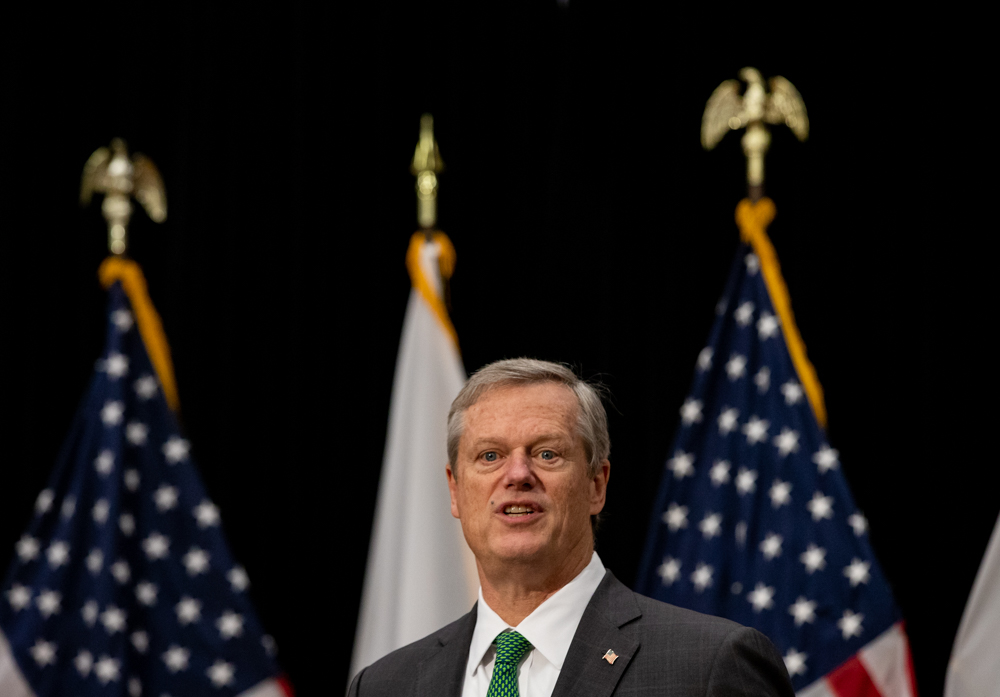
AUG. 25, 2020…..Gov. Charlie Baker visited a bicycle shop in Belmont on Tuesday, admitting after a tour that he and his wife, Lauren, have “kicked the idea around for awhile” of buying themselves bikes.
Baker insisted, “No, I wasn’t shopping,” but suggested he might take his own advice this weekend and go out to get himself two new wheels during the the state’s annual sales tax holiday weekend.
“I think it would be great if everybody who’s looking to buy pretty much anything that they’ve been putting off or that they might do at some point down the road to find a way to go out and make that happen,” Baker said Tuesday, after touring the award-winning WheelWorks bike shop, co-owned by Clint Paige.
The official reason for Baker’s visit was to draw attention to the upcoming tax-free weekend and announce a $2 million ad campaign that will run through the end of the year, encouraging residents to shop, dine out and travel at local stores and destinations.
For the fourteenth time since 2004, the state will give shoppers buying from Massachusetts retailers this weekend a break from the state’s 6.25 percent sales tax on all purchases under $2,500.
Baker said the holiday weekend, which became a permanent fixture on the August calendar in 2018, is important every year, but especially this year as small businesses look to recover from the COVID-19 pandemic restrictions imposed throughout the spring and early summer.
“We would urge you all to get out and shop and shop safely,” Baker said.
Paige said he’s been lucky to have a product that people wanted to use during the pandemic, but he said other retailers and the food industry have not been as lucky.
“So do whatever you can, residents here in Massachusetts, to recognize the fact that there’s a lot of people out there that are still hurting. Do what you can to come up this weekend and come out over the next several months to support these businesses that are not doing quite as well,” Paige said.
Lt. Gov. Karyn Polito said the administration plans to use $500,000 from the budget of the Massachusetts Office of Travel and Tourism and $1.5 million from the federal coronavirus relief fund to run print, television, radio and online ads through the end of the year. The campaign begins Friday.
The state will also utilize billboards and social media to spread the message, and plans to consult with regional tourism councils on marketing strategies. MOTT is run by Executive Director Keiko Orrall, a former state legislator from Lakeville and Republican National committeewoman who is in Charlotte this week for the Republican National Convention.
The “My Local MA” campaign can also be accessed online at www.findmylocalma.com, with links to local resources and chambers of commerce to find out where to shop and stay locally.
“The goal of this campaign is to continually remind people that where you shop, dine and travel matters,” Polito said.
Massachusetts Retailers Association President Jon Hurst visited WheelWorks with Baker, and said that while 100 percent of RAM’s members are now open, 50 percent are operating at reduced capacity. He said that could mean businesses doing only curbside or delivery business, or limiting the number of people in their stores at any given time.
“We need to remind people that they need to shop like jobs depend on it, because, frankly, they do,” Hurst said.
Massachusetts is one of 16 states that plan to hold a sales tax holiday this year, according to Hurst. The Legislature previously voted every year whether to authorize the August sales tax holiday, but in 2018 Baker signed a law making it permanent.
Baker said that the tax-free shopping weekend, which is typically pegged to the return to school, costs the state between $20 million and $25 million in forgone tax revenue. In a year when the state still doesn’t have an annual budget in place and is worried about a big mismatch between spending and revenues, and with school beginning remotely for many students, Baker did not offer an estimate for how much this year’s holiday could cost.
Hurst said that 20 percent of his member businesses have reported doing better than last year, while 80 percent have seen a downturn in business in 2020.
Baker said that while businesses like WheelWorks have benefited from people wanting to get outside and be active during the pandemic, other sectors of the economy, including the tourism and entertainment industries, are paying “an incredibly painful steep price for COVID and for a lot of the restrictions and the rules and the guidelines that we put in place.”
“A tax break is always good for the taxpayer, obviously, but this year in particular we really want everybody to think about taking advantage of the chance that this provides for you to go shop in locally-owned, locally-operated business in your community,” Baker said.
How to Grow When It’s Slow: What Not to Do Right Now
Cameron Herold is a top business consultant, speaker, and author of Double Double – How to Double Your Revenue and Profit in 3 Years or Less.
We got to take a peek into a conversation business expert Cameron Herold had with one of his clients via a recent podcast interview on Real Estate Rockstars Radio. He’s the mastermind behind hundreds of companies’ exponential growth and teaches today’s most dynamic business leaders.
Cameron asked his client, “What revenue ideas have you come up with?”
“We haven’t had time for that,” she replied.
“So what marketing have you been doing in the last 10 days,” Cameron asked?
“We haven’t had time for that,” she repeated.
“You’ve never gone two weeks without doing sales and marketing and business development in your history,” Cameron explained. “Why would you stop now?”
This series has been offering ideas on what you can do to grow your business, it seems appropriate that we share some suggestions for what NOT to do. For example, don’t stop marketing!
There is a lot that business leaders can do to ensure their company grows when it is slow. However, some mistakes could prove costly in the long run. Inspired by Cameron, here are some things we would discourage during a crisis:
Don’t Change Your Strategic Plan
Crises can send business leaders into a frenzy as they take measures to protect the company and employees. To avoid making mistakes, you should look at the areas where you can cut costs while at the same time remaining focused on the future. When the ground starts shaking, avoid the temptation to change your strategic plan immediately. It would be necessary to think, consult, and discuss the business’s future with the relevant stakeholders to help you grow both during and after the crisis.
Don’t Lie to Achieve Short-Term Goals
It can be difficult to deal with the pressure that comes with a crisis and slow growth. Companies will do everything in their power to ensure they get paid for their products and services. You should be careful not to lie to achieve short-term revenue targets. When managing a crisis, it is important that you think long-term. Having a long-term plan will allow you to do your sales and marketing while at the same time mitigating risks and losses.
Don’t Put Unreasonable Pressure on Teams to Deliver Results
Some managers will double sales goals or ask employees to deliver higher numbers to the company in tough times. However, it is important to understand that the employees are trying to adapt to changes as well. Crises present a challenging working environment that may make it difficult for many employees to deliver the expected results. It should not feel as though business leaders are out of touch and tone-deaf. Managers should set realistic targets that will encourage employees to deliver.
Don’t Give Bad Behavior A Pass
When trying to navigate the tough environment and lead your team forward, you should remember that this is a stressful time. Your employees may be under pressure both at work and at home. However, this is not to say that bad behavior should be condoned in the workplace. An angry outburst at work can erode trust and ruin relationships between colleagues. Whenever you notice any bad behavior, you should not give it a pass. Instead, call out the bad behavior to ensure it does not undermine focus and hard work.
Don’t Be Slow to Adapt
Most crises will lead to a change in interests and habits, which can cause a shift in the competitive landscape, making it necessary to respond quickly to the changes. When circumstances appear to be dire, keeping a competitive edge can be very challenging. However, you will have to adapt quickly if you want to pursue new markets and opportunities. Failure to do this may see you falling behind on the competition and struggling to recover when the crisis fades.
For information about how to become a better business owner or operator, check out the Second In Command Podcast at CameronHerold.com/podcast.
And stay tuned for the next article in the 6-part series How to Grow When It’s Slow on the topic of how to change your business for the better.
PRINCETON, MA, August 17, 2020 – NEADS World Class Service Dogs invites the public to join us in person on Saturday, August 22 from 10am-2pm for the Dog Days of Summer Shop Sale. We’re taking everything outside for a safe, socially distanced shopping experience.
Shoppers can get the best deals of the summer on apparel, gifts, and goodies from the NEADS Shop (shop.neads.org).
We’re planning a safe, socially distanced shopping experience with virus prevention protocols in place including: mandatory masks worn by staff and customers; spaced out tables and tents; Service Dogs and Service Dogs in Training only (no pets).
About NEADS Inc.
NEADS Inc. is a 501(c)(3) nonprofit organization located in Princeton, Massachusetts. Established in 1976, NEADS offers the widest array of Service Dog programs in the industry, including Service Dogs for adults and children with a physical disability, Service Dogs for veterans, Service Dogs for Hearing, and Service Dogs for children with autism or other developmental disabilities. NEADS dogs are also partnered with professionals in classroom, therapy, hospital, ministry, and courthouse settings. For more information, please visit neads.org.
How to Grow When It’s Slow: What Your Team Needs Right Now
“To really grow quickly,” says business expert Cameron Herold, “You have to be slightly more than a business, slightly less than a religion.”
Cameron explains further that, when you add publicity to a great culture, you attract more of the talented people who will fit your culture as you grow.
“The culture is what was going to allow us to bring those people into the organization quickly,” he adds.
Cameron Herold is a top business consultant, speaker, and author of Vivid Vision. We caught up with him via a recent podcast interview he did for Real Estate Rockstars Radio. He’s the mastermind behind hundreds of companies’ exponential growth and teaches today’s most dynamic business leaders.
Business leaders play a critical role in getting companies through slow growth periods. A crisis is characterized by enormous pressures and challenges that make it necessary for organizations to learn quickly in the fast-moving environment. Inspired by experts like Cameron, we’ve compiled a few suggestions for your business.
Demonstrate true leadership
Employees, customers, and suppliers will be looking to the management for direction when there is a crisis. Business leaders will need to stay connected with reality without focusing too much on the crisis. Instead, the leaders should clearly define the future so that staff can fit into the plan. Difficult and uncertain situations will require leaders who can remain calm, focused, energetic, and confident. A confident leadership will inspire the confidence of the different stakeholders, making it easier to navigate the tough times.
Transparent communication
The natural reaction for many people during a crisis will be fear and anxiety. Business leaders have to understand this and take steps to reassure stakeholders by maintaining transparent communication at all times. Employees will want to know the measures that have been put in place to ensure a secure work environment. Investors and customers will also want their concerns to be addressed proactively. Sometimes explicit communication will mean admitting to stakeholders that you are afraid or do not know something.
Encourage collaboration
When responding to a crisis, you will not have all the answers. You should consider calling on the capabilities of your employees and team members to help overcome the uncertainty. Leaders can bring talents together through task forces, and sub-taskforces with clearly defined roles. Continuous engagement with employees in this manner will reduce rumors and fear-mongering. Your staff will also have confidence in you and rely on your leadership for direction, creating a calm environment in which meaningful progress can be achieved.
Accelerate digital transformation
Businesses are continuously pursuing digital transformation programs to improve the efficiency of their operations. However, a crisis that causes major disruptions across many industries will make this transformation an urgent priority. Business leaders will have to accelerate the process to ensure that they find new ways of working and creating value through technology. Considering that employees will work remotely when it is slow, digital transformation will help address the current and future needs of your business.
Proper financial management
For any business to grow when it is slow, leadership teams will have to make tough decisions to cut costs. In essence, cash is king at a time of crisis, making it essential to focus on the company’s short-term and long-term financial health. It would be important to consult widely and make smart decisions that will place your business on the growth path. Prudent financial management will enable you to conserve the available resources and keep your business running.
Have a clear vision
Leadership teams should learn important lessons from any crisis and make the necessary adjustment to ensure the business is prepared for other crises in the future. These adjustments will also help to develop a clear vision that will be shared with the employees. The vision should describe every aspect of the business, painting a picture of where the leadership wants to take the company in the coming years. As you do this, you should not lose sight of other risks that could pose a threat to your business.
For information about how to become a better business owner or operator, check out the Second In Command Podcast at CameronHerold.com/podcast.
And stay tuned for the next article in the 6-part series How to Grow When It’s Slow on the topic of what not to do right now.
Article Source: The Statehouse News Service
Article Author: Matt Murphy
AUG. 14, 2020…..Apologies to Pink Floyd, but experts agree kids do need some education. The nagging question is how best to provide it.
Learning is supposed to resume in a matter of weeks, but tension abounds between the state, districts, teachers’ unions, and parents about whether it’s safe to return to the classroom and whether remote learning is an acceptable substitute.
The state’s two major unions – the Massachusetts Teachers Association and the American Federation of Teachers – want school buildings to remain shuttered, at least to start the year. But Gov. Charlie Baker said he “can’t imagine” why most kids wouldn’t be returning to school given the current status of the virus in Massachusetts.
After creeping up and ringing some alarm bells, the statewide positive test rate is back down around 1.5 percent, which is the lowest it’s been since widespread testing began.
Baker has preached local control throughout much of the pandemic, and rolled out a new rubric this week for people, including school administrators, to make decisions based on what’s happening in their own communities, not just across the state.
But he also made clear where he comes down on the question of remote versus in-person schooling. He’s had less to say about fall athletics, though his administration also warned this week that sports like football and basketball are inherently more risky than tennis.
Gov. Charlie Baker looked up at a television screen displaying the state’s new color-coded COVID-19 infection rate map during a Tuesday news conference. [Sam Doran/SHNS]
The administration deployed another “stoplight” system to track each city and town’s progress in controlling COVID-19. The new color-coded maps of Massachusetts municipalities shade cities and towns “red,” “yellow,” or “green” based on the prevalence and spread of the coronavirus.
The colors correlate to average new daily cases reported over the previous two weeks, with “green” towns reporting fewer than four daily cases per 100,000 people, and “red” towns reporting more than eight new cases a day for every 100,000 people.
A fourth category – white – means a municipality has had fewer than five new cases reported in total over the past two weeks.
“If you’re in a green or a white community, I can’t imagine a good reason not to go back, whether it’s full-time or some sort of a hybrid, because for all intents and purposes you meet all the benchmarks that are being used across the country and across New England to make decisions about whether it’s safe to go back to school,” Baker said.
The governor said that unlike remote learning in the spring, the start of a new school year means students starting new grades with teachers they don’t know, and vice versa. Learning to read, he has said, is not a virtual exercise.
The Department of Elementary and Secondary Education formalized the governor’s position when it told the 305 green and yellow communities that the state expected them to prioritize in-person learning, though there’s no consequence for disobedience.
For 46 other communities, that is not their situation.
In these higher-risk communities, the state has put together an inter-agency task force to offer assistance with testing, contact tracing and enforcement of public and private gathering size limits.
The state said it will also help, if asked, with public awareness campaigns to remind people to stay focused.
“We’re making progress and have made progress in our fight, but we’re seeing the effects of too many people letting their guard down and simply relaxing, get in the way of some of our continued move forward,” Baker said.
Eleven municipalities have been put in the most at-risk “red” category, including Chelsea, Everett, Lynn, Revere, Fall River, Granby, Holyoke, Hull, Lawrence, Saugus and Salem. Those cities and towns, Education Commissioner Jeff Riley said, should begin the year with remote instruction.
Solving the school conundrum is not easy, but there was no controversy over what should happen with the Democratic National Convention next week, which was supposed to take place in Milwaukee before the pandemic.
The DNC will be fully remote. Not even Joe Biden, the presumptive Democratic nominee, will be there in person.
U.S. Sen. Elizabeth Warren scored a Wednesday night speaking role at the virtual DNC, but it was not the time slot many of her supporters may have been hoping to see. Biden this week announced California Sen. Kamala Harris as his running mate, making the daughter of Indian and Jamaican parents the first Black woman to run on a major party presidential ticket. She will give her acceptance speech on Wednesday night.
In picking Harris, Biden passed over Warren who was on the list of women the former vice president vetted for the job. But given the pressure on Biden to pick a woman of color, the outcome was not unexpected.
“I don’t worry about where she ends up or her influence on what happens during a Biden presidency. She’s already proven they work together well, and she’ll be a number one player wherever she is,” said Gus Bickford, chair of the Massachusetts Democratic Party.
Some have Warren ticketed for the Treasury if Biden can topple President Donald Trump in November, while others think she could be more powerful in the Senate, especially if Democrats can regain control of that body.
Regardless, there were probably more than a few eager Democrats who had to put their ambitions on ice, at least for now, as they wait to see whether a Senate seat opens up before 2024.
The competition for the state’s other Senate seat heated up, with U.S. Sen. Edward Markey and U.S. Rep. Joseph Kennedy III squaring off in their second-to-last debate before the Sept. 1 primary.
Polling has shown the race to be tight, and after refusing to sign a pledge to keep outside money out of their race, Markey is now hammering Kennedy over the support he is receiving from a new super PAC that may, or may not, be funded in part by Kennedy’s father, who himself was a congressman.
Markey has also benefited from super PAC spending, which Kennedy’s team is all too willing to point out.
Things may be getting uglier in the Senate race, but not as ugly as they got this week out west where UMass College Democrats accused Holyoke Mayor Alex Morse, who is gay, of inappropriately contacting students through social media channels. Morse denies taking advantage of his position as a UMass lecturer to meet men, but says he won’t apologize for using dating apps in his personal life.
Some LGBTQ lawmakers like Sen. Julian Cyr have come to Morse’s defense, suggesting a double standard in the face of unsubstantiated claims. Some reports have even suggested it may have been an orchestrated attempt to hurt Morse’s campaign against U.S. Rep. Richard Neal, who has denied any involvement.
The truth may be a bit blurred, but it’s clear it’s crunch time for a lot of campaigns as early voting is underway.
Dave Cavell, the one-time speechwriter in the Obama White House who advised Attorney General Maura Healey before leaving her office to run for Congress, saw his time running out.
Cavell suspended his campaign in the Fourth Congressional District, and endorsed Jesse Mermell. In doing so, Cavell not only talked up Mermell’s progressive credentials, but said he it was a strategic move to avoid further splintering the vote in what’s now an eight-person field in a way that could make it easier for Newton City Councilor Jake Auchincloss to win.
Auchincloss has become the crowded field’s favorite punching bag after the Boston Globe’s editorial board endorsed his campaign, despite some controversial comments he’s made in the past on social media.
For instance, his rivals view his free-speech comparison between the Confederate Flag and Black Lives Matter banners as disqualifying. He has since called those comments a mistake.
Cavell, however, was only the tip of the iceberg, because after he exited the race his former, and much better known, boss Healey also endorsed Mermell.
The attention on the campaign trail this week is what August is usually like in an even-numbered year, even though this is no usual year and the Legislature extended its session beyond the traditional July 31 recess date.
Legislative leaders suggested they would call lawmakers back into session this month if and when any of the conference committees negotiating policing, climate change, telehealth, economic development and transportation spending bills reached a deal.
So far, that hasn’t happened.
Also this past week:
The Maine Supreme Judicial Court ruled that Vacationland voters should not be able to decide the fate of a transmission line needed to bring Canadian hydropower from Quebec to Massachusetts.
Rep. Shawn Dooley, a Norfolk Republican, used Facebook as a platform to rail against “King Charles” and what he sees as the governor’s trampling of the Constitution through executive orders aimed at controlling COVID-19, namely the conditions placed on travelers visiting from places like Rhode Island.
Supreme Judicial Court Justice Barbara Lenk decided to postpone her planned retirement from August to December when she actually bumps up against the mandatory retirement age of 70, giving Baker more time to seek out qualified, and diverse, applicants for his sixth nomination to the top court.
STORY OF THE WEEK: To Zoom or not to Zoom, that is the superintendent’s question.
SONG OF THE WEEK: No matter how students return this fall, they can always be true to their school
PRINCETON, Ma. – Wachusett Mountain Ski Area is pleased to announce that Charles Adams, former assistant general manager at Boston’s TD Garden, has joined the resort management team as new Food & Beverage Director.
Adams brings more than 15 years of experience and leadership in a variety of food service operations at major sporting venues. He helped lead TD Garden through the completion of its recent $100m expansion and renovation project. Working for the Delaware North Company, Adams assisted in the overall leadership of all food, beverage and retail sales at The Garden. Prior to moving to Massachusetts, he served in a variety of key food service management roles for Levy Restaurants at several iconic sports stadiums and arenas and major sporting events in the south. His background includes Director of Operations for the University of Alabama; Assistant Director of Operations at Mercedes Benz Stadium; Assistant Director of Operations at The Georgia Dome; and Catering Supervisor at Turner Field.
At Wachusett, Adams will oversee all Food & Beverage operations including the Main Food Court Cafeteria; Coppertop Lounge & T-Bar; Black Diamond Restaurant; Balance Rock Coffee Company; and O’Brien’s Deck Bar & Grill. He will also manage all of Wachusett’s private event catering including weddings, corporate outings, private functions, meetings and sales of Wachusett’s private Mountain Suite Slope Skyboxes.
“We are very happy to have Charles join our team,” said Wachusett President Jeff Crowley. “With his extensive background managing food & beverage operations at such major venues, we’re very excited about the new opportunities this will create here at Wachusett. We have had a wonderful F&B Operation for years, we hoping he can help us maintain or take the food service to yet another level.” Wachusett is already well known for its quality food service, often recognized in the SKI Magazine annual reader survey for providing some of the best “on-mountain” food among all Eastern US Ski Resorts.
Currently, Adams is overseeing the new summer operations of O’Brien’s Deck Bar & Grill outdoor restaurant open weekends and select Thursdays and Fridays through September 27. “Charles has been instrumental in reopening O’Brien’s outdoor restaurant this summer while complying with the COVID protocol standards set by CDC & Westminster Board of Health,” added Crowley. “He looks forward to working with the local and state governing bodies and will be very helpful in us managing the new COVID 19 protocols we will be implementing this winter.”
Wachusett Also Promotes New Executive Chef
PRINCETON, Ma. – Charles Adams, Wachusett Mountain’s new food and beverage director, is also pleased to announce the promotion of Cassandra Koranda as the resort’s new Executive Chef.
“Cassie has long been part of the Wachusett family,” said Wachusett vice president Carolyn Stimpson. “She started working here along with her mother at age 15 and we’re thrilled to see her bring her culinary skills to a new level for our team.”
Koranda has been working as Wachusett Mountain’s Sous Chef for the past two years and previously as Kitchen Manager at the Blueprint American Bar & Grill in Westminster. A top graduate of the Bay Path Regional Vocational School Culinary Arts Program, she found her love for cooking at an early age working for her parent’s restaurant in Worcester. Prior to returning to her roots in central Massachusetts, she managed two restaurants on the Camp Pendleton Marine Base in California where she fed thousands of Marines daily.
As Executive Chef, she will supervise kitchen operations and oversee the menus for Wachusett’s Main Food Court Cafeteria; Black Diamond Restaurant; Balance Rock Coffee Company; and O’Brien’s Deck Bar & Grill. She will also be responsible for all of Wachusett’s private event catering. You can see her cooking up some Wachusett specialties at www.wachusett.com/The-Mountain/Media-Center/Video-Gallery.aspx
Article Source: The Statehouse News Service
Article Author: Chris Lisinski
AUG. 7, 2020…..American employers added nearly 1.8 million jobs in July while the unemployment rate declined to 10.2 percent, restoring another chunk of the jobs lost during the pandemic but at a slower pace than in recent months.
The 1.76 million positions added are more than three times the gains as any pre-pandemic month since 2000, but the boost also lags behind the 2.7 million jobs added in May and the 4.8 million added in June, according to federal datapublished Friday.
Altogether, the three continuous months of rising employment have clawed back less than half of the historic 21.3 million jobs cut in April, when many businesses were ordered to close physical operations to slow the spread of COVID-19.
“The economy fell off a cliff at the end of the first quarter of 2020 and we have been slowly climbing back ever since, thanks in large part to government support,” Citizens Bank Head of Global Markets Tony Bedikian said in a statement. “We have seen a very troubling increase in COVID-19 cases in many states that had reopened for business, but we continue to be cautiously optimistic that the overall U.S. economy has turned a corner, and that the solid job gains announced today will be sustained.”
Job gains came in most industries tracked by the Bureau of Labor Statistics, with leisure and hospitality and food services and drinking places — two of the categories most sharply affected by mandatory shutdowns — together accounting for nearly 1.1 million of the new positions.
Retail trade added another 258,000 jobs in July, while health care employment increased 126,000.
Total jobs in the public sector rose by 301,000 in July, federal officials said, countering a traditional trend of declining in July before seasonal adjustment is applied.
“Employment declines occurred earlier than usual this year due to the pandemic, resulting in unusually large July increases in local government education (+215,000) and state government education (+30,000) after seasonal adjustment,” BLS wrote in its report. “A July job gain in federal government (+27,000) reflected the hiring of temporary workers for the 2020 Census.”
Economists have warned that major cuts to government services could be on the horizon if Congress and President Donald Trump do not agree on an aid package that will help close massive state and local budget gaps opened by the pandemic. Negotiations in Washington are ongoing, with no compromise appearing imminent Friday morning.
Officials also announced that the national unemployment rate — determined through a different survey than total employment — declined to 10.2 percent in July, a 0.9 percentage point drop from June.
That, too, reflects the volatility of the current economic reality. Dropping almost a full percentage point from the unemployment rate — particularly after hitting a high of 14.7 percent in April — is itself an almost unprecedented improvement, but the pace is again slower than in May or June.
Even after declining, the July national unemployment rate was still at a level not observed since April 1983.
BLS said in its release that the share of responses that had been misclassified was significantly lower in June and July than earlier months during the pandemic, when the surveys were hampered by the pandemic’s impact.
“For March through June, BLS published an estimate of what the unemployment rate would have been had misclassified workers been included,” the bureau wrote. “Repeating this same approach, the overall July unemployment rate would have been about 1 percentage point higher than reported. However, this represents the upper bound of our estimate of misclassification and probably overstates the size of the misclassification error.”
Many states in recent months have eased the initial restrictions they placed on business and public activity earlier in the pandemic, though surging case numbers have prompted several governors to pump the brakes on their reopening plans, which could create an uneven recovery process.
Officials will publish July employment numbers and unemployment rates for all 50 states on Aug. 21. In June, Massachusetts had the highest unemployment rate in the nation at 17.4 percent, even though the state’s businesses added a record 83,700 jobs.