A business-led solution to one of our region’s greatest workforce challenges
After years of research, planning, and collaboration, North Central Massachusetts is taking a bold step forward in addressing one of our most persistent economic challenges: transportation barriers that limit workforce participation and business growth. The North Central Massachusetts Rides Transportation Management Association (TMA) represents an innovative, business-led approach to solving the transportation puzzle that has long hindered our region’s economic potential.
The Business Case for Action
Transportation barriers don’t just inconvenience workers—these are obstacles that directly impact bottom lines. When qualified employees do not have access to reliable transportation to commute to and from work, businesses face chronic staffing challenges, increased turnover costs, and limited access to talent pools. In our largely rural region, where many communities lack comprehensive public transit, these challenges are particularly acute.
The data tells a compelling story. According to the 2022 UMass Donahue Institute workforce study commissioned by the Chamber, transportation emerged as one of the top barriers preventing full workforce participation in North Central Massachusetts. The study found that while public transportation exists in the region, it faces significant limitations: the commuter rail is designed primarily to bring workers from North Central Massachusetts into Boston rather than around the region, and while the Montachusett Area Transit Authority (MART) provides essential fixed-route bus services throughout the region, the challenge is often the “last mile” connectivity between transit stops and workplaces. The study noted that “getting from commuter rail through the ‘last mile’ to their workplace is a challenge for workers in the area unless their employer happens to be along an existing route.”
“Using public transportation for commuting outside of Leominster, Fitchburg, and Ayer is not a viable option for job seekers,” the study noted, identifying this as a critical impediment to regional economic growth. The research specifically recommended developing a TMA for the North Central Massachusetts Region as a strategic solution to these transportation challenges.

Understanding Transportation Management Associations
TMAs are membership-based, public-private partnerships that bring together employers, property owners, institutions, and municipalities to provide and promote transportation options for commuters. Think of them as regional cooperatives focused on solving practical business challenges through innovative transportation solutions.
TMAs complement—rather than compete with—existing public transit systems. While MART provides essential fixed-route bus services, the TMA will focus on more flexible, targeted solutions, such as shared shuttle services, and employer-specific transportation programs that can fill gaps in the existing transit network.
Bruno Fisher, administrator, MART, sees the TMA as a valuable partner in expanding regional mobility options. “MART is excited to be working collaboratively with the North Central Massachusetts Rides TMA and the diverse group of stakeholders the association is building. Our fixed-route services provide the backbone of public transportation in the region, but we recognize businesses and workers have diverse transportation requiring flexible solutions to supplement the services provided by MART. The TMA’s ability to provide targeted shuttle services and micro-transit options will complement our larger bus network perfectly by providing access to businesses outside the fixed route network and creating a more comprehensive transportation system that serves everyone better.”
Neil Angus, director of the Devens Enterprise Commission and a founding TMA member, sees the initiative building on proven success. “The Devens Shuttle we launched in 2017 in partnership with MART proved municipal-employer partnerships for transportation solutions can work. The Fitchburg Line Working Group has also worked to greatly improve MBTA commuter rail services in our region. The TMA takes this collaborative model region-wide, connecting municipalities, residents and employment centers across North Central Massachusetts. What we learned—that businesses collaborating with local, regional, and state government can solve challenges no single employer can tackle alone—is now scaling across North Central Massachusetts.”
TMAs have proven successful across Massachusetts, in places like the Route 128 corridor, the Middlesex 3 area, and in Greater Boston and Cambridge. They typically offer tools to facilitate carpools and vanpool formation, an emergency ride home program that guarantees alternative transportation for employees who commute via a shared transportation, shuttle services to fill critical transportation gaps, and transit planning and promotion to maximize use of existing public transportation.
A Regional Response to Regional Challenges
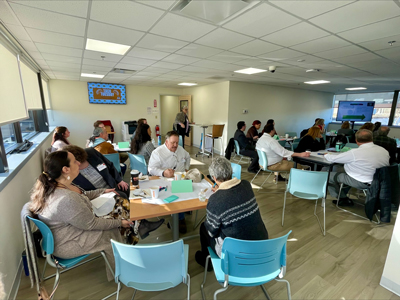
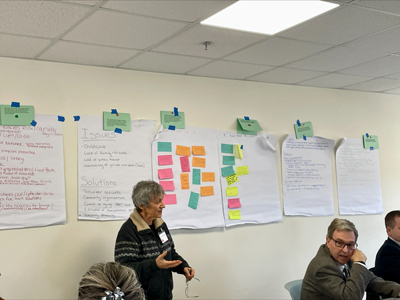
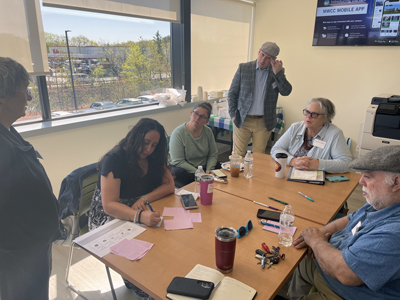
The formation of our TMA didn’t happen overnight. It emerged from extensive community engagement led by the Health Equity Partnership of North Central Massachusetts (CHNA9) through their Anchor Collaborative initiative. This collaborative process involved healthcare providers, educational institutions, major employers, government offices, and transportation authorities across our region.
“Transportation has been consistently identified as a key contributor to health disparities in every Community Health Assessment process in our region since at least 2014,” explains Chelsey Patriss, executive director, CHNA9/Health Equity Partnership of North Central Massachusetts. “Through the Anchor Collaborative, we brought together institutions that employ thousands of people and serve even more residents to address this fundamental barrier to economic opportunity and health access. The TMA represents the practical, business-focused solution that emerged from this collaborative assessment.”
The initiative also aligns with the Chamber’s “One North Central” regional economic development plan, which identified transportation infrastructure as critical for regional growth, business attraction, and workforce development.
Chamber Leadership Driving Innovation
This initiative reflects the Chamber’s commitment to addressing real barriers facing members and the broader business community. Throughout the collaborative development process, the Chamber maintained a seat at the table, working alongside members and regional stakeholders to explore the formation of this innovative solution. Building on this commitment to regional leadership, the Chamber has agreed to serve as the host organization for the TMA, providing administrative infrastructure while the TMA operates as an independent affiliate with its own board, budget, and governance structure.
“This TMA initiative represents exactly the kind of innovative, collaborative approach our region needs,” said Roy Nascimento, president and CEO, North Central Massachusetts Chamber of Commerce. “We understand transportation challenges limit our businesses’ access to talent and our workers’ access to opportunity. By hosting this TMA as an affiliate organization, the Chamber maintains its leadership role in exploring the development of practical solutions to shared challenges. This isn’t just about transportation—it’s about strengthening our economic competitiveness and creating positive conditions for business growth.”
The TMA’s founding members represent a cross-section of our region’s major employers and institutions, each bringing unique perspectives and employee populations to the collaborative effort.
Technical Expertise Driving Results
The TMA benefits from professional management by TransAction Associates, a Massachusetts-based firm with over 33 years of experience in transportation program management and TMA operations. Michele Brooks, director of consulting, TransAction Associates, brings deep expertise to the North Central Massachusetts region.
“TMAs work because they create economies of scale and shared resources individual employers couldn’t achieve alone,” Brooks explains. “In North Central Massachusetts, we’re seeing exactly the kind of collaborative spirit that makes TMAs successful. The region’s employers understand transportation challenges affect everyone, and they’re willing to work together on solutions. Rural TMAs face unique challenges due to geography and lower population density, but they also have opportunities to be innovative and responsive to specific community needs.”
Practical Benefits for Businesses
For Chamber members, TMA participation offers tangible benefits that directly impact business operations:
Cost Savings: Shared transportation resources reduce individual company investment in employee transportation while creating efficiencies to lower overall transportation-related costs.
Improved Recruitment and Retention: Enhanced transportation options expand the geographic area from which businesses can recruit talent, while employee satisfaction with commute options improves retention rates.
Reduced Absenteeism: Reliable transportation alternatives reduce weather-related and vehicle-related absences, improving operational consistency.
Environmental Benefits: Coordinated transportation initiatives help businesses meet sustainability goals and potentially qualify for environmental incentives.
Regional Economic Development: Improved transportation connectivity makes the entire region more attractive to new businesses and residents, creating a rising tide that lifts all regional enterprises.
Rozanna Penney, president and CEO, Heywood Healthcare and a founding member of the TMA, sees the program as essential for both workforce recruitment and patient access. “Healthcare is one of our region’s largest employment sectors, but we’re also acutely aware of how transportation barriers affect our patients’ ability to access care and our employees’ ability to get to work reliably. With 1,700 employees, we understand transportation solutions benefit not just our workforce, but the entire community we serve.”
Business-Led Governance and Participation
The TMA operates on its own membership and fee-for-service model, separate from Chamber membership, designed to be accessible to businesses of all sizes while ensuring sustainable operations. Membership dues are structured based on organization’s type and size, with different levels for employers, property owners, residential properties, and municipalities. This business-led investment model ensures all members have a voice in TMA governance—every member organization has the opportunity to designate a representative to serve on the TMA’s board of directors, keeping control firmly in the hands of the business community.
Tricia Pistone, AVP of external affairs at HealthAlliance-Clinton Hospital and chair of the TMA’s founding board, emphasizes the collaborative vision driving this initiative. “As healthcare providers, we see firsthand how transportation barriers impact not just our workforce, but the health outcomes of our community. Taking on the board chair role represents HealthAlliance’s commitment to being part of the solution. This TMA brings together the collective strength of our region’s major employers to tackle a challenge none of us could solve alone. By pooling our resources and expertise, we’re creating sustainable transportation solutions that will benefit our employees, our patients, and ultimately strengthen the economic vitality of North Central Massachusetts.”
Initial Programming and Future Growth
In addition to founding member commitments from the private sector, the TMA has received an $85,000 grant from MassDOT’s TMA Assistance Program to help establish operations. The TMA’s initial year will focus on getting the organization up and running and establishing core services, including implementing a ridesharing and trip planning platform, an emergency ride home program, and marketing initiatives. Ongoing collaboration with MART will also expand awareness and utilization of existing transportation options. Future programming may include shuttle services to fill identified gaps, expanded vanpool coordination, and specialized transportation solutions for shift workers and off-hours employment.
Jason Zelesky, vice president of student affairs and dean of students, Mount Wachusett Community College and a founding TMA member, emphasizes the connection between transportation and educational opportunity. “Our students often face significant challenges getting to campus and to work-study opportunities. Many are balancing education with employment, and reliable transportation is critical for their success. The TMA will help our students access not just education, but the career opportunities that follow graduation.”
A Sustainable, Collaborative Model
Unlike traditional public transit systems that rely heavily on government funding, the TMA model creates sustainable financing through member investment, grant funding, and potential fee-for-service revenue. This reduced reliance on government funding also makes the TMA more flexible and responsive to market conditions and the specific needs of participating employers and workers. The organization has already secured preliminary member commitments of $30,000, in addition to the MassDOT grant.
“Transportation equity isn’t just a social good—it’s an economic necessity,” notes Nascimento. “When people can’t get to work, businesses can’t find workers. When patients can’t access healthcare, the overall health of those in our community suffers. The TMA addresses these equity concerns while strengthening our regional economy.”
The TMA is exploring additional funding opportunities to help employers with transportation solutions and is looking to recruit more members who face transportation challenges and would benefit from a collaborative solution.
Getting Involved
Chamber members interested in joining the TMA can contact Michele Brooks at TransAction Associates for information about joining the TMA and requirements. The TMA operates as a separate organization with its own board, budget, and finances, while benefiting from Chamber administrative support and regional connections.
“The TMA represents the kind of innovative, collaborative solution our region needs to compete in today’s economy,” concludes Patriss. “By working together, we can create transportation solutions that no single employer could achieve alone, while building an infrastructure for future economic growth.”
For more information about TMA membership opportunities, contact Michele Brooks at TransAction Associates or visit the Chamber website at www.NorthCentralMass.com .
The North Central Massachusetts Rides Transportation Management Association operates as an affiliate of the North Central Massachusetts Chamber of Commerce. TMA membership is separate from Chamber membership and operates under its own governance structure and fee schedule.
North Central Massachusetts | Central Massachusetts | Massachusetts | Chamber of Commerce | North Central Massachusetts Chamber | Chamber of Commerce Membership | Chamber of Commerce Member Benefits | Chamber of Commerce near me | Blog

 Chamber member Fuse Energy is offering local small businesses an opportunity to save money on electricity while supporting clean energy in our community.

 Join the Boys & Girls Club of Fitchburg and Leominster for Movie Under the Stars!