out in 1733. The land was promised to soldiers following the war against the Narragansett Indians that terminated in 1675, though grants were not actually made until 1728. The first meeting house was built in 1753, a burial ground was laid out in 1754, and the town common was established in 1759. The community was officially incorporated as “Templetown” on March 6, 1762, with the name changed to Templeton in 1764.
Early economic activity was predominantly agrarian until about 1820, when Templeton’s strategic location at the crossroads of three major stagecoach routes spurred small-scale manufacturing. Chair production became a significant enterprise, and a small tin factory was established in what is now the Grange hall. The town center’s economy benefited greatly from serving travelers passing through, with numerous taverns catering to stagecoach passengers.
Industrial development peaked around 1860, after which economic activity was drawn to larger surrounding communities. Each village developed distinct characteristics: Templeton Center maintains the historic town common and civic buildings, East Templeton serves as the current municipal center, while Baldwinville and Otter River developed as residential and recreational areas.
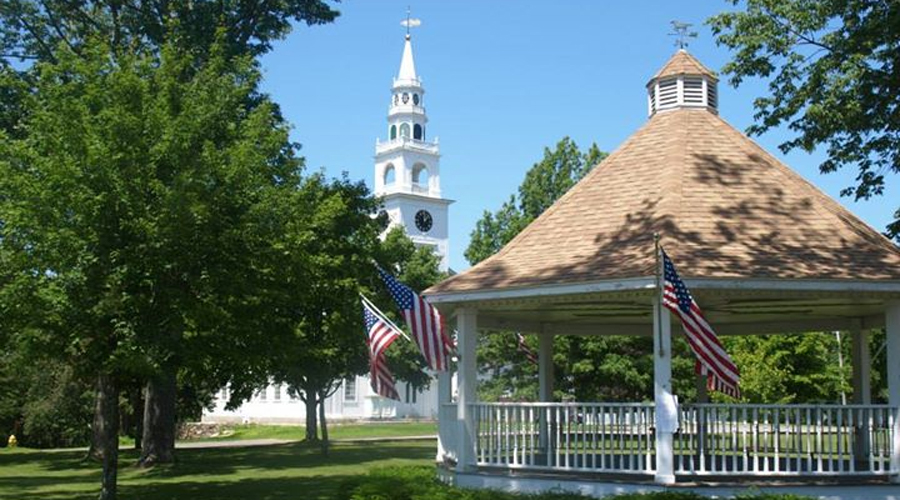
The Templeton Common Historic District, added to the National Register of Historic Places in 1983, preserves the town’s finest collection of 18th and early 19th-century architecture. In 2010, it was named one of the 1,000 places to visit in Massachusetts by the Great Places in Massachusetts Commission.
Notable figures associated with Templeton include John Boynton (1791–1868), entrepreneur, philanthropist, and founder of Worcester Polytechnic Institute, who operated his successful tinware business in Templeton; George A. Fuller (1851–1900), architect credited with pioneering modern skyscraper construction; and Sarah Goodridge (1788–1853), renowned miniaturist painter.