E-Newsletter
An Electronic Publication of the North Central Massachusetts Chamber of Commerce

Inside this edition, you’ll discover the latest Chamber initiatives and success stories from across our region. From economic development projects and upcoming networking events to policy updates and workforce training opportunities, we’re keeping you connected to what matters most for your business and North Central Massachusetts.
The North Central Massachusetts Chamber of Commerce is here to help – with trusted resources, a strong business network, and a support system to keep your business and the region moving forward
Fuente del artículo: State House News Service
Artículo por: Matt Murphy
JAN. 6, 2021…..With many businesses on the brink after months of scraping by through the pandemic, the Legislature struck a late-night deal Wednesday to inject hundreds of millions of dollars into the economy in an effort to spur job growth and keep businesses afloat.
The $626.5 million economic development bill (H 5250) came together in the closing hours of the two-year legislative session after more than five months of private negotiations between House and Senate leaders.
While the compromise bill scrapped a House-backed plan to have Massachusetts join other New England states in legalizing sports betting, it did include a version of Gov. Charlie Baker’s long-stalled housing production proposal to lower the threshold for local boards to approve zoning bylaw changes to a simple majority.
Baker has pushed for years for the change as one that is essential to meet his goal of creating 135,000 new units of housing by 2025 to ease the housing crunch, especially around Greater Boston.
The bill also included $50 million in funding for transit-oriented housing, $30 million for a loan program similar to the federal Paycheck Protection Program for businesses hurt by COVID-19, and funding for job training, tourism, technology and advance manufacturing.
“I think it’s a great bill. It covers a lot of ground, will help the commonwealth with job creation over the next few months and years,” Senate President Karen Spilka said, adding that it also prioritizes racial, geographic and economic equity where possible.
The bill passed the House 143-4 at 4 a.m and cleared the Senate 40-0 at 4:15 a.m.
The bottom-line on the bill grew from the roughly $450 million legislators were eyeing back in July.
Sen. Eric Lesser, a Longmeadow Democrat, said the bill would help Massachusetts “chart a path out of the recession were are in” and address the “explosion” of social and economic injustice that has been exposed in some communities by the pandemic by prioritizing funds for those communities business owners.
The bill includes $35 million in loan funding for community development lending institutions to extend capital to small businesses, with a focus on minority- and women-owned businesses that have historically had trouble accessing financing and have been disproportionately impacted by the pandemic.
It would also seal no-fault eviction records, Lesser said.
There is $52 million set aside for science and technology research, $20 million for economic development in small, rural communities, $14 million for tourism, and $6 million to support artists and local museums.
And if signed by Baker, the low-income housing tax credit program would double to $40 million.
The talks were led by House Ways and Means Chairman Aaron Michlewitz and Lesser, the Senate chair of the Committee on Economic Development and Emerging Technologies. They were joined on the conference committee by Reps. Ann-Margaret Ferrante and Donald Wong and Sens. Michael Rodrigues and Patrick O’Connor.
Massachusetts had the highest unemployment rate in the country at 16.1 percent in July when the House and Senate debated and passed competing versions of the bill that was finalized Tuesday night.
But while the job market has rebounded and the state’s 6.7 percent unemployment rate now matches the national average, economists remain uncertain about the strength of that recovery and whether the ongoing surge in COVID-19 infections could spark public officials to revert to tight restrictions on businesses.
To prepare for what’s to come after the pandemic, the bill would create a “Future of Work” commission to study how to promote sustainable jobs with fair benefits and workplace safety standards across industries.
There are also commissions that would be created to study the negative impact of changes in media on local journalism and how to help the arts community recover from the pandemic.
And lawmakers also agreed on a “student loan bill of rights,” which is an issue Lesser has been pushing for multiple sessions. The bill would make sure borrowers are educated about their responsibilities and borrowing rights and student loan servicers that take advantage of students could be fined and forced to repay student borrowers.
The infusion of money for economic development and job creation comes on top of a new round of federal stimulus and a $668 million small business recovery fund Gov. Baker launched last month to help small employers hurt by COVID-19 restrictions cover rent, payroll, debt and other expenses.
Late Tuesday afternoon, new Speaker Ron Mariano called it “a shame” the two branches couldn’t reach a deal to legalize betting on sports.
Baker filed a proposal to legalize betting on professional sports back in January 2019, and had hoped to sign a law before the start of the NFL season late that summer. The House included college sports in its bill that would have allowed for betting through mobile apps.
Mariano pointed the finger at the Senate for not wanting to negotiate the issue, but said he hopes to return to the topic early in the new session to make sure a home-grown company like DraftKings doesn’t uproot and take jobs somewhere else, like New Hampshire, where sports betting is legal.
“If I could, we’d have a deal,” Mariano told Bloomberg radio.
The House had proposed to use nearly a third of the $50 million in revenue it projected from legalized sport betting to create a new fund for distressed restaurants, with qualifying restaurants eligible to receive up to $15,000 in relief.
Restaurants have been some of the hardest hit small employers in the state by the pandemic, and have been lobbying to limit the delivery charges as more customers are choosing to stay home.
The final compromise bill capped the fees third-party delivery services can charge restaurants for their services at 15 percent of the price of the online order for the duration of the COVID-19 emergency. The cap also only applies to restaurants with fewer than 25 locations.
Solar power has surged in popularity over the past few years, thanks in part to the rise in energy prices combined with increased public awareness around climate change and environmental issues. Not only is solar power good for the environment but switching to solar power offers some very attractive financial benefits.
When photovoltaic systems were first introduced, the high cost made it virtually impossible to justify an investment in solar power, especially for homeowners and small-to-medium business owners. Back in 2010, the average cost of a kilowatt-hour of solar energy was 38 cents. By comparison, the average retail electricity price nationwide was 9.82 cents per kilowatt-hour, or about one-quarter the cost of solar energy.
Given the cost difference between conventional, grid-based power and solar power, it’s easy to see why transitioning to solar power simply didn’t make sense for most homes and businesses.
Thankfully, the gap between the cost of a solar photovoltaic system and the cost of grid-based electricity has shrunk over the past few years, thanks in part to the numerous government incentives for those who opt to ‘go green’.
There are now a number of property tax credits available to home and business owners who opt to use alternative energy sources, including solar. These credits often cover a wide range of energy-efficient systems and devices including geothermal, or ground source, heat pumps that provide both heating and cooling. Small wind turbines, solar water heaters, solar air heaters and fuel cells can also qualify for tax savings, making the overall cost of using solar power and other alternative energy sources much more affordable than they had been.
According to Our World in Data, a global research organization affiliated with the University of Oxford, the average global price per watt of power generated by a solar PV panel in 1976 was a staggering $106.09 USD. By 1990, that price dropped to $8.81, and as of 2019, the cost of one watt of solar-generated power was just $0.38.
Not only has the overall cost per kilowatt-hour for solar power fallen, but demand for properties with solar photovoltaic systems has steadily risen. In many major real estate markets, buyers are willing to pay a sizable premium for homes that already have a solar system installed, and that’s a trend that’s predicted to continue well into the next decade.
Here’s what is in the new stimulus bill
On Monday, December 21, 2020, the Senate approved a massive emergency economic relief package, government funding, and tax cuts designed to counter the effects of the pandemic and stimulate economic growth. The legislation, introduced as a 5,593-page bill, was passed with a 92 to 6 vote following weeks of intense negotiations.
Efforts to pass economic relief measures in the weeks leading to the presidential election had failed despite numerous attempts. But after the election, a bipartisan group of lawmakers teamed up and successfully negotiated for action to spur economic activity by helping businesses and consumers.
Why was the 5,593-page bill passed?
The spike in COVID cases across the country and strong concern that the economy is weakening informed the need for the federal government to intervene — cushioning households and jump-starting the economy. Nearly a year after the first case of Coronavirus was reported, government-mandated restrictions are still in place across the country. Congress is upbeat that the stimulus bill will protect jobs, businesses, households, and livelihoods.
Just hours after the bill was sent to the White House, the President asked Congress to amend the current bill to afford a greater distribution to qualified Americans.
What is inside the $900 billion stimulus package?
As of now, the $900 billion economic relief stimulus includes:
The bill extends aid to millions of households and businesses hammered by COVID. The aid is given through stimulus checks, enhanced federal unemployment benefits, and money for small businesses, childcare, and schools. It also covers the funding for free vaccination that will be distributed across states. Additionally, the package will repurpose $429 billion in unused funding provided by the Cares Act for Emergency lending programs run by the Federal Reserve.
Let’s look at the key details of the bill:
Stimulus check
Jobless benefits
The legislation extends unemployment benefits of up to $300 per week.
Relief for business
School funding
Transporte
This story is still developing as it has not been signed by the President, and Congress may vote on an amended bill as soon as Christmas Eve.
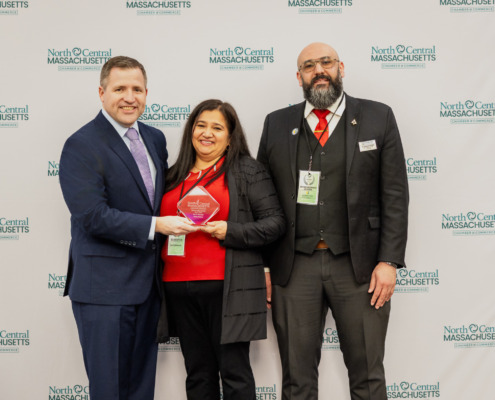

The reception features an open bar and gourmet appetizers.
View
Event
Join us for Connect North Central
Friday, September 25, 2026
8am-9am
View
Event
North Central Golf Tour Championship: Fore the Future
An FLNC Non-Traditional Scholarship Fundraiser
View
Event
Thank you Series Supporting Sponsor empHowered PR
View
Event
Join us for our 11th Annual
Congressional Luncheon
View
Event
Wednesday October 28, 2026
5:00pm - 7:00pm
View
Event
Join us for this in person HR Legal Update
View
Event
November 19, 2026
7:15am - 9:00am
View
Event
Chamber members are provided with the opportunity to engage with the Mayors of Fitchburg, Gardner, and Leominster who provide updates on projects and other things happening in their Cities. These events are by invitation only, please contact Travis Condon for more details.
View
Event
Bull Run Restaurant
215 Great Rd. Shirly, MA
View
Event
Join us for our last Connect North Central of the year!
Friday, December 11, 2026
8am-9am
View
Event
Chamber members are provided with the opportunity to engage with the Mayors of Fitchburg, Gardner, and Leominster who provide updates on projects and other things happening in their Cities. These events are by invitation only, please contact Travis Condon for more details.
View
Event
Partnership kicks off in 2020 with launch of Quinn’s Barrel Aged Amber Ale in the US
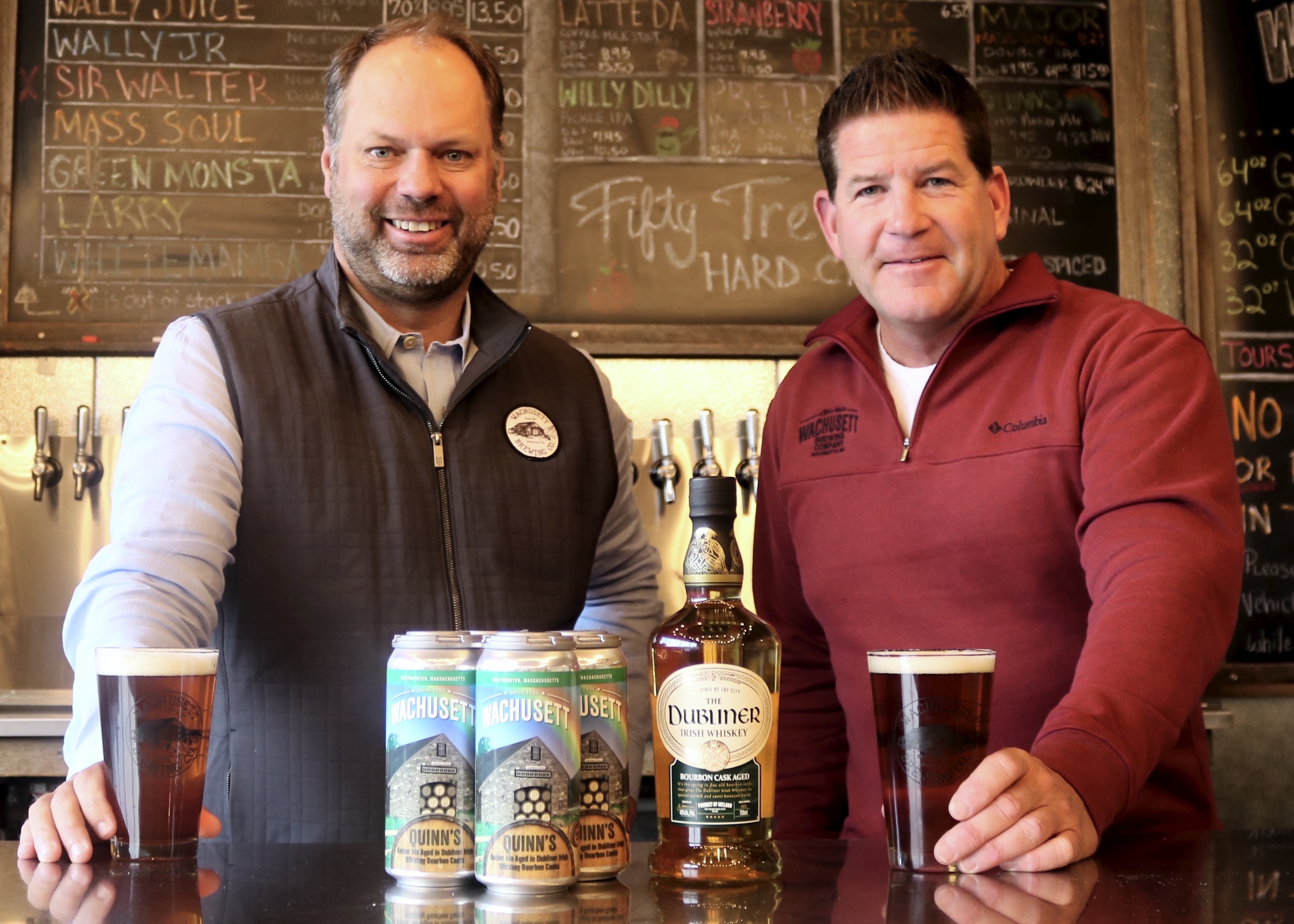
“This is a truly exciting collaboration for Dubliner Irish Whiskey”, says Darryl McNally, Master Distiller at the Dublin Liberties Distillery and home of the best-selling whiskey. “Not only do we choose breweries whose beer casks add a unique taste to our whiskey, but partners like Wachusett Brewing, that have the same independent spirit as Dubliner, with a straight-up attitude and down to earth appreciation of great tasting brands. Dubliner seeks to inject fun and excitement into whiskey and we are creating new whiskey flavours that drive wider appeal for Irish whiskey. The end result is Just Good Whiskey.”
“It is an honor to partner with The Dubliner for this exciting project” said Christian McMahan, President of Wachusett Brewing Company. “There is no shortage of Irish whiskey lovers in this part of the country and we think our Barrel Aged Quinn’s Amber is going to be the perfect way to celebrate the upcoming St. Patrick’s Day holiday. We are equally proud to see those casks go back to Ireland and look forward to seeing the essence of Wachusett used to make a spectacular Irish Whiskey”
Quinn’s Barrel Aged will be released on tap and in 16oz cans in late February in Boston and across Massachusetts in bars and restaurants as well as retail stores.
For more information about Wachusett Brewing Company, visit www.wachusettbrew.com For more information about The Dubliner Irish Whiskey, visit https://www.dublinerwhiskey.com
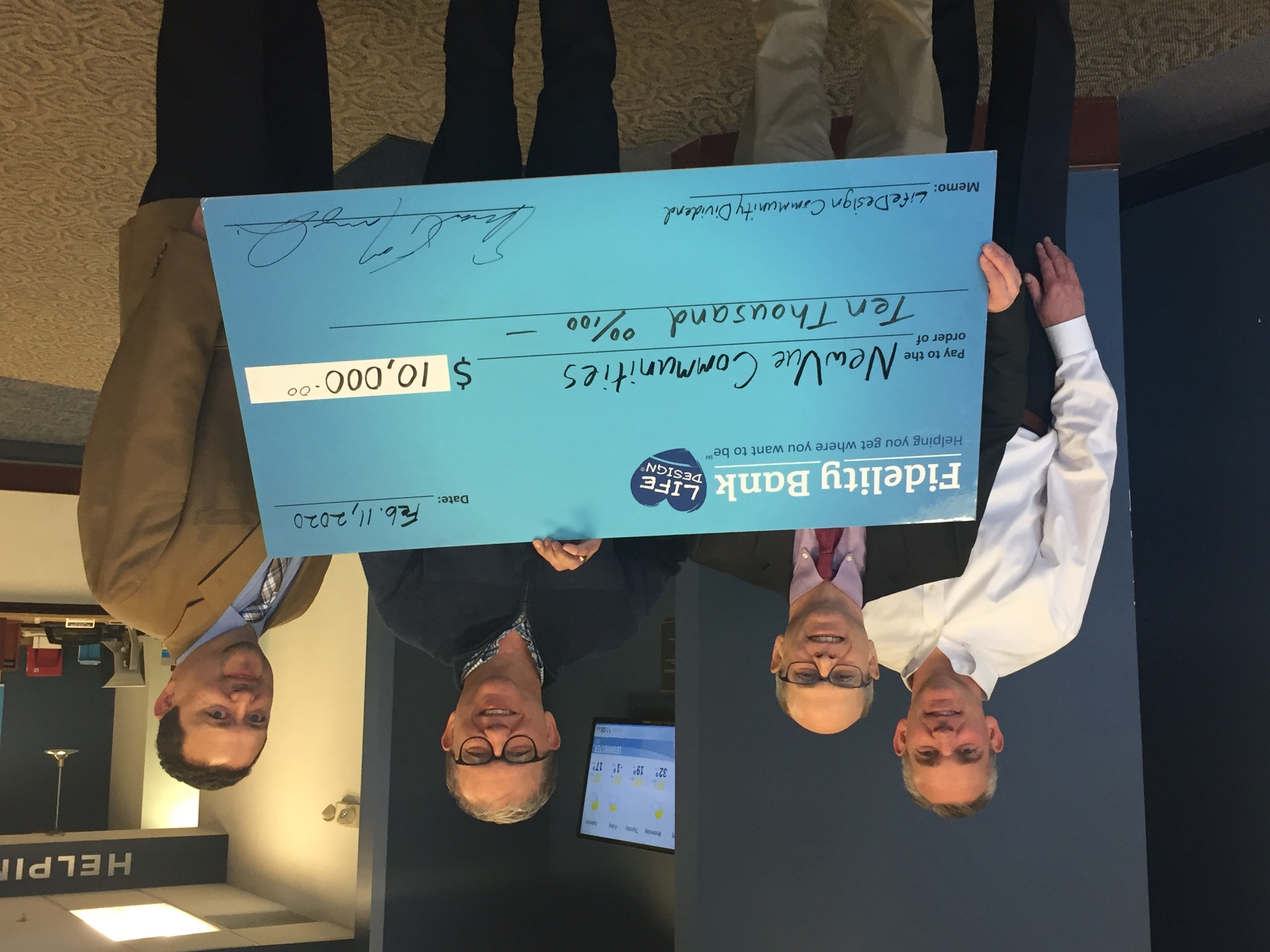
(L-R) Fidelity Bank President and COO Christopher McCarthy, NewVue Communities Executive Director Marc Dohan, Fidelity Bank Chairman and CEO Edward F. Manzi, Jr., and CEO of Family Federal Savings Dave Brassard
(LEOMINSTER, Mass.) –, NewVue Communities received a $10,000 investment from Fidelity Bank through their Community Investment Tax Credit Program. NewVue Communities is a Fitchburg based nonprofit dedicated to strengthening communities through home ownership, housing development and small business counseling. “This grant reflects our continuing strong commitment to Fitchburg, which at one time was home to the bank’s only location,” says Fidelity Bank President and COO Christopher McCarthy. “We are proud to support the work of NewVue Communities. Their work aligns perfectly with Fidelity Bank’s LifeDesign promise of being a team of caring people, who take a caring approach, to provide caring solutions for our community, clients and colleagues.” The grant is part of Fidelity Bank’s LifeDesign Community Dividend, which last year paid out more than $330,000 to support more than 250 organizations, causes and events in communities the bank serves, including Fitchburg.
“Fidelity Bank’s support will help us provide services and programs that help create stable and strong communities by investing in both people and places,” says Marc Dohan, Executive Director of NewVue Communities. Fidelity Bank has provided $40,000 in financial support to NewVue Communities over the past four years.
Fidelity Bank recently finalized its merger with Family Federal Savings. The merger brings together two banks with a long history and commitment to the Fitchburg community. The two mutually owned financial institutions were founded in Fitchburg and have been serving clients, employees, and the community for a combined total of 270 years. The merger adds Family Federal Savings full-service offices in Fitchburg, Stow and Needham, giving the bank a total of 14 full- service offices. Fidelity Bank’s 675 Main Street location in Fitchburg has been relocated to Fidelity Bank’s new full-service banking office at the converted Family Federal Savings’ Fitchburg location at 130 Whalon Street in the Twin City Plaza.

When the workday ends and the lights go down, Custom Cleaning Service of Peabody, Inc. gets to work. “We operate as our clients’ silent partner after business hours,” says Adam Paicos, of Templeton, who now serves as Director of Operations and oversees the company’s expansion into North Central MA. “We are not often seen, but we ensure facilities are clean, secure, and ready for business each day while serving as the eyes and ears for our clients when they are not on site.”

Discover local business stories through our Inside North Central Massachusetts Podcast series. Listen as Chamber members share their journeys, insights, and contributions to our thriving regional business community.

Looking for your next opportunity? Explore current job openings from employers across North Central Massachusetts on our Jobs Board. Whether you’re starting a new career or making a change, you’ll find a variety of local positions available to help you take the next step.
CapEx Facility Services & Construction · Leominster, MA
TaraVista Behavioral Health Center · Harvard, MA
DRS Power Technology, Inc. · Fitchburg, MA
AIS · Leominster, MA