E-Newsletter
An Electronic Publication of the North Central Massachusetts Chamber of Commerce

Inside this edition, you’ll discover the latest Chamber initiatives and success stories from across our region. From economic development projects and upcoming networking events to policy updates and workforce training opportunities, we’re keeping you connected to what matters most for your business and North Central Massachusetts.
The North Central Massachusetts Chamber of Commerce is here to help – with trusted resources, a strong business network, and a support system to keep your business and the region moving forward
Applications for the 2021 scholarship program through the North Central Massachusetts Chamber Foundation will be accepted starting February 1, 2021. Students interested in applying for a scholarship through the Chamber’s Foundation should contact their high school guidance department to submit an application. Each year, the Chamber Foundation distributes approximately 25 scholarships to local high-achieving high school students in North Central Massachusetts. A limited number of applicants are submitted by each school in the Chamber’s service area each year and for consideration by a committee of Chamber members. Deadline for applications is Monday, March 1, 2021.
Since the establishment of its scholarship program, the North Central Massachusetts Chamber Foundation has awarded over a million dollars in scholarships. Many of these awards are made possible through contributions from members of the Chamber and proceeds from the Chamber’s Scholarship fundraiser. Scholarships endowed through the Chamber Foundation are often named in honor of prominent members of the North Central Massachusetts business community whose philanthropy and commitment to the community have helped shape North Central Massachusetts.
The Chamber’s Foundation is a 501 (c) 3 non-profit organization focused on assisting in the betterment of the region through charitable activities. Funds raised by the Foundation are utilized primarily for education/workforce development initiatives and charitable activities in North Central Massachusetts, including scholarships to eligible applicants pursuing education and grants to support economic and community development projects.
For more information on the North Central Massachusetts Chamber Foundation’s scholarship program or a list of the named scholarships, please visit northcentralmass.com or call 978.353.7600 ext. 225.
Wa, Wa, Wachusett
Who doesn’t know the catchy jingle by now?
It’s that time of year when the Wachusett Mountain Ski Area in Princeton opens for the season. In fact, this year, Wachusett was the first mountain to open for skiing in the Northeast, a milestone Wachusett President Jeff Crowley attributes to his all-star snowmaking team.
Crowley, whose family operates the ski area, said he knows customers are extra excited to hit the slopes this year as recreational activities are limited due to the COVID-19 pandemic.
“It’s so rewarding to hear people thank you,’’ Crowley said. “They are so appreciative of the fact that we’re open. We went the extra mile to open early.’’
In a typical year, the property is more than a ski area hosting festivals, weddings, corporate events and more. And while the ski area may be going back to the basics this year by focusing on what it does best, the experience will undoubtedly be different.
“The ski business is not for the faint of heart — insurance, power, weather — and now you put the pandemic on top of that it’s that much more complicated,’’ Crowley said.
As an outdoor sport, Crowley knows there will be high demand for skiing and boarding this year. But they have to balance that demand with safety protocols to keep staff and customers safe.
Among the changes: new signage, capacity limits, booting up at vehicles, outside food service, base lodge use limits, y the addition of outdoor heaters and seating.
“It’s incumbent on all of us here, rangers, lift employees, ski patrol, to keep a watchful eye so everyone stays at a safe distance,’’ Crowley said. “People are just looking for recreation. The good thing is with our year of experience and our ability to deal with crowds, we feel confident.’’
Crowley said he and his brother, David, and sister, Carolyn, are carrying out the vision their father, Ralph Sr. had for the ski area. As kids, Crowley said his dad would take them skiing in northern New England, but it was a hike and not practical on a regular basis.
“He realized this is a jewel of Massachusetts,’’ he said. “His goal was to create high-quality recreation close to the metropolitan area.’’
Thanks to the advancement in grooming and snowmaking and investment in high-speed lifts, Wachusett now provides top-notch snow surface close to home. In fact, Wachusett ranked 9ta in Ski magazine’s reader survey for Best Resorts in the East 2021.
In addition to providing a unique local ski and boarding experience, Crowley said his family’s passion and commitment to providing quality customer service, resonates with the public.
“The neat thing is that little Wachusett just cracked the top 10 ski areas in the East,’’ he said. “We were able to beat a lot of the big boys up north.’’
Wachusett Mountain Ski Area is located at 499 Mountain Road in Princeton. The ski area can be reached at 978.464.2300 and www.wachusett.com.
Fuente del artículo: State House News Service
Autor: Chris Lisinski
JAN. 6, 2021…..House and Senate Democrats forged a late-night compromise on a $16.5 billion transportation bond bill, salvaging consensus in the dying moments of the lawmaking session on a multi-year plan to pay for infrastructure improvements while also raising fees on ride-hailing services.
A final compromise between House and Senate leaders emerged shortly after midnight Wednesday after months of private negotiations, leaving members only a few hours to read the updated version of the 63-page bill (H 5248) before approving it 146-0 in the House and 39-1 in the Senate. Sen. Ryan Fattman, a Sutton Republican, cast the lone dissenting vote around 3:20 a.m.
The bill now on Gov. Charlie Baker’s desk authorizes billions of dollars in bonds for highway and bridge maintenance, train modernization, and major capital projects such as a Red Line-Blue Line Connector, the extension of commuter rail service to the South Coast, and the approaches to the two Cape Cod bridges.
In a surprise move, the bill calls for increases to the flat per-ride fees charged on app-based services such as Uber and Lyft, a measure the branches addressed in separate legislation but not in either versions of their bond bills.
Another measure requires the MBTA to implement a low-income fare program, which has long been a priority of transit advocates, and those who fail to pay T fares would no longer be subject to arrest.
“The COVID-19 pandemic has created really unprecedented changes to the ways we commute, but this does not mean the ills of our transportation system do not persist,” said Sen. Joseph Boncore, who co-chairs the Transportation Committee and led the Senate’s negotiations. “Massachusetts needs a new deal on transportation, but included in this bill is a strong foundation to continue that conversation.”
With their late-night vote, legislators punctuated the end of the 2020-2021 session by returning to a topic that had dominated debate on Beacon Hill early last year. Still virtually untouched, though, is a related package of tax and fee increases that cleared the House in the spring but died in the Senate without a vote.
Baker filed his original $18 billion transportation bond proposal in July 2019. Governors tend to seek the borrowing authorizations in multi-year increments, and Baker cautioned Monday that the long delay from lawmakers imperiled the upcoming construction season.
“We literally are almost out of transportation bond authority, and we need that bill for the spring construction and summer construction season, and we also need it to sign multi-year agreements that involve federal reimbursement,” Baker said. “You have to actually demonstrate to the feds that you have the authorization to pay for a federally supported project, which in many cases take a couple of years to actually have the feds sign off and say, ‘yes, you can spend the money.'”
Several provisions Baker sought in his first draft of the bill did not make it into the version on his desk, such as a tax credit for employers who encourage working from home.
The bill lands in a vastly different climate than when Baker first proposed it. Commuting patterns evolved significantly during the pandemic, with ridership on public transit cratering — and a massive budget headache erupting at the T as a result — and some employers indicating they may keep remote work options in place for the foreseeable future.
The House approved its $18 billion bond bill in March, one day after it authorized a package of tax and fee increases — including the first state gas tax increase in seven years — that Democratic leaders said could raise as much as $600 million annually to invest in crumbling infrastructure and aging public transit.
In the Senate, however, the revenue bill faltered without a vote as lawmakers bristled at the idea of hiking taxes during a pandemic-fueled recession, frustrating House leaders who felt they had taken a tough vote.
One major element from the House’s tax package, ride-hailing fee increases, made it into the borrowing bill.
Under the compromise bond bill, the assessments charged for trips on platforms such as Uber and Lyft would increase from $0.20 per ride of any type to $0.40 per shared ride, $1.20 per non-shared ride, and $2.20 per non-shared ride in a luxury vehicle.
Boncore said on the Senate floor that the increases are intended to “change commuter behavior by incentivizing commuters to request a shared ride for a lower fee or use public transit.”
Negotiators spliced that language into the compromise even though neither underlying bond bill tackled transportation network company, or TNC, fees. The House included similar increases in its tax bill, while the Senate adopted an amendment containing a new fee structure to its version of the fiscal year 2021 budget.
Baker previously suggested raising the fees on the companies to $1 per ride, warning that their growing presence on Massachusetts roadways contributed to worsening traffic. It is not clear if he will view the Legislature’s proposed hikes, which are likely to generate pushback from the companies, as excessive.
The bill would create a commission to study congestion pricing, a strategy that would alter tolls at different times to incentivize off-peak travel, and it would create violations for drivers who park their vehicles in designated bus lanes.
Several other notable provisions approved in either the House or Senate bills did not make it into the final compromise, including authorization for cities and towns to pursue their own revenue-raising regional ballot initiatives and “value capture” models to collect funds from real estate development near highways or transit.
Unlike the original House bill, which called for adding two members to the MBTA Fiscal and Management Control Board, the conference committee’s proposal does not expand the T’s oversight panel.
Baker now has 10 days to decide the bill’s fate, which, in a reflection of the pandemic’s unprecedented upheaval, will play out entirely during the brand-new lawmaking session that begins Wednesday.
John Pourbaix, executive director of the Construction Industries of Massachusetts group, said the bill’s success will help keep workers who might have faced steep cuts afloat.
“Passage of this bill allows MassDOT and the MBTA to continue procuring the vast list of capital projects which will preserve thousands of jobs for the hard working men and women in the transportation construction industry and, in turn, will help the state’s economic recovery and improve public safety,” Pourbaix said.

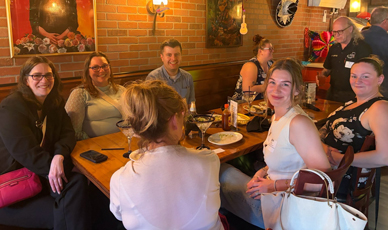
The reception features an open bar and gourmet appetizers.
View
Event
Join us for Connect North Central
Friday, September 25, 2026
8am-9am
View
Event
North Central Golf Tour Championship: Fore the Future
An FLNC Non-Traditional Scholarship Fundraiser
View
Event
Thank you Series Supporting Sponsor empHowered PR
View
Event
Join us for our 11th Annual
Congressional Luncheon
View
Event
Wednesday October 28, 2026
5:00pm - 7:00pm
View
Event
Join us for this in person HR Legal Update
View
Event
November 19, 2026
7:15am - 9:00am
View
Event
Chamber members are provided with the opportunity to engage with the Mayors of Fitchburg, Gardner, and Leominster who provide updates on projects and other things happening in their Cities. These events are by invitation only, please contact Travis Condon for more details.
View
Event
Bull Run Restaurant
215 Great Rd. Shirly, MA
View
Event
Join us for our last Connect North Central of the year!
Friday, December 11, 2026
8am-9am
View
Event
Chamber members are provided with the opportunity to engage with the Mayors of Fitchburg, Gardner, and Leominster who provide updates on projects and other things happening in their Cities. These events are by invitation only, please contact Travis Condon for more details.
View
Event
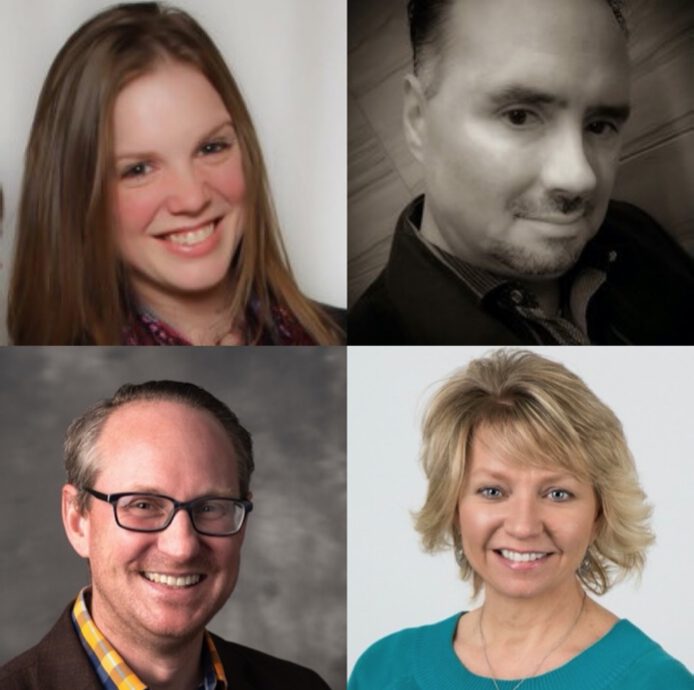
Come join panelists from the Center for Women & Enterprise, Wachusett Business Incubator, North Central Massachusetts Development Corporation and Image Identity LTD. for this not so average discussion on financing your business. Our panel of experts will speak to the different types of financing available. We will discuss how to pick the right type of lending institution and how best to prepare for that conversation. You will learn about resources available to help you plan or grow. We will answer topical questions that get to the heart of why you would consider outside financing in the first place.
The discussion is taking place at 9:00AM-11:00AM Friday, March 13, 2020 at the presentation room of the Wachusett Business Incubator, 35 Sanborn St. Gardner, MA 01440. Registration is $10.00. Parking is free. Register at http://wachusettincubator.com/ event/395/
Our Panelists
The Center for Women & Enterprise (CWE) https://www.cweonline.org/
CWE will be represented by Michelle Miller, CWE Central MA Director. Michelle has managed economic development and rehabilitation programs in Massachusetts as well as in Colombia, Peru, and Nicaragua.
ImageIdentity, LTD: Brain for Rent https://imageidentity.com/
For twenty-five years, David Lubelczyk has provided creative and consulting services to large corporations, non-profit organizations, and small start-up companies. He is a core member of the mentor team at the Wachusett Business Incubator where he assisted in the development of WBI’s Leadership Candidate Program and is developing a unique business planning tool, the Playbook.
North Central MA Development Corporation https://www.choosenorthcentral.com
Sandie Cataldo is the Manager of Economic Development for North Central MA development Corporation. Sandie works with non-profits, state agencies, banks and credit unions as well as small business community to strengthen economic development on a regional level by encouraging job creation and retention.
Wachusett Business Incubator http://wachusettincubator.com/
WBI will be proudly represented by Scott M. Graves. He is currently the Executive Director of the Wachusett Business Incubator. He directs the organization’s economic development programs while developing new programming and funding sources to tackle the most critical economic issues for North Central Massachusetts. He is a business owner in his own right, founder of the Arts Innovation Center and the New England Playhouse.
All Inquiries for interviews and information
Scott M. Graves Wachusett Business Incubator 35 Sanborn St. Gardner, MA 01440
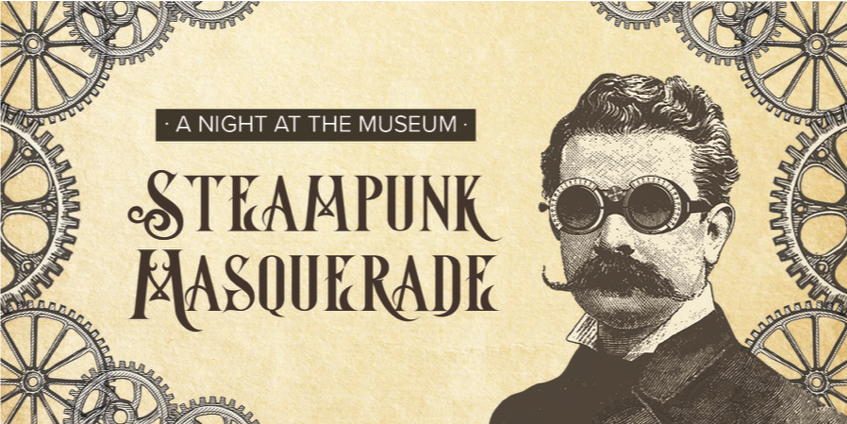
Saturday, March 14, 2020
6pm-9pm
Guests will enjoy Neo Victorian food, cocktails, and music. Steampunk attire encouraged. 21+
Tickets are $50 per person. Sponsorship and ticket packages are also available. Learn more and purchase online or at the FAM front desk. Fitchburg Art Museum, 185 Elm Street.
This annual FAM event provides support for the Museum’s education initiatives, exhibitions, and special programs. This year’s theme is inspired by the spring exhibition After Spiritualism: Loss and Transcendence in Contemporary Art.
For more information, RSVP to the Facebook event or email: .

When the workday ends and the lights go down, Custom Cleaning Service of Peabody, Inc. gets to work. “We operate as our clients’ silent partner after business hours,” says Adam Paicos, of Templeton, who now serves as Director of Operations and oversees the company’s expansion into North Central MA. “We are not often seen, but we ensure facilities are clean, secure, and ready for business each day while serving as the eyes and ears for our clients when they are not on site.”

Discover local business stories through our Inside North Central Massachusetts Podcast series. Listen as Chamber members share their journeys, insights, and contributions to our thriving regional business community.

Looking for your next opportunity? Explore current job openings from employers across North Central Massachusetts on our Jobs Board. Whether you’re starting a new career or making a change, you’ll find a variety of local positions available to help you take the next step.
CapEx Facility Services & Construction · Leominster, MA
TaraVista Behavioral Health Center · Harvard, MA
DRS Power Technology, Inc. · Fitchburg, MA
AIS · Leominster, MA