E-Newsletter
An Electronic Publication of the North Central Massachusetts Chamber of Commerce

Inside this edition, you’ll discover the latest Chamber initiatives and success stories from across our region. From economic development projects and upcoming networking events to policy updates and workforce training opportunities, we’re keeping you connected to what matters most for your business and North Central Massachusetts.
The North Central Massachusetts Chamber of Commerce is here to help – with trusted resources, a strong business network, and a support system to keep your business and the region moving forward
Celebrating its 50th Anniversary this year, Micron Solutions in Fitchburg is a world class contract manufacturer for the Medical Device, Defense and Life Sciences markets.
It strives to be a true manufacturing “one stop shop.” According to the website, where others are forced to outsource numerous core components increasing cost and lead times, Micron has expanded its capabilities to offer an integrated set of services to handle jobs completely in-house.
“Our mission,” explains President & CEO Bill Laursen, “is to be the go-to partner for our clients. We develop elegant, yet robust automated manufacturing solutions. We function like other larger contractors yet offer a hand-crafted, personalize business experience.” Micron works with clients of all sizes to provide manufacturing solutions and assembly services to expeditiously help its customers meet their goals.
As Micron’s website explains, “our specialties include Precision Machining, Thermoplastic Injection Molding, Mold Making, Assembly Services and Sensors. Whether it is partnering with clients to help with design for manufacturing on new programs or to support existing applications, Micron Solutions, Inc. is prepared to commit all resources necessary to find a solution. As a Full-Service Supplier, each member of our manufacturing, engineering, research and quality teams stand ready to work in collaboration with clients to meet any challenge.”
Founded in 1972, Micron now employs 120 people in its 120,000-square-foot manufacturing facility. As the website states, Micron “is capable of serving customers’ projects from start to finish.” Laursen explains the company’s core values are to “do it right the first time!” He strives to build a “customer-focused, collaborative” work culture. Even during the past two years amidst the COVID-19 Pandemic, he noted how proud he was of his loyal team. During the business slowdown, Laursen noted “Our folks wanted to come to work. We were proud to maintain our team.”
Evidence of the company’s commitment to its employees and its clients shows with its regular “Micron Matters” town-hall style meetings with employees and management. In those meetings, Laursen notes they are always focusing on celebrating the company’s collaborative work culture, accountability and continuous improvement.
As a local business, Laursen said Micron supports the local community by providing employment opportunities through internships and co-ops to local high school and college students. Many returned to work for the company during and after completing school. He also highlighted the strong legacy of manufacturing in North Central Massachusetts. While the business has clients world-wide, he said the region’s close proximity to the healthcare and bioscience industries provides tremendous opportunity. They primarily rely on their sales force, social media and their website for promotion but, Laursen added, Micron’s customers are the businesses strongest source.
Laursen credits a company advisor by the name of Mike Kelly as one of Micron’s biggest influencers in its ability to grow the business. Retired after a successful career at several large Medical Device companies, he said Kelly has been instrumental in the company’s success in creating an “honest, helpful work environment.”
As the website concludes, “we strive to provide results that exceed your quality requirements, meeting your financial needs and help grow your business.” Yet, even with its customer and client focus, Laursen notes the company’s highest priority is safety – it has all culminated in 50 years of success for Micron.
The Chamber’s tourism arm, Visit North Central Massachusetts, focused its marketing efforts last quarter on promoting the region as a Winter destination, with a heavy emphasis on utilizing digital strategies. We invested in an assorted mix of strong content on VisitNorthCentral.com highlighting winter activities and businesses. This included developing a new Winter landing page and blog articles such as “A Winter Getaway Might be Closer than you Think” and “Snow on the Mountain”. We also conducted several sponsored content campaigns targeted to the drive market. During the Winter season we also invested in some paid social media; targeted and geofenced digital advertising; YouTube advertising; and some limited print advertising. Our Facebook page garnered 221,443 impressions, reach of 78,845 and 8,004 engagements since the start of the Winter season. “Find Your…” was utilized as the overarching theme for our advertising campaigns during the season. The campaigns centered around the wide range of activities, lodging, restaurants, breweries and cultural attractions in North Central Massachusetts. Our winter activities were promoted as “Find Your Thrill” through geofenced digital ads on MassLive and LocalIQ affiliate websites and targeted YouTube advertising. The MassLive display ads garnered 251,401 impressions and 216 clicks thus far. The LocalIQ digital ads garnered 57,235 impressions and 72 clicks thus far. The targeted YouTube advertising campaign resulted in 98 clicks, 40,872 interactions and a 47.28% view rate. We also worked with MassLive and Telegram & Gazette to promote the region as a winter getaway destination through “Find Your Slice of Simplicity” branded content. The content focused on the unique lodging options, restaurants, museums and relaxing winter activities in the region. The MassLive content resulted in 39,701 impressions, click through rate of 0.61% and 244 clicks. The Telegram & Gazette content garnered 9,894 reads, a 20.06% click through rate, and 1,985 clicks. The sponsored social media post resulted in 6,247 link clicks, over 400 reactions, and nearly 150 shares. For print media, we advertised in AAA magazine in Rhode Island, Connecticut and New York as well as Baystate Parent monthly issues through “Find Your Winter Wonderland”. These advertisements were targeted towards families with young kids centered around the family-friendly experience our region provides. We also partnered with the Massachusetts Office of Travel and Tourism, the Massachusetts Ski Association and five other regional tourism councils on a collective winter campaign with Hearst media highlighting the state as a ski and winter destination. And, during the season we implemented some shop local marketing to promote supporting local businesses. Preliminary data from Arrivalist indicates a 14% increase in visitors traveling to the region over the same period the prior year, but down 27% over pre-pandemic 2019. Top four origin markets were Boston; Rhode Island; Connecticut; and New York.
As we move in to the Spring, we will continue our past strategies of promoting the outdoor assets of our region as well highlighting local attractions and businesses. We will do so through pivoting to a more digital focused marketing mix with geofenced and targeted digital ads, connected-app streaming ads, targeted YouTube advertising, paid Pinterest ads, branded content, social media and print media. We are also planning to resume some sale development activities, including participating in some travel industry trade shows in the Spring to promote the region.
After being closed to the public for more than 700 days, the Massachusetts State House reopened to the public in February. As local communities also rescind or revise their mask ordinances, the reopening of the State House certainly represents a major shift in the pandemic. While COVID-19 continues to remain present, communities across the Commonwealth are adapting and learning to conduct business in this new environment. As the Chamber continues our advocacy efforts, we look forward to the opportunity for staff and Chamber members to interact with legislators on important issues in the people’s house.
Election season is also heating up, with contested races for all of the major constitutional offices, some of which will be decided in the state primary on September 6ta. The Chamber once again looks forward to playing an informative role throughout the process, and we have launched a new election series as part of our Inside North Central Massachusetts Podcast focusing on candidates for these statewide seats. Episodes will continue to be posted in the coming weeks and will remain up through the election. The Chamber is also monitoring races in the House and Senate. 1para Middlesex District Representative Sheila Harrington was recently appointed to be clerk-magistrate of Gardner District Court while 1para Worcester District Senator and former senate president, Harriette Chandler, announced she would not seek reelection leaving at least two open seats in North Central Massachusetts. We are working to engage candidates in regards to our members’ priorities and our initiatives.
We are continuing to monitor the State’s COVID-19 response. In February, Governor Baker signed a $101 million COVID-19 spending bill that included $76 million in direct state spending aimed at boosting access to masks, vaccines and rapid tests, particularly for schools, congregate care facilities and homeless shelters, along with another $25 million in available federal funds to be directed to the state’s COVID emergency paid sick leave program. At the end of February, the Baker Administration also announced a new $75 million dollar grant program to support small businesses impacted by the COVID-19 pandemic. The program comes as part of the $4 billion ARPA spending plan signed into law in December. These funds will be administered by the Massachusetts Growth Capital Corporation through two different grant programs, the New Applicant Grant Program and the Inclusive Grant Program. Applications for the programs are open until April 4, 2022.
Following the announcement of Governor Baker’s final proposed budget of $45 billion, the Chamber met with the region’s delegation virtually for our annual Legislative Briefing. The briefing provided an important opportunity to thank the delegation for their ongoing support of Chamber priorities, while advocating for a number of items in the upcoming budget and legislative session. The Chamber is focused on securing support for a number of crucial areas that will help advance North Central Massachusetts including economic development, workforce development, education and tourism.
If you have any questions or concerns, please feel free to contact Travis Condon, the Chamber’s public affairs manager, at 978.353.7600, ext. 224; or via email at .
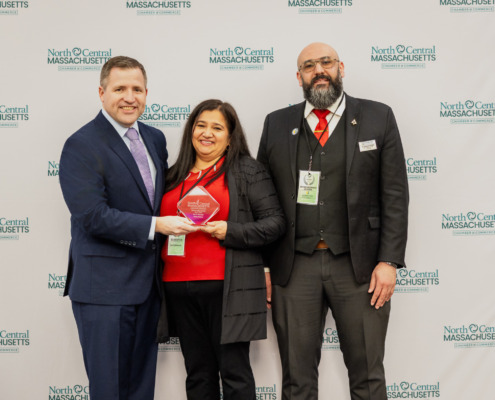

The reception features an open bar and gourmet appetizers.
View
Event
Join us for Connect North Central
Friday, September 25, 2026
8am-9am
View
Event
North Central Golf Tour Championship: Fore the Future
An FLNC Non-Traditional Scholarship Fundraiser
View
Event
Thank you Series Supporting Sponsor empHowered PR
View
Event
Join us for our 11th Annual
Congressional Luncheon
View
Event
Wednesday October 28, 2026
5:00pm - 7:00pm
View
Event
Join us for this in person HR Legal Update
View
Event
November 19, 2026
7:15am - 9:00am
View
Event
Chamber members are provided with the opportunity to engage with the Mayors of Fitchburg, Gardner, and Leominster who provide updates on projects and other things happening in their Cities. These events are by invitation only, please contact Travis Condon for more details.
View
Event
Bull Run Restaurant
215 Great Rd. Shirly, MA
View
Event
Join us for our last Connect North Central of the year!
Friday, December 11, 2026
8am-9am
View
Event
Chamber members are provided with the opportunity to engage with the Mayors of Fitchburg, Gardner, and Leominster who provide updates on projects and other things happening in their Cities. These events are by invitation only, please contact Travis Condon for more details.
View
Event
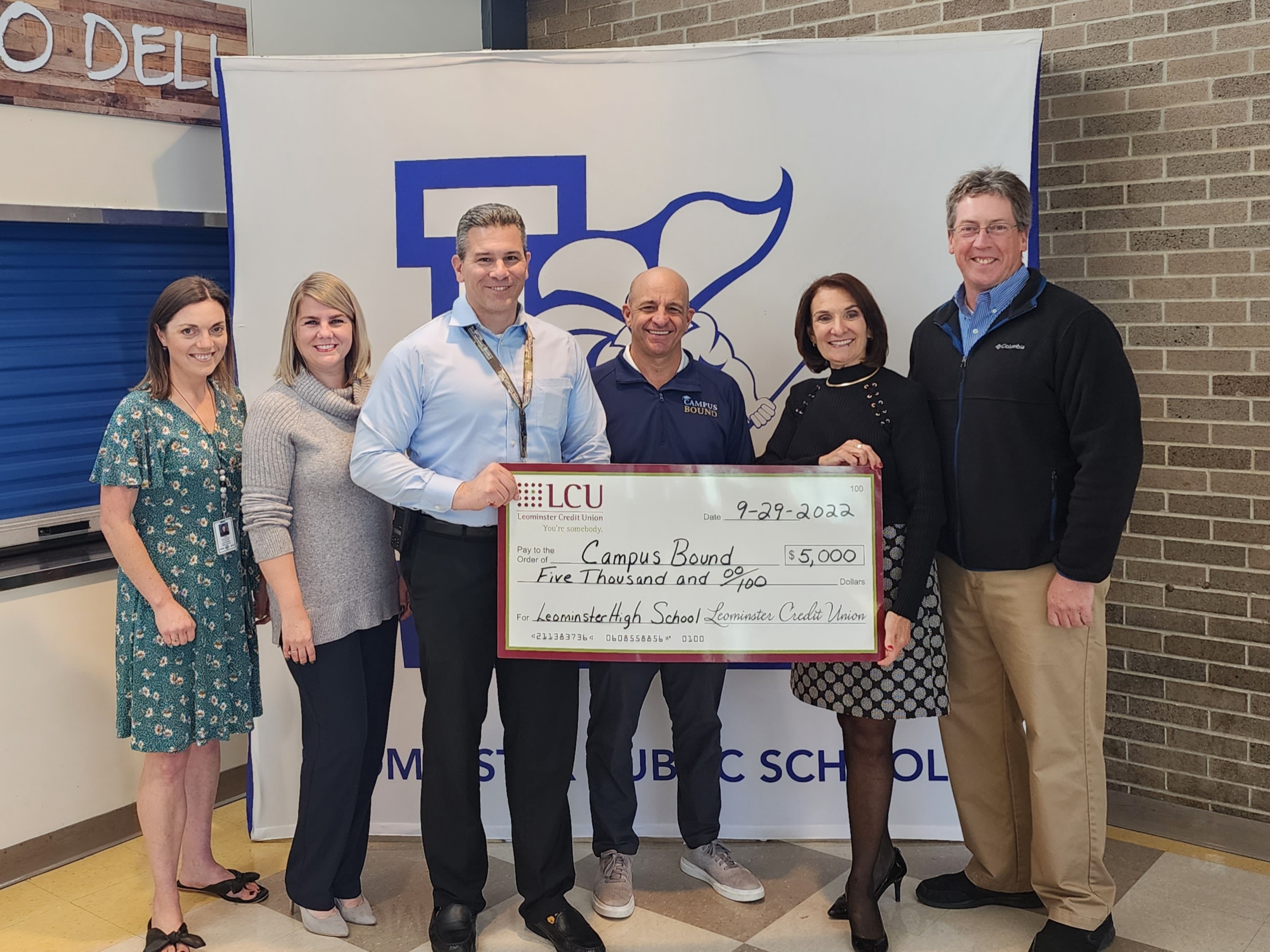
Pictured L to R: Megan DeInnocentis, Guidance Department; Kelli Rooney, Senior Vice President, Community Engagement and Marketing, LCU; Joshua Romano, Principal, Leominster High School; Gregg Cohen, President, Campus Bound; Barbara Mahoney, President & CEO, LCU; and Brian Gardiner, Campus Bound
Leominster, MA – Leominster Credit Union (LCU) presented a check for $5,000 to the Campus Bound Program to benefit Leominster High School (LHS) students.
Since 2020, Campus Bound experts have provided free support to Leominster High School to help reduce the costs of college. Campus Bound is a team of experienced, passionate college counseling and financial aid professionals working with the Leominster High School Guidance Department to help families successfully navigate the financial aid process and other cost-reduction strategies on their road to higher education. This program is made possible through the sponsorship by Leominster Credit Union.
“LHS is very grateful for the generosity of Leominster Credit Union and the support they show to Campus Bound and building opportunities for our students. This partnership helps LHS students meet their post-high school aspirations,” stated Joshua Romano, Principal, Leominster High School
Campus Bound is committed to helping students of all achievement levels to create strong applications and discover their best-fit schools.
“The Campus Bound team was extremely helpful by showing us how to build a budget of what we could afford for college and then how to build a list of affordable colleges our children should apply to,” quoted from a parent of the classes of ‘20, ‘21, ’24. “With their help, we found errors in our Free Application for Federal Student Aid (FAFSA) that resulted in a substantial increase in aid once we worked with the college financial aid office of our child’s first choice school.”
Counselors at Campus Bound collaborate frequently with students, ensuring that all receive the most up-to-date information and personalized support with this challenging process.
“We regularly look for opportunities to engage and partner with organizations who offer products and services to the communities we serve. Our objective in giving back is to fulfill a need and support an initiative. Given the rising costs associated with attending college, Campus Bound can offer a much-needed comprehensive solution. As a sponsor to this program, we are assisting local students with the opportunity to access resources to help them navigate and attain entry to great schools, find solutions to reduce college expenses and minimize debt,” said Barbara Mahoney, President & CEO, Leominster Credit Union.
For more information on Campus Bound, visit campusbound.com.

The annual appeal is part of the bank’s charitable giving program, called The Giving Tree, which reflects the bank’s commitment to making a real difference in the neighborhoods it serves, and the belief that we can enhance everyone’s quality of life if we work to solve our biggest problems—together.
The 2022 drive marks the bank’s 19th year of hosting Neighbors Helping Neighbors, which invites bank customers, employees, and members of the community to donate money toward food pantries throughout the month of November. All donations (up to $2,500 per customer) will be matched dollar for dollar by bankHometown and the total raised will be divided among participating food pantries across Massachusetts and Connecticut in communities the bank serves. In 2021, through contributions and matching donations, the campaign raised over $39,000 and resulted in $2,800 contributions to 14 participating food pantries. Over the years, the program has donated nearly $265,000.
Donations of any amount are encouraged, and as an added incentive to give, the bank will offer those who donate the opportunity to win a $25 gift card at each of its locations.
“Neighbors Helping Neighbors is a great example of how communities come together to help others in need,” said Morton. “bankHometown is proud to lead this annual giving tradition and thankful to our valued customers and employees who selflessly give each year.”
Those who wish to participate have until November 30 to make their donations. Checks should be made payable to “bankHometown Neighbors” and can be dropped off at any bankHometown branch or mailed to:
Mary C. Mulrenin
Executive Secretary
bankHometown
31 Sutton Avenue
Oxford, MA 01450
The food pantries that will be supported this year include:
Massachusetts:
Athol Salvation Army Food Pantry
Auburn Youth and Family Services Food Pantry
CARE Food Pantry, Clinton
Food Share, Southbridge, Charlton & Sturbridge
Friendly House Pantry, Worcester
Friends of the Millbury Seniors
Ginny’s Helping Hand, Inc., Leominster
Oxford Ecumenical Food Shelf
Sutton Senior Center Michael A. Chizy Food Pantry
St. John’s Food for the Poor, Worcester
St. Vincent de Paul Food Pantry, Webster
Connecticut:
Community Kitchens of Northeastern CT, Killingly
Daily Bread, Putnam
Friends of Assisi, Killingly
Thompson Ecumenical Empowerment Group
Local, woman-owned and operated graphic design and marketing studio looks back on 20 years of growth
Shirley, Mass.—Sitka® Creations, a graphic design studio providing clients with creative and effective graphic and web design and visual communication services, is celebrating 20 years in business this November.
Founded by Tamar Russell Brown in 2002, Sitka Creations was first opened in Rockland, Maine with Russell Brown and a few freelance staff. Over the years, the business has expanded to locations in Martha’s Vineyard, New York City, and Leominster, and moved to its current location in Phoenix Park in 2013.
“Moving to Phoenix Park gave me a real vision that I could grow my business,” said Russell Brown. “In 2015, I started offering payroll, and in the last three years offered benefits, such as health insurance and paid time off, in an effort to continue to grow and provide our team with what they need. Today, we have six employees and three contractors.”
Sitka Creations serves a variety of small businesses, and arts and culture organizations, in the food, retail, manufacturing, IT, and legal services industries. “We have a handful of clients in almost all of the places where I have done business in the past,” added Russell Brown. “While we are small, we are versatile and can offer clients a variety of services based on their unique needs. Typically, we essentially become contributing members of the client’s team.”
Like many entrepreneurs, Russell Brown took her passion of art and of being an artist as the drive for opening her business, while also looking up to her father, a small business owner himself.
“This started as a way to make extra money, but it was always in my head to design more creations than what I could do at my day job,” she said. “In my free time, I would try to obtain design gigs that were of interest to me, and since I loved working with clients directly, I made the transition to that of business owner.”
Russell Brown earned an associate degree from Nashville State Technical Institute and a bachelor’s degree in Visual Communication from Rhode Island College. She is also certified in photography, Teaching English as a Foreign Language (TEFL), and Teaching English to Speakers of Other Languages (TESOL).
A resident of Fitchburg, Russell Brown volunteers with various organizations within the community. She is Chair of the Fitchburg Cultural Council, a Founder of the Fitchburg Open Studios event, and on the board at the Fay Club. She previously served on the Mount Wachusett Community College Design Board, the Montachusett Regional Technical Vocational High School Design Department Advisory Committee and is in her second term on the Rhode Island College Alumni Board, where she also served as a mentor to aspiring web developers.
Russell Brown and her team will be recognizing her 20 years in business at an invitation-only event on November 2 to look back on their success while thanking clients, partners, and friends for their support.
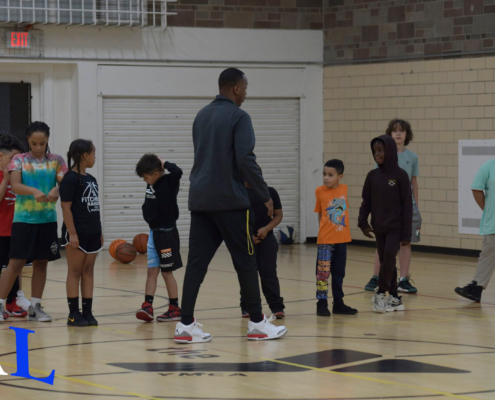
When the workday ends and the lights go down, Custom Cleaning Service of Peabody, Inc. gets to work. “We operate as our clients’ silent partner after business hours,” says Adam Paicos, of Templeton, who now serves as Director of Operations and oversees the company’s expansion into North Central MA. “We are not often seen, but we ensure facilities are clean, secure, and ready for business each day while serving as the eyes and ears for our clients when they are not on site.”

Discover local business stories through our Inside North Central Massachusetts Podcast series. Listen as Chamber members share their journeys, insights, and contributions to our thriving regional business community.

Looking for your next opportunity? Explore current job openings from employers across North Central Massachusetts on our Jobs Board. Whether you’re starting a new career or making a change, you’ll find a variety of local positions available to help you take the next step.
CapEx Facility Services & Construction · Leominster, MA
TaraVista Behavioral Health Center · Harvard, MA
DRS Power Technology, Inc. · Fitchburg, MA
AIS · Leominster, MA