E-Newsletter
An Electronic Publication of the North Central Massachusetts Chamber of Commerce

Inside this edition, you’ll discover the latest Chamber initiatives and success stories from across our region. From economic development projects and upcoming networking events to policy updates and workforce training opportunities, we’re keeping you connected to what matters most for your business and North Central Massachusetts.
The North Central Massachusetts Chamber of Commerce is here to help – with trusted resources, a strong business network, and a support system to keep your business and the region moving forward
Imagine a modern renaissance, built on our past with the vision of a sustainable, modern future. Guess what? It’s happening right now in North Central Massachusetts. With more than 7,500 businesses based in the 27 communities that encompass North Central, we are building on the strong bones of our industrial past to redevelop buildings and create green living spaces, all while staying true to our traditional New England roots.
In 2020, a group of local business and community leaders, dignitaries and other key regional stakeholders got together to really understand what makes our region tick. The result is One North Central, a regional economic development plan to set a path forward for growth and opportunities.
One critical factor that bubbled to the surface early on was the North Central Massachusetts real estate market’s affordability compared to Greater Boston. Our region is home to more than 52 million square feet of industrial, retail and flex space, which is an increase of 375,000 square feet since 2006. And, with industrial and office lease rates approximately $15 per square foot, the region offers a relatively large share of competitively priced warehouse and distribution space. In fact, North Central Massachusetts offers the highest potential for industrial space demand, more than double when compared to the other four Massachusetts regions identified in One North Central. In fact, we have a unique competitive edge over many other regions closer to Boston—the lower cost of both owner and renter housing. It’s an advantage which could attract new talent to live in the region who could purchase homes typically out of reach in many other parts of the state.
The region’s plethora of unique historic downtowns and town centers with a variety of community types offer a wide spectrum of opportunities for businesses and families alike. Want to take a commuter rail to a walkable downtown or open a small business in an old mill? You can. Interested in building furniture in a state-of-the-art manufacturing facility, learning to design a video game in a tech lab or visit a farm or orchard for fresh produce? You can do that, too. For our region’s largest communities, downtown areas are fast becoming destinations for arts and culture, restaurants and green space that attracts residents, employees, and visitors to live, work, learn and enjoy.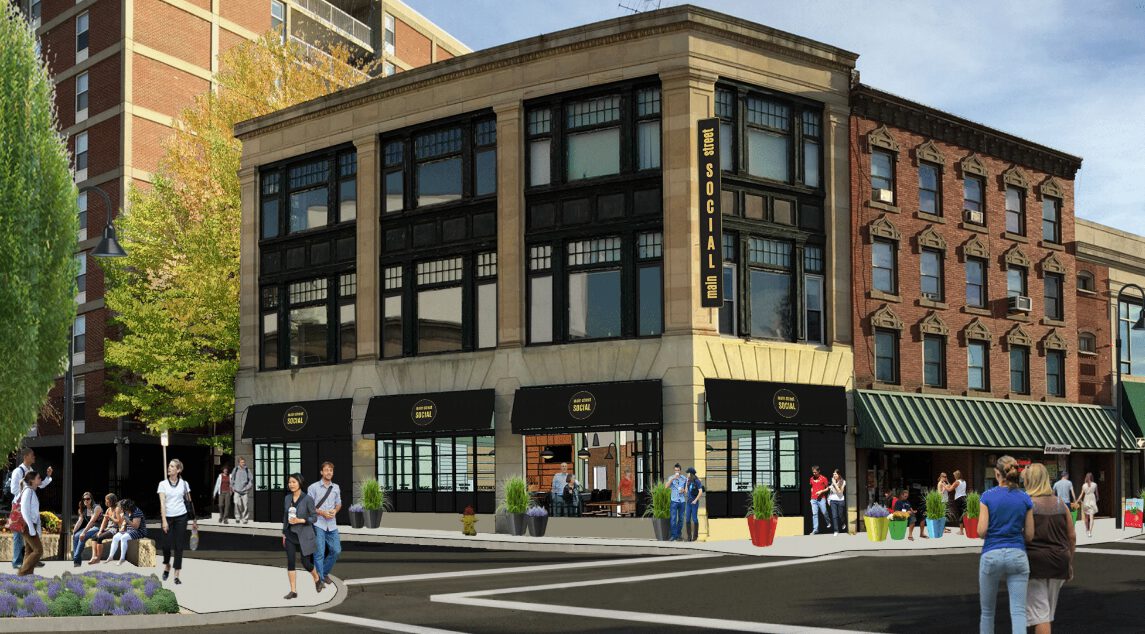
“A major focus of our economic development is our Urban Renewal Plan focusing on the Mill Street and Downtown areas which are designed to create opportunity for private investment, stimulate economic growth, and improve and expand housing opportunities,” said Trevor Beauregard, Director, Community Development and Planning, City of Gardner, and Executive Director, Gardner Redevelopment Authority. “In concert with state funding and grants, the availability of lending for private development in Gardner is also stimulating the city’s targeted areas for development and growth.”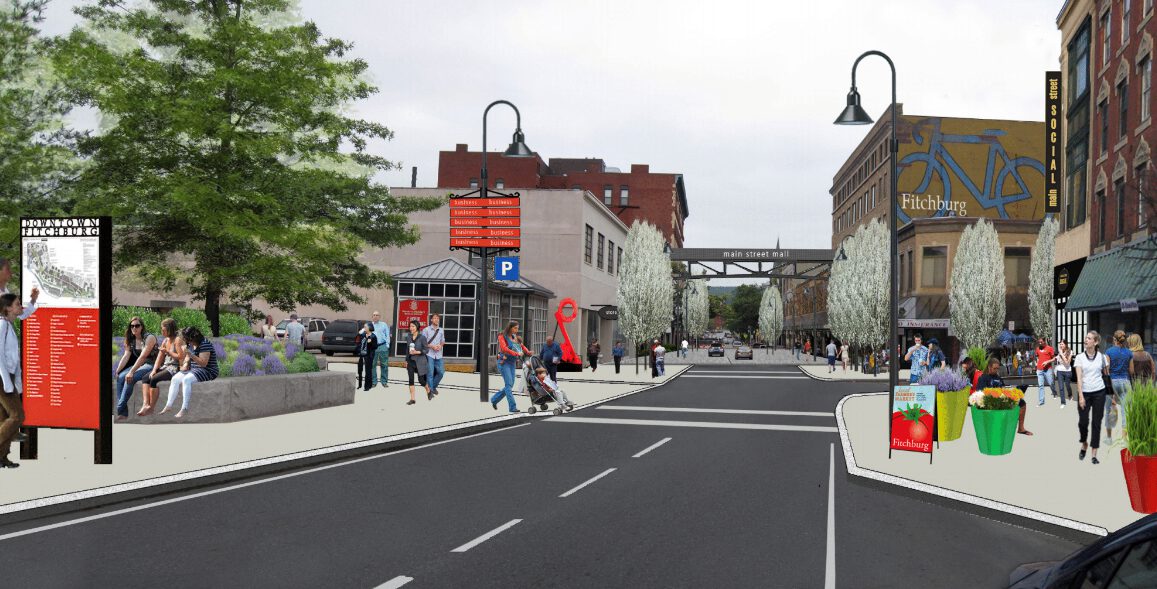
Beauregard highlighted the Timpany Crossroads Project as a well-sighted, successful private investment located along the commercial corridor at the corner of Route 2A and Route 68, which offers businesses convenient access to major roadways and provides maximum high visibility. And in March 2021, Community HealthLink announced it purchased 13 acres of land next to Walmart on Timpany Boulevard to build a new 20,000-square-foot facility. The new building will be fully ADA-compliant and LEED certified, and offer primary and family medical, dental and behavioral health services, as well as urgent care.
“We have a two-pronged approach to economic development in Fitchburg,” said Tom Skwierawski, Executive Director of Planning and Community Development, City of Fitchburg. “We are
looking at the west and east sections of the city in very different ways. On the east, we have agricultural, greenfield development sites with the potential for tremendous commercial development. On the west side, we have a commercial recreation hub that started with Great Wolf Lodge and is now home to Game On, both of which provide family experiences for recreation.”
A big challenge for Skwierawski is the current real estate market’s low inventory which is making it difficult to welcome new residents to the city. “While we want to create continuous activities for the weekend traveler, we also want to attract people who’ve been priced out of the greater Boston area. We want them to purchase a home and raise a family here, but that’s hard to accomplish when there is little to no real estate inventory available.”
The City of Fitchburg is also turning to its downtown area, which the city refers to as “InTown,” into a destination arts and culture hub surrounded by residential units for those priced out of Boston, Worcester and the Merrimack Valley. “We have the Moran Square project which includes 44 residential units and commercial development opportunities, and several projects along Main Street designed to increase traffic to the downtown area,” he said. “We’re currently working on the redevelopment of 655 Main Street which will create four rental units and become the future home of the Dario’s on Main restaurant; 805 Main Street which will provide eight units; and the former Harper Furniture building renovation which will connect with the former Summer Street Firehouse providing 44 units and commercial space.”
In addition to the city’s InTown redevelopment, Fitchburg State University was awarded a $475,000 grant from MassDevelopment in December 2021 for the Main Street Theater Block rehabilitation project, which will provide 500 to 2,200 square feet of additional space to accommodate restaurants, retail space, art galleries and studios. And, in keeping with the city’s mission of creating an arts and culture hub, the Fitchburg Art Museum and NewVue Communities are working together to create the Fitchburg Arts Community, which will bring approximately 60 units of affordable rental artist residences and workspaces to three historical buildings adjacent to the Fitchburg Art Museum.
While downtown is a key area for growth, Skwierawski said industrial development like the Amazon warehouse on Intervale Road is equally important. The 97,000 square foot warehouse, slated to open in August 2022, will provide up to 300 jobs in the region. “We are really excited about this development and are looking to expand an industrial park at the sand pit adjacent to the warehouse.”

Planning for the Monoosnock Brook Stabilization Project began 2019 and is funded by two Municipal Vulnerability Preparedness (MVP) Action Grants totaling over $367,000. It’s an important project that will replace the current stone walls along the brook and the large culvert below the municipal parking lot off Mechanic Street. “The brook is a centerpiece of our downtown and provides a quiet respite for our residents and businesspeople during their lunch hour and lets families experience nature just a few steps from a bustling downtown area,” added Curtis. The project is expected to be completed in summer 2023.
Part of Gardner’s Urban Renewal Plan includes a pedestrian corridor with street markings and signage to make the public walkways more pedestrian and bicycle friendly. “We are working to expand the bike path from the [Mount Wachusett Community] college to downtown through a bicycle and walking network using shared streets and multiuse paths,” said Beauregard.
Speaking of bicycle friendly paths, the Twin Cities Rail Trail, which follows an abandoned rail corridor from downtown Fitchburg to Mechanic Street in downtown Leominster, is scheduled to be open to the public in 2023. The trail runs parallel to Route 12 and will be open for all non-motorized use. “By bringing the rail trail directly to Mechanic Street, cyclists and walkers will be able to access all of what downtown Leominster has to offer while being active outdoors,” added Curtis.
Just a few miles away is Devens, home to more than 100 businesses and organizations providing more than 4,000 jobs all bolstered by approximately 2,100 acres of open space and recreation land. Formerly known as Fort Devens, the former U.S. Army base is now home to bustling businesses in technology and innovation, as well as New England Studios, producer of such television shows and movies as Dexter, Defending Jacob y Castle Rock. Growth and development abound in this community, with King Street Properties developing a 45-acre biomanufacturing campus consisting of five buildings with 700,000 total square footage. And last summer, SMC Ltd., a medical device contract manufacturer, announced plans to double its footprint with the addition of a 207,000 square foot manufacturing and warehouse facility, resulting in approximately 400 new jobs.
For all its successes, sometimes growth can present challenges, as Leominster’s downtown growing pains can attest to. With just about every square foot of downtown commercial space filled, the Economic Development Office is working in collaboration with Mayor Dean Mazzarella and downtown business owners to both find additional space while maintaining that uniquely positive small town, customer experience. Curtis noted, “We have monthly downtown business group meetings with our business owners so we are made aware of their challenges and how we can work together to create solutions.”
Curtis was quick to point out the Mall at Whitney Field is a hot topic of conversation in Leominster, with many rumors swirling about the future of the mall and surrounding area. “The mall is a work in progress and while there are many rumors about the future of the mall, including tearing it down, this is simply not the case,” said Curtis. “The investors who own the mall want to see this succeed so in this case patience is asked by all in the community while we work to figure out the best path forward.”
Collaboration is certainly key, not only with business owners, but also between other cities and towns in the region. “What we’ve realized over the years is that we cannot achieve our goals as a city without partnering with other cities in the region,” said Curtis. “We want our businesses to thrive and if Leominster cannot accommodate the needs of a new business or a business that needs to grow its footprint, we will work with other communities to collaborate and help our business owners find the most appropriate location to achieve their goals.”
Skwierawski and Beauregard also praised their respective city officials for collaborating with them on several of the economic development projects, both past and current.
“We are all rowing in the same direction and by having our Mayor, City Council, NewVue Communities, ReImagine North of Main, the Fitchburg Redevelopment Authority, and the North Central Massachusetts Chamber in our corner, it makes our work a lot easier. But more importantly, a collaborative environment provides business owners with the confidence that we will work as a team to help them achieve their goals.” Beauregard also said the Gardner City Council and its Mayor Mike Nicholson are all very supportive of all the city’s initiatives, which makes it much easier to move projects forward seamlessly and as quickly as possible.
It’s truly an exciting time to see how our cities and towns are redeveloping areas by modernizing buildings from our past, creating sustainable housing and establishing recreation areas connecting cities together as we work toward building North Central Massachusetts for the next generation.
The Baker-Polito Administration today announced eight new early college programs and awarded several grants totaling more than $1.3 million to high schools launching or expanding early college programs as part of a statewide effort to substantially increase the number of high school students who take college courses and earn college credits at no cost before they graduate high school. Through these newly awarded designations and grants, the Executive Office of Education anticipates that approximately 8,700 students will be enrolled in early college programs by the 2024-2025 school year. Early college programs combine traditional high school courses with an opportunity to earn college credit at a college or university. Currently, there are approximately 5,400 students enrolled in early college courses at 50 high schools across the Commonwealth. “Early college is an invaluable tool that supports increased college enrollment among participating students, particularly students from groups historically underrepresented in higher education, and helps them succeed once they arrive on campus,” said Governor Charlie Baker. “Today’s announcement will boost participation rates at schools that already have programs, as well as launch new and exciting programs that will create more pathways to college.” Since its launch in 2017, the Baker-Polito Administration has strived to expand access to early college programs. The Governor’s FY23 budget proposal includes $7.3 million for early college funding, representing a significant increase over FY22, to bring the total annual investment to more than $18 million. “The more communities that launch early college programs, particularly in our Gateway Cities, the more we can provide opportunities to students that help close achievement and workforce gaps,” said Lt. Governor Karyn Polito. “By creating and supplementing designated early college programs with our municipal partners, our administration aims to break down barriers that persist between high school and higher education.” Eight high schools and their higher education partners were awarded official designation status this month by the Department of Elementary and Secondary Education and the Department of Higher Education to launch new early college programs. “Successful early college programs create a coherent course of study that can change the trajectory of a student’s life,” said Education Secretary James Peyser. “By designating these early college programs, we are creating a shift in the educational experience for thousands of students.” The majority of students who participate in early college programs meet MassCore college readiness curriculum requirements while also successfully completing credit-bearing college courses. Early college has also been shown to boost college completion rates for low-income, minority and first-generation college students. Early college students enroll in college at significantly higher rates than their high school peers. For example, in 2019, approximately 76 percent of early college students enrolled in college after graduation compared to 55 percent of their peers who did not participate in early college. “As part of the intra-agency early college collaboration, the Board and Department of Higher Education has approached this effort, as with all our work, from an empirically-based policy analysis frame,” said Department of Higher Education Commissioner Carlos Santiago. “We are therefore pleased with early data showing that designated Massachusetts early college programs have prioritized and demonstrated progress in raising college-going rates and matriculation for students of color and low-income students, who continue to confront the highest barriers to higher education.” “It’s wonderful to see additional and expanded designated early college programs everywhere from the Berkshires to the coast,” said Elementary and Secondary Education Commissioner Jeffrey C. Riley. “These programs are a great opportunity for students to see that they’re capable of college-level work and take their first steps on that path.” The newly designated programs are:
In addition, five high schools and their college partners were awarded a total of $750,000 to create early college programs that are large-scale, with at least 400 students or the whole school participating. This new “immersive early college” model will provide students with an opportunity to earn a minimum of 30 college credits prior to graduating high school. Each of the following schools received $150,000 in grant funding:
Additionally, nine schools were awarded expansion grants, totaling more than $650,000, to support their existing early college programs and boost the number of students enrolled, particularly those underrepresented in higher education. The grantees include:
The Baker-Polito Administration launched a new hiring and training employer grant program, “HireNow,” which will help employers quickly hire and train new workers and get more people back to work. The new program provides eligible employers with a $4,000 per employee grant, which can be used to cover training costs or as a signing bonus for new employees. By providing employers with these flexible funds to facilitate quick hiring, the Administration is focusing on addressing continued hiring challenges faced by employers and increasing labor force participation. Employers can learn more about the program and apply at mass.gov/HireNow.
The program is open to all Massachusetts employers, including both for-profit and non-profit entities (excluding federal, state, and municipal governments). Governor Charlie Baker, Lt. Governor Karyn Polito and Labor and Workforce Development Secretary Rosalin Acosta announced the launch of the program today at LabCentral, a Cambridge non-profit that provides support and working space for start-ups in the biotech and life sciences sectors. LabCentral plans to hire lab operations and other technical and administrative staff this year and will use funds from HireNow to support training costs.
“Our Administration is focused on supporting Massachusetts’ economic growth and getting more people back to work, and the HireNow program is one more tool at our disposal to meet employers’ workforce needs and grow our labor force,” said Governor Charlie Baker. “The flexible funds from this program will be distributed to employers quickly to help them with training costs, tuition support and other needs. We are grateful to our partners in the Legislature for allocating the ARPA funds necessary to make this program happen.”
“We know employers are ready to grow and expand by hiring new workers, and we’re excited to deploy flexible dollars as part of the HireNow program to jump-start those efforts,” said Lt. Governor Karyn Polito. “Massachusetts’s economic recovery from the pandemic is off and running, but we know there are still persistent workforce challenges that we must address. To boost our local economies, it is critical that we help both for-profit and non-profit employers meet their workforce needs and get more people back to work. We appreciate the partnership of the employer community as we developed this program and look forward to putting these funds to work alongside our existing, proven job-training programs.”
HireNow aims to address hiring challenges faced by employers that have been brought about by the COVID-19 pandemic. According to a recent analysis of Bureau of Labor Statistics data, there are over 85,000 workers not participating in the labor market compared to pre-pandemic levels. Meanwhile, employers’ need for workers has continued to increase, with unfilled job postings up 20% compared to pre-pandemic levels and approximately 200,000 open jobs available across the Commonwealth.
The Administration is focused on addressing these challenges through a variety of efforts, including by expanding access and awareness to its existing, apprenticeships, incumbent worker training programs, the Career Technical Initiative and more. Local MassHire Workforce Boards are also expanding resources to match employers and workers with training programs, and regions are hiring new staff members to serve as regional “Market Makers” to connect companies to graduates of new education and training programs starting up in their areas funded by the American Rescue Plan Act. These staff members will be regional points of contact to help match employers’ needs with both job-seekers and the skill-building programs needed to successfully fill open jobs. In addition, MassHire Centers are adding staff to work directly with job seekers who want to enroll in new training programs to gain more skills.
The HireNow program will build on these efforts by providing resources directly to employers that make it possible to immediately hire new employees and provide them with necessary training to fill open roles. The program will be supported by $50 million in American Rescue Plan Act funds.
“We are excited to add HireNow to our growing number of grant programs that aim to close job and equity gaps across the Commonwealth,” said Labor and Workforce Development Secretary Rosalin Acosta. “We hope these funds will encourage employers to expand their hiring strategy to include those with potential for learning and growing on the job, over a direct-skills match, as this will widen the candidate pool and help both jobseekers and businesses.”
“Getting people back to work is a key element of our strategy for economic recovery and the ‘HireNow’ program allows us double down on these efforts,” said Housing and Economic Development Secretary Mike Kennealy. “I look forward to this program’s success not just in enhancing access to employment opportunities, but accelerating it.”
“HireNow will be an excellent complement to the Career Technical Initiative we launched two years ago which expands access to high-quality vocational programs for high school students and adults by creating three shifts, one during the regular school day for vocational students, one in the afternoons for students enrolled in their local high school, and one in the evening for adult learners looking to change careers or upgrade their skills,” said Education Secretary James Peyser. “Employers will be able to recruit students from CTI programs, and use the HireNow grants to offer deeper training for their employees.”
Program Details:


The reception features an open bar and gourmet appetizers.
View
Event
Join us for Connect North Central
Friday, September 25, 2026
8am-9am
View
Event
North Central Golf Tour Championship: Fore the Future
An FLNC Non-Traditional Scholarship Fundraiser
View
Event
Thank you Series Supporting Sponsor empHowered PR
View
Event
Join us for our 11th Annual
Congressional Luncheon
View
Event
Wednesday October 28, 2026
5:00pm - 7:00pm
View
Event
Join us for this in person HR Legal Update
View
Event
November 19, 2026
7:15am - 9:00am
View
Event
Chamber members are provided with the opportunity to engage with the Mayors of Fitchburg, Gardner, and Leominster who provide updates on projects and other things happening in their Cities. These events are by invitation only, please contact Travis Condon for more details.
View
Event
Bull Run Restaurant
215 Great Rd. Shirly, MA
View
Event
Join us for our last Connect North Central of the year!
Friday, December 11, 2026
8am-9am
View
Event
Chamber members are provided with the opportunity to engage with the Mayors of Fitchburg, Gardner, and Leominster who provide updates on projects and other things happening in their Cities. These events are by invitation only, please contact Travis Condon for more details.
View
Event
Virtual seminar on how to stay safe online
WHAT: As part of the Fidelity Bank LifeDesign Workshop Series, the community is invited to attend a free workshop, “Being Smart About Cyber Security.” Participants will learn about the current cyber threat landscape, current attacks, and steps to prevent cyber attacks.
WHERE: Virtual; registration at www.fidelitybankonline.com/cyber
WHEN: Tuesday, October 18, 2022 from 5:30 to 6:30 p.m.
WHO:
Brad Kirlin, Senior Vice President, Chief Technology Officer, Fidelity Bank
The Elementary School and former Junior High will be the new home to Senior Center and 3 Gardner Nonprofits
Gardner – October 4, 2022 – Gardner’s Waterford Street School, recently vacated after completion of the new Gardner Elementary School, will begin a new mission in the coming months. The former school is set to become the new home of four important Gardner institutions – The Gardner Senior Center, the Gardner Community Action Committee, GAAMHA, an organization dedicated to providing employment and treatment for individuals with disabilities and substance use disorders, and Growing Places, which aims to provide communities with sustainable, local produce.
In addition to providing a suitable home for these four institutions, including considerations of safety and access for the Senior Center, the quick turnaround in occupancy at the Waterford Street property will provide the City with a consistent source of revenue in what would otherwise be a disused building.
There will also be a Constituent Service Office at the location where members of the public will be able to meet with different City service departments and elected officials by appointment or scheduled office hours.
Speaking on the long-considered but quick-coalescing development, Gardner Mayor Mike Nicholson said, “The first time we talked about this project was in September of 2020, when I mentioned to Representative Zlotnik and Council President Kazinskas that I’d like to see the Senior Center moved to Waterford Street to get all of its services in a one floor building, and the project really took off from there. For the next year and a half, working with his office, we were able to set up meetings with the different organizations to get us to where we are today.”
Key to Waterford’s repurposing was State Representative Jonathan Zlotnik, who noted the opportunities that would arise from having the four organizations share a common space and resources. He stated “This project will meaningfully repurpose this building and provide these organizations with much needed space to improve and expand services. There are many advantages this will provide and present great opportunities for collaboration. As a former student, and the son of a former teacher at Waterford Street School, I’m very happy that we have been able to work to see this building continue to serve this community.”
Speaking at a press conference on Monday to announce the project, City Council President Elizabeth Kazinskas said “I think this is going to be an exciting use of the space here at Waterford. As a former student of Gardner Junior High, it’s really nice to see something come of this space, because there are a lot of wonderful memories that were made for students over the years, just as there will be for the people that are coming here.”
At the press conference, the video of which can be found on the City’s YouTube channel, Mayor Nicholson noted that this initiative compliments the work the City has done over the last two years to prevent and reduce the number of vacant buildings and problem properties in the City.
“We’ve done a lot of work in Gardner to revitalize vacant buildings and hold landlords accountable and we need to hold ourselves to the same standard,” said Mayor Nicholson. “Today’s announcement shows just that. This new Community Center will utilize the space in a way that truly benefits the City’s residents by growing what these organizations do and allowing them to collaborate in a more effective environment.”
The press conference also made plain the enthusiasm of Waterford’s four new tenants. Speaking on behalf of the Gardner Senior Center, Director Mike Ellis outlined some of the specific advantages he saw for his organization in the upcoming move.
“The Gardner Senior Center is really energized and excited about moving here to Waterford. We currently have three major issues facing us on a daily basis. First, if you’ve ever come to the Senior Center for an event, you know that parking is an issue. Here at Waterford we have ample parking for folks to come and attend many of our programs. The second issue is that our current building doesn’t allow us to do many large programs at the same time. This move will help us provide more programs to our seniors simultaneously. Third, it’s not going without notice that the Gardner Senior Center stairs are precarious. In fact, over the last fifteen months, we’ve had several major incidents that have required us to call emergency services. Coming to Waterford affords us a facility on a single floor so that we’ll have better access, more opportunities, and a safer environment.”
Julie Meehan, the Director of the Gardner CAC, which currently shares a building with the Senior Center, echoed similar sentiments to her neighbor. “Many people know the CAC as the largest food pantry in the city, but beyond the pantry we also have free community meal sites, toys for tots, medical transportation for seniors, Thanksgiving and Christmas food baskets, and emergency assistance for housing and heating. This move is very important because it allows our agency to have all of our programs centrally located as opposed to scattered throughout the city.”
Ayn Yeagle, the Executive Director of Growing Places, said “One of the things that we work on is filling food system gaps. The pandemic certainly helped to make apparent the food insecurity issues we have in our region. We have 190 farms in North Central Massachusetts and our farmers are growing beautiful crops of all different types, but they don’t really have a way to get it to everybody. What Growing Places does is fill the distribution and aggregation gaps. What Waterford will do is that it has a school kitchen and we’re going to retrofit it and create a processing center so we can create value-added products for our farmers and our community, such as taking apples and making apple sauce, or apple chips, or maybe even some apple pie if you’re lucky.”
Tracy Hutchinson, the Chief Executive Officer of GAAHMA, and Shawn Hayden, its Chief Operating Officer, like their future neighbors, saw opportunity for growth in their organization. “As excited as we are about the expansion of our community-based day program here at Waterford Street School, that actually triggers another exciting expansion for GAAHMA” said Hayden “There will be another opportunity for the City in that the space that’s freed up at our Coleman Street headquarters will actually be able to pivot and expand our growing outpatient behavioral health services to provide mental health and addiction counseling for people in the city.”
Asked when the move was expected to come to fruition, officials emphasized that while there were several steps still to come in the process, they were confident it could be undertaken some time in 2023.
Nicholson concluded by thanking Representative Zlotnik for the integral work he played in getting this project to where it is today. “I want to thank Representative Zlotnik for his help in getting this project off the ground, by helping bring these organizations together and providing state funds. I’d also like to thank all of these organizations for their continued investment in our community.”
In order for this initiative to take place, the School Committee must first vote to transfer the building from the School Department to the City for ownership. The City Council must then approve the Senior Center moving to the location and approve the lease agreements for the tenants moving into the location.
MASSACHUSETTS – Main Street Bank is pleased to announce that Carl Flumerfelt has accepted the position of Senior Vice President Commercial Lender, effective August 15th, 2022.
Carl will be supporting Main Street Bank’s Commercial Loan Department by connecting with new and existing business customers. Using his years of experience in commercial banking, Carl works closely with clients to understand their business and how the appropriate business loan option will work to support their day-to-day functions and growth. While his office is based in the bank’s Ayer, MA location, Carl will be the first of our Commercial Lending Team to be available via Main Street Bank’s video banking service, Video Connect, to meet with and serve business clients from virtually anywhere.
“Building mutually successful deals and forming meaningful connections with clients are my favorite parts of this job, and I am excited to have access to the resources at Main Street Bank to do even more of it,” says Carl.
Carl comes to Main Street Bank after 35 years of service at Winchester Savings Bank. There, he oversaw the operational and strategic aspects of their commercial, retail, and consumer lending teams. Carl comes highly accredited with both Associates and Bachelor’s degrees from Bentley University, as well as an MBA from Babson College. He also has experience as a CRA officer, a Regulation O Officer, and a Bank Corporator and Executive Committee Member. Raised in the north shore community of Hamilton, MA, Carl is a proud New Englander. Anyone who has met Carl is familiar with his infectious approach to life and business. Main Street Bank is thrilled to have such a prestigious banker as part of our commercial lending team.
For commercial lending related questions or assistance, Carl can be contacted directly at 351-213-0391 or at .

When the workday ends and the lights go down, Custom Cleaning Service of Peabody, Inc. gets to work. “We operate as our clients’ silent partner after business hours,” says Adam Paicos, of Templeton, who now serves as Director of Operations and oversees the company’s expansion into North Central MA. “We are not often seen, but we ensure facilities are clean, secure, and ready for business each day while serving as the eyes and ears for our clients when they are not on site.”

Discover local business stories through our Inside North Central Massachusetts Podcast series. Listen as Chamber members share their journeys, insights, and contributions to our thriving regional business community.

Looking for your next opportunity? Explore current job openings from employers across North Central Massachusetts on our Jobs Board. Whether you’re starting a new career or making a change, you’ll find a variety of local positions available to help you take the next step.
CapEx Facility Services & Construction · Leominster, MA
TaraVista Behavioral Health Center · Harvard, MA
DRS Power Technology, Inc. · Fitchburg, MA
AIS · Leominster, MA