E-Newsletter
An Electronic Publication of the North Central Massachusetts Chamber of Commerce

Inside this edition, you’ll discover the latest Chamber initiatives and success stories from across our region. From economic development projects and upcoming networking events to policy updates and workforce training opportunities, we’re keeping you connected to what matters most for your business and North Central Massachusetts.
The North Central Massachusetts Chamber of Commerce is here to help – with trusted resources, a strong business network, and a support system to keep your business and the region moving forward
Article Source: The Statehouse News Service
Article Author: Chris Lisinski
AUG. 7, 2020…..American employers added nearly 1.8 million jobs in July while the unemployment rate declined to 10.2 percent, restoring another chunk of the jobs lost during the pandemic but at a slower pace than in recent months.
The 1.76 million positions added are more than three times the gains as any pre-pandemic month since 2000, but the boost also lags behind the 2.7 million jobs added in May and the 4.8 million added in June, according to federal datapublished Friday.
Altogether, the three continuous months of rising employment have clawed back less than half of the historic 21.3 million jobs cut in April, when many businesses were ordered to close physical operations to slow the spread of COVID-19.
“The economy fell off a cliff at the end of the first quarter of 2020 and we have been slowly climbing back ever since, thanks in large part to government support,” Citizens Bank Head of Global Markets Tony Bedikian said in a statement. “We have seen a very troubling increase in COVID-19 cases in many states that had reopened for business, but we continue to be cautiously optimistic that the overall U.S. economy has turned a corner, and that the solid job gains announced today will be sustained.”
Job gains came in most industries tracked by the Bureau of Labor Statistics, with leisure and hospitality and food services and drinking places — two of the categories most sharply affected by mandatory shutdowns — together accounting for nearly 1.1 million of the new positions.
Retail trade added another 258,000 jobs in July, while health care employment increased 126,000.
Total jobs in the public sector rose by 301,000 in July, federal officials said, countering a traditional trend of declining in July before seasonal adjustment is applied.
“Employment declines occurred earlier than usual this year due to the pandemic, resulting in unusually large July increases in local government education (+215,000) and state government education (+30,000) after seasonal adjustment,” BLS wrote in its report. “A July job gain in federal government (+27,000) reflected the hiring of temporary workers for the 2020 Census.”
Economists have warned that major cuts to government services could be on the horizon if Congress and President Donald Trump do not agree on an aid package that will help close massive state and local budget gaps opened by the pandemic. Negotiations in Washington are ongoing, with no compromise appearing imminent Friday morning.
Officials also announced that the national unemployment rate — determined through a different survey than total employment — declined to 10.2 percent in July, a 0.9 percentage point drop from June.
That, too, reflects the volatility of the current economic reality. Dropping almost a full percentage point from the unemployment rate — particularly after hitting a high of 14.7 percent in April — is itself an almost unprecedented improvement, but the pace is again slower than in May or June.
Even after declining, the July national unemployment rate was still at a level not observed since April 1983.
BLS said in its release that the share of responses that had been misclassified was significantly lower in June and July than earlier months during the pandemic, when the surveys were hampered by the pandemic’s impact.
“For March through June, BLS published an estimate of what the unemployment rate would have been had misclassified workers been included,” the bureau wrote. “Repeating this same approach, the overall July unemployment rate would have been about 1 percentage point higher than reported. However, this represents the upper bound of our estimate of misclassification and probably overstates the size of the misclassification error.”
Many states in recent months have eased the initial restrictions they placed on business and public activity earlier in the pandemic, though surging case numbers have prompted several governors to pump the brakes on their reopening plans, which could create an uneven recovery process.
Officials will publish July employment numbers and unemployment rates for all 50 states on Aug. 21. In June, Massachusetts had the highest unemployment rate in the nation at 17.4 percent, even though the state’s businesses added a record 83,700 jobs.
Article Source: The Statehouse News Service
Article Author: Matt Murphy
AUG. 7, 2020…..As the summer heated up and infection rates went down, Massachusetts got footloose before it was COVID free. And now the state could be on the verge of paying for it.
Gov. Charlie Baker, in his most scolding tone yet, rolled back outdoor gathering size limits from 100 people to 50, and said he was giving state and local police the authority to enforce those limits on public and private property. Indoors limits will remain at 25.
“Hugs, handshakes, high-fives, dancing, who knows?” Baker said about what’s been going on at these backyard parties and events that the governor blames for an uptick in COVID-19 cases and a rise in the state’s positive test rate to 2.1 percent.

Gov. Charlie Baker observed a dummy laying on a gurney during a tour of the Boston MedFlight headquarters at Hanscom Field on Tuesday to learn about their ongoing work to transport COVID-19 patients from community hospitals to larger Boston hospitals. [David L. Ryan/Boston Globe/Pool]
“The biggest issue we have is people who are familiar with people being familiar with them, in big groups,” Baker said.
That’s not the only problem though. The governor said he’s not ready, as some have suggested he should be, to step back a phase in the reopening schedule. But he said bars “masquerading” as restaurants by selling potato chips and pretzels in order to open need to stop what they’re doing.
The state getting serious about enforcement is all so Massachusetts can avoid a repeat of this spring and becoming the next kid in the New England neighborhood to not get invited to the pool party. That distinction went this week to Rhode Island, where Gov. Gina Raimondo is battling her state’s own resurgence because of too much partying.
The Ocean State found itself added to the quarantine lists of not just Massachusetts, but also states like New York and New Jersey who want Rhode Islanders to quarantine if they leave their waterfront enclave.
This precursor to a fall resurgence couldn’t come at a worse time as schools are finalizing their plans to bring students back to classrooms and campuses around the state, or not. Business confidence also slipped in July, according to Associated Industries of Massachusetts, and enhanced unemployment benefits from the federal government have expired, eliminating a safety net as the recovery appears to be slowing.
UMass Amherst reversed its plans to welcome students back to campus this month even if all their classes were going to be taught online, and some districts like Somerville are ignoring the administration’s pleas to at least give in-person learning a chance.
The Legislature has employed a hydrid model of in-person and remote participation during the pandemic, but in what was supposed to be the first full week of a five-month recess there wasn’t much of either going on.
Last week, the House and Senate made sure to give their negotiators every second available before the faux midnight deadline to strike a deal on police reform, transportation spending, telehealth or economic development. They did this knowing they had already extended the session, giving themselves ample more time.
Seven days later and the Legislature is in the same place it was last Friday night – waiting.
“We will let the conferees do their magic and hopefully get something done and pass it,” Senate President Karen Spilka said at the start of the week. “If it’s done next week, two weeks, that’s when we will come back to do it.”
Instead of shrinking, the number of conference committees actually grew with a fifth piece of legislation dealing with climate change moving into talks between the branches.
Sen. Michael Barrett and Rep. Thomas Golden, the co-chair of the Committee on Telecommunications, Utilities and Energy, are leading those talks, with support from Senate Majority Leader Cynthia Creem, Speaker Pro Tempore Patricia Haddad, House Minority Leader Brad Jones and Sen. Patrick O’Connor.
It’s the same group that negotiated a significant renewable energy bill two years ago, minus Sen. Marc Pacheco, who still chairs the Senate’s Global Warming Committee, but has fallen out of the new leadership hierarchy and was replaced by Creem.
Instead, Pacheco was relegated last week to cheering the House on from the sidelines of Twitter as that branch worked through and passed its version of the net-zero emissions bill that is now in final negotiations.
The administration this week also did its part for global warming by rolling out a new clean peak standard that aims to encourage a reliance on renewable power sources to meet energy demand during peak hours, instead of falling back on dirtier fossil fuels like oil.
Even though negotiations this week didn’t yield any deals, those talks have to be going better than the discussions between Congressional Democrats and the White House over a new COVID-19 relief package.
For starters, they’re still going on, which can no longer be assured in Washington. But Democrats and Republicans can’t get on the same page for an extension of enhanced unemployment benefits or the $500 billion in unrestricted relief money governors are requesting.
The House passed a total package of $3 trillion already, while Republican leaders would reportedly like to get that down to $1 trillion. With the state budget’s outlook riding in part on relief funds, the impasse makes Beacon Hill look somewhat prescient in pushing off its budgeting decisions for longer than just August.
Baker finally put his signature on a three-month, $16.5 billion interim budget that leaders say will carry state government through October, but the governor rejected an Oct. 31 sunset on the authorization, and said the Legislature’s attempts to impose minimum spending thresholds stepped on his toes at a time when he needed flexibility to manage through a pandemic and fiscal crisis.
The bill sought to restrict Baker from spending less on any line item than either the fiscal 2020 budget or what the governor proposed in January in his House 2 budget.
Leaders, however, have been silent since Baker sent that proposal back with an amendment in which he pledged to report to them if he finds ways to accomplish the same goals while spending less.
STORY OF THE WEEK: Testing the limits of reopening
SONG OF THE WEEK: We were given a little rope, but did we do too much?

How to Grow When It’s Slow: Build A Company Culture In A Remote-Run Business
“I just got off a coaching call with a client in Detroit,” recalls business expert Cameron Herold. “He’s got about a hundred employees in his manufacturing shop and I was talking to him about culture while they’re basically in shutdown. He’s fully paying all of his employees for three months – full salaries – and he’s completely blown their minds.”
Cameron Herold is a top business consultant, speaker, and author of Double Double – How to Double Your Revenue and Profit in 3 Years or Less. We caught up with him via a recent podcast episode he was on for Real Estate Rockstars Radio. He’s the mastermind behind hundreds of companies’ exponential growth and teaches today’s most dynamic business leaders.
In uncertain times when there is slow growth in different industries, the natural reaction for many people is fear. As a business leader, you should build a company culture that makes everyone want to be part of the company. Cameron has some great advice for business owners in his interview. Below are some values, attitudes, and practices we think you can encourage to build a great company culture, inspired by Cameron.
Pay your employees full salary
When employees work remotely, you will not be able to boost their morale with corporate culture wall graphics. As such, you will have to find innovative ways of building a company culture. Some companies are finding ways to pay their employees their full salaries – a bold statement when times are tough. By taking care of the financial aspect, you will help make their lives much better. You can also redo your office space to provide them with a great work environment once normalcy returns.
Show your staff that you care about them
You can find ways to encourage your employees to look out for each other. As a business leader, you should be the first person to embrace the company culture and set the pace in practicing the shared values. Simple acts of kindness, such as sending your staff meal plans, buying them cookbooks, cooking videos, and suggesting fun family activities, will go a long way in building strong relationships. Your staff will be pleasantly surprised and feel appreciated through such actions.
Connect with employees
When employees who were working remotely come back to work, you can organize new activities that will help strengthen your relationship with them. Activities that have never been done before will make for great fun while providing employees from different departments an opportunity to bond. For instance, staff from different departments can form teams and play against each other in a game. When you take part in the activities, you will not only connect with your employees but also show them that they matter.
Promote employee well-being
Even as the company goes through a rough patch, your employees will need to be reassured. You will have to create a secure environment where they can work by providing on- and off-site support. Considering the increasing fear and stress levels during such times, you can find ways to foster positive coping. Support employee physical and mental health through employee assistance programs, webinars on resilience, and tutorials on mindfulness. It would also be important to provide them with information on health risks and preventative measures.
Provide more flexibility
Depending on their living situations and responsibilities, working remotely can affect your employees in different ways. Workers with young children or elder-care responsibilities will have to balance work tasks and take care of their loved ones. Try to be flexible and relax your expectations during this time. One of the best ways to go about it would be to have an open discussion with employees regarding when and how tasks will be accomplished.
For information about how to become a better business owner or operator, check out the Second In Command Podcast at CameronHerold.com/podcast.
And stay tuned for the next article in the 6-part series How to Grow When It’s Slow on the topic of what your team needs from their leaders right now.
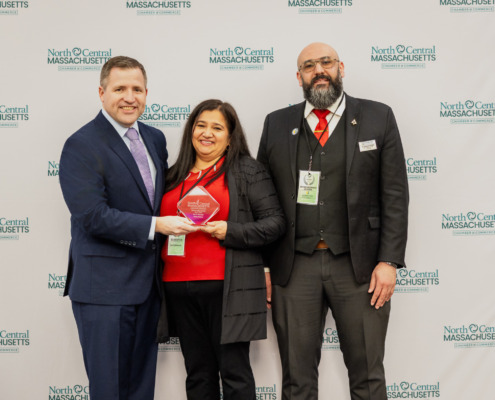

The reception features an open bar and gourmet appetizers.
View
Event
Join us for Connect North Central
Friday, September 25, 2026
8am-9am
View
Event
North Central Golf Tour Championship: Fore the Future
An FLNC Non-Traditional Scholarship Fundraiser
View
Event
Thank you Series Supporting Sponsor empHowered PR
View
Event
Join us for our 11th Annual
Congressional Luncheon
View
Event
Wednesday October 28, 2026
5:00pm - 7:00pm
View
Event
Join us for this in person HR Legal Update
View
Event
November 19, 2026
7:15am - 9:00am
View
Event
Chamber members are provided with the opportunity to engage with the Mayors of Fitchburg, Gardner, and Leominster who provide updates on projects and other things happening in their Cities. These events are by invitation only, please contact Travis Condon for more details.
View
Event
Bull Run Restaurant
215 Great Rd. Shirly, MA
View
Event
Join us for our last Connect North Central of the year!
Friday, December 11, 2026
8am-9am
View
Event
Chamber members are provided with the opportunity to engage with the Mayors of Fitchburg, Gardner, and Leominster who provide updates on projects and other things happening in their Cities. These events are by invitation only, please contact Travis Condon for more details.
View
Event
Fitchburg Public Library presents…
Harry Potter Book Night! February 6, 2019, 6-7:30 pm – Garden Room, Fitchburg Youth Library
Join us on February 6, 2019, from 6-7:30 pm for our 3rd Annual Harry Potter Book Night! This year’s theme is “Hogwarts School of Witchcraft and Wizardry”! There will opportunities to make magical crafts like origami sorting hats, personalized bookmarks, and glitter wands to help you in “school”. There will be tests of your knowledge – from a Table Top Quidditch Tournament to Harry Potter trivia, and even special classes you can take in slime potion creation! Make sure to take a picture at our photo booth of all of your enchantments and stop by our refreshment table to keep you alert!
Our new Teen Librarian, Colin Welch, will also be sharing the wonder of J.K. Rowling’s unforgettable stories and, most excitingly, introducing the next generation of readers to the unparalleled magic of Harry Potter.
Please check our calendar listing for more information. All are free programs. Free parking is available in the lot at the corner of Boulder Drive and Newton Place. For information about this or other Library programs call 978-829-1780 or visit our website: www.FitchburgPublicLibrary.org.

When the workday ends and the lights go down, Custom Cleaning Service of Peabody, Inc. gets to work. “We operate as our clients’ silent partner after business hours,” says Adam Paicos, of Templeton, who now serves as Director of Operations and oversees the company’s expansion into North Central MA. “We are not often seen, but we ensure facilities are clean, secure, and ready for business each day while serving as the eyes and ears for our clients when they are not on site.”

Discover local business stories through our Inside North Central Massachusetts Podcast series. Listen as Chamber members share their journeys, insights, and contributions to our thriving regional business community.

Looking for your next opportunity? Explore current job openings from employers across North Central Massachusetts on our Jobs Board. Whether you’re starting a new career or making a change, you’ll find a variety of local positions available to help you take the next step.
CapEx Facility Services & Construction · Leominster, MA
TaraVista Behavioral Health Center · Harvard, MA
DRS Power Technology, Inc. · Fitchburg, MA
AIS · Leominster, MA