E-Newsletter
An Electronic Publication of the North Central Massachusetts Chamber of Commerce

Inside this edition, you’ll discover the latest Chamber initiatives and success stories from across our region. From economic development projects and upcoming networking events to policy updates and workforce training opportunities, we’re keeping you connected to what matters most for your business and North Central Massachusetts.
The North Central Massachusetts Chamber of Commerce is here to help – with trusted resources, a strong business network, and a support system to keep your business and the region moving forward
Fuente del artículo: State House News Service
Author: Katie Lannan
MARCH 12, 2021….Yesterday was March 11, the first day mass vaccination site signups opened to Massachusetts teachers, the last day — before a pre-registration system went live Friday — that thousands of appointments at those sites would be released all at once and swiftly snatched up in a stressful scramble, and the day President Biden said there’d be enough COVID-19 vaccine doses for all American adults by the end of May.
Here in the infinite time loop that is daily life in a yearlong (so far) global pandemic, where the length of days and months can seem completely arbitrary and divorced from any traditional structure, yesterday also feels like it could have been March 11, 2020, the day President Trump restricted travel from Europe, the World Health Organization officially called it a pandemic, the NBA suspended its season and Tom Hanks and Rita Wilson announced they’d contracted the coronavirus.
It was a day earlier that, in Massachusetts, Gov. Charlie Baker declared the state of emergency that still influences most activity.
“I have to say — well, first of all, I wasn’t expecting this,” an emotional Baker said, marking the order’s anniversary during a press conference Wednesday at an N-95 mask manufacturing facility.
Reflections on the past year pervaded the week for many who recalled their pre-pandemic “last” — day in the office or at school, night out with friends, live concert, restaurant meal, trip on an airplane or public transit.
Despite the disorienting feeling of living in two years at once, in some ways, the month is marching on in a modified version of normal. Baker is sporting his annual charity buzz cut, part of Granite Telecommunications’ “Saving by Shaving” fundraiser, and Sen. Nick Collins is still planning to host Boston’s St. Patrick’s Day breakfast next weekend, albeit virtually.
And as the sun comes out and temperatures rise, there’s also been a springtime stirring in the Legislature.
The House and Senate on Thursday sent Baker a bill that would allow the more than 200 towns with municipal elections this spring to again offer the early mail-in and in-person voting options adopted last year.
As Biden signed a $1.9 trillion stimulus-and-more spending bill into law, the Massachusetts House approved a state-level relief package that aims to buoy businesses, workers and the state’s strained unemployment trust fund all.
Top House and Senate Democrats announced that plan together. Quick passage is expected in the Senate, where Republicans say exempting forgiven Paycheck Protection Program loans to small businesses from state taxes — one component of the bill — should be the body’s top priority as a March 15 tax-filing deadline looms.
After sending Senate President Karen Spilka a note Thursday morning saying he and the other two members of his caucus would be ready to block any legislation that wasn’t PPP tax-related, Minority Leader Bruce Tarr did just that, using a parliamentary move to keep the Senate from taking up a climate policy bill that would lock the state into its goal of net-zero carbon emissions by 2050.
It’s just the latest roadblock for the so-called climate roadmap bill, which has been floating around the Legislature in various forms since the pre-COVID days of February 2020.
Tarr objected to the fact that the latest version of the bill, a redraft by the Senate’s Committee on Bills in Third Reading that incorporates some of the amendments Baker wanted, emerged for review after 10 p.m. Wednesday ahead of an expected Thursday vote.
Baker’s amendments had been sitting before the committee for a month before suddenly reaching the floor, and senators said there have been talks underway with environmental advocates and the business communities. None of those discussions have been in the form of a public hearing.
Democrats said the bill’s provisions had been vetted — and in many cases, already voted upon — over the course of the past year.
Sen. Marc Pacheco, among the senators to voice dismay at the delay and to describe an urgent need for action, also brought up what he said was some exciting news on the renewable energy front: a completed federal review of the Vineyard Wind I offshore wind farm.
While the Biden-era Department of Interior made quick work of its Vineyard Wind analysis, the Department of Labor is still waiting for a confirmation vote on its new secretary, more than two months after Biden nominated Boston Mayor Marty Walsh for the post.
Two weeks ago, Baker signed a new law canceling the special mayoral election that Boston would have been required to hold if Walsh resigned before March 5. That law is now moot, with Walsh still on the job and future acting Mayor Kim Janey waiting in the wings of the Eagle Room.
If the secretary-designee were looking for labor pools close to home to dip a toe in while waiting to join his already-migrated chief of staff in Washington, there’s no shortage of issues on that front to wade into.
Nurses at Worcester’s St. Vincent Hospital, still at odds with Tenet Healthcare over staffing levels, launched a strike on Monday. While state officials are considering what work might look like post-COVID, they’re also estimating that about 250,000 of the jobs lost here will stay gone, permanently. Behind in their road-maintenance efforts after one pandemic spring, municipal officials (who would still like to see the state pass a multi-year road repair funding bill, with more money) are facing high labor costs as they compete with housing developers for contractors.
Then there’s the teachers unions.
Baker and teachers unions have been at odds for a while, disagreeing on the best approach to school reopenings, educator vaccinations and this year’s MCAS exams, to name a few.
The latest spark ignited Tuesday when Education Commissioner Jeff Riley exercised his new authority to decide when schools and districts can no longer teach students through hybrid or remote instruction, setting an April 5 deadline to have elementary schoolers back in classrooms full-time, followed by an April 28 return for middle schoolers.
The state has set aside four days when its seven mass-vaccination sites will only offer first doses appointments for K-12 and early educators and school staff — March 27, April 3, April 10 and April 11.
Massachusetts Teachers Association President Merrie Najimy called the plans for repopulating classrooms “poorly timed,” saying many educators would not be vaccinated by April 5. She reiterated her union’s call for the administration to support local vaccine clinics over the mass sites and to allow first responders to immunize teachers in schools.
A rebuke followed from Baker senior advisor Tim Buckley, who accused the teachers unions of demanding the state “take hundreds of thousands of vaccines away from the sickest, oldest and most vulnerable residents in Massachusetts and divert them to the unions’ members, 95% of which are under age 65.”
Najimy and fellow union heads Beth Kontos and Jessica Tang fired back, calling it “sad, and frankly, reckless that on the one-year anniversary of the COVID-19 pandemic shutting down our state, Governor Charlie Baker is pitting one vulnerable group against another.”
The rising tensions come as legislative budget writers are gearing up to delve into the education spending proposals contained in Baker’s $45.6 billion budget for fiscal 2022 at a Tuesday hearing. On that front, the teachers unions and administration don’t even agree what year it is — Baker’s plan would implement the first year of the school finance law known as the Student Opportunity Act, but groups like the MTA argue that after putting the reforms on hold in fiscal 2021, next year’s budget should have two years’ worth of phased-in new funding to stay on the law’s seven-year schedule.
How the House and Senate will handle school aid in their budgets remains to be seen. In the vaccine spat at least, House Speaker Ronald Mariano — who, by the way, has gotten his first dose, as has Spilka, because both are age-eligible — sided with the teachers.
“If the goal is to have our kids back in public school, a time certain should have been picked at the very beginning and we should work toward that,” the former teacher and one-time Quincy School Committee member said on Bloomberg radio. “The administration, in its wisdom, decided to come up with a date certain and then has done little to meet that deadline.”
Wherever teachers ultimately get their shots, once they’ve received both Pfizer or Moderna doses or the one-and-done Johnson & Johnson version, new doors will open up for them 14 days later, as they will for all who are fully vaccinated.
While the virus and its variants are still spreading, new CDC guidance this week said it’s OK for fully vaccinated individuals to gather indoors, without masks or distancing, and for them to similarly visit indoors with unvaccinated members of one other household who are at low risk for COVID-19. And an update to the state’s travel order allows fully vaccinated travelers to skip the quarantine-or-test-negative requirements.
After a very long year, those revisions — combined with a string of sunny days and Biden’s Thursday night forecast that if everyone keeps up their precautions and gets vaccinated when they can, this Fourth of July could “begin to mark our independence from this virus” — are enough to have visions of backyard barbecues dancing in your head.
Article source: State House News Service
Autor: Chris Lisinski
MARCH 11, 2021…..The Massachusetts House unanimously approved a wide-ranging tax relief, paid emergency sick leave and unemployment system funding bill Thursday that would soften jobless aid insurance premium hikes set to hit businesses in the coming weeks.
Both laid-off workers and employers stand to gain access to tax breaks under the bill (H 89), which is built on a Gov. Charlie Baker proposal aimed at stabilizing the state’s unemployment system and also includes provisions such as creation of a paid sick leave program for employees who are affected by COVID-19 and tax breaks on any forgiven Paycheck Protection Program loans from 2020.
The bill would freeze a rate schedule, thereby imposing smaller increases in unemployment taxes businesses pay in 2021 and 2022. It would also authorize $7 billion of borrowing to keep the depleted unemployment fund solvent and pay back federal loans, plus impose a separate surcharge on businesses to cover federal interest.
House Speaker Ron Mariano told reporters after the bill’s passage that “the thrust of the bill is always about getting people back to work.”
“We’re trying to help small businesses get back on their feet,” Mariano said. “The more money we can keep in and under the control of the small business owners, the better off we’re all going to be. It allows them to hire more people with the freeze in the rate, the forgiveness of the PPP stuff allows them to retain capital. All of this goes into the hiring back of employees.”
The House voted 155-0 in favor of the bill. Four lawmakers — Republican Reps. F. Jay Barrows of Mansfield, Angelo D’Emilia of Bridgewater, and Donald Wong of Saugus as well as independent Rep. Susannah Whipps of Athol — voted present.
Senate leaders expect to take the bill up next week and have already indicated their support.
The state’s unemployment system is funded by contributions from businesses, which can scale up depending on how often an employer’s workers seek the aid.
COVID-19 and the widespread changes to public life it wrought created a tidal wave of joblessness, spiking at a 17.7 percent statewide unemployment rate last June. The demand wiped out the unemployment insurance trust fund, which cratered from a balance of $1.6 billion in February 2020 to $2.2 billion in the red by year’s end.
In its most recent monthly report, the state Department of Unemployment Assistance projected the trust fund will post year-end deficits of $4.7 billion in 2021, nearly $5 billion in 2022, $4 billion in 2023, and $2.9 billion in 2024.
That dire outlook is set to trigger a shift in the tax rate schedule that, without action, would push the average per-employee cost on businesses from $544 in 2020 to $866 in 2021, a nearly 60 percent jump.
The legislation would freeze the rate schedule in 2021 and 2022, settling the average per-employee cost at $635 in 2021 and $665 in 2022, according to the Associated Industries of Massachusetts.
It would also authorize the state to bond up to $7 billion to keep benefits flowing and pay back the more than $2.2 billion the state has borrowed from the federal government for unemployment so far.
Interest rates on municipal bonds are lower than the 2.27 percent rate that will be due on the federal loans, and supporters say the step will allow Massachusetts to save money in the long run.
“While unemployment has been coming down, certainly compared to where it was back in June of last year, we still definitely have some challenges ahead of us, and bonding that money is going to give us some flexibility of not putting it all on businesses immediately,” said House Ways and Means Committee Chair Rep. Aaron Michlewitz.
Businesses would also face a new surcharge, in the form of an excise tax on employee wages, through December 2022 to help repay interest due in September on the federal loans. Rep. Josh Cutler, co-chair of the Labor and Workforce Development Committee, told the News Service the surcharge would result in an average cost of $57 per employee in 2021 and $66 per employee in 2022.
“Even with this additional employer surcharge, businesses in Massachusetts will save money as a result of our action today,” Cutler, a Duxbury Democrat, said on the House floor.
The bill also includes several other major sections.
It would create a tax credit available to those who received unemployment benefits and have household incomes below 200 percent of the federal poverty level, and waive penalties for any missed tax payments on those benefits last year. The total tax credit is worth $30 million for the 2020 tax year and $20 million for 2021.
Businesses would also be exempt from needing to pay state taxes on forgiven federal Paycheck Protection Program loans, a step that Republican lawmakers have highlighted in recent weeks as important relief.
“When a lot of the businesses were requesting PPP loans, they were in the midst of surviving. They weren’t thinking about next year,” Michlewitz, a North End Democrat, told reporters. “They weren’t thinking about what tax decision they’d have to make in the future. They were thinking about how they’d stay open in the midst of an economic shutdown. In order to protect these small businesses and allow them to get back to where they were, short-term and long-term, the loan forgiveness here and tax forgiveness here is an appropriate step to be taking.”
A year into the pandemic, the House included language creating an emergency COVID-19 paid sick leave program in the bill making benefits available to employees who contract COVID-19, need to quarantine, or must care for a family member affected by the illness.
Full-time workers could access 40 hours of paid time off, while leave for part-time workers would vary based on their schedules. Employers with fewer than 500 workers can access federal tax credits to help cover the costs.
Before approving the bill, the House rejected a proposed amendment from Rep. Erika Uyterhoeven of Somerville that would have offered two weeks of COVID-19 leave to affected employees.
Members also voted 152-4 to shoot down another Uyterhoeven amendment aimed at what she described as preventing “double-dip” tax breaks for businesses that received PPP loans.
Baker first filed a version of the bill including only the UI changes in December, then re-filed his proposal in January with the start of the new session. Major business groups such as AIM and the National Federation of Independent Businesses supported that measure.
“By passing this legislation, we will have the ability to use a much less expensive financing mechanism to borrow money and pay back the fund,” Baker said about the bill Wednesday.
The Republican governor has not taken a public stance on sections that Democratic leaders added into the package, such as the COVID-19 emergency paid sick leave or the tax credits for unemployed workers.
The House vote came after Senate Republicans delayed action on a revamped climate bill, saying that passage of the relief bill to prevent PPP loans from being taxed should “take place immediately” before other matters.
“Absent action by the legislature, these businesses will be forced to pay substantial amounts in additional taxes through tax returns now due on March 15, rather than putting these dollars to work in their struggle to survive and continue to employ the thousands of Massachusetts residents the Payroll Protection Program was designed to protect,” Sens. Bruce Tarr of Gloucester, Ryan Fattman of Sutton, and Patrick O’Connor of Weymouth wrote. “Failure to act in a timely way will cause incalculable hardships for employers and employees in Massachusetts.”
Main street businesses are struggling, but that doesn’t mean your business has to suffer, too. Throughout history, many great business stories have begun in an economic downturn. You’re probably as tired of “the pivot” as we are, but these adjustments can make your business more resilient.
The pandemic has ushered in massive changes and lost revenue for most small businesses in our community. However, within the disruptions and changing market lies opportunities that can help you stay afloat. It takes comprehensive analysis and review of the business to identify and explore viable opportunities, which exist in all industries.
Digital sales soared as governments advised people to stay home to prevent new infections. However, a significant percentage of the sales were discretionary and non-essential items. As time went by, people became comfortable with ordering groceries and other day-to-day supplies online. If you were yet to explore the online market, there couldn’t be a better time to evaluate your opportunities.
For instance, if your business only served walk-in customers, migrating part or all of your operations to the online delivery model can help you maintain sales and customer engagement. Whitespaces are bound to emerge in any business model, although not all are worth exploring. We recommend a comprehensive evaluation of your business to identify the best opportunities arising out of the economic chaos.
Many businesses, such as restaurants and retail stores, that depended on walk-in customers for their revenue were dealt big blows following social distancing restrictions. A significant number closed their doors after losing more than 60% of their income. However, some took the chance to diversify the business and explore other sources of revenue.
For instance, restaurants and hotels rely on guests coming to the facility and while some still cater to their walk-in guests, the turnover has dropped significantly. Some restaurant owners have expanded their model to accommodate ghost kitchens, online dishes and food trucks to compensate for the revenue loss.
Hybrid business models can work in any industry but require drastic changes and investment. You will need various third-party software applications, security solutions, service delivery frameworks and shipping. Nonetheless, with digital sales soaring, you can expect to recover your investment sooner. The business will also serve its primary customers while garnering new ones that are looking for safer shopping experiences.
The effects of the pandemic will remain for several months, so it is vital to think long-term. Consumer behavior has changed drastically, but there are many positives to take from the new opportunities and experiences. Businesses should develop strategies and roadmaps that extend beyond six months to guarantee smooth transition and continuity.
It is a new world for entrepreneurs who now must rely heavily on digital engagements to spark sales. In the past, finding the perfect physical location was essential to success. However, with less traffic in the streets, businesses are shifting focus to develop a strong online presence. This might imply redirecting funds meant for facility expansion to digital platform optimization. Ultimately, the goal is to understand what changes will last and how you can adapt to guarantee business continuity.
Thinking long-term is vital even in the absence of a pandemic. Although things will eventually return to normal, many of the changes are poised to stick around. The new normal is something all entrepreneurs must adapt to if they are to stay in business. Fortunately, there are many tools companies can use to predict the future and implement long-term plans that will outlast the pandemic.
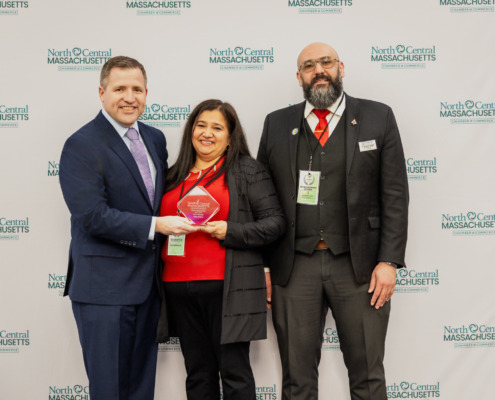

Chamber members are provided with the opportunity to engage with the Mayors of Fitchburg, Gardner, and Leominster who provide updates on projects and other things happening in their Cities. These events are by invitation only, please contact Travis Condon for more details.
View
Event
Bull Run Restaurant215 Great Rd. Shirly, MA
View
Event
Join us for our last Connect North Central of the year!
Friday, December 11, 2026
8am-9am
View
Event
January 14, 20277:15am - 9:00am
View
Event
Erin Logan | NBC 10 Reporter
View
Event
Chamber members are provided with the opportunity to engage with the Mayors of Fitchburg, Gardner, and Leominster who provide updates on projects and other things happening in their Cities. These events are by invitation only, please contact Travis Condon for more details.
View
Event

“Now more than ever, The Arc relies on the generosity of our loyal sponsors, donors, and supporters to deliver critical supports in innovative ways. This year’s Charity Auction will be an opportunity to connect both with new people and those who have traditionally attended the auction each year. A special thank you to The Arc’s Corporate Sponsor Workers Credit Union and the many other sponsors for their commitment during a time of change,” says Mary Heafy, President and CEO.
Colby O’Brien, Director of Development at The Arc, said, “This decision was difficult but in an abundance of caution, we made the right call. The 2020 Annual Charity Auction has an incredible committee and dedicated donors. One silver lining of moving the auction online is that it presents an opportunity to involve those who have never participated before. In the weeks ahead, the community will find more information posted on The Arc’s Facebook page and the event’s website www.TheArcAuction.GiveSmart.com.”
Those who want to support The Arc’s Charity Auction with in-kind or monetary donations can contact Colby by email at or by phone at 978-343-6662.

In this position, Mr. Ginisi will oversee the organization’s awareness across all digital platforms, help provide impactful and innovative messaging and increase outreach to the 21 communities in North Central Massachusetts that the agency serves.
“We are excited to welcome David to our leadership team,” said Lori Richardson, Chief Executive Officer of Montachusett Home Care Corporation. “David will be a tremendous asset to our agency with his drive for community engagement and his extensive proven marketing and outreach experience. Dave is vital in ensuring that our community knows our mission is to provide comprehensive information and quality services so that older people, individuals with disabilities and their families are empowered to make personalized choices to ensure a life of dignity, safety and respect.”
David joins Montachusett Home Care from the North Central Massachusetts Chamber of Commerce, and its affiliates: Visit North Central Massachusetts and the North Central Massachusetts Development Corporation, where he worked as the Marketing and Communications Manager for several years. He played a pivotal role in helping advance the North Central Massachusetts economy by developing many key marketing campaigns and initiatives while working hand-in-hand with business and community leaders across the entire region. David holds a bachelor’s degree in Communications Media from Fitchburg State University, class of 2016. He is also a graduate of the Community Leadership Institute class of 2020. David is a resident of Fitchburg and is extremely active in his community, including serving on the Board of Directors for Fitchburg Access Television, the Advisory Board for Fitchburg State University’s Center for Italian Culture, and several committees including: The Young Professionals of North Central Massachusetts and Fitchburg Civic Days.
Montachusett Home Care Corporation (MHCC) is a non-profit agency incorporated in 1974 that is overseen by a volunteer Board of Directors from the community it serves. MHCC serves Ashburnham, Ashby, Ayer, Berlin, Bolton, Clinton, Fitchburg, Gardner, Groton, Hubbardston, Lancaster, Leominster, Lunenburg, Pepperell, Princeton, Shirley, Sterling, Templeton, Townsend, Westminster and Winchendon.
MHCC’s trained professional staff of nurses and case managers, work one-on-one with older adults (60+) and adults of all ages living with disabilities to connect them to services such as homemaking, personal care, home delivered meals, chore services, adult day health, caregiver support or information on public benefits and information of community based services. Assessments, care management, service coordination and services delivered are all based upon quality assurance protocols and regulatory compliance standards. Many of the services are free or low-cost, depending upon income.
Business or community members interested in learning more about MHCC’s dynamic line of work should contact David at (978) 466-1571 or via email at .
Learn how to get your garden ready for the colder weather with Ingrid Wheeler, local gardener and landscape designer, on Thursday, September 17, 2020, at 7:00 PM in a special Virtual Workshop!
Whether you are an experienced gardener, or this is your first year with a quarantine garden, there is lots to learn! Topics discussed may include:
Please register at https://tinyurl.com/fplgarden
This is a free program. For information about this or other Library programs call 978-829-1780 or visit our website: www.FitchburgPublicLibrary.org.

When the workday ends and the lights go down, Custom Cleaning Service of Peabody, Inc. gets to work. “We operate as our clients’ silent partner after business hours,” says Adam Paicos, of Templeton, who now serves as Director of Operations and oversees the company’s expansion into North Central MA. “We are not often seen, but we ensure facilities are clean, secure, and ready for business each day while serving as the eyes and ears for our clients when they are not on site.”

Discover local business stories through our Inside North Central Massachusetts Podcast series. Listen as Chamber members share their journeys, insights, and contributions to our thriving regional business community.

Looking for your next opportunity? Explore current job openings from employers across North Central Massachusetts on our Jobs Board. Whether you’re starting a new career or making a change, you’ll find a variety of local positions available to help you take the next step.
CapEx Facility Services & Construction · Leominster, MA
TaraVista Behavioral Health Center · Harvard, MA
DRS Power Technology, Inc. · Fitchburg, MA
AIS · Leominster, MA