E-Newsletter
An Electronic Publication of the North Central Massachusetts Chamber of Commerce

Inside this edition, you’ll discover the latest Chamber initiatives and success stories from across our region. From economic development projects and upcoming networking events to policy updates and workforce training opportunities, we’re keeping you connected to what matters most for your business and North Central Massachusetts.
The North Central Massachusetts Chamber of Commerce is here to help – with trusted resources, a strong business network, and a support system to keep your business and the region moving forward
Fuente del artículo: State House News Service
Author: Katie Lannan
MARCH 12, 2021….Yesterday was March 11, the first day mass vaccination site signups opened to Massachusetts teachers, the last day — before a pre-registration system went live Friday — that thousands of appointments at those sites would be released all at once and swiftly snatched up in a stressful scramble, and the day President Biden said there’d be enough COVID-19 vaccine doses for all American adults by the end of May.
Here in the infinite time loop that is daily life in a yearlong (so far) global pandemic, where the length of days and months can seem completely arbitrary and divorced from any traditional structure, yesterday also feels like it could have been March 11, 2020, the day President Trump restricted travel from Europe, the World Health Organization officially called it a pandemic, the NBA suspended its season and Tom Hanks and Rita Wilson announced they’d contracted the coronavirus.
It was a day earlier that, in Massachusetts, Gov. Charlie Baker declared the state of emergency that still influences most activity.
“I have to say — well, first of all, I wasn’t expecting this,” an emotional Baker said, marking the order’s anniversary during a press conference Wednesday at an N-95 mask manufacturing facility.
Reflections on the past year pervaded the week for many who recalled their pre-pandemic “last” — day in the office or at school, night out with friends, live concert, restaurant meal, trip on an airplane or public transit.
Despite the disorienting feeling of living in two years at once, in some ways, the month is marching on in a modified version of normal. Baker is sporting his annual charity buzz cut, part of Granite Telecommunications’ “Saving by Shaving” fundraiser, and Sen. Nick Collins is still planning to host Boston’s St. Patrick’s Day breakfast next weekend, albeit virtually.
And as the sun comes out and temperatures rise, there’s also been a springtime stirring in the Legislature.
The House and Senate on Thursday sent Baker a bill that would allow the more than 200 towns with municipal elections this spring to again offer the early mail-in and in-person voting options adopted last year.
As Biden signed a $1.9 trillion stimulus-and-more spending bill into law, the Massachusetts House approved a state-level relief package that aims to buoy businesses, workers and the state’s strained unemployment trust fund all.
Top House and Senate Democrats announced that plan together. Quick passage is expected in the Senate, where Republicans say exempting forgiven Paycheck Protection Program loans to small businesses from state taxes — one component of the bill — should be the body’s top priority as a March 15 tax-filing deadline looms.
After sending Senate President Karen Spilka a note Thursday morning saying he and the other two members of his caucus would be ready to block any legislation that wasn’t PPP tax-related, Minority Leader Bruce Tarr did just that, using a parliamentary move to keep the Senate from taking up a climate policy bill that would lock the state into its goal of net-zero carbon emissions by 2050.
It’s just the latest roadblock for the so-called climate roadmap bill, which has been floating around the Legislature in various forms since the pre-COVID days of February 2020.
Tarr objected to the fact that the latest version of the bill, a redraft by the Senate’s Committee on Bills in Third Reading that incorporates some of the amendments Baker wanted, emerged for review after 10 p.m. Wednesday ahead of an expected Thursday vote.
Baker’s amendments had been sitting before the committee for a month before suddenly reaching the floor, and senators said there have been talks underway with environmental advocates and the business communities. None of those discussions have been in the form of a public hearing.
Democrats said the bill’s provisions had been vetted — and in many cases, already voted upon — over the course of the past year.
Sen. Marc Pacheco, among the senators to voice dismay at the delay and to describe an urgent need for action, also brought up what he said was some exciting news on the renewable energy front: a completed federal review of the Vineyard Wind I offshore wind farm.
While the Biden-era Department of Interior made quick work of its Vineyard Wind analysis, the Department of Labor is still waiting for a confirmation vote on its new secretary, more than two months after Biden nominated Boston Mayor Marty Walsh for the post.
Two weeks ago, Baker signed a new law canceling the special mayoral election that Boston would have been required to hold if Walsh resigned before March 5. That law is now moot, with Walsh still on the job and future acting Mayor Kim Janey waiting in the wings of the Eagle Room.
If the secretary-designee were looking for labor pools close to home to dip a toe in while waiting to join his already-migrated chief of staff in Washington, there’s no shortage of issues on that front to wade into.
Nurses at Worcester’s St. Vincent Hospital, still at odds with Tenet Healthcare over staffing levels, launched a strike on Monday. While state officials are considering what work might look like post-COVID, they’re also estimating that about 250,000 of the jobs lost here will stay gone, permanently. Behind in their road-maintenance efforts after one pandemic spring, municipal officials (who would still like to see the state pass a multi-year road repair funding bill, with more money) are facing high labor costs as they compete with housing developers for contractors.
Then there’s the teachers unions.
Baker and teachers unions have been at odds for a while, disagreeing on the best approach to school reopenings, educator vaccinations and this year’s MCAS exams, to name a few.
The latest spark ignited Tuesday when Education Commissioner Jeff Riley exercised his new authority to decide when schools and districts can no longer teach students through hybrid or remote instruction, setting an April 5 deadline to have elementary schoolers back in classrooms full-time, followed by an April 28 return for middle schoolers.
The state has set aside four days when its seven mass-vaccination sites will only offer first doses appointments for K-12 and early educators and school staff — March 27, April 3, April 10 and April 11.
Massachusetts Teachers Association President Merrie Najimy called the plans for repopulating classrooms “poorly timed,” saying many educators would not be vaccinated by April 5. She reiterated her union’s call for the administration to support local vaccine clinics over the mass sites and to allow first responders to immunize teachers in schools.
A rebuke followed from Baker senior advisor Tim Buckley, who accused the teachers unions of demanding the state “take hundreds of thousands of vaccines away from the sickest, oldest and most vulnerable residents in Massachusetts and divert them to the unions’ members, 95% of which are under age 65.”
Najimy and fellow union heads Beth Kontos and Jessica Tang fired back, calling it “sad, and frankly, reckless that on the one-year anniversary of the COVID-19 pandemic shutting down our state, Governor Charlie Baker is pitting one vulnerable group against another.”
The rising tensions come as legislative budget writers are gearing up to delve into the education spending proposals contained in Baker’s $45.6 billion budget for fiscal 2022 at a Tuesday hearing. On that front, the teachers unions and administration don’t even agree what year it is — Baker’s plan would implement the first year of the school finance law known as the Student Opportunity Act, but groups like the MTA argue that after putting the reforms on hold in fiscal 2021, next year’s budget should have two years’ worth of phased-in new funding to stay on the law’s seven-year schedule.
How the House and Senate will handle school aid in their budgets remains to be seen. In the vaccine spat at least, House Speaker Ronald Mariano — who, by the way, has gotten his first dose, as has Spilka, because both are age-eligible — sided with the teachers.
“If the goal is to have our kids back in public school, a time certain should have been picked at the very beginning and we should work toward that,” the former teacher and one-time Quincy School Committee member said on Bloomberg radio. “The administration, in its wisdom, decided to come up with a date certain and then has done little to meet that deadline.”
Wherever teachers ultimately get their shots, once they’ve received both Pfizer or Moderna doses or the one-and-done Johnson & Johnson version, new doors will open up for them 14 days later, as they will for all who are fully vaccinated.
While the virus and its variants are still spreading, new CDC guidance this week said it’s OK for fully vaccinated individuals to gather indoors, without masks or distancing, and for them to similarly visit indoors with unvaccinated members of one other household who are at low risk for COVID-19. And an update to the state’s travel order allows fully vaccinated travelers to skip the quarantine-or-test-negative requirements.
After a very long year, those revisions — combined with a string of sunny days and Biden’s Thursday night forecast that if everyone keeps up their precautions and gets vaccinated when they can, this Fourth of July could “begin to mark our independence from this virus” — are enough to have visions of backyard barbecues dancing in your head.
Article source: State House News Service
Autor: Chris Lisinski
MARCH 11, 2021…..The Massachusetts House unanimously approved a wide-ranging tax relief, paid emergency sick leave and unemployment system funding bill Thursday that would soften jobless aid insurance premium hikes set to hit businesses in the coming weeks.
Both laid-off workers and employers stand to gain access to tax breaks under the bill (H 89), which is built on a Gov. Charlie Baker proposal aimed at stabilizing the state’s unemployment system and also includes provisions such as creation of a paid sick leave program for employees who are affected by COVID-19 and tax breaks on any forgiven Paycheck Protection Program loans from 2020.
The bill would freeze a rate schedule, thereby imposing smaller increases in unemployment taxes businesses pay in 2021 and 2022. It would also authorize $7 billion of borrowing to keep the depleted unemployment fund solvent and pay back federal loans, plus impose a separate surcharge on businesses to cover federal interest.
House Speaker Ron Mariano told reporters after the bill’s passage that “the thrust of the bill is always about getting people back to work.”
“We’re trying to help small businesses get back on their feet,” Mariano said. “The more money we can keep in and under the control of the small business owners, the better off we’re all going to be. It allows them to hire more people with the freeze in the rate, the forgiveness of the PPP stuff allows them to retain capital. All of this goes into the hiring back of employees.”
The House voted 155-0 in favor of the bill. Four lawmakers — Republican Reps. F. Jay Barrows of Mansfield, Angelo D’Emilia of Bridgewater, and Donald Wong of Saugus as well as independent Rep. Susannah Whipps of Athol — voted present.
Senate leaders expect to take the bill up next week and have already indicated their support.
The state’s unemployment system is funded by contributions from businesses, which can scale up depending on how often an employer’s workers seek the aid.
COVID-19 and the widespread changes to public life it wrought created a tidal wave of joblessness, spiking at a 17.7 percent statewide unemployment rate last June. The demand wiped out the unemployment insurance trust fund, which cratered from a balance of $1.6 billion in February 2020 to $2.2 billion in the red by year’s end.
In its most recent monthly report, the state Department of Unemployment Assistance projected the trust fund will post year-end deficits of $4.7 billion in 2021, nearly $5 billion in 2022, $4 billion in 2023, and $2.9 billion in 2024.
That dire outlook is set to trigger a shift in the tax rate schedule that, without action, would push the average per-employee cost on businesses from $544 in 2020 to $866 in 2021, a nearly 60 percent jump.
The legislation would freeze the rate schedule in 2021 and 2022, settling the average per-employee cost at $635 in 2021 and $665 in 2022, according to the Associated Industries of Massachusetts.
It would also authorize the state to bond up to $7 billion to keep benefits flowing and pay back the more than $2.2 billion the state has borrowed from the federal government for unemployment so far.
Interest rates on municipal bonds are lower than the 2.27 percent rate that will be due on the federal loans, and supporters say the step will allow Massachusetts to save money in the long run.
“While unemployment has been coming down, certainly compared to where it was back in June of last year, we still definitely have some challenges ahead of us, and bonding that money is going to give us some flexibility of not putting it all on businesses immediately,” said House Ways and Means Committee Chair Rep. Aaron Michlewitz.
Businesses would also face a new surcharge, in the form of an excise tax on employee wages, through December 2022 to help repay interest due in September on the federal loans. Rep. Josh Cutler, co-chair of the Labor and Workforce Development Committee, told the News Service the surcharge would result in an average cost of $57 per employee in 2021 and $66 per employee in 2022.
“Even with this additional employer surcharge, businesses in Massachusetts will save money as a result of our action today,” Cutler, a Duxbury Democrat, said on the House floor.
The bill also includes several other major sections.
It would create a tax credit available to those who received unemployment benefits and have household incomes below 200 percent of the federal poverty level, and waive penalties for any missed tax payments on those benefits last year. The total tax credit is worth $30 million for the 2020 tax year and $20 million for 2021.
Businesses would also be exempt from needing to pay state taxes on forgiven federal Paycheck Protection Program loans, a step that Republican lawmakers have highlighted in recent weeks as important relief.
“When a lot of the businesses were requesting PPP loans, they were in the midst of surviving. They weren’t thinking about next year,” Michlewitz, a North End Democrat, told reporters. “They weren’t thinking about what tax decision they’d have to make in the future. They were thinking about how they’d stay open in the midst of an economic shutdown. In order to protect these small businesses and allow them to get back to where they were, short-term and long-term, the loan forgiveness here and tax forgiveness here is an appropriate step to be taking.”
A year into the pandemic, the House included language creating an emergency COVID-19 paid sick leave program in the bill making benefits available to employees who contract COVID-19, need to quarantine, or must care for a family member affected by the illness.
Full-time workers could access 40 hours of paid time off, while leave for part-time workers would vary based on their schedules. Employers with fewer than 500 workers can access federal tax credits to help cover the costs.
Before approving the bill, the House rejected a proposed amendment from Rep. Erika Uyterhoeven of Somerville that would have offered two weeks of COVID-19 leave to affected employees.
Members also voted 152-4 to shoot down another Uyterhoeven amendment aimed at what she described as preventing “double-dip” tax breaks for businesses that received PPP loans.
Baker first filed a version of the bill including only the UI changes in December, then re-filed his proposal in January with the start of the new session. Major business groups such as AIM and the National Federation of Independent Businesses supported that measure.
“By passing this legislation, we will have the ability to use a much less expensive financing mechanism to borrow money and pay back the fund,” Baker said about the bill Wednesday.
The Republican governor has not taken a public stance on sections that Democratic leaders added into the package, such as the COVID-19 emergency paid sick leave or the tax credits for unemployed workers.
The House vote came after Senate Republicans delayed action on a revamped climate bill, saying that passage of the relief bill to prevent PPP loans from being taxed should “take place immediately” before other matters.
“Absent action by the legislature, these businesses will be forced to pay substantial amounts in additional taxes through tax returns now due on March 15, rather than putting these dollars to work in their struggle to survive and continue to employ the thousands of Massachusetts residents the Payroll Protection Program was designed to protect,” Sens. Bruce Tarr of Gloucester, Ryan Fattman of Sutton, and Patrick O’Connor of Weymouth wrote. “Failure to act in a timely way will cause incalculable hardships for employers and employees in Massachusetts.”
Main street businesses are struggling, but that doesn’t mean your business has to suffer, too. Throughout history, many great business stories have begun in an economic downturn. You’re probably as tired of “the pivot” as we are, but these adjustments can make your business more resilient.
The pandemic has ushered in massive changes and lost revenue for most small businesses in our community. However, within the disruptions and changing market lies opportunities that can help you stay afloat. It takes comprehensive analysis and review of the business to identify and explore viable opportunities, which exist in all industries.
Digital sales soared as governments advised people to stay home to prevent new infections. However, a significant percentage of the sales were discretionary and non-essential items. As time went by, people became comfortable with ordering groceries and other day-to-day supplies online. If you were yet to explore the online market, there couldn’t be a better time to evaluate your opportunities.
For instance, if your business only served walk-in customers, migrating part or all of your operations to the online delivery model can help you maintain sales and customer engagement. Whitespaces are bound to emerge in any business model, although not all are worth exploring. We recommend a comprehensive evaluation of your business to identify the best opportunities arising out of the economic chaos.
Many businesses, such as restaurants and retail stores, that depended on walk-in customers for their revenue were dealt big blows following social distancing restrictions. A significant number closed their doors after losing more than 60% of their income. However, some took the chance to diversify the business and explore other sources of revenue.
For instance, restaurants and hotels rely on guests coming to the facility and while some still cater to their walk-in guests, the turnover has dropped significantly. Some restaurant owners have expanded their model to accommodate ghost kitchens, online dishes and food trucks to compensate for the revenue loss.
Hybrid business models can work in any industry but require drastic changes and investment. You will need various third-party software applications, security solutions, service delivery frameworks and shipping. Nonetheless, with digital sales soaring, you can expect to recover your investment sooner. The business will also serve its primary customers while garnering new ones that are looking for safer shopping experiences.
The effects of the pandemic will remain for several months, so it is vital to think long-term. Consumer behavior has changed drastically, but there are many positives to take from the new opportunities and experiences. Businesses should develop strategies and roadmaps that extend beyond six months to guarantee smooth transition and continuity.
It is a new world for entrepreneurs who now must rely heavily on digital engagements to spark sales. In the past, finding the perfect physical location was essential to success. However, with less traffic in the streets, businesses are shifting focus to develop a strong online presence. This might imply redirecting funds meant for facility expansion to digital platform optimization. Ultimately, the goal is to understand what changes will last and how you can adapt to guarantee business continuity.
Thinking long-term is vital even in the absence of a pandemic. Although things will eventually return to normal, many of the changes are poised to stick around. The new normal is something all entrepreneurs must adapt to if they are to stay in business. Fortunately, there are many tools companies can use to predict the future and implement long-term plans that will outlast the pandemic.
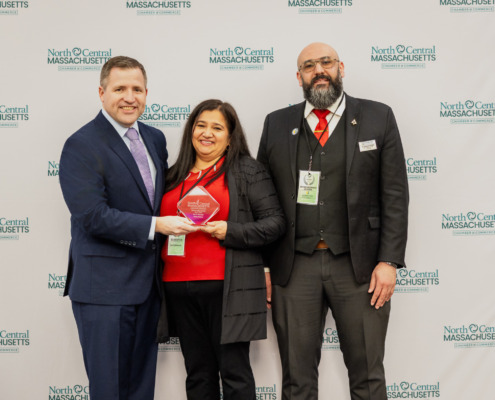

The reception features an open bar and gourmet appetizers.
View
Event
Join us for Connect North Central
Friday, September 25, 2026
8am-9am
View
Event
North Central Golf Tour Championship: Fore the Future
An FLNC Non-Traditional Scholarship Fundraiser
View
Event
Thank you Series Supporting Sponsor empHowered PR
View
Event
Join us for our 11th Annual
Congressional Luncheon
View
Event
Wednesday October 28, 2026
5:00pm - 7:00pm
View
Event
Join us for this in person HR Legal Update
View
Event
November 19, 2026
7:15am - 9:00am
View
Event
Chamber members are provided with the opportunity to engage with the Mayors of Fitchburg, Gardner, and Leominster who provide updates on projects and other things happening in their Cities. These events are by invitation only, please contact Travis Condon for more details.
View
Event
Bull Run Restaurant
215 Great Rd. Shirly, MA
View
Event
Join us for our last Connect North Central of the year!
Friday, December 11, 2026
8am-9am
View
Event
Chamber members are provided with the opportunity to engage with the Mayors of Fitchburg, Gardner, and Leominster who provide updates on projects and other things happening in their Cities. These events are by invitation only, please contact Travis Condon for more details.
View
Event
Resource Management, Inc. (RMI) announces its 25th anniversary as a national, full-service Human Resource Outsourcing & Professional Employer Organization (PEO)

Mr. Lopez sold R&M Maintenance in 1992 and worked for an employee leasing firm, where he was an account executive selling time and attendance recording systems. He transitioned to the business protection service that included insurance products and human resources. Unfortunately, the firm shut down unexpectedly, leaving clients left to pay hundreds and thousands of dollars in taxes, unemployment insurance and 401(K) payments. The impact his clients were facing affected him personally, so in 1995, he took matters into his own hands.
“I took my own money from my savings and payed for whatever was owed in taxes and workers compensation. All of those clients left hanging, became my very first clients at RMI.” said Lopez.
What was once a nightmare, turned into the American dream. Today, RMI celebrates 25 years in business. The company is a family-owned full-service Human Resources and PEO providing expertise in Payroll, Employee Benefits and Workers’ Compensation to small and mid-size businesses. The firm operates in 39 states.
Lopez and his family have made a great impact on the business since it started in 1995. His daughter, Rachel serves as President and son Alex, Vice President. “My dad has always been a hard worker. Since day 1 he’s always had this drive to help businesses prosper and reach success.” Rachel said.
RMI is a rapidly growing business with its headquarters located in Fitchburg, Massachusetts and offices in Orlando and Doral/Miami, Florida. This year, the company was awarded #1 in Largest Minority-Owned Business in Massachusetts.
Due to RMI’s business expertise it has grown to be included in the top 50 largest Hispanic- Owned business in the nation. RMI’s commitment to provide professional services was recognized by the US Dept of Commerce, awarding the firm with the prestigious Minority Professional Service Firm of the year in 2018.
The family is proud of the growth over the past 25 years and have big dreams for taking RMI to the next level for years ahead. “The passion my dad has for the PEO community speaks volumes to the success that RMI has had for the past 25 years. My dad formed a solid foundation for us to build off, which has allowed us to grow into the businesses we are today” Rachel said. “As we look to the future, our mission is to continue supporting small businesses and help them achieve their long-term goals, by taking on the administrative burden of HR, Payroll, Employee Benefits, and Workers’ Comp. RMI reduces their liability and gives them more time to concentrate on their core business and growth.”
About Resource Management, Inc.
Are you struggling with HR for your business? At RMI we believe employers should have the opportunity to focus on their core business functions, without having to think about HR, Payroll, Employee Benefits, and Workers’ Compensation. For more information on our services, visit our website: www.rmi-solutions.com
Leominster, MASS –Several Fidelity Bank employees were virtually honored by Fidelity Bank for their contributions during a year that has been unlike any other due to COVID-19. “It is a pleasure to recognize the contributions of our caring colleagues,” says Ed Manzi Jr., Fidelity Bank Chairman and CEO. “I am inspired by how our honorees have risen to the challenges they face.” The annual awards recognize Fidelity Bank role models who exemplify the bank’s caring culture and LifeDesign approach of providing the clarity needed to help clients make informed decisions and move forward with confidence. The awards had to be given out virtually instead of at an in-person ceremony because of the pandemic.
Mission Accomplished awards were given to Sally Buffum and Damian Scott.


Damian Scott of Leominster was given the Mission Accomplished award representing the support departments of the bank. Scott is an IT Technician for the bank. Scott was cited for leading the effort to deploy the remote workforce when the COVID-19 pandemic hit, building processes to save the Operations team the time in delivering new forms to all Branches, creating processes to reduce paper and increase the bank’s electronic documentation, and moving the bank from Windows 7 to Windows 10. He is described as unfailingly pleasant and a team player who is always available.
Role Model awards were given to employees who personify Fidelity Bank’s five guiding values of treating everyone with care and respect, making sound and ethical professional decisions, pursuing excellence, being committed to continuous learning and improvement and maintaining a positive and fun work environment.
Dan Ramos of Baldwinville received the bank’s Role Model award for personifying the bank’s guiding value of Treating Everyone with Care and Respect. Ramos is Facilities Manager for Fidelity Bank, which makes him a department of one. No matter the season, Ramos is there with a smile to fix air conditioning units and boilers to keep his colleagues comfortable. He was also instrumental in helping the SHINE Initiative set up their new office in Worcester.
Brittany Roberge of Rutland was recognized for Making Sound and Ethical Professional Decisions. Roberge is Operations Coordinator. She uses all the tools and information she has at her disposal to take on the difficult job of handling debit card fraud claims. Roberge was praised for providing comfort and support to clients at a time when they feel unsettled and vulnerable, so they can have the clarity to make decisions with confidence.
Alexandria Morrissey of Hubbardston was honored for Pursuing Excellence. Morrissey is the Assistant Branch Manager in the bank’s Gardner full-service office. Morrissey is described as having a relentless commitment to executing details and being thorough as she serves her clients. One example was given where her scrutiny of a client’s records uncovered more than $10,000 in unauthorized charges. Another example was when a senior officer at another financial institution praised her for her help resolving an issue for a mutual client.
Phillis Johnson of Gardner was honored for exemplifying the bank’s guiding principal of pursuing Continuous Learning and Improvement. Johnson is a Compliance/BSA Coordinator for Fidelity Bank. Bank officials say she adapted quickly after joining the bank through a merger in 2018. Since then she has become the record keeper of the Bank’s compliance learning system and helps keep people on track with their own required individual learning roadmap.
Ridge Markeseines of Winchendon was recognized for Maintaining a Positive and Fun Work Environment. Markeseines is a personal banker in Fidelity Bank’s Gardner full-service office. His colleagues and clients say he is a bright spot no matter what the situation who has good cheer that is contagious. One example was when he dressed up in a Miss Piggy costume for the Chair Luge event at the 2019 Gardner Fall Festival.
##
About Fidelity Bank:
Founded in 1888, Fidelity Bank is one of the strongest independent community banks in Central and Eastern Massachusetts. Fidelity Bank’s unique LifeDesign approach to banking provides the care and clarity needed to make informed decisions with confidence. The Bank offers a range of personal and business banking solutions to clients in 14 full-service offices in Leominster, Worcester, Fitchburg, Needham, Gardner, Stow, Shirley, Barre, Millbury, Paxton, Princeton, and Winchendon. The Bank has consistently earned a “5 Star” rating from BauerFinancial, Inc., the nation’s leading independent bank rating and research firm. Fidelity Bank has been voted Worcester Telegram & Gazette Best Bank in Central Massachusetts and Best Financial Services, Best Bank by both Leominster Champion and Baystate Parent, and it has been recognized by the Worcester Business Journal as a Top Workplace. In 2019 Fidelity Bank was named to the Boston Globe’s Top Places to Work list for the fifth time. As of June 30, 2020, the bank had total assets of approximately $1.15 billion. For more information, visit www.fidelitybankonline.com o www.facebook.com/fidelitybankma

When the workday ends and the lights go down, Custom Cleaning Service of Peabody, Inc. gets to work. “We operate as our clients’ silent partner after business hours,” says Adam Paicos, of Templeton, who now serves as Director of Operations and oversees the company’s expansion into North Central MA. “We are not often seen, but we ensure facilities are clean, secure, and ready for business each day while serving as the eyes and ears for our clients when they are not on site.”

Discover local business stories through our Inside North Central Massachusetts Podcast series. Listen as Chamber members share their journeys, insights, and contributions to our thriving regional business community.

Looking for your next opportunity? Explore current job openings from employers across North Central Massachusetts on our Jobs Board. Whether you’re starting a new career or making a change, you’ll find a variety of local positions available to help you take the next step.
CapEx Facility Services & Construction · Leominster, MA
TaraVista Behavioral Health Center · Harvard, MA
DRS Power Technology, Inc. · Fitchburg, MA
AIS · Leominster, MA