E-Newsletter
An Electronic Publication of the North Central Massachusetts Chamber of Commerce

Inside this edition, you’ll discover the latest Chamber initiatives and success stories from across our region. From economic development projects and upcoming networking events to policy updates and workforce training opportunities, we’re keeping you connected to what matters most for your business and North Central Massachusetts.
The North Central Massachusetts Chamber of Commerce is here to help – with trusted resources, a strong business network, and a support system to keep your business and the region moving forward
Deciding between hiring in-house talent or outsourcing the job can be a tough call to make, and both options have their benefits and drawbacks. Here are some things to consider when choosing between the two recruitment options.
It’s easy to understand the draw that outsourcing certain tasks has for business owners.
First of all, while you should work closely with an independent contractor, there are no employee-related expenses; no training costs, health care, vacation time, or sick leave.
Additionally, in many cases, you will be working with and benefiting from the experience and insight of a team of specialists, rather than a single worker.
Outsourcing may also spare you business expenses. For example, perhaps you are interested in making some promotional and informational videos for your website. You could invest in expensive equipment, along with hiring someone with the proper know-how, or you could outsource the job to a video production company that already has the knowledge, experience, and the equipment.
Finally, outsourcing certain tasks can free you and your workers up to focus on the core areas of your business without pouring time and effort into peripheral tasks.
While outsourcing can be a good thing, it also has its drawbacks. Your project may not receive the focus it deserves, you lose a little bit of control over the timeframe, and you have less control over the quality of the finished product. Before deciding whether to outsource a task or operation, consider these questions.
Generally, anything that relates directly to the operation of your business should be handled in-house. For example, for some businesses, their social media marketing strategy is an essential part of their competitive advantage. In this case, a social media manager should likely be an in-house hire who shares your goals and vision for marketing campaigns.
However, duties like payroll, bookkeeping, and administrative tasks, though they don’t relate directly to the vision of your business, tend to take a significant toll on overall productivity. Outsourcing these tasks, rather than hiring in-house, makes sense for most businesses.
There may be a significant cost difference between a trained employee and an independent contractor. Oftentimes, if you’re shooting a single promotional video or you want to create an app, outsourcing the job may make the most sense because it will spare your business the expense of investing in expensive equipment and providing highly specialized training. On the other hand, independent contractors may charge a relatively high daily rate, making outsourcing less than ideal for long-term projects.
If you have a skills gap that needs to be filled quickly, then outsourcing makes sense. Rather than taking the time to go through the hiring and training process, you can hire an experienced professional who can hit the ground running.
In the end, whether or not you choose to outsource hinges on your timeframe for project completion, budgetary considerations, and how it will impact the efficiency and goals of your business. Using these as guidelines will help you choose the recruitment option that is right for your business.
As of this writing, President Biden is working to garner support for two major plans, a $2.3T infrastructure bill dubbed the American Jobs Plan announced in March and a $1.8T American Families Plan. The American Families Plan, if approved, would include: a national paid family and medical leave benefit similar to Massachusetts that would include a 12 year ramp up period; over $200B for two years of pre-K for every student; $109B for two years of community college, and grants to expand access for high-demand programs. The infrastructure plan would include: $479B for transportation infrastructure improvements to roads, bridges, public transit, Amtrak, electric vehicle production, and airports. The plan aims to spur job creation through projects designed to improve drinking water, update the electric grid, expand broadband access, and modernize buildings. It would also provide incentives for companies that manufacture products within the country, and calls for higher wages, with the President pitching a $15 minimum wage. Biden’s plans call for increasing the income tax rate for the top 1 percent of earners from 37 percent to 39.6 percent, along with higher tax rates on capital gains and dividends on individuals earning more than $1M, and eliminating other corporate tax provisions.
At the state level, Governor Baker set an end date of June 15, 2021 for the Commonwealth’s State of Emergency. The Baker-Polito administration and state legislature each continue to work on a solution for the unemployment solvency issue facing the state and impacting small businesses across the Commonwealth. On April 1, Governor Baker authorized $7B in borrowing in an effort to stabilize the state’s trust fund. This law also limited the average rate hike to 18.5 percent; however, businesses are still seeing dramatic increases, even ones who kept full staff throughout the pandemic. The state is set to receive billions from the federal government in recovery funds and the Chamber has joined with other business groups and most of the members of our legislative delegation in advocating that those funds be put into the UI trust fund to ease the burden on the business community. In other advocacy efforts, the Chamber was also part of a joint letter sent out in March to Energy Secretary Theoharides on the Clean Energy and Climate Plan for 2030 and the need for a measured approach using available resources and we testified at a transportation hearing in support of Phase II of the Twin Cities Rail Trail project in the region.
While the State House continues to operate largely remotely, the state budget is operating on a normal timeline as opposed to the current fiscal year. The Governor released his $45.6B proposed budget in January. The House released their $47.716B proposed budget on April 14, while the Senate released their $47.6B proposed budget on May 11. Once the Senate debate wraps up, the budgets will head to conference committee where the two branches work out their differences on the budget. The Chamber has been working closely with members of the region’s delegation and several coalitions throughout the budget process to advocate for economic development priorities, support for the workforce development pipeline, and increases to funding that will aid in economic recovery for North Central Massachusetts and help the industries hit hardest by the pandemic.
If you have any questions or concerns, please feel free to contact Travis Condon, the Chamber’s public affairs manager, at (978) 353-7600, ext. 224; or via email at .
Fuente del artículo: State House News Service
Author: Katie Lannan
State lawmakers on Thursday agreed to schedule this year’s sales tax holiday for the weekend of August 14 and 15.
A 2018 law that put the state’s minimum hourly wage on a gradual path to $15 and created the paid family and medical leave program also made the holiday, when the 6.25 percent sales tax is waived for many purchases, an annual fixture and tasked the Legislature with picking an exact date each August.
The House and Senate each adopted a resolution (S 2487) Thursday setting August 14 and 15 as this year’s dates.
“We invite all residents to go out and benefit from this opportunity as we incentivize investment in our businesses and continue the work of setting our economy on a path to post-pandemic recovery,” Senate President Karen Spilka and House Speaker Ronald Mariano said in a statement.
The law directs the Legislature to adopt the joint resolution “not later than June 15,” which was Tuesday, and says that if lawmakers fail to adopt the resolution, the revenue commissioner must designate a date by July 1. Last year, the Baker administration scheduled the weekend for August 29 and 30th.
A Department of Revenue spokesperson did not immediately respond to an email asking if the department would go along with the Legislature’s chosen date or pursue something else in light of the missed deadline.
The holiday, in which the state agrees to forgo revenue that would otherwise be collected in a bid to spur buying at local businesses, allows shoppers to avoid paying taxes on most retail items that cost less than $2,500.
Through May, the state had collected $30.451 billion in tax revenue this year, an increase of 23 percent over the same 11 months of fiscal 2020 and $3.938 billion above the revenue department’s expectations.
Critics of sales tax holidays have knocked the idea as an annual gimmick that merely redistributes economic activity while forcing state government to give up millions of dollars in taxes it would otherwise collect. Supporters say the tax holiday enables consumers to pay less for purchases and gives businesses a jolt of activity in the middle of August.
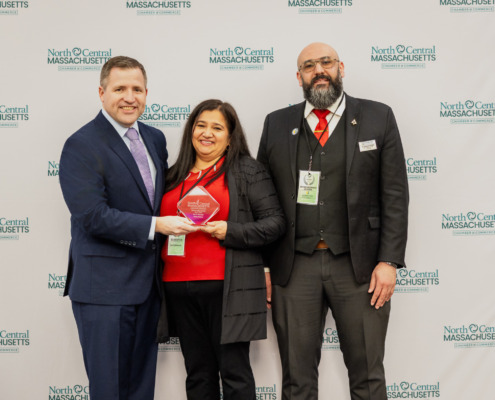

The reception features an open bar and gourmet appetizers.
View
Event
Join us for Connect North Central
Friday, September 25, 2026
8am-9am
View
Event
North Central Golf Tour Championship: Fore the Future
An FLNC Non-Traditional Scholarship Fundraiser
View
Event
Thank you Series Supporting Sponsor empHowered PR
View
Event
Join us for our 11th Annual
Congressional Luncheon
View
Event
Wednesday October 28, 2026
5:00pm - 7:00pm
View
Event
Join us for this in person HR Legal Update
View
Event
November 19, 2026
7:15am - 9:00am
View
Event
Chamber members are provided with the opportunity to engage with the Mayors of Fitchburg, Gardner, and Leominster who provide updates on projects and other things happening in their Cities. These events are by invitation only, please contact Travis Condon for more details.
View
Event
Bull Run Restaurant
215 Great Rd. Shirly, MA
View
Event
Join us for our last Connect North Central of the year!
Friday, December 11, 2026
8am-9am
View
Event
Chamber members are provided with the opportunity to engage with the Mayors of Fitchburg, Gardner, and Leominster who provide updates on projects and other things happening in their Cities. These events are by invitation only, please contact Travis Condon for more details.
View
Event
bankHometown President and CEO Robert J. Morton recently announced that the bank was selected to participate in the Federal Home Loan Bank of Boston’s 2021 Equity Builder and Housing Our Workforce programs. These programs provide grants through approved lenders that assist lower income homebuyers with specific costs associated with buying a home.
“Home ownership is still very much a part of the American dream and is important for building strong communities and financial stability. However, affordable housing is a critical issue in central Massachusetts and northeast Connecticut,” said Morton. “These programs have made the path to home ownership possible for thousands of families across the Commonwealth, and bankHometown is proud to be selected as a participant.”
With the Equity Builder Program (EBP), qualified borrowers are eligible to receive up to $15,000 in assistance toward down-payment and closing costs as well as homebuyer counseling and rehabilitation assistance. To qualify, household income must be at or below 80 percent of the area median income of the new home. Since 2003, the EBP has awarded more than $45.9 million in assistance to more than 4,000 homebuyers.
With the Housing Our Workforce (HOW) Program, qualified borrowers are eligible to receive up to $10,000 in a two-to-one match of down payments made at the time of purchase. To qualify, household income must be more than 80 percent but less than 120 percent of the area median income of the new home. Since 2019, HOW has awarded approximately $4.3 million in assistance to nearly 300 homebuyers.
Funds for both programs are limited and are available on a first-come, first-served basis. For 2021, bankHometown is eligible to receive up to $150,000 through the Equity Builder Program and $100,000 through Housing our Workforce, depending on availability of funds. Loans are subject to credit approval. Buyers may receive assistance only toward the purchase of an owner-occupied primary residence and must complete a homebuyer counseling and education program.
To learn more about applying for assistance, homebuyers should contact the bank’s residential lending department at 888.307.5887.
Sobre bankHometown
Founded in 1889, bankHometown is headquartered in Oxford, Massachusetts, and has $1.2 billion in assets and 16 branches located throughout central Massachusetts and northeastern Connecticut. Through its sponsorship and charitable giving program, bankHometown and the Hometown Bank Community Foundation support non-profit organizations and causes throughout Worcester and Windham Counties. In 2020, the bank and foundation donated more than $346,000 and over the last five years donated more than $1.4 million. For more information, visit bankhometown.com.
The first Earth Day celebration took place just over 50 years ago, on April 22, 1970. Now, in the challenging decade of the 2020s, adventurous artists working in diverse media are coming together at this Gallery Sitka show to interpret, question, and honor old Mother Earth in all her fascinating complexity and beauty.
“The artists were all asked to consider how they, as human beings, were connected to Nature,” explains Beth Barry, the show’s curator. “All the canvases must be no larger than 20 by 20, and all artists were asked for a minimum of three paintings.” More than 50 artists answered the call.
“I’ve been curating for about ten years,” says Ms. Barry, “and I’ve been working with Tamar for seven or eight years.” Gallery Sitka owner Tamar Russell Brown has produced Earth Day shows before, and she enjoys the tremendous enthusiasm and insight that Ms. Barry brings to the work of curation.
“I like to put all the paintings on the floor and move them around, trying to put things together, mostly by color, but also by size and shape,” the artist-curator says. “It’s a fast process,” says Beth. She likes to have “another eye” evaluating the artwork, in order to expand the possibilities of what art lovers may find interesting or beautiful.
“The hanging of a show is very important,” she explains. “Ideally, there should be a tension among the different artworks. Two pictures that are very similar in terms of color or style should not be placed right beside each other.” It is much more interesting, Beth implies, when two pictures of different, but complementary, colors (for example) hang close to each other. It’s not just a matter of how each individual painting strikes the viewer, but of how all the pictures work together for an overall effect — almost as if all the pictures together are operating as a single, massive work of art unto itself.
Abstract Expressionism has long been Beth’s primary interest, both as a painter and as a curator. In recent years she has been painting for and curating a show entitled “Mostly Abstract” at Ashawagh Hall in East Hampton, at the far end of Long Island, where painters Willem de Kooning and Jackson Pollack had homes.
The Gallery Sitka show will be a boon for the artists selected for it. The works in the exposition will be carried on the popular website, Artsy.net, for a year.
Jeanne Borofsky is not just a “picture person,” as most visual artists are. She’s also a “word person.” While a lovely display of spring greenery dominates the bulk of her submission to the show, the artist subtly works in the title of the work itself, with the word “Forget” placed in smallish type near the top of the composition in encaustic. While this seems normal enough, she adds eccentric touches such as tiny newspaper clippings with the text upside down and a piece of a map with prominent place names printed on it. As if these little particles of the world of letters are not surprising enough, she includes a truly inscrutable feature of her artwork — a script of her own invention, seemingly a not-yet-translated fragment of a document from a long-lost civilization. The pictorial element makes a comeback in the form of a blue lizard and the line-drawing of a frog. The work conjures up a little battle between the green, wet, buzzing forest pressing in on the edges of the noisy streets and right angles of the city.
The “Blue Lilacs” of Emily Stedman are somewhat ghostly in this lovely watercolor, as the green, the greyish blue, and the little flashes of magenta seem to be evaporating into the air in a steamy part of the woods on the first really warm day of the spring. A long, grey, punishingly cold winter is now making way for the striking purple and white petals of April. The blooms will seem tired and out-of-place come the unforgivingly hot days of July and August, but around Earth Day the lilacs reassure us that our home planet if properly cared for, will continue to bring forth life and beauty year after year after year.
Angelique Luro’s “Frond” is not a painting. It’s a photograph of four paintings. These paintings, abstract and expressionistic, are situated within a “frame” of actual — that is, photographed — green and yellowish leaves of the plants that surround the paintings. We get the interpretive work of the painter combined with the “recording” work of the photographer. It’s a bit like dueling interpretations of reality, featuring perplexing questions such as “What is art?” and “What is nature?” The all-encompassing photograph, which of course takes in both the abstraction of the photographed paintings and the wild, reaching “hands” of leaves, forces us to ask: “What is technology?” There is a freedom, a responsiveness, in these four mixed-media paintings that are just as wild as the surrounding greenery, guided not by Mother Nature’s patient hands but by the artist’s vibrant sense of color and motion.
Mel Smothers indeed painted over a can of Campbell’s Soup, so thoroughly that we can’t tell what flavor the can contains. But even without giving it away in the title — a very matter-of-fact “I Painted Over Andy Warhol” — the viewer recognizes the familiar image of the soup can, with its garish medium-red seeming to “bleed” into the white paint that can’t quite seem to cool down and completely cover the can. The white jumps out unobstructed, brilliant, in the lower right-hand corner of the picture, as if the light of the sun finds its way to the surface that backs up the soup can. But the sun totally immerses and electrifies the opening flower in the foreground. The flower is a living thing that is very much the same as any other flower of its type but is still an individual, like the sensitive artist who painted it. The natural world thrusts itself into the foreground as the industrial pop art that Warhol painted almost 60 years ago is pushed into the background.
“Leaf Relief #1” offers an astonishing diversity of colors, as well as a somewhat surrealistic manner of assigning colors to these brilliantly glazed ceramics. While some of the leaves are conventional enough — dark green from the deep, dark forest — others are impossible royal blues and indigos. Two maple leaves are as dark as pomegranates, darker and more somber than any brilliant red leaves of October. We have a couple of very small leaves whose color is as gold as brand-new (yes) gold leaf. We have four plump blueberries that have snuck in among the leaves. And, as we all know, blueberries are purple and only blue if you squint. Yet artist Susan Tunick’s blueberries are a rich, early morning sky-blue. The variety of colors here is astonishing.
Nothing communicates a connection with Nature, of course, more directly than the color green. Susan Wadsworth’s “Silver Pavilion Garden, Kyoto” is a study in green, or rather a competition of sorts among three shades of it cut up by a fourth shade that is such a very dark green that it comes across as black. This black divides the fields of green pigment like the borders of countries on a map. But they divide up the shades just as the edges of leaves (or bunches of leaves) do when the light of the sun runs out of material to illuminate. The shadow that lurks behind these leaves carves the border around that living vegetation, allowing the surfaces of the leaves themselves to reflect the sun’s light back to the viewer. There is a very dark green that conjures up withered leaves of late fall, so dry and desiccated that even autumn yellow, red, and brown have been knocked out. There is a very light green, so light that it seems an impossible shade in the natural world. But the dominating shade is the bright spring green that we usually only see in April and perhaps in May, reminding us that the Earth is continually renewing itself and pushing the recent chill of winter out of our minds. But toward the top and center of the canvas is a stark field of white. This might be meant to remind us of the snow — a sort of memento mori in pure color (or absence of color, if you prefer).
“Earth’s Tilted Axis” is a title that challenges us to figure out how its precise scientific terminology relates to the wildness in Susan Libsin’s defiantly abstract painting. What is representational here is easily found but does not offer much in the way of an explanation of why Ms. Libsin names it after a feature such as the Earth’s axis, a part of the mechanism that only seems real to us when we think of the Earth as a sort of machine. Many of us have more romantic and frankly emotional ties to old Mother Earth, while others are more liable to view this spinning sphere in space as an inert device. Yet the fields of color in the painting seem to have nothing in common with a lifeless spinning top. We see a dramatic and perhaps stormy dark-blue sky bisected by a white cloud of a rather suggestive shape. To the left is a green that seems in the process of reconciling its medium green with a stubborn yellow taking on a bit of the blue above. To the right is a ferocious combination of weird reds — slashes of magenta hovering over a fiery red reminiscent of lava pouring out of the summit of a volcano, both floating above a dark blood-red. These clashing reds have a strange, hellish quality that doesn’t give us anything like calm or comfort. The title reminds us of Newton and Kepler and all the other serene mathematicians trying to impose order on a natural world that is, for all its hypnotizing beauty, often a violent arena of conflict. The Earth is our home in the universe, but Libsin’s interpretation of it hardly lets us sigh and smile and coo, “There’s no place like home.”
Karin Bruckner’s “Dance of Seven Veils” comes at the viewer from a mostly abstract perspective. It gives us the impression that the veils themselves could be made of nylon or some other synthetic fabric. The veils are made up of black strands that look ragged and torn. Yet the representational features of the picture pretty much end there. The veils take on bits of yellow that are striking beside the black and grey. Beside and behind the black is also a sky blue that pushes its way through at the lower left, along with a pale green at right. That green might stand in for the ocean, as in the “sea of green” that Paul McCartney wrote about in the old Beatles song. At the center and left is a muddy patch of earth (that is, soil), appropriate indeed for a painting about the artist’s relationship with the planet Earth. The gouache sometimes called a water-medium similar to traditional watercolor, is also fitting for this overall theme of the exposition, since it evokes the watery world of the rivers, the rains, and the seven seas.
The first impression that Karin Battin’s “Dawn” makes is one of disruption, of tumult. A powerful wind seems to be whipping across the objects in the foreground. These objects include a patch of blue across the lower quarter of the canvas. A body of water? Perhaps. A dark red, roundish object hangs or floats above the water and seems to be pushed to the left by the wind. A human heart? Perhaps. What looks like a large artery reaches up and out of the picture at the top, and some black cords — wiring? — gather behind the red. At upper right are three leaves, green with yellow trim — petals, perhaps, instead of leaves — borne along by the wind. The dominant color from top to bottom is a very pale green. This is the wind itself, perhaps symbolizing a violent change in the natural world. There is a network of something like chicken wire behind the green and the blue, indeed backing up most of the entire canvas. Another network appears as well, a set of vertical columns that seem to cut through the blue water. These background nets may be the world of modern technology reaching into the world of Nature, perhaps intending to trap or imprison it. Yet if one abandons the search for things representational, the picture surprisingly offers an atmosphere of comfort, a feeling of peace evoked by these lovely fields of color and the balanced interplay between them.
We learn from an Indian environmental studies website called Mongabay that “Seagrasses are marine flowering plants, found on all continents except Antarctica.” That sounds benign enough. But we also learn that “seagrass meadows are experiencing rates of loss that may be as high as 7% of their total global area per year.” And that was ten years ago. Most of us are not qualified to hazard a scientific opinion about this statistic. We don’t know whether to be, or how much to be, either complacent or alarmed about it. But Barbara Groh’s picture “Red Sea Grasses” seems to reflect the attitude that we should at least try and learn a little more about a plant that is millions of years old but perhaps only recently beginning to lose its place in the world. Ms. Groh’s materials also take it on the chin in this work, a somewhat violent meeting of Earth-oil and hardboard. The dramatic red of the seagrass in question is seemingly created by slashing into the hardboard with some sharp-edged tool. But if that isn’t enough to startle us, there’s the mostly yellow surface that might remind us of the sun, the radiation from which burns a little hotter here on Earth with each passing year. An art lover doesn’t need to take a position on what should be done to address the question of increasing average temperatures on our planet, or even the question of who or what is at fault for it. But this artwork makes a very strong statement that compels the viewer to learn more about this ecological state of affairs. In fact, that burning yellow and frightening red are simply too disturbing. They won’t allow us to take a smug, self-satisfied attitude. An automatic endorsement of this side or that side of the issue just won’t do. The artist is calling on us to do our own thinking on the subject, even as she is stirring up not just thoughts but also powerful feelings.
Artists included in this show are: A. Bascove, Amy Regalia, Angelique Luro, Barbara Groh, Barbara Swanson Sherman, Beth Barry, Bonnie Steinsnyder, Bridie Wolejko, Carolyn Todd, Casey Anderson, Cecilia André, Colette Shumate Smith, Colleen Deery, Daniel Senie, Desmond Johnson, Diane Churchill, Donna Rega, Eileen Ferara, Emily Stedman, Jacqueline Sferra Rada, Janet Morgan, Janet Soderberg, Jeanne Borofsky, Jennifer Hilton, JJE McManus, Karin Batten, Karin Bruckner, Kate Shaffer, Kathy Levine, Ksanyx, Lawrence Libby, Lillian Burkart, Linda Cuccurullo, Marilyn Church, Martha Robinson, Matt McKee, Mel Smothers, Melissa Richard, Nilou Moochhala, Pamela Baker, Patricia Gericke, Patricia Jenks, Priscilla Stadler, Regina Silvers, Rennie Keller, Richard Crowe, Jr., Sandi Daniel, Sandra Taggart, Shira Toren, Susan Grucci, Susan Lisbin, Susan M. Wadsworths, Susan Tunick, Teressa Valla, Wendy Moss, and Wendy Saemisch-Hannigan.
This exposition will be available for viewing by appointment and online, beginning Friday, April 23. Please call Gallery Sitka at 978.425.6290 to set up a time to see the artwork. Gallery Sitka is located at The Phoenix Park, 2 Shaker Road, Suite D101, in Shirley, Mass. Visit gallerysitka.com for more information about the show and its featured artists. This show was partially funded by the Shirley Cultural Council.
Workers Credit Union today announced it was named a 2021 Diamond Award winner by the Credit Union National Association (CUNA). The credit union earned the recognition in the category of financial education for its new, interactive PlanIt app, a touch-enabled app installed on large panels in its PlanIt locations that asks members questions to match them up with products and service categories to make their most ambitious financial dreams come true. The app is part of the credit union’s goal to provide judgement-free financial education, implementing the latest technology that removes friction from banking so members can focus on their financial wellness.
“It is an honor to be named a Diamond Award Winner once again and be recognized as the best-of-the-best of credit unions across the country,” said Doug Petersen, president and CEO of Workers Credit Union. “We’re extremely proud of this award that recognizes our commitment to financial education and wellness, which is the cornerstone of the Workers Way™ and everything we do.” Workers Credit Union previously was recognized in the television campaign category in 2020.
El Workers Way™ financial wellness program provides personalized, judgement-free, financial education and coaching to all Workers Credit Union members. All Workers branch staff are trained and certified financial coaches who meet with members one-on-one, both in person and virtually. The coaches become true partners, taking members through the step-by-step process of achieving financial wellness and empowering them to make good decisions at every life stage whether they are getting a first mortgage or planning for retirement.
El CUNA Diamond Awards are the most prestigious awards in the credit union industry and recognize exceptional efforts in credit union marketing and business development. This year’s awards competition received 1,278 entries in 35 categories, including brand campaigns, crisis management, and more.
“Credit unions that receive these awards should be extremely proud of their accomplishments and know that their work represents the very best examples of creativity, innovation, relevance and execution,” according to Amy McGraw, CUNA Diamond Awards Chair.
To learn more about The Workers Way™, visit www.wcu.com.
Workers Credit Union, a member-owned and member-focused $2 billion credit union, is building the financial wellness of its more than 110,000 members through coaching, products and support that empowers them to build a better life for themselves and their families. Headquartered in Littleton, MA, Workers Credit Union has been serving communities in Massachusetts for more than 100 years. Workers Credit Union recently adopted a national charter that enables it to serve a broader set of members wherever they live. Workers Credit Union is a Community Development Financial Institution and Low-Income Designated Credit Union.

When the workday ends and the lights go down, Custom Cleaning Service of Peabody, Inc. gets to work. “We operate as our clients’ silent partner after business hours,” says Adam Paicos, of Templeton, who now serves as Director of Operations and oversees the company’s expansion into North Central MA. “We are not often seen, but we ensure facilities are clean, secure, and ready for business each day while serving as the eyes and ears for our clients when they are not on site.”

Discover local business stories through our Inside North Central Massachusetts Podcast series. Listen as Chamber members share their journeys, insights, and contributions to our thriving regional business community.

Looking for your next opportunity? Explore current job openings from employers across North Central Massachusetts on our Jobs Board. Whether you’re starting a new career or making a change, you’ll find a variety of local positions available to help you take the next step.
CapEx Facility Services & Construction · Leominster, MA
TaraVista Behavioral Health Center · Harvard, MA
DRS Power Technology, Inc. · Fitchburg, MA
AIS · Leominster, MA