E-Newsletter
An Electronic Publication of the North Central Massachusetts Chamber of Commerce

Inside this edition, you’ll discover the latest Chamber initiatives and success stories from across our region. From economic development projects and upcoming networking events to policy updates and workforce training opportunities, we’re keeping you connected to what matters most for your business and North Central Massachusetts.
The North Central Massachusetts Chamber of Commerce is here to help – with trusted resources, a strong business network, and a support system to keep your business and the region moving forward
57,000 employees from 210 municipalities and public school districts will receive cybersecurity awareness training to better detect and avoid cyber threats
The Baker-Polito Administration announced the 2022 Municipal Cybersecurity Awareness Grant Program award recipients. Administered by the Executive Office of Technology Services and Security (EOTSS) and its Office of Municipal and School Technology (OMST), this program will provide over 57,000 employees from 210 municipalities and public school districts across the Commonwealth with critical cybersecurity training to better detect and avoid cyber threats.
The 2022 Municipal Cybersecurity Awareness Grant Program, which is funded by $250,000 in capital IT authorizations from the 2020 General Governmental Bond Bill, is designed to support local government efforts to improve overall cybersecurity posture through comprehensive online end-user training, evaluation and threat simulation. Awarded communities will receive licenses for end-user training, assessment and phishing simulation procured by the Executive Office of Technology Services and Security. Demonstrated buy-in from the Chief Executive in the community is a requirement of all program participants.
At an event hosted by the City of Haverhill, Lt. Governor Karyn Polito joined Secretary of Technology Services and Security Curt Wood, legislators and municipal officials from across the Commonwealth to announce this year’s award recipients. The City of Haverhill and the Haverhill Public School District are first-time participants in the program and have been awarded a grant that will see 1,900 city employees receive end-user cybersecurity training.
“Today’s announcement is a good step forward in the Commonwealth’s ability to resist cyber threats,” said Governor Charlie Baker. “Our administration applauds the local leaders throughout the Commonwealth for participating in this year’s program and ensuring their workforce is equipped with the knowledge for robust cyber defense.”
“Cybersecurity is a growing issue that should not be ignored,” said Lt. Governor Karyn Polito. “The Municipal Cybersecurity Awareness Grant Program is an important resource for the Commonwealth’s local governments and public schools to address this issue head-on while increasing their cyber threat resiliency.”
“I thank Governor Baker for his leadership on cybersecurity, as executive buy-in is critical to making this issue a ‘kitchen table’ topic,” said Secretary of Technology Services and Security Curt Wood. “I am thrilled at the response to this year’s grant program, with executives from across the Commonwealth’s cities and towns stepping up and making cybersecurity a priority.”
“Congratulations to all the municipalities and school districts who pursued a Municipal Cybersecurity Awareness Grant,” said Senator Barry Finegold, Senate Chair of the Joint Committee on Advanced Information Technology, the Internet, and Cybersecurity. “In an increasingly digitalized world, ensuring that our online platforms are safe and secure is crucial. That is why I’m grateful for programs like this that ensure our partners in local government have the tools and resources to best protect themselves from disruptive cyber-attacks. Thank you to the Baker-Polito Administration for continuing to invest in the Commonwealth’s cyber preparedness.”
“Local governments and school systems here in Massachusetts are experiencing an increasing number of cyber attacks and their best defense is an educated workforce,” said Representative Linda Dean Campbell, House Chair of the Joint Committee on Advanced Information Technology, the Internet, and Cybersecurity. “The Legislature and the Governor are partnering to address this challenge through increased training, a new Legislative Committee, funding for needed technology upgrades and collaboration with the private sector. Most important, however, is workforce training as provided for through these grants.”
“The city of Haverhill takes its job to protect the privacy of our residents and the general public very seriously and we are committed to improving our cyber security defenses,” said Haverhill Mayor James Fiorentini. “Although we already provide cyber security training to our employees, this funding will allow us to do more and make our defenses and safeguards even stronger. We very much appreciate this grant from the Baker-Polito Administration and we also appreciate their interest in coming to Haverhill to make this important announcement benefiting 210 Massachusetts municipalities and school districts.”
“Employee training programs are an important component of a comprehensive security program and the establishment of a culture of cybersecurity,” said Stephanie Helm, Director, MassCyberCenter at the Massachusetts Technology Collaborative. “Congratulations to all the communities who were selected for this program. These new grants will help each of you meet the goals of the Minimum Baseline of Cybersecurity for Municipalities.”
“Today’s announcement is welcome news to communities, and demonstrates that the state is deeply committed to working with local governments to create resilient and cyber-secure cities and towns in every corner of Massachusetts,” said Massachusetts Municipal Association Executive Director Geoff Beckwith. “Local leaders know that protecting our public IT infrastructure and sensitive data from sophisticated cyberattacks requires a powerful state-local partnership, and we are grateful to the Baker-Polito Administration and the Massachusetts Legislature for providing critical support, resources and assets through the Cybersecurity Awareness Grant Program, which is a model for the rest of the nation.”
To see the full list of awardees, click here.
For more on the Municipal Cybersecurity Awareness Grant Program, visit: https://www.mass.gov/how-to/apply-for-the-municipal-cybersecurity-awareness-grant-program.
For more information on the full list of municipal cybersecurity and IT program offerings from EOTSS’ Office of Municipal and School Technology (OMST), visit: https://www.mass.gov/info-details/all-office-of-municipal-and-school-technology-omst-programs.
Servicio de Noticias de la Cámara de Representantes
Author: Matt Murphy
The cost of gas in Massachusetts set a record Monday as the average price per gallon soared to $4.16, with drivers on the Cape and islands paying the most at the pump, according to AAA Northeast.
The average cost per gallon is the highest ever recorded by the auto club, and promoted calls from one candidate for governor for Beacon Hill to take action and temporarily suspend the state’s tax on gasoline.
“We need relief from the skyrocketing prices across the board, and the state has a clear way to help by putting a holiday on the gas tax during this current crisis. This would provide an instant savings to our families trying to make ends meet,” said Chris Doughty, one of two Republicans running for governor.
Doughty called for the state’s 24-cent gas tax to be suspended until prices drop below $3.70 per gallon on average, and he said the state should implement a trigger to suspend the gas tax in the future any time the average price tops $4.
Gasoline prices have been surging since Russia’s invasion of Ukraine over a week ago, and have added to inflationary forces driving up the price of groceries and other goods. Just one week ago the average price recorded by AAA Northeast was $3.62 per gallon.
The state budgeted for $792.9 million in motor fuel tax revenue in fiscal 2022, and through January the Department of Revenue has reported collecting $372.3 million in gasoline taxes, up from $333.9 million over the same seven-month period in fiscal year 2021.
Baker last week hinted that he might be looking at the gas tax when asked about what the state could do to ease the impact of inflation on residents. The governor mentioned his $700 million tax cut package, but then said, “We’ve also started to have conversations in the administration about some other things we might be able to do, which we’ll certainly take it up with the Legislature as we develop those proposals.”
Asked in the short-term if that might include gas tax relief, Baker said, “If we were to do something short term, that would probably be the place we would go.”
The Massachusetts Fiscal Alliance also called for temporary suspension of the gas tax on Monday, but one former state transportation official said there was another way to provide “quick relief from spiking gas prices.”
“Provide emergency funding to the T to run more frequent service all day long. Make every bus in the state free. Enable mode shift at an unprecedented scale,” tweeted former Transportation Secretary Jim Aloisi.
Gas prices in the last week alone have risen by 54 cents a gallon, on average, and are up 72 cents a gallon compared to a month ago ($3.44), and $1.48 higher than March 7, 2021 ($2.68), according to AAA.
President Joe Biden banned the import of Russian oil, natural gas and coal Tuesday, an action that is likely to further raise the sky-high price of gasoline in the short-term but one that environment-minded advocates hope will lead to a long-term separation from fossil fuels.
Biden said the ban is intended to “inflict further pain on [Russian President Vladimir] Putin, but there will be costs as well here in the United States.” The further costs that Biden’s ban will have in the United States are most likely to be felt at the gas pumps, where the average price of a gallon of gasoline hit a new record high of just above $4.24 in Massachusetts on Tuesday, according to AAA.
As inflationary forces have driven up the price for groceries and many other household goods in recent months, global events have done the same for energy prices. The average price of gas in Massachusetts is up 61 cents over the last week, 78 cents over the last month and $1.55 in the last year, AAA said, and the price of gas has become a topic of national conversation.
Biden said Tuesday that the U.S. average gas price has climbed 75 cents since Putin began his build-up of Russian military forces ahead of his invasion of Ukraine.
“I’m going to do everything I can to minimize Putin’s price hike here at home,” Biden said in an attempt to place blame for the rising prices at the feet of the Russian president. U.S. Rep. Lori Trahan used the same language in her statement supporting the Biden administration’s suspension of Russian energy imports Tuesday.
“[F]urther insulating Americans from Putin’s price hike is absolutely necessary,” the Westford Democrat said.
In 2021, the United States imported almost 700,000 barrels of crude oil and refined petroleum products per day from Russia and the president’s executive order banning those imports “will deprive Russia of billions of dollars in revenues,” the White House said. Biden outlined a number of near-term steps he said he will take to ease the pain of gas prices, but he and others Tuesday also said the United States should use this as an opportunity to boost domestic energy generation, especially renewable energy.
“This crisis is a stark reminder: to protect our economy over the long-term, we need to become energy independent,” the president said. “It should motivate us to accelerate a transition to clean energy.”
U.S. Sen. Ed Markey used the president’s action Tuesday to call on Congress to take up and pass $555 billion worth of climate and clean energy provisions that were formerly part of the president’s Build Back Better plan.
“This moment is a clarion call for the urgent need to transition to domestic clean energy so that we are never again complicit in fossil-fueled conflict,” Markey said.
Like consumers, the Massachusetts state government has almost no recourse when it comes to surging gas prices. On Monday, Republican gubernatorial candidate Chris Doughty and the Massachusetts Fiscal Alliance called on Bay State lawmakers to suspend the state’s 24-cent-per-gallon gas tax as a way to provide relief to drivers.
Former Rep. Geoff Diehl, a Republican gubernatorial candidate who made a name for himself in 2014 when he led the successful effort to eliminate automatic inflation-based increases in the state gas tax, said he is also in favor of a suspension.
“We’ve seen how much money we saved taxpayers in recent years by rejecting those annual increases; can you even imagine what those increases would be with current inflation rates?” Diehl said in a statement. “Tax relief isn’t the answer to all of our problems and it won’t erase all fuel price increases, but particularly where our state has surplus tax revenue on-hand, it would go a long way toward making Massachusetts a more affordable place to live.”
Asked about rising gas prices on Feb. 28 (when gas in Massachusetts averaged $3.62 per gallon), Senate President Karen Spilka said the issue was “definitely” a concern and suggested that the broad climate bill she has said the Senate intends to consider in the coming months would move Massachusetts further away from fossil fuels.
“It does certainly emphasize the need for us to go electric and take off our reliance on gas and that’s something that I know in the Senate we’re planning on looking at anyway,” she said. “So this really emphasizes the need for electric public transportation and personal transportation.”
The House last week passed an offshore wind bill that Rep. Jeff Roy said would help Massachusetts become more energy independent and less vulnerable to energy price spikes.
The Baker administration has already stated the Bay State’s shift away from gas-powered internal combustion engines and towards electric vehicles as a means to achieve the state’s greenhouse gas emissions commitments.
To hit the state’s 2030 target, about 1 million of the 5.5 million passenger vehicles projected to be registered in Massachusetts will have to be electric vehicles and mid-century commitments will require that all new cars and passenger trucks sold in Massachusetts be zero-emission vehicles starting in 2035, the administration has said.
For Secretary of State William Galvin, the sky-high price of gas signals a need to take a closer look at the prices being charged by middlemen and whether any distributors are taking advantage of consumers in Massachusetts.
“Right now here in Massachusetts, we should be scrutinizing the prices of wholesalers, we should be looking at the price of home heating oil,” Galvin said Tuesday morning on WBZ-TV. “How did you get that price? You are entitled to a fair profit, you’re not entitled to gouge, you’re not entitled to take advantage of an international situation.”
Like the price for gasoline, the price for home heating oil has soared in recent weeks. As of Monday, the average per-gallon retail price of home heating oil was $5.02 in Massachusetts with some prices reaching as high as $6 per gallon, according to the Department of Energy Resources. In the last week, as the heating season has begun to wind down, the average price has jumped more than 25 percent from $4 per gallon as of Feb. 28 and over the last year has spiked 75 percent — from an average price of $2.87 per gallon this week a year ago.
About 14 years ago, Massachusetts saw similarly high prices at the pump in the midst of the 2008 presidential election. Gasoline prices hit a then-record $4.08 per gallon on July 7, 2008 — which would be equal to $5.21 per gallon in 2022 dollars, according to the Bureau of Labor Statistics.
Much of the public discussion around the price of gas now echoes the debate that took place in 2008.
“We’re going to change how often we drive and where we drive. We’re going to have to think more seriously about telecommuting,” then-Gov. Deval Patrick said in Salem on July 9, 2008. “We’re going to have to carpool more often.”
Hillary Clinton, then locked into a tough Democratic primary contest with Barack Obama, and eventual Republican nominee John McCain both proposed a suspension of the federal gas tax during the peak summer driving months between Memorial Day and Labor Day to ease the pain of the soaring gas prices.
Obama opposed the idea as a political stunt — he told voters in North Carolina that the three-month suspension “would save you on average half a tank of gas,” Reuters reported — and many economists called it a bad idea that would complicate the problem by fueling greater demand for gas.
Though most of the elements at play were out of Beacon Hill’s collective hands, the Senate Committee on Post Audit and Oversight convened a hearing in June 2008 (about a month before gas prices hit their high point for the year) to scrutinize the impacts of rising energy costs on consumers and the state’s efforts to address the problem.
“It is also imperative that we explore what state level action we can take to try to tackle this crisis, because quite frankly, we’re running on empty,” Sen. Marc Pacheco, who chaired the committee, said at the hearing.
Afterward, the committee reported that the pain at the pump was likely just a preview of the financial distress that was in store when home heating season rolled around and that the state would need to roughly triple what it had been providing for low-income fuel assistance.
This time around, the state’s financial picture is much brighter. The high gas prices of the summer of 2008 coincided with plummeting home values and gave way in the fall to the Great Recession. This year, the Department of Revenue is already sitting on about $1.7 billion in above-expectations tax revenue after having collected about $5 billion more than expected last budget year.
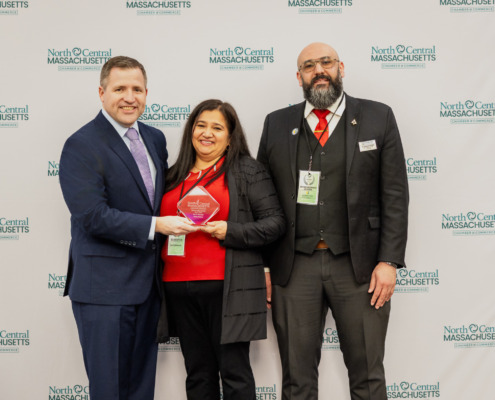

The reception features an open bar and gourmet appetizers.
View
Event
Join us for Connect North Central
Friday, September 25, 2026
8am-9am
View
Event
North Central Golf Tour Championship: Fore the Future
An FLNC Non-Traditional Scholarship Fundraiser
View
Event
Thank you Series Supporting Sponsor empHowered PR
View
Event
Join us for our 11th Annual
Congressional Luncheon
View
Event
Wednesday October 28, 2026
5:00pm - 7:00pm
View
Event
Join us for this in person HR Legal Update
View
Event
November 19, 2026
7:15am - 9:00am
View
Event
Chamber members are provided with the opportunity to engage with the Mayors of Fitchburg, Gardner, and Leominster who provide updates on projects and other things happening in their Cities. These events are by invitation only, please contact Travis Condon for more details.
View
Event
Bull Run Restaurant
215 Great Rd. Shirly, MA
View
Event
Join us for our last Connect North Central of the year!
Friday, December 11, 2026
8am-9am
View
Event
Chamber members are provided with the opportunity to engage with the Mayors of Fitchburg, Gardner, and Leominster who provide updates on projects and other things happening in their Cities. These events are by invitation only, please contact Travis Condon for more details.
View
Event
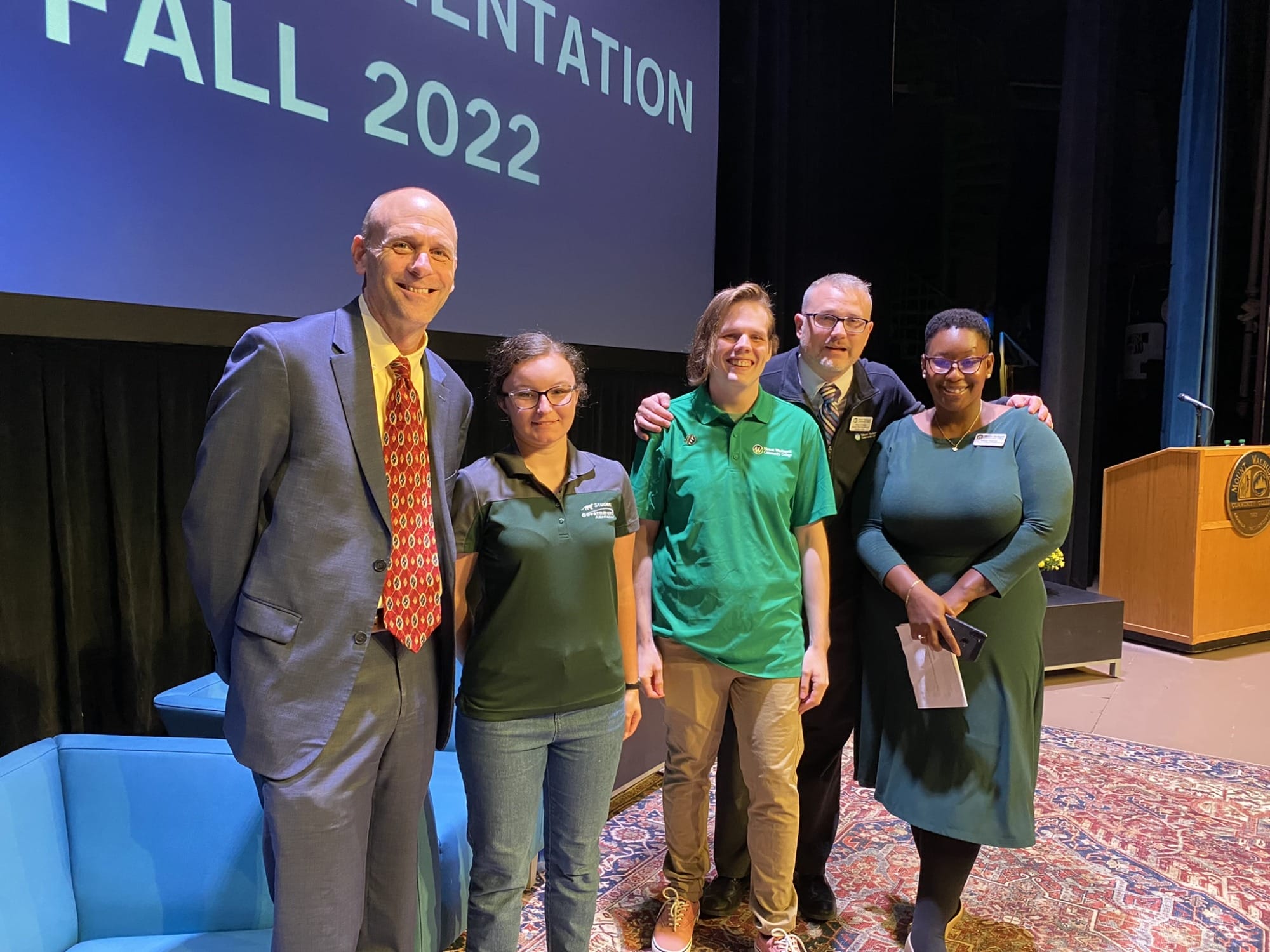
GARDNER, MA – September 6, 2022 – Mount Wachusett Community College held an orientation for new and transfer students on September 1, 2022 in preparation for the start of its 59th academic year on September 7, 2022.
“We are looking forward to welcoming students back to our campus,” stated MWCC President James Vander Hooven. “The life that students and faculty bring to the halls and classrooms has been missed, and I personally have missed interacting with our students, faculty and staff in person.”
Highlights of the Fall Semester include:
– United Way Day of Caring on Friday, September 16. Students, staff, and faculty will be volunteering at various locations in the community as part of this annual event.
– In celebration of Constitution Day the Brewer Center for Civic Learning and Community Engagement will be hosting a voter registration table in the Student Center on September 20 from 10 am to 2 pm.
– Pregnant and Parenting Student Expo will be held on Wednesday, September 21st. Our Student Parent Support team will be meeting with pregnant and parenting students to explore the services available to assist them as they pursue their educations.
– Community College Night at the Woo Sox will be held on Thursday, September 22nd. MWCC and the Massachusetts Association of Community Colleges organized this statewide evening to watch the Woo Sox take on the Syracuse Mets
– Tea Time Speaker Series returns with “Puerto Rican Declaration of Independence” on Friday, September 23 and “Gender Identity and Understanding LGBTQIA+” on Friday October 21.
– MWCC will be at the North Central Chamber of Commerce “Work North Central” Hiring Event at the Wachusett Mountain Ski Lodge on September 27 from 10 am to 1 pm.
– The MWCC Dental Clinic, co-located with the Community Health Center in Fitchburg, will hold a ribbon cutting to celebrate a significant enhancement to the clinic facility on September 28th.
– The NEACAC College Fair will be held at Mount Fitness on Tuesday, September 27th. Representatives from nearly 100 colleges and universities from all over New England and beyond will be on hand to talk to high school students and other individuals.
– The Coffee and Career Fair returns on Wednesday October 5. MWCC welcomes businesses and recruiters to campus to meet with students and graduates.
– Horticulture students have been raising pumpkins this summer in anticipation of the first MWCC Pumpkin Fest on October 5.
– The Fall Open House will be held on Saturday, October 29. Potential students are welcome to tour and can apply and be accepted on the spot.
MWCC admissions are rolling, students can apply and register for classes up through the first week of the semester. More information on upcoming events at MWCC can be found at mwcc.edu.
Silva promoted following record-breaking commercial sales with the bank’s LifeDesign approach
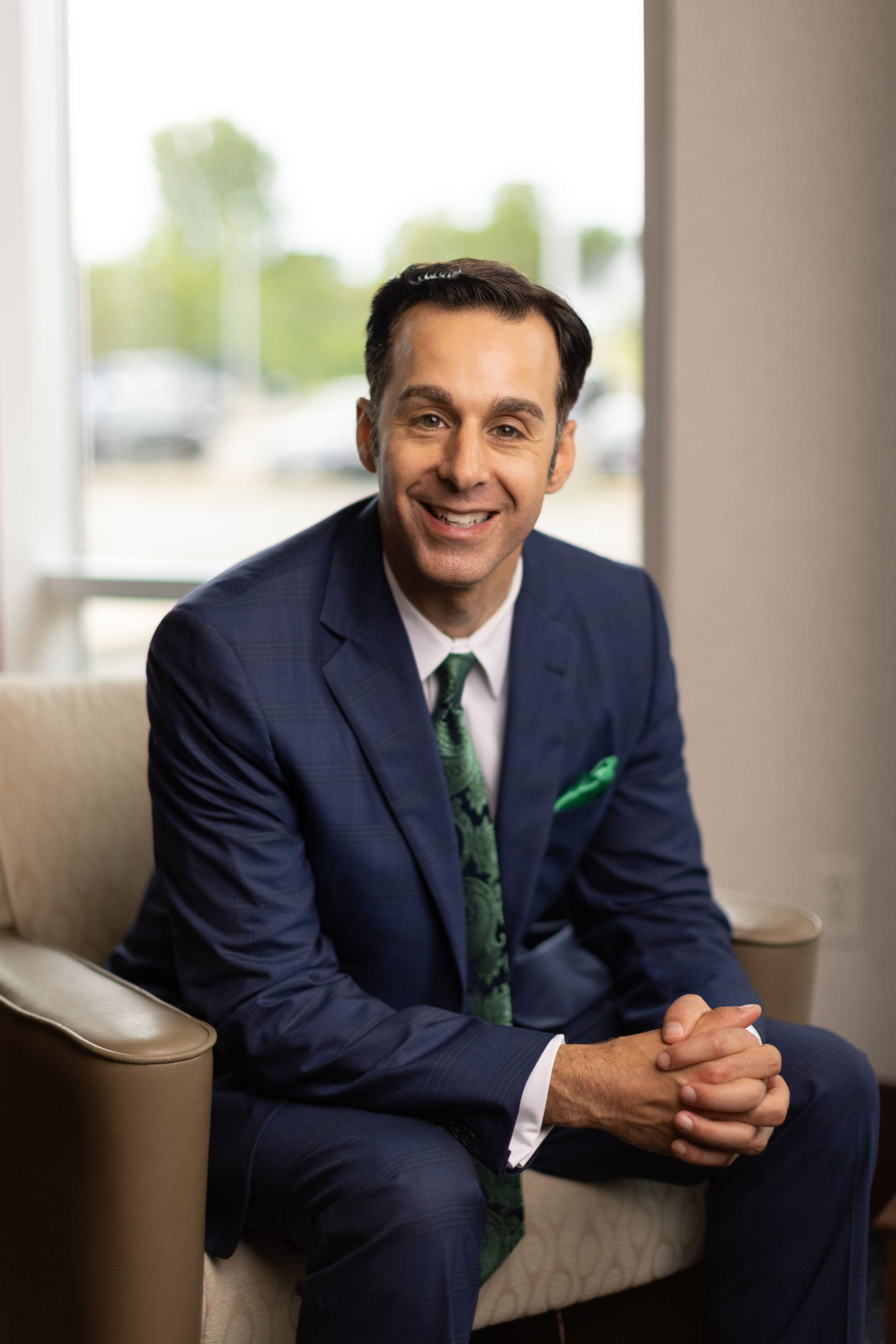
Silva began working at Fidelity Bank in May 2021 as Senior Vice President, Chief Commercial Banking Officer, where he led all aspects of Commercial Banking and Cash Management sales with a focus on growing the business while also embracing Fidelity Bank’s LifeDesign approach to banking.
“In his first year with Fidelity Bank, Joe has led record-breaking growth in commercial loans and makes him the perfect leader for all of our lending programs moving forward,” said Christopher W. McCarthy, President & COO. “Joe embodies our LifeDesign approach to banking in all that he does and has experienced much success in helping our business clients realize growth and success while achieving their financial goals.”
Silva received a bachelor’s degree in Interpersonal Communications from the University of Rhode Island and is also a graduate of the Bank Leadership Program from the Darden School at the University of Virginia.
United Way of North Central Massachusetts (UWNCM) is pleased to announce our newest initiative, Board Connection, which will be kicking off in October with an in-person event. This initiative is designed to help bridge the gap between non-profit organizations and professionals residing in our shared communities by helping to connect qualified individuals with openings on various boards (Board of Directors, Advisory Boards, Committees, etc.).
We invite you and your associates to attend this event free of charge on October 12, 2022, from 5:30 – 7:30 pm at Great Wolf Lodge in Fitchburg. The event will include an educational panel highlighting what it means to serve on a board, a resource fair featuring over 40 agencies with open board seats, light refreshments, and a wine/beer cash bar. Registration can be completed by emailing Lisa Normandin at . We hope you will join us in this great opportunity to learn how you can become more involved in your community.


When the workday ends and the lights go down, Custom Cleaning Service of Peabody, Inc. gets to work. “We operate as our clients’ silent partner after business hours,” says Adam Paicos, of Templeton, who now serves as Director of Operations and oversees the company’s expansion into North Central MA. “We are not often seen, but we ensure facilities are clean, secure, and ready for business each day while serving as the eyes and ears for our clients when they are not on site.”

Discover local business stories through our Inside North Central Massachusetts Podcast series. Listen as Chamber members share their journeys, insights, and contributions to our thriving regional business community.

Looking for your next opportunity? Explore current job openings from employers across North Central Massachusetts on our Jobs Board. Whether you’re starting a new career or making a change, you’ll find a variety of local positions available to help you take the next step.
CapEx Facility Services & Construction · Leominster, MA
TaraVista Behavioral Health Center · Harvard, MA
DRS Power Technology, Inc. · Fitchburg, MA
AIS · Leominster, MA