E-Newsletter
An Electronic Publication of the North Central Massachusetts Chamber of Commerce

Inside this edition, you’ll discover the latest Chamber initiatives and success stories from across our region. From economic development projects and upcoming networking events to policy updates and workforce training opportunities, we’re keeping you connected to what matters most for your business and North Central Massachusetts.
The North Central Massachusetts Chamber of Commerce is here to help – with trusted resources, a strong business network, and a support system to keep your business and the region moving forward
Servicio de Noticias de la Casa del Estado
Autor: Colin A. Young
One day before she is to be sworn into office, Gov.-elect Maura Healey continued to flesh out her Cabinet by naming her secretaries of economic development and of technology services and security, but major administration roles remain unfilled by Healey, who has also not appointed a communications team.
Yvonne Hao, Healey’s pick to lead the Executive Office of Economic Development, co-founded and held top roles at the investment firm Cove Hill Partners and was an operating partner at Pillar Ventures. She also served as chief operating officer and chief financial officer for PillPack, an online pharmacy that was acquired by Amazon in 2018, and previously worked at Bain Capital and McKinsey & Company.
In an anticipated reorganization proposal, Healey plans to split the existing Executive Office of Housing and Economic Development into two distinct Cabinet posts, and on Wednesday said that Hao will be the first woman and person of color to lead the state’s chief economic development secretariat. Healey made housing a major platform of her campaign but has not yet named her secretary of housing.
“Massachusetts is a national leader in the innovation economy, and the next Secretary of Economic Development has an opportunity to not only maintain that leadership role, but also grow our economic competitiveness,” Hao said.
Last month, Healey told GBH Radio that in addition to assembling her Cabinet and administration, her “top priorities are affordability and making sure that Massachusetts is a place where if you live here, you can stay here; if you come here to study or to work, you can stay here; if you’re an employer here or a business here, you can stay here and grow here.”
Hao has been active in the Bay State business community, serving on the boards for CarGurus, Flywire, Gentherm, ZipRecruiter and Bose. She is also vice chair of the board of trustees of Beth Israel Lahey Health, and is a trustee emerita for Williams College, her alma mater. Hao lives in Williamstown and Cambridge.
Jason Snyder, tapped Wednesday to run the Executive Office of Technology Services and Security, has spent about 10 years at Harvard University, serving as its chief technology officer since 2015. He has some familiarity with state government, though — he was chief technology officer for Massachusetts throughout Gov. Deval Patrick’s two terms in office, the Healey team said.
Before that, he worked 13 years at CSC Consulting Group. Snyder graduated from Rensselaer Polytechnic Institute and lives in Reading.
Gov. Charlie Baker in 2017 created the Executive Office of Technology Services and Security (and its corresponding Cabinet secretary position) based on the former Massachusetts Office of Information Technology.
“The Commonwealth of Massachusetts does incredible work day in and day out to deliver critical services to residents, but we need to make sure that everyone is able to access those services,” Snyder said. “I’m honored to have the opportunity to serve in the Healey-Driscoll Administration and look forward to the work ahead to make sure that our technology is resilient, secure and accessible to all.”
Cybersecurity has been a growing focal point for state government in recent years, especially since the COVID-19 pandemic changed the ways that businesses operate and people interact, leading to even greater reliance on digital technologies but also opening up opportunities for cybercriminals. Last month, Baker signed an executive order to create the Massachusetts Cyber Incident Response Team, tasked with preparing for, responding to and recovering from cybersecurity threats at a time when officials say public agencies are facing heightened risks online.
Healey has still not built out her entire Cabinet and major posts are still unfilled, including the positions overseeing health and human services, public safety and security, housing, and labor and workforce development.
Here is the Cabinet that Healey has so far announced: Matt Gorzkowicz as secretary of administration and finance, Patrick Tutwiler as education secretary, Gina Fiandaca as transportation secretary, Rebecca Tepper as secretary of energy and environmental affairs, Melissa Hoffer as a Cabinet-level climate chief, Hao as economic development secretary, and Snyder as secretary of technology services and security.
Chamber of Commerce | North Central Massachusetts | North Central Massachusetts Chamber | Massachusetts Business | Massachusetts Economy | Massachusetts Chamber of Commerce | Chamber of Commerce | Government Affairs | State House News Service | Maura Healey
Servicio de Noticias de la Casa del Estado
Autor: Colin A. Young
Beacon Hill seems to have more money than it knows what to do with these days, and lawmakers could soon have even fewer options at their disposal.
Surging state revenues have in recent years fueled sizeable surpluses and allowed the Baker administration and Legislature to pump the state’s Stabilization Fund up to new heights. But similar to the way that fiscal year 2022 revenues were capped by Chapter 62F, leading to taxpayer rebates totaling nearly $3 billion, the Stabilization Fund’s balance is getting closer than it has in at least 20 years to a cap of its own — one that would trigger another lesser-known tax rebate mechanism in state law.
As of the end of fiscal year 2022 on June 30, Massachusetts had stashed away in the Stabilization Fund about 75 percent of what it is legally allowed to, according to the year-end financial report released last week by the state comptroller.
Massachusetts injected $2.311 billion into its Stabilization Fund during fiscal year 2022, bringing the rainy day fund’s balance to a historic high of about $6.938 billion, according to the comptroller. And the fiscal year 2023 budget that Gov. Charlie Baker signed in August would put the Stabilization Fund on track to reach yet another record high of roughly $8.4 billion by next summer, his administration has said.
The law that lays out the parameters of the Stabilization Fund stipulates that “[i]f the amount remaining in the fund at the close of a fiscal year exceeds 15 per cent of the budgeted revenues and other financial resources pertaining to the budgeted funds, as confirmed by the comptroller in the audited statutory basis financial report for the immediately preceding fiscal year, the amounts so in excess shall be transferred to the Tax Reduction Fund.”
For fiscal year 2022, the Stabilization Fund cap was $9,312,616,000 as calculated by Comptroller William McNamara’s office in the Statutory Basis Financial Report published last Friday. And the balance of the Stabilization Fund when fiscal 2022 ended was $6,937,864,000 — or 74.5 percent of the allowable balance.
While there is still room for more savings, the fund’s balance is closer to the limit than it has been at any point over the last 20 years and the balance has been increasing at a much faster rate than the cap.
The last time that the Stabilization Fund ended a fiscal year with a balance less than it had one year prior was fiscal year 2014, when the balance was equal to about 23.5 percent of the statutory cap. Since then, the fund’s balance has grown more than 455 percent — from about $1.248 billion to roughly $6.938 billion. Over the same period, the cap — which is based on tax revenues, federal grants and reimbursements, and more — has increased 75 percent, from $5.320 billion to $9.312 billion.
Starting in fiscal 2015, the Stabilization Fund began to grow, slowly at first. Its balance increased just 0.32 percent that year, then 3.12 percent in fiscal 2016 and 0.71 percent in fiscal 2017. Each fiscal year since, the fund’s balance has grown by a greater percentage than has its upper limit imposed by the cap.
Fiscal year 2018’s nearly 54 percent increase in the balance far outpaced the 6.44 percent increase in the cap. The 71 percent growth in the Stabilization Fund balance in fiscal 2019 (compared to 6.44 percent growth in the cap) brought the fund to about 50 percent of its legally-allowable maximum. Fiscal 2020 was more reserved — 2 percent growth in the cap and 2.24 percent growth in the fund’s balance.
But even as state revenues have skyrocketed in the last two years, the Stabilization Fund’s balance has still grown faster than its ceiling. Fiscal 2021 saw a 20 percent increase in the cap — the largest one-year increase since the cap was raised in the early 2000s from 10 percent to 15 percent of budgeted revenues — and 32 percent growth in the fund’s balance. And fiscal year 2022 generated a 9 percent increase in the cap but a nearly 50 percent increase in the Stabilization Fund’s balance.
If or when the statutory 15 percent cap is reached, any additional money that would normally be bound for the Stabilization Fund — like excess capital gains revenue — goes instead into the Tax Reduction Fund, which sends money back to taxpayers through a one-time increase in the personal exemption.
Since its creation in 1986 as a companion to the Stabilization Fund, taxpayers have received three tax cuts through the Tax Reduction Fund, according to News Service reporting. The cuts came through one-time increases in personal exemptions on 1996, 1997 and 1998 tax returns.
The first tax cut was worth $150 million, the second came in at $91.8 million, and the third and most recent cut was worth $208.8 million, the News Service reported in 2001, citing a deputy state comptroller.
Massachusetts was limited to holding a maximum of $543 million in the Stabilization Fund in fiscal year 1996, but tax revenues helped to propel it well beyond that figure, triggering the automatic tax cut. Gov. William Weld, who was locked into a hot U.S. Senate race against John Kerry at the time, announced in June 1996 that there would be a roughly $150 million tax cut coming when people filed their taxes the following year. That cut meant $105 for a single filer or $135 for married couples, the News Service reported at the time.
“I would much rather see some harried parents enjoy a night out than see government engorge itself on the public’s tax dollars,” Weld said when he announced the tax cut.
Current lawmakers, who were blindsided by the governor’s late July Chapter 62F revelation, may have avoided a possible Stabilization Fund cap issue when they made what McNamara last week called one of the “more unusual transfers” as they closed the books on fiscal year 2022. Instead of being transferred into the Stabilization Fund as would normally be the case, the final close-out budget passed by the Legislature and signed by Gov. Charlie Baker directed the state’s year-end $4.8 billion surplus to instead be deposited into a Transitional Escrow Fund to be reappropriated in fiscal year 2023.
Secretary of Administration and Finance Michael Heffernan said the escrow account “acts almost as a stabilization fund on top of the Stabilization Fund.”
Massachusetts is far from the only state where a similar story is playing out.
Together, states had a record $136.5 billion in savings by the end of fiscal 2022, the National Association of State Budget Officers said. An October report from the Pew Charitable Trusts found that state savings accounts hold enough money in reserve to run government operations for a median of 42.5 days, a new high and up from a median of 28.9 days in fiscal 2019, just before the pandemic-fueled recession.
At least three states — Connecticut, Iowa and Oklahoma — were projected to have already maxed out their rainy day funds once the final accounting on fiscal year 2022 was completed, Pew said. In those cases, money that otherwise would have flowed into savings will be diverted to other purposes, as would be the case if Massachusetts were to hit its Stabilization Fund ceiling.
And while the COVID-19 years have proved to be a boon for state savings accounts despite initial forecasts for steep losses, Pew said that it expects that states will soon have to slow down on stashing money away.
“Budget surpluses and related gains in states’ rainy day funds during fiscal years 2021 and 2022 are not expected to continue to the same degree in fiscal 2023. Higher-than-forecasted tax revenue growth, historic federal aid, and record financial reserves have buttressed states’ fiscal positions over the past two budget years,” Pew said in its October report. “However, policymakers now face an inflection point as they reckon with several looming challenges, including weakening economic growth amid tightening monetary policy and historically high inflation, and a tapering of federal aid.”
Chamber of Commerce | North Central Massachusetts | North Central Massachusetts Chamber | Massachusetts Business | Massachusetts Economy | Massachusetts Chamber of Commerce | Chamber of Commerce | Government Affairs | State House News Service
As we greet 2023, it is important to be aware of several changes to laws and policies that will have an impact on the business climate. Laws pertaining to minimum wage, retail premium pay and PFMLA take effect at the start of the year. In terms of November’s ballot questions, the Fair Share Amendment will also be put into place on January 1.
Minimum Wage/ Premium Pay: On January 1, 2023, several changes related to minimum wage are set to take effect as the final years’ worth of changes are enacted by the Grand Bargain legislation.
Paid Family Medical Leave (PFML):
Massachusetts Fair Share Amendment: After being voted in favor by fifty-two percent in November, the new Fair Share Amendment (Article CXXI of the Articles of Amendment to the Massachusetts Constitution) will take effect on January 1, 2023
Chamber of Commerce | North Central Massachusetts | North Central Massachusetts Chamber | Massachusetts Business | Massachusetts Economy | Massachusetts Chamber of Commerce | Chamber of Commerce | Minimum Wage/ Premium Pay | Paid Family Medical Leave (PFML) | Massachusetts Fair Share Amendment
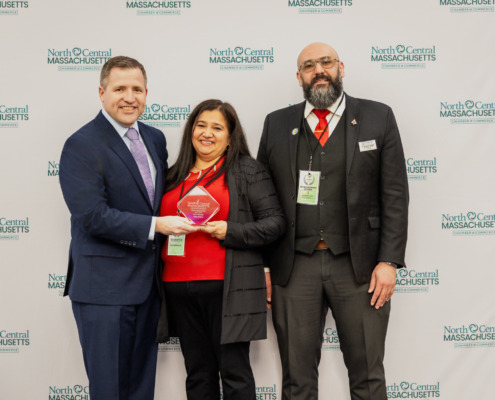

Chamber members are provided with the opportunity to engage with the Mayors of Fitchburg, Gardner, and Leominster who provide updates on projects and other things happening in their Cities. These events are by invitation only, please contact Travis Condon for more details.
View
Event
Bull Run Restaurant215 Great Rd. Shirly, MA
View
Event
Join us for our last Connect North Central of the year!
Friday, December 11, 2026
8am-9am
View
Event
January 14, 20277:15am - 9:00am
View
Event
Erin Logan | NBC 10 Reporter
View
Event
Chamber members are provided with the opportunity to engage with the Mayors of Fitchburg, Gardner, and Leominster who provide updates on projects and other things happening in their Cities. These events are by invitation only, please contact Travis Condon for more details.
View
Event

Children enjoy a sensory table in the MWCC Family Resource Center.
Mount Wachusett Community College has received a Career Readiness and Educational Access Grant from the Community Foundation of North Central Massachusetts. This grant will enable MWCC to expand its Child Watch drop-in program for student-parents to use while they are on campus attending classes, meeting with advisors, participating in study groups, or otherwise working toward their degrees.
The Child Watch program was launched in April 2022 with support from the federally funded Child Care Access Means Parents in School (CCAMPIS) project and the federal work-study program. The Child Watch program provides children with enrichment, play, and socialization with peers and the opportunity to see their parents pursue academics, creating a family value tied to academic growth and perseverance.
“By providing childcare for student parents, MWCC will help to increase educational access and equity for parents and create a pathway for parents to earn their degree and obtain gainful employment to support their families,” stated MWCC President James Vander Hooven.
“In its first year, over 50 students utilized the child watch, but this only scratches the surface of the current need,” notes Ann Reynolds, CCAMPIS Advisor at MWCC. “This program has helped our parenting students to stay in school. Childcare is an overlooked basic need for many student parents.”
For many student-parents, access to childcare can mean the difference between earning their degree or dropping out. With many of our parenting students attending part-time or in the evenings, the lack of evening childcare leads parents to take fewer classes and increases their time to graduation. Additionally, parents with unreliable childcare options may miss significant numbers of classes, leading to a decrease in their academic performance and possible loss of financial aid.
In addition to the expanded child watch program, MWCC has a number of programs for parenting students including the Parent Support Group, Family Resource Center, and Lactation Room and hosts the MOC Child Care and Head Start Services at the Garrison Center for Early Childhood Education. More information on these programs is available at mwcc.edu/student-parents.

This Fall we are offering free training in the fields of CNC Operator and Culinary Arts to underemployed and unemployed MA residents, seeking a new start in their career. All participants will receive industry recognized credentials, full sets of tools & materials, hands-on training, and job placement assistance, all at NO COST.
Applicants:

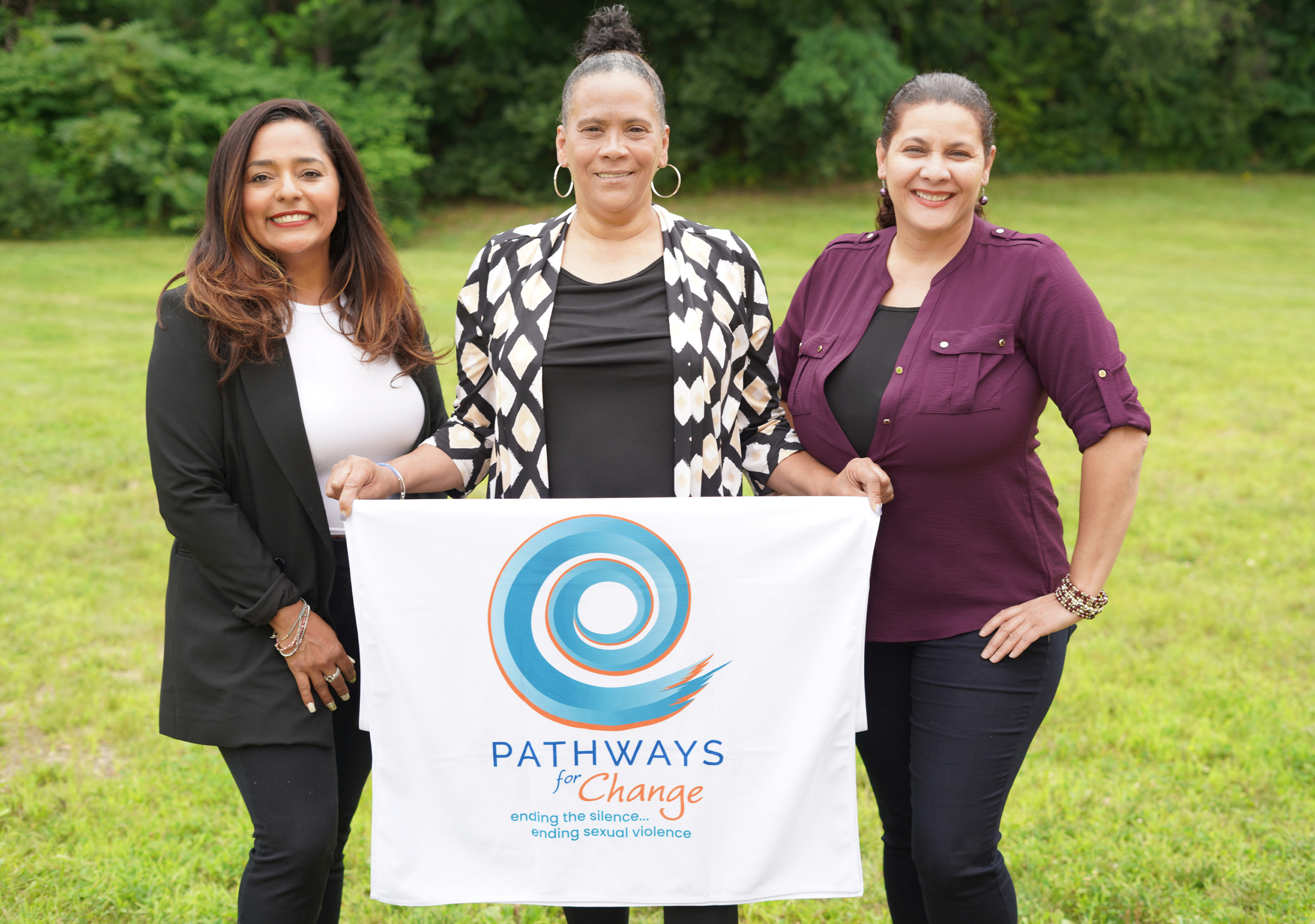
Pathways for Change received a grant to pilot the Males Advocating Change (MAC) program. Pictured left to right is Wendy Aguilar, Assistant Director of Education & Outreach; Marguerite Mowry, Youth Education Specialist and Amparo L. Cruz, Director of Education & Outreach.
Grants given to eight agencies to tackle rising youth mental and behavioral health issues stemming from COVID-19 pandemic
United Way of North Central Massachusetts (UWNCM) recently awarded $90,000 in grants to 8 local agencies to pilot youth mental and behavioral health initiatives. The grants are part of a new area of work for UWNCM that seeks to address challenges faced by young people arising from increased isolation during and after the COVID-19 pandemic.
The following agencies received grants: Boys & Girls Club of Fitchburg/Leominster, Boys & Girls Club of Lunenburg, Girl Scouts of Central & Western Mass, LUK Crisis Center, Inc., Montachusett Community Branch YMCA, Mount Wachusett Community Foundation, Pathways for Change, Inc., and Spanish American Center, Inc.
Grants will support a variety of programs serving diverse populations from different perspectives, from providing free behavioral health services for uninsured marginalized youth, to enabling girls to discover art and nature as tools for mental well-being, and using dance movement therapy to support youth who identify as Latino, Black, and Indigenous.
UWNCM first identified a need for increased youth mental and behavioral health services after hosting a community roundtable on the topic in December 2022. Participants, including representatives from local agencies and the health field, noted that in the wake of the COVID-19 pandemic, many young people have become isolated and unprepared for healthy social relationships.
The grant program is a new initiative for UWNCM that seeks to begin identifying the most effective ways of delivering services to young people who are struggling with mental and behavioral health. Grants will run through June 30, 2024, and results will be used to create targeted programs going forward.
Pathways for Change, Inc., based in Worcester, received a grant to pilot Males Advocating Change (MAC), a program that will engage middle school, high school and college-aged men to address male violence, particularly sexual and dating violence against women.
Kim Dawkins, CEO/President of Pathways for Change, says, “We are grateful to UWNCM for our recent Youth Mental/Behavioral Health grant. The role of MAC is to raise awareness of the myths about masculinity and play a part in building and expanding young males’ understanding of healthy, non-violent masculinity. These funds will provide critical resources needed to continue our work to engage young males and train them to be leaders in our effort to end sexual violence in North Central Massachusetts.”
Judy Tomlinson, Director of Community Impact at UWNCM, adds, “Youth mental and behavioral health problems are reaching crisis levels in our region. With our new grant program, UWNCM is dipping our toes in the water of a larger issue and learning as we go. We are excited to support a wide variety of initiatives that will use creative methods to support our youth.”
United Way de North Central Massachusetts presta servicios a las comunidades de Ashburnham, Ashby, Athol, Ayer, Devens, Fitchburg, Gardner, Groton, Harvard, Hubbardston, Leominster, Littleton, Pepperell, Lunenburg, Petersham, Phillipston, Royalston, Shirley, Templeton, Townsend, Westminster y Winchendon.

When the workday ends and the lights go down, Custom Cleaning Service of Peabody, Inc. gets to work. “We operate as our clients’ silent partner after business hours,” says Adam Paicos, of Templeton, who now serves as Director of Operations and oversees the company’s expansion into North Central MA. “We are not often seen, but we ensure facilities are clean, secure, and ready for business each day while serving as the eyes and ears for our clients when they are not on site.”

Discover local business stories through our Inside North Central Massachusetts Podcast series. Listen as Chamber members share their journeys, insights, and contributions to our thriving regional business community.

Looking for your next opportunity? Explore current job openings from employers across North Central Massachusetts on our Jobs Board. Whether you’re starting a new career or making a change, you’ll find a variety of local positions available to help you take the next step.
CapEx Facility Services & Construction · Leominster, MA
TaraVista Behavioral Health Center · Harvard, MA
DRS Power Technology, Inc. · Fitchburg, MA
AIS · Leominster, MA