E-Newsletter
An Electronic Publication of the North Central Massachusetts Chamber of Commerce

Inside this edition, you’ll discover the latest Chamber initiatives and success stories from across our region. From economic development projects and upcoming networking events to policy updates and workforce training opportunities, we’re keeping you connected to what matters most for your business and North Central Massachusetts.
The North Central Massachusetts Chamber of Commerce is here to help – with trusted resources, a strong business network, and a support system to keep your business and the region moving forward
Governor Charlie Baker and Lt. Governor Karyn Polito today announced the appointment of Jamey L. Tesler as Secretary of Transportation and CEO of the Massachusetts Department of Transportation (MassDOT). Tesler has served as Acting Secretary since January, when he was appointed to replace former Secretary Stephanie Pollack after Pollack’s appointment as Deputy Administrator of the Federal Highway Administration for the Biden-Harris Administration.
“Jamey Tesler is a dynamic leader and with several years of experience in senior roles in the transportation sector, he and the team at the Department are ready to advance the important work underway across Massachusetts’ transportation systems,” said Governor Charlie Baker. “From safety to planning for the mobility needs of the Commonwealth’s future, the job of Transportation Secretary is hugely important and Jamey is the right person to lead the Department.”
“In continuing in his role as Secretary, Jamey will remain a strong partner for officials at the municipal level, ensuring a commitment to local infrastructure and projects,” said Lt. Governor Karyn Polito. “We are grateful for his ongoing leadership and dedication to the transportation sector and service to the people of this Commonwealth.”
“Since January, it has been the honor of my professional career to serve as Acting Secretary of Transportation and I am grateful and humbled that Governor Baker and Lt. Governor Polito have confidence in my ability to continue to lead the organization as we deliver a transportation system that is safe, reliable, resilient and equitable,” said Secretary Jamey Tesler. “With the support of MassDOT’s dedicated workforce and management team, I am looking forward to continuing to advance customer service improvements, programs giving municipalities resources, and infrastructure projects which connect people with where they want to go, whether they are walking, bicycling, traveling by public transportation, or riding in a vehicle.”
Prior to his appointment as Acting Secretary in January, Tesler served as Registrar of Motor Vehicles. He has years of experience across the Department of Transportation and has worked for more than 16 years in senior management roles in the public sector, including as General Counsel to the Massachusetts State Treasurer, Deputy Legal Counsel in the Office of the Governor, Deputy General Counsel for the Massachusetts Bay Transportation Authority (MBTA), MassDOT Assistant Secretary for Procurement and Contract Management, Acting Chief of Staff for the Secretary of Transportation, and then as Chief Operating Officer at MassDOT. Tesler received his bachelor’s degree in Economics and International Relations from the University of Pennsylvania and his Juris Doctor from the University of Michigan.
Learn more about the Massachusetts Department of Transportation.
Fuente del artículo: State House News Service
Autor: Chris Lisinski
Employers in Massachusetts will face additional assessments equal to 10.5 percent of their unemployment insurance rates as part of an accounting fix the state deployed to soften the pandemic’s impacts, the Baker administration announced last week.
The unemployment system stabilization law Gov. Charlie Baker signed in May unwound massive spikes in the bills that businesses pay to fund joblessness benefits while imposing a new COVID-related charge, but until recently, employers did not know how much the additional assessments would cost.
In a letter to businesses dated Thursday, the Department of Unemployment Assistance announced the quarterly “COVID-19 Recovery Assessment” will be equal to 10.5 percent of each employer’s existing UI rate. The Boston Business Journal first reported about the letter on Friday.
Those who pay a UI rate of 4.98 percent, for example, will face an additional COVID-19 assessment at a 0.523 percent rate. Adjusted UI rates and COVID rates will be available starting July 26, the department said, with bills for the first and second quarters due by Aug. 31.
COVID-19 Recovery Assessments will be retroactive to Jan. 1 of this year and will help “manageably spread over time the cost of benefits paid by the UI Trust Fund in 2020 and 2021,” DUA wrote in its letter.
While the law aimed to reduce the immediate impact and trimmed the solvency assessment rate from 9.23 percent to about 1.1 percent, employers remain on the hook in the long term to cover the upheaval in the state’s unemployment insurance trust fund. As of May 31, the fund had a balance nearly $1.8 billion in the red, according to the most recent state report.
Business groups (including North Central Massachusetts Chamber of Commerce) have been pushing for the Legislature and administration to use a portion of state government’s roughly $5 billion American Rescue Plan Act funding to pay down the deficit and reduce the burden they face. Lawmakers will kick off a public hearing process Tuesday about how to use that money.
The Baker-Polito Administration today announced it will invest $186 million of the Commonwealth’s direct federal aid from the American Rescue Plan Act (ARPA) toward critical priorities including support for hospitals, health and human services, mental health, and workforce development. Utilizing these federal resources now will help further the Commonwealth’s economic recovery and provide relief for residents hardest-hit by COVID-19, such as lower-wage workers and communities of color.
This $186 million is part of a total of approximately $5.3 billion in direct aid awarded to the Commonwealth through ARPA. The funding announced today is part of $200 million provided to the Administration in recently signed legislation for addressing critical needs as a result of the COVID-19 pandemic. Governor Baker has filed legislation to put an additional $2.915 billion of this funding to immediate use to address additional urgent and pressing needs including housing and homeownership, economic development and local downtowns, job training and workforce development, health care, and infrastructure.
“Our administration is putting this $186 million to work now because many communities throughout Massachusetts – especially low-income families and communities of color – have been disproportionately impacted by COVID-19 and cannot wait for assistance. More than 400,000 residents are due to lose enhanced unemployment benefits in the first week of September, making the workforce training funding particularly urgent,” said Governor Charlie Baker. “We look forward to working quickly with our colleagues in the Legislature in allocating additional funding and providing residents and families with relief from the housing, economic, workforce, health care, and other challenges which continue to face the Commonwealth as we recover from the COVID-19 pandemic.”
“Investing this $186 million is an important step in helping those who have been hard-hit by the pandemic, and we must continue deploying federal resources to further the economic recovery,” said Lieutenant Governor Karyn Polito. “These funds will help address crucial health care and workforce priorities, and we look forward to quickly getting them out the door and into our local communities.”
Highlights of this $186 million investment plan include:
Health Care
Workforce
The discretionary funds awarded to the Commonwealth through ARPA are intended to support urgent COVID-19 response efforts, replace lost revenue, support immediate economic stabilization for households and businesses, and address unequal public health and economic challenges in Massachusetts cities and towns throughout the pandemic. ARPA is also providing a total of $3.4 billion in direct aid for local governments throughout Massachusetts.
Massachusetts expects to benefit from a total of approximately $113 billion in COVID-related federal aid provided through the six pieces of federal legislation enacted during the pandemic. The majority of this funding is outside of the Commonwealth’s discretion. For example, over $50 billion is going directly to individuals and businesses in the form of stimulus payments, Paycheck Protection Program loans, Unemployment Assistance, and other initiatives. Over $3 billion has been awarded to the MBTA, RTAs, airports, and transportation. Approximately $2.9 billion has been awarded in Elementary and Secondary School Emergency Relief (ESSER Grants) for local schools, over $1.5 billion is being provided for higher education relief, and nearly $700 million has been awarded for child care.
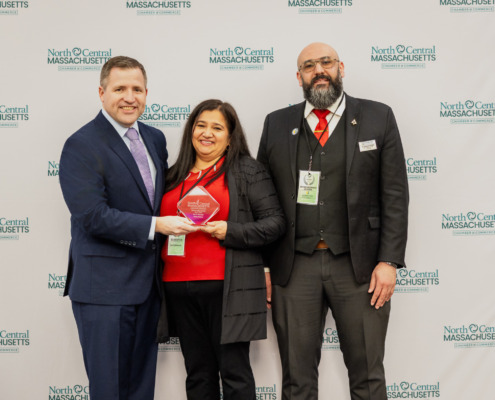

The reception features an open bar and gourmet appetizers.
View
Event
Join us for Connect North Central
Friday, September 25, 2026
8am-9am
View
Event
North Central Golf Tour Championship: Fore the Future
An FLNC Non-Traditional Scholarship Fundraiser
View
Event
Thank you Series Supporting Sponsor empHowered PR
View
Event
Join us for our 11th Annual
Congressional Luncheon
View
Event
Wednesday October 28, 2026
5:00pm - 7:00pm
View
Event
Join us for this in person HR Legal Update
View
Event
November 19, 2026
7:15am - 9:00am
View
Event
Chamber members are provided with the opportunity to engage with the Mayors of Fitchburg, Gardner, and Leominster who provide updates on projects and other things happening in their Cities. These events are by invitation only, please contact Travis Condon for more details.
View
Event
Bull Run Restaurant
215 Great Rd. Shirly, MA
View
Event
Join us for our last Connect North Central of the year!
Friday, December 11, 2026
8am-9am
View
Event
Chamber members are provided with the opportunity to engage with the Mayors of Fitchburg, Gardner, and Leominster who provide updates on projects and other things happening in their Cities. These events are by invitation only, please contact Travis Condon for more details.
View
Event

[Pictured L to R: Barbara Mahoney, President & CEO, LCU; Gregg Cohen, President, Campus Bound; Steven Dubzinski, Principal, Leominster High School; Brian Gardiner, Campus Bound; Brittany Haley, High School Branch Manager and Financial Education Manager, LCU and Katie Najjar, SVP, Retail, LCU.]
“As a community based financial institution, we look for opportunities to engage and partner with organizations who offer products and services to the communities we serve. Campus Bound offers a much-needed comprehensive solution, given the rising costs associated with attending college. As a sponsor to this program, we are assisting local students with the opportunity to access resources to help them navigate and attain entry to great schools, find solutions to reduce college expenses and minimize debt,” said Barbara Mahoney, President & CEO, Leominster Credit Union.
Campus Bound is committed to helping students of all achievement levels create strong applications and discover their best-fit schools. Counselors collaborate frequently, ensuring that all of the students receive the most up-to-date information and make the best decisions as they navigate the college search, application, and decision process.
“It has been a pleasure helping the LHS community as they work to navigate the financial challenges that a college education presents. The engagement of the students and parents has been amazing. LCU’s sponsorship has resulted in students having a lower cost of college and increased opportunities,” stated Gregg Cohen, President of Campus Bound.
“Leominster High School is ecstatic to partner with Campus Bound to provide our students an opportunity to get a true understanding of the financial aspect of a college education. The commitment that Campus Bound and Leominster Credit Union shows to this community make this program a valued part of our college search process,” said Steven Dubzinski, Leominster High School Principal.
Recovering from challenges of the pandemic top of mind for business owners, consumers
(Leominster, Mass.)—Fidelity Bank recently announced the results of its 2021 Economic Survey, providing an overview of how more than 200 businesses and more than 500 consumers perceive the state and regional economy over the next 12 months as the region recovers from the pandemic.
While the effects of COVID-19 are keeping the region’s business owners up at night, consumers are now focused on having more control over their finances, with particular focus on paying off debt and ensuring a healthy nest egg. Survey respondents believe the pandemic will impact the economy for the next one to two years, with more than 60 percent of respondents indicating the changes they made in response to the pandemic will last indefinitely. In fact, more than half of the business respondents acknowledged the changes they made during the pandemic were positive.
Vector Five, a Lunenburg-based business that designs and builds displays and exhibits for trade shows, saw an immediate halt on their trade show schedule in 2020. The business re-evaluated their current business model and recently announced a new division, Spaces by Five, which provides corporate interior and exterior upgrades, from concept to execution.
“We are dedicated to bringing brand expression to life at trade shows and events,” said Dawn Perkins, Partner, Vector Five. “While the pandemic created challenges for our clients and our own business with the cancelation of in-person events, we learned we can complement our services by partnering with our general contracting, production set-up and graphics teams to build out interior and exterior business spaces, too, which is how we developed Spaces by Five.”
Job security is expected to be in worst shape when compared to 2019, with half of business respondents indicating hiring will increase or decrease in 2021, and 89 percent indicating they have invested in the workforce over the past 12 months. In addition to COVID-19, the availability of skilled labor remains a top concern in addition to costs of living, government, and fuel and energy.
With this in mind, businesses indicated a commitment of utilizing capital investments on hiring new workers and purchasing equipment over the next year. Respondents felt the federal government’s response to aide small businesses through the Paycheck Protection Program (PPP) was acceptable, and well over half of the respondents have a positive view on the government’s handling of PPP. Fidelity Bank helped local businesses obtain more than $40 million under the Paycheck Protection Program.
ModuForm, a Fitchburg-based, family-owned company that manufactures contemporary, durable and comfortable furnishings for use in behavioral health hospitals, colleges, libraries and other commercial applications, attempted to obtain a PPP loan from a larger bank, but turned to Fidelity Bank for guidance following more than 60 days of confusion. “When trying to get answers from a larger bank, we were treated with total indifference for over two months,” said Joshua Weissman, President, ModuForm. “Within days of contacting Fidelity Bank, all of our paperwork was submitted, and the funds were available to us shortly thereafter. The Fidelity Bank team was very responsive, provided clarity and made the process simple from beginning to end.”
It’s no surprise that consumer spending was down in the last year. When shopping, the best value and price maintained the top influence for 2021, followed by safety protocols, online shopping, and convenience.
“In 2019, the idea of safety protocols when deciding about where to shop was not even on a consumer’s mind,” said Ed Manzi, Chairman and CEO, Fidelity Bank. “This survey proves that while business plans and spending habits have changed due to the pandemic so too has our awareness of being safe when leaving the comforts of home.”
While respondents indicated recovery from COVID-19 could last years, more than half of all respondents believe the North Central Massachusetts economy will be in better or somewhat better shape in 2021.
“We’ve known all along that business owners and consumers who call our communities home are tenacious and resilient,” said Manzi. “As the commonwealth reopens this summer, we can all do our part to help the economy quickly recover by supporting our businesses while enjoying the company of those we’ve missed in the past year.”
To view the Fidelity Bank 2021 Economic Survey in its entirety, visit https://www.fidelitybankonline.com/our-news/fidelity-bank-announces-results-of-2021-economic-survey-recovering-from-challenges-of-the-pandemic-top-of-mind-for-business-owners-consumers.
GARDNER, MA – June 21, 2021 – Mount Wachusett Community College is pleased to announce our Dean’s and President’s Lists for the spring 2021 semester. Students who complete a minimum of 12 semester hours are eligible. The Dean’s List requires a 3.30 to 3.99 grade point average while the President’s List requires a 4.0 grade point average.
Presidents List
Ashburnham
Rajkumar Desai, Shawn Ilinitch
Athol
Alexia Clapper, Lindsay Williams, Destiny Wrigley
Baldwinville
Chloe Caisse
Barre
Gemma Gabrielli, Gabrielle Walker
Bolton
Benjamin Wikoff
Boxborough
Mikayla Barrett, Campbelle Stephens
Boylston
Alex MacConnell, Nathan Reich
Douglas
Karissa Alyrd
East Falmouth
Jeffrey Quinn
Fitchburg
Mays Asfari, Pedro Baez, Jessica Burgos, Tony Lam, Amy Meunier, Ponetip Souvannavong, Taniya Tucker, Brenda Velasquez, Daisy Vue, Jaelyn Wentworth
Gardner
Mordrianna Gaudet-Oxford, Daniel Hidalgo
Gilbertville
Maddison Willigar
Hubbardston
Rebecca Cronin, Joely McKelvie, Angelina Ovitt, Andrea Techera, Kevin Techera
Leominster
Katelyn Cameron, Caitlyn Curley, Pamela Day, Angela Hoyt, Delroy Lindesay, Charles Milhans, Melissa Paquette, Sarah Poirier
Lexington
Samina Mian
Lunenburg
Olivia Hayes, Tina O’Leary, Erin Romero-Berquist
Marlborough
Keegan Byrnes
Monson
Amy Robertson-Soucy
Oakham
Lindsey Lessore
Pepperell
Taylor McLellan, Kaitlyn Winsper
Phillipston
Hannah Bennett, Rebecca Degon, Sydney Marshall
Princeton
Isabella Ervin, Thomas Kokernak
Shirley
Zoe Zupko
Southbridge
Molly McNamara
Templeton
Garrett Dora, Natalie Johnson, Adelia Sampognaro
Townsend
Emily Price
West Boylston
David Urella
Westminster
Ryan Coleman, Celeste Infantino, Cheryl Sanders, Justin Tralongo
Winchendon
Allison Beane, Aidan Bourque, Isabelle Costa, Joseph Noe, Danielle Belpedio
Worcester
Brooke Hazen, Kathryn Woods
Jaffrey, NH
Peter Luksha
New Ipswich, NH
Kailyn Matson
Richmond, NH
Rebecca Rule-Sellers
Hanover, PA
Jessica Woodward
Deans List
Woodstock, CT
Bethany Chase
Kennesaw, GA
Rebekah Pineda
Ashburnham
Samantha Bertrand, Steven Gorrell, Holden Larsen, Katie O’Brien, Alana Perry, Ean Roy
Ashby
Patty Brine, Leelannee Farrington, Lydia Palmer
Athol
Alexis Barrett, Danielle Darling, Grace Dufour, Gracie Eastman, Madison Faneuf, Allysia Hartley, Emily Jamieson, Olivia Luchock, Savannah Smart-Gray, Colby Soltysik, Emily Woodard
Auburn
Eric Paradis
Ayer
Cameron Breault, Eric Gravelle, Perrin Grubb
Baldwinville
Monet Coleman, Jayson Drop, Joshua Duval, Kristen Lloyd, Patricia Magane, Jonathan Morin, Zachary Stacy, Aryana Williams
Barre
Michael Flood, Miranda King, Sarah O’Sullivan
Belchertown
Ashley Tarr
Bolton
John Maron
Boxborough
Genevieve Phelps
Bridgewater
Tonya Fleming
Cambridge
Cheryl Locksley-Grant
Clinton
Alvin Deleon, Irene Jimenez, Dylan Napoli, Manny Patel
East Bridgewater
Jenna Tully
East Brookfield
Adam Gibson
East Templeton
Samantha Giblin
Fitchburg
Omar Abdelkebir, Faiza Boulefaa, Michael Chernoch, Amanda Chiasson, Tiarra Favreau, Melissa Gonzalez, Brandan Grossi, Jailene Lopez, Sarah Lyon, Geanine Mazerolle, Jamal Michel, Aicha Ndiaye, Eileen Nina, Rohanji Novas, Jael Omeler, Andrew Picard, Bryant Quinn, Aleigha Rivard, Jessica Romero, Brittany Ruffen, Timothy Stewart, Alana Strumberger, Steven Tarnowski, Jouan Vang, Jennifer Vasquez, Jamie Velasquez, Alex Willie
Framingham
Priscila Gheleri
Gardner
Aislyn Atkinson, Hannah Burns, Angelica Butler, Robert Chilcoat, Khysha Doiron, Skyler Elliott, Jacob Gamble, Vanessa Hill, Catherine Hough, Trentin Hursey, Savannah Johnson, Anneliese King, Daniel Knoll, Erik McMaster, Brandon Mills, Isabelle Poulin, Julie Richard,
Cynthia Roy, Guadalupe Ruiz, Martena Soliman, Abanoub Tefal, Giovanni Toledo, Serena Wiita
Gilbertville
Holly Perry
Groton
Kayla Hanlon, Andrew Miller
Hardwick
Lynsey Fletcher
Holden
Alli Carbonneau, Ariel Norum
Hubbardston
Mariah Aviles, Ariana Giardina, Nichole Hazel, James Nason, Alexandrea Ramos, Natalia Wilder
Hudson
Margaret Moran
Hyde Park
Curtis Booker
Jefferson
Elizabeth Afonso
Lancaster
Carolyn Poch
Lawrence
Jazmine Martinez, Orquidia Martinez
Leominster
Meghan Arce, Nakia Bachman, James Barrett, Netty Bazile, Olivia Bush, Cameron Cutter, Benjamin Dearden, Andre Dion, Molly Donovan, Nancy Fong, Kayla Garcia Brodie, Thomas Hall, Molly Jacob, Christopher Johnson, Andrew Lanciani, Demetric Lavender, Alondra Lopez Abreu, Anna Clara Loureiro Lago, Matthew Madrigal, Douglas Marcelino, Edward Maslov, Kionna Mayard, Kimberly Mertz, AJ Natal, Basille Neglawi, Amanda Newell, Ernest Nyarko,
Kerisbel Pina, Sabrina Poirier, Sydney Sacks, Katie Santana, Cameron Vettese, Flor Zhagui
Littleton
Leonard Albert Sta Maria
Lowell
Joseph Bernardini
Lunenburg
Ryan Barksdale, Madelyn Dame, Carlee Dunbar, Jose Flores, Dylan Gaudet, Kristen Melanson, Madison Pinard, Larisa Stacy, Isabella Stillman, Chantel Szlosek, Clayton Wang
Marlborough
Nicole Madaglia
Middleboro
Thomas Melucci
Monson
Tristan Soucy
Northborough
Susan Willwerth
Oakham
Amber Aynesworth, Shaye McKeen
Orange
Ellie Burton, Simon Powell, Alexi Rosado, Christine Sawin
Pepperell
Rebecca Epstein, Melany Lorance, Christopher McCall
Petersham
Phoebe Burch
Phillipston
Hannah Bean, Karisa Bussiere, Briana Higgins, Madeline Rose, Sydney Wilga
Princeton
Jeremy Dower
Rutland
Parker Houghton, Allison Kane, Lindsey Mahan, Samantha Sargent, Robert Walters
Shirley
Alex Hertz, Nicole Kelly
South Deerfield
Lauren Hnath
Southbridge
Dawnmarie Jones
Sterling
Andrew Vettese, Alyssa Waterman
Stow
David Duprey
Templeton
Sebastian Coscia, Katelyn Haley, Mallory LeBlanc, Vincent Sampognaro
Townsend
Alban Baboci, Amanda Fales, Seth Farley, Callum Hammill, Olivia Olmeda, Alivia Roy
West Brookfield
Robert Howard
Ware
Olivia Mooney
West Boylston
Ruchit Patel
Westminster
Jaxon Decker, Nicholas Grossi, Gianna Moorshead, Kailyn Parker, Janel Tralongo, Jason Tralongo, Jonathan Winn
Winchendon
Cassandra Burdick, Jillian Bussiere, Maxxuelle Chanthachack, Erick Colston, Meagan Cucchiara
Taylor Fitzpatrick, Andrew Forest, Akacia Gambone, Zachary Martins, Hannah Morse, Kelsey Pelkey, Mansi Prajapati, Clarissa Simmers-Swanson, Tiana Taylor, Breanna Whittier
Worcester
Doris Agyei, Nicole Benoit, Giselle Maradiaga, Ebenezer Mireku, Josphat Ndegwa, Christopher Shea, Julie Von Fettweis
Springvale, ME
Haylie Baker
Jaffrey, NH
William Luksha
New Ipswich, NH
Kyle Boland, Averi Dyer, Shaina Lakanen, Sarah McInerney
Rindge, NH
John Stanway
Temple, NH
Kayla Rautiola
Briarcliff, NY
Rachael Orsi
Fincastle, VA
Suzanne Poirier

When the workday ends and the lights go down, Custom Cleaning Service of Peabody, Inc. gets to work. “We operate as our clients’ silent partner after business hours,” says Adam Paicos, of Templeton, who now serves as Director of Operations and oversees the company’s expansion into North Central MA. “We are not often seen, but we ensure facilities are clean, secure, and ready for business each day while serving as the eyes and ears for our clients when they are not on site.”

Discover local business stories through our Inside North Central Massachusetts Podcast series. Listen as Chamber members share their journeys, insights, and contributions to our thriving regional business community.

Looking for your next opportunity? Explore current job openings from employers across North Central Massachusetts on our Jobs Board. Whether you’re starting a new career or making a change, you’ll find a variety of local positions available to help you take the next step.
CapEx Facility Services & Construction · Leominster, MA
TaraVista Behavioral Health Center · Harvard, MA
DRS Power Technology, Inc. · Fitchburg, MA
AIS · Leominster, MA