E-Newsletter
An Electronic Publication of the North Central Massachusetts Chamber of Commerce

Inside this edition, you’ll discover the latest Chamber initiatives and success stories from across our region. From economic development projects and upcoming networking events to policy updates and workforce training opportunities, we’re keeping you connected to what matters most for your business and North Central Massachusetts.
The North Central Massachusetts Chamber of Commerce is here to help – with trusted resources, a strong business network, and a support system to keep your business and the region moving forward
The North Central Massachusetts Chamber Foundation is pleased to announce that applications for its 2022 Scholarship program are now being accepted. Each year, the Chamber Foundation distributes approximately 25 scholarships to local high-achieving high school students in North Central Massachusetts. Since the establishment of its scholarship program, the North Central Massachusetts Chamber Foundation has awarded over a million dollars in scholarships.
Students interested in applying for a 2022 scholarship through the North Central Massachusetts Chamber Foundation should contact their high school guidance department to submit an application. Deadline for applications is Tuesday, March 1, 2022. A limited number of scholarship applicants are submitted by each school in the Chamber’s service area each year and then reviewed by a committee of Chamber members.
Many of these awards are made possible through contributions from members of the North Central Massachusetts Chamber of Commerce. Scholarships endowed through the Chamber Foundation are often named in honor of prominent members of the North Central Massachusetts business community whose philanthropy and commitment to the community have helped shape North Central Massachusetts.
The Chamber’s Foundation is a 501 (c) 3 non-profit organization focused on assisting in the betterment of the region through charitable activities. Funds raised by the Foundation are utilized primarily for education/workforce development initiatives and charitable activities in North Central Massachusetts, including scholarships to eligible applicants pursuing education and grants to support economic and community development projects.
For more information on the North Central Massachusetts Chamber Foundation’s scholarship program or a list of the named scholarships, please visit northcentralmass.com or call 978.353.7600 ext. 222.
As it aims for Massachusetts to phase out sales of traditional gas-powered medium- and heavy-duty vehicles over the next three decades, the Baker administration is adopting greenhouse gas emissions standards and regulations from California meant to accelerate the switch to electric vehicles.
The Department of Environmental Protection last week filed emergency regulations and amendments to immediately adopt the Golden State’s Advanced Clean Trucks (ACT) policy, which requires an increasing percentage of trucks sold between model year 2025 and model year 2035 to be zero-emissions vehicles. DEP’s amended regulations also incorporate California’s revisions to greenhouse gas standards for model year 2025 and a “Heavy-Duty Omnibus Regulation,” to establish lower greenhouse gas and nitrogen oxides emissions standards for conventional trucks and heavy-duty vehicles.
The administration said the adoption of California’s regulations, which is required in certain circumstances under Massachusetts law, will help reduce pollution that harms the environment, promote the adoption of electric trucks and “lead to reduced fuel consumption and fuel costs and maintenance due to more fuel-efficient engines and vehicles and next-generation zero-emission trucks.”
“Massachusetts continues to take aggressive action to reduce emissions from the transportation sector, and addressing pollution from medium- and heavy-duty vehicles and advancing the market for clean trucks is an essential part of this effort,” Energy and Environmental Affairs Secretary Kathleen Theoharides said. “Reducing emissions from trucks will help support public health by improving air quality, reducing the risk from exposure to toxic diesel pollution, and reducing emissions that contribute to climate change.”
Emissions from transportation totaled an estimated 30.8 million metric tons of carbon dioxide equivalents in 2018, more than any other single sector and equal to roughly 42 percent of all emissions that year, DEP said. Baker administration energy officials have said that medium- and heavy-duty vehicles account for about 14 percent of the greenhouse gas emissions in Massachusetts. The transportation sector is one of a handful for which the Baker administration must establish legally binding 2025 and 2030 emissions sublimits by July 1.
DEP said in a summary of the changes that the adoption of the California regulations is projected by 2050 to lead to a 51 percent reduction in regional medium- and heavy-duty vehicle nitrogen oxides emissions, a 23 percent drop in particulate matter emissions and a 53 percent reduction in greenhouse gas emissions compared with today’s levels.
The Massachusetts Clean Air Act requires that the Bay State “shall adopt motor vehicle emissions standards based on the California’s [sic] duly promulgated motor vehicle emissions standards” unless DEP determines, after a public hearing and based on “substantial” evidence that emissions standards and a compliance program similar to California’s “will not achieve, in the aggregate, greater motor vehicle pollution reductions than the federal standards and compliance program.”
DEP said that its analysis of the California regulations concluded that they “are clearly more stringent and provide, in the aggregate, greater emission reductions than the current federal program, and therefore must be adopted by MassDEP.” The regulations were filed Dec. 30 on an emergency basis, the agency said, because they must be in place two years before the first affected model year begins. Model year 2025 starts Jan. 1, 2024.
Members of the public will have a chance to weigh in on the changes during a Feb. 1 virtual public hearing and can submit written comments via email to until 5 p.m. on Feb. 11, DEP said.
DEP acknowledged that the amendments “will increase the upfront cost of new [medium- and heavy-duty] vehicles” but said the owners of those vehicles will realize savings over time from having switched to a zero-emissions vehicle. In all, the changes are projected to lead to costs of $1.054 billion by 2050, the agency said.
The amended regulations are also expected to lead to health care cost savings “in the range of $363 million to $818 million from 2025 through 2050, with the majority of benefits due to avoided premature deaths, avoided hospitalizations for cardiovascular illness and avoided emergency room (ER) visits,” the administration said.
“In addition to reducing criteria pollutant emissions and GHG, the regulations will lead to reduced fuel consumption and fuel costs due to more fuel-efficient engines and vehicles, and next generation zero emission trucks, which will positively affect consumers, most businesses and fleet owners,” DEP said.
Zero-emission vehicles are a major part of the Baker administration’s strategy to meet reduced greenhouse gas emissions goals. The 2050 decarbonization plan the administration released in late 2020 said that reducing greenhouse gas emissions by 45 percent from 1990 levels by 2030 — the administration’s goal before a climate law set the required 2030 reduction at 50 percent — would “require that about 1 million of the 5.5 million [passenger vehicles] projected to be registered in the Commonwealth in 2030 be” zero-emission vehicles.
In coordination with more than a dozen other states, Massachusetts has already set a goal that at least 30 percent of all trucks sold by 2030 and 100 percent of trucks sold by 2050 be zero-emission vehicles.
Colin A. Young/SHNS
Walking down the street, it’s rare to spot a business that doesn’t have a “Help Wanted” sign in the window. The “Great Resignation,” and the number of people who abandoned their 9-to-5 jobs for a side hustle or entirely new career, has resulted in a talent shortage for almost every industry.
However, it may not be a dearth of viable candidates that have made it difficult for you to fill a position at your business, but rather your hiring software that’s rejecting decent job applicants before you get a chance to see them.
The days of the paper application are largely gone by. Now, many companies, even small businesses, use Human Resources software to automate the hiring process. Applicant Tracking Systems (ATS) and Recruiting Marketing Systems (RMS) manage the job application pipeline and streamline the recruiting process. Hiring managers can use ATS to sort through dozens of online applicants for entry-level positions, while the RMS allows recruiters to filter and rank potential applicants for middle-to-high skills positions.
While these automated hiring software systems can help employers quickly find a strong pool of candidates, the protocols in the programming may automatically reject otherwise qualified candidates, such as those with a gap in employment history or those whose experience from one industry could easily transfer to another industry that requires similar skills.
As a result, ATS and RMS systems automatically exclude viable job candidates from consideration. Hiring managers never see the resume and cover letter, the latter of which could address an employment gap or demonstrate how a candidate could apply cross-industry skills.
Some Chamber members note that qualified high-skills candidates may be automatically vetted out of the hiring process because they don’t match the exact criteria of the ATS or RMS algorithms. The numbers of middle-skilled workers vetted out are even higher.
However, the criteria used by the hiring software didn’t appear out of thin air. In fact, many qualified candidates are rejected because they don’t match the job description posted by the company. Oops. Some recruiters may use a stringently written job description to remove the marginally-qualified candidates and thus minimize the number of potential job applicants.
One way to increase the number of available applicants is to re-write the job description, re-evaluating it to include more “soft skills” such as work ethic, engagement, and innovation. Firms open to seeking “hidden workers” — talent that was automatically or arbitrarily weeded out of the automated process, may discover an untapped asset. Instead of adding new skills and requirements to existing job descriptions, switch the filters on your hiring software from “negative,” which weeds out more applicants, to “positive,” which increases the hiring pool and includes candidates with a broader range of experience.
Hidden workers are those who, like the examples above, aren’t an exact match for the specifications of the job description but who may have plenty to offer employers, especially companies that are willing and able to provide extra training for applicants with drive and potential.
If you’re struggling to fill a position in your company, or if you’re suffering from a lack of available front-line workers, take a closer look at your hiring software. A few simple tweaks to the conditions set in the system and some revamped job descriptions may yield remarkable results.
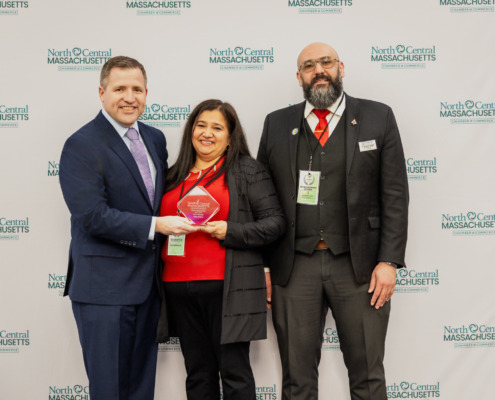

Chamber members are provided with the opportunity to engage with the Mayors of Fitchburg, Gardner, and Leominster who provide updates on projects and other things happening in their Cities. These events are by invitation only, please contact Travis Condon for more details.
View
Event
Bull Run Restaurant215 Great Rd. Shirly, MA
View
Event
Join us for our last Connect North Central of the year!
Friday, December 11, 2026
8am-9am
View
Event
January 14, 20277:15am - 9:00am
View
Event
Erin Logan | NBC 10 Reporter
View
Event
Chamber members are provided with the opportunity to engage with the Mayors of Fitchburg, Gardner, and Leominster who provide updates on projects and other things happening in their Cities. These events are by invitation only, please contact Travis Condon for more details.
View
Event
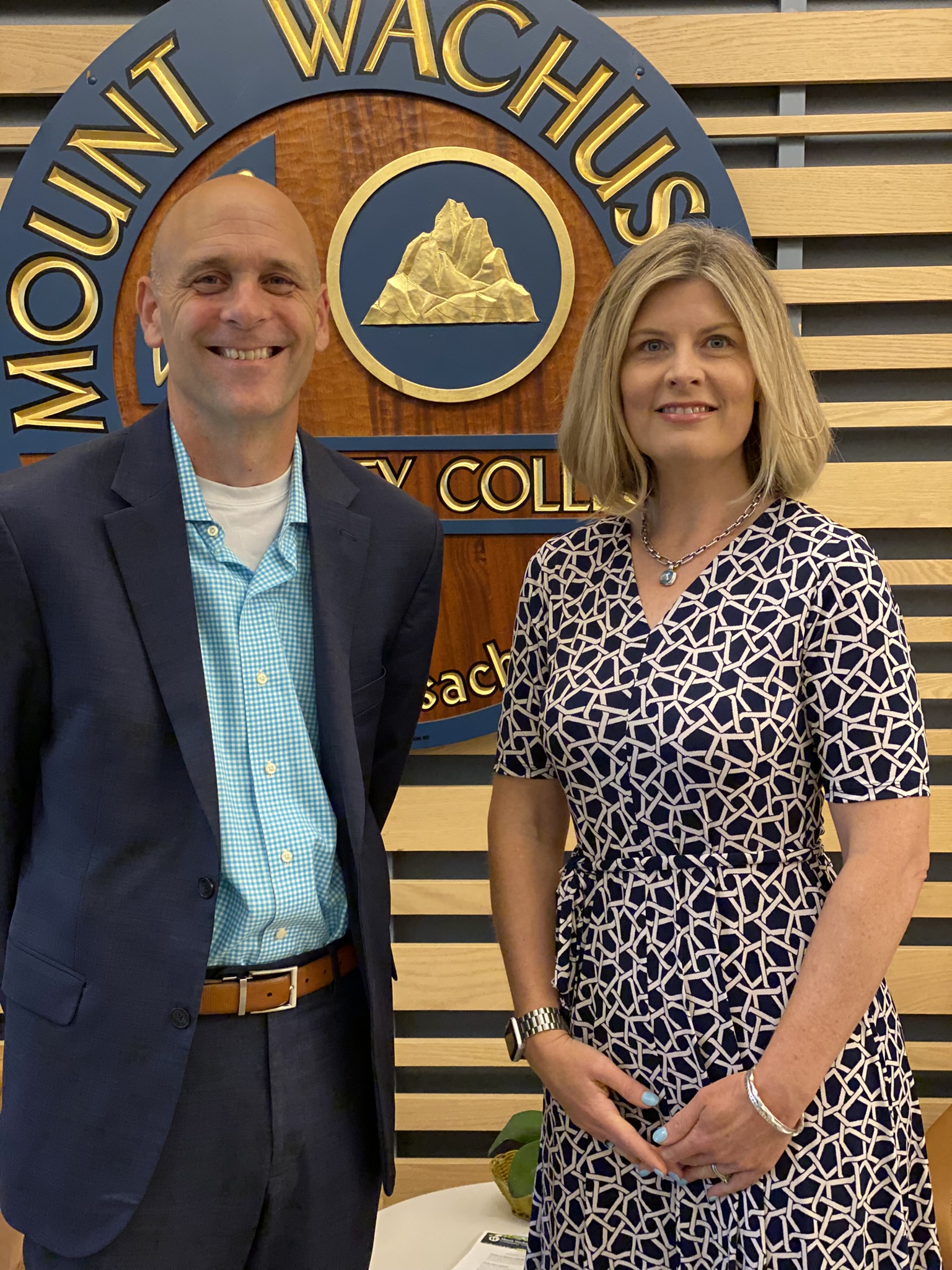
“I am excited to welcome Tricia to the Board,” noted MWCC President James Vander Hooven. “I have worked closely with her over the last few years. She has been a committed liaison between her organization and our medical and health-related programs.”
Pistone joined UMass Memorial Health – Health Alliance – Clinton Hospital in April 2021, after a fourteen-year career in leadership roles at Making Opportunity Count, Inc. (MOC) in Fitchburg. Her history with MWCC dates to her time as Economic Development Director for Congressman John Olver, who was integral in sustaining grant funding for the construction of the colleges’ wind turbines.
“I am honored to join MWCC’s Board of Trustees,” stated Pistone. “I have had the privilege to work with MWCC in various capacities throughout my career and have always held the college in the highest regard as both an institution for higher education institution as well as an anchor organization in our region. I look forward to working closely with the Administration and Board of Trustees to continue that strong legacy into the future.”
“Ms. Pistone has been a great supporter of the college through her career, and it is a pleasure to have her with us,” stated Chairman of the Board of Trustees Robert Antonioni.
In addition to Chairman Antonioni, Pistone joins MWCC alumna Irene Hernandez Guzman, Leominster City Councilor Clair M. Freda, Weston Public Schools Director of Health Services Jamy Gaynor, Professor Emerita, Western New England University, Denise Kindschi Gosselin, CEO of GAAMHA, Inc. Tracy L. Hutchinson, President and CEO of Workers Credit Union Douglas Petersen, ACT, Inc. President Kenneth Tomasetti, and student trustee Cody Nathanson.
Mount Wachusett Community College, in collaboration with the Massachusetts Army National Guard, is launching a bridge program for eligible service members and veterans to earn and maintain their National Registry of Emergency Medical Technician (NREMT) certification.
The program enables US Army Combat Medics to earn credit for their military training and experience, smoothing the transition to the civilian workforce while enhancing career opportunities for Reserve Component members.
“It gives us tremendous pride to offer this program to our service members,” stated MWCC President James Vander Hooven. “The Mount is a leader in both veteran services and preparing first responders and healthcare professionals, and this program is a natural fit for our college and community.
“The gap between military training and college education can sometimes be enormous. That’s probably why there are so few programs like this,” notes Robert Mayer, Director of Veteran Services at MWCC. “I’m thrilled that a way of bridging that gap has been worked out here at MWCC. I am optimistic that this could be a first step in narrowing that gap for many in our transitioning military population.”
Military medic to paramedic programs were first established in 2017 in Michigan. MWCC is one of only a handful of higher education institutions to offer this bridge program. The MWCC Paramedic Technology program was launched in 2018 and has since seen a 100% employment rate for graduates.
Workers Credit Union donated more than $400,000 to 175 charitable organizations in 2021. This year they are launching a new program called “Workers Kindness,” which gives its members a voice in how some of that money is allocated each quarter. “There is no one better to determine where we should donate than our members living in the communities we serve,” says Workers Credit Union President and CEO Doug Petersen. “This program ensures our giving is aligned with the causes that are important to them.”
Under the Workers Kindness program, each quarter members receive a voting call to action via email, online/mobile banking, and web alerts. By clicking on the survey link, members can “vote their kindness” from a slate of pre-selected charities and nominate organizations for inclusion on future ballots. Early reaction to the program has been strong with thousands of members responding. Donations will be made to the organizations that are proportional to the support they receive from members.
This program reflects Workers Credit Union’s overall commitment to charitable giving and improving the lives of both its members and their communities. Workers Credit Union staff devoted more than 2,000 hours to volunteering in 2021. The credit union also returned $2.2 million to its members through its Workers GiveBack program, now in its ninth year and having returned more than $25 million to members.

When the workday ends and the lights go down, Custom Cleaning Service of Peabody, Inc. gets to work. “We operate as our clients’ silent partner after business hours,” says Adam Paicos, of Templeton, who now serves as Director of Operations and oversees the company’s expansion into North Central MA. “We are not often seen, but we ensure facilities are clean, secure, and ready for business each day while serving as the eyes and ears for our clients when they are not on site.”

Discover local business stories through our Inside North Central Massachusetts Podcast series. Listen as Chamber members share their journeys, insights, and contributions to our thriving regional business community.

Looking for your next opportunity? Explore current job openings from employers across North Central Massachusetts on our Jobs Board. Whether you’re starting a new career or making a change, you’ll find a variety of local positions available to help you take the next step.
CapEx Facility Services & Construction · Leominster, MA
TaraVista Behavioral Health Center · Harvard, MA
DRS Power Technology, Inc. · Fitchburg, MA
AIS · Leominster, MA