Noticias y Eventos
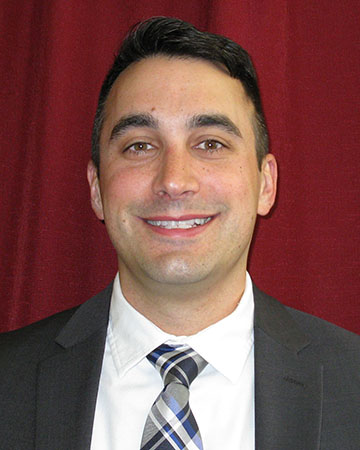
LCU Announces Promotion

Baker-Polito Administration announced a total of approximately $2.1 million in awards to nine eligible entities across the Commonwealth to fund 38 projects that seek to strengthen the state’s economy on a regional basis through support for existing small businesses, business growth, and efforts to increase economic activity in local downtowns and main streets. The Regional Economic Development Organization grant program was established in partnership with the Legislature and is administered by the Massachusetts Office of Business Development. The program provides competitive grants that are awarded to applicants based on the ability to successfully support businesses through proposals that account for the varying regional needs of the Commonwealth’s economy. This round builds on a prior round of REDO awards which resulted in an additional $3 million to 11 regional economic development organizations to sustain ongoing efforts to foster economic activity at regional levels, and to support 29 additional projects in support of economic development priorities. “With the REDO program, our Administration can continue supporting efforts that help drive economic growth based on the needs of each, individual region of the Commonwealth,” said Governor Charlie Baker. “By strengthening the businesses we have now, and by working to attract new businesses to our downtowns and main streets, we can ensure that each region benefits from the increase in economic activity created through the support of this program.” “By helping regional economic organizations execute on solutions that best address the individual needs and challenges of each of the state’s regions, we can accelerate our progress toward economic recovery,” said Lt. Governor Karyn Polito. “I want to congratulate the recipients in this round of REDO awards and I look forward to their efforts to help leverage the unique assets that exist in all corners of Massachusetts to help our business community continue to grow and thrive.” REDO grant recipients’ efforts will focus on a range of initiatives including: an assessment of competitive strengths, weaknesses and opportunities; representing the regional business community in long-range workforce planning efforts to ensure robust skills and talent pipelines that meet regional needs; representing the regional business community in collaborative, long-range workforce skills, transportation and land use planning; promoting regionally significant industry clusters; promoting connections across sectors of the regional economy; maintaining an inventory of key development parcels; marketing their respective regions; and providing assistance to businesses and industrial prospects which may locate in the region. “The REDO program has been critical to our recovery by providing necessary resources to allow economic development entities to create regionally-tailored economic development initiatives that meet their respective needs,” said Housing and Economic Development Secretary Mike Kennealy. “In addition, REDO’s flexibility allows us to take a targeted approach to supporting our small businesses, which helps ensure our economic recovery is evenly distributed and statewide.” Examples of eligible grants include non-construction façade improvement and investments in signage and aesthetic improvements, continuation of pop-up businesses, projects similar to the Shared Street and Spaces Program that support enhanced foot traffic and local commerce, and main street recovery projects with high local impact for small businesses.The full list of grant recipients can be found here.
Servicio de Noticias de la Cámara de Representantes
Colin A. Young
So many people are fighting for the precious few homes for sale in Massachusetts that the intense competition in April propelled the median sale prices of both single-family houses and condos to new record heights, real estate market watchers at The Warren Group said Tuesday.
“The median single-family home price of $560,000 marked a new all-time high for Massachusetts,” Tim Warren, CEO of The Warren Group, said. “Under normal conditions, this would be a reason to celebrate, but only if you currently own a home and you’re looking to sell and don’t need to buy a new home. With such limited inventory — not only across Massachusetts, but also across the country — finding that next place to live will prove to be challenging.”
There were 3,862 single-family home sales in Massachusetts last month, a 14.8 percent drop from April 2021. The median sale price increased 9.8 percent from the $510,000 mark established in April 2021 to its new all-time high, the Warren Group said.
April sales were about equal to sales in April 2020, at the very beginning of the pandemic, but the median price since then has soared 30 percent from $430,000 to $560,000, The Warren Group said.
The 13,580 single-family home sales in Massachusetts so far this year represent an 11.1 percent decline compared to the first four months of 2021 and the year-to-date median sale price of $510,000 is up 9.7 percent from the same period in 2021 and up 26.9 percent from the same period in 2020.
Potential buyers in search of a condo did not fare much better last month. The 2,149 condo sales in April 2022 marked a 15.2 percent decrease from April 2021. Meanwhile, the median sale price “took off like a rocket in April,” Warren said, shooting up 11.6 percent on a year-over-year basis to $530,000.
“As the spring and summer housing markets continue to heat up, it will be interesting to see where prices go from here,” he said.
Among Massachusetts’ 14 counties, Nantucket leads the way with an April median sale price of $1.627 million and was the only county to post a drop in median price from last April (down about 20 percent from last year’s mark of $2.025 million). There have only been 40 homes sold on Nantucket so far this year (with a median price of $2.223 million) compared to the 70 sold at this point last year.
Martha’s Vineyard is close behind as Dukes County last month reported a median sale price of $1.325 million, up almost 33 percent from $1 million last April. Like Nantucket, year-to-date sales on the Vineyard are down markedly — there have been 61 homes sold in Dukes County this year ($1.1 million median price) compared to 109 at this point last year.
Plymouth County most closely mirrors the statewide picture. April sales there dropped more sharply from April 2021 than the average (down 21 percent versus the statewide average of down 15 percent) but the median price in Plymouth County ($530,000) was closest to the statewide number of $560,000 and Plymouth’s 12.5 percent growth was similar to the statewide 9.8 percent figure.
Only two counties — Hampshire and Franklin — saw sales increase from April 2021 to April 2022 and only Hampshire County is ahead of its 2021 pace four months into 2022 (though Franklin County is within a handful of sales of its 2021 mark).
“Meanwhile, as interest rates continue to increase, buyers will continue to expand their searches to more rural communities — adding even more competition in markets that have historically been more affordable,” Warren said.
Oak Hill Country Club just recently celebrated their 100ta anniversary. Back in 1921, the country club’s initial 9-hole golf course, designed by Wayne Stiles. Oak Hill expanded to an 18-hole course designed by Donald Ross in 1925, with additions such a pool area, dining facility, tennis court, and clubhouse shortly after.
According to their website, Oak Hill has been a prominent site for local and regional championships. Beginning with the 1935 Massachusetts Open – won by Gene Sarazen – Oak Hill has hosted 15 Massachusetts Golf championships, three New England Amateurs, three New England PGA championships, the 1966 Tri-State matches, and countless Mass Golf and USGA qualifying events. Local golf officials consider Oak Hill to be one of the state’s best competitive venues, a recognition that has resulted in the club being awarded a 7th Massachusetts Open Championship in its Centennial Year of 2021.
Nature, over time, has since then taken its toll on the original course design, and Audra Kirtland, Marketing Communication and Membership Director, and Jeremy Jarvis, General Manager, look to bright horizons with strategic planning to bring the course back to its original design and history.
“What sets us apart is the history of the Country Club in North Central Massachusetts,” said Kirtland. “We are just east of route 495, and we are very proud of the legacy and conditions that we have posted, including seven pro-amateurs and our exclusive Oak Hill memberships.”
Jarvis chimed in, including various plans to go back to the original Ross design. “We plan on upgrading and revisiting the original designs, as they changed over the years, including the topography of the course,” he said. “A lot of thought and strategic planning goes into the design to make up the 18 holes. The landscape itself changes over the century; bunkers need to be redone every ten or so years. There are a lot of different elements that go into it.”
In addition to updating and revamping the original course design, Oak Hill looks to expand on memberships, providing new opportunities for everyone that discovers this hidden gem.
Their website states that Oak Hill members come from a wide variety of business backgrounds and professions that coalesce into a diverse group that all have one thing in common – they love this club. “We truly believe that there is no other membership like that of Oak Hill.”
Oak Hill Country Club provides Family Golf membership, House membership, and Individual Golf packages for anyone interested in joining the private country club. All memberships include exclusive access to the clubhouse, practice facilities, tennis courts, and swimming pool area.
“Being in the location that we are [in Fitchburg, MA], we see all walks of life come through our doors: from blue collar to white collar, the small business owner, a roofing company… you name it!” Kirtland said.
Currently, Oak Hill Country Club has just under 400 memberships, and over 1,000 members.
“A unique aspect of the country club is that we are very family-oriented. We have a lot of generational families, which you don’t really see any more at country clubs,” Kirtland said.
In addition to the avid golfers and non-competitive folks, Oak Hill sets the scene for weddings and functions that are member-sponsored. The newly renovated Garden Room and customized wedding packages offer a unique compliment to your special day. The Garden Room is the perfect location and venue for large functions including birthdays, holiday parties, and other events. While the 1921 Room “offers a quaint and intimate space” for smaller gatherings or corporate functions.
“Here at Oak Hill, we strive to ensure competitiveness, fun, or a successful themed event. We do a lot to make sure that the reason they come is to have a good time at Oak Hill,” Jarvis stated.
“The relationships that we form with the different local businesses through the North Central Massachusetts Chamber of Commerce are incredibly beneficial; you get to know people and we love to share our facility with these different groups, knowing who we are and taking their business here for small events or dinner parties as well,” Kirtland said.
A naturally social distant activity, the championship golf course and memberships at Oak Hill Country Club are unlike any other. Rich with Massachusetts history, Oak Hill looks to set forth their strategic plan while revisiting and honoring their roots.
Oak Hill Country Club is located at 840 Oak Hill Road, Fitchburg, MA 01420 and the Clubhouse can be contacted via their website or by calling 978-342-2717. You can learn more about them on their website www.oakhillcc.org, or follow them on Facebook, Instagram, or Twitter.
Servicio de Noticias de la Cámara de Representantes
Michael P. Norton
Business surveys in Massachusetts are delivering mixed reviews this week.
Associated Industries of Massachusetts reported Monday that employers grew more confident in April despite high inflation and the economic contraction in the first quarter. The trade group’s business confidence index posted its third straight monthly gain, rising to 58.1 on a 100-point scale.
“Massachusetts companies remain optimistic about the sustainability of the economic expansion even amid tightening financial conditions and uncertainties related to COVID-19 and the war in Ukraine,” Sara Johnson, chair of the AIM Board of Economic Advisors, said in a statement.
Johnson said every element of the business confidence index was in optimistic territory in April, and the highest reading was recorded for employers’ views about the prospects of their own companies.
AIM analysts said Bay State businesses continue to be hampered by supply chain constraints and attributed prices increases and material shortages locally at least in part to COVID lockdowns in China and Russian’s invasion of Ukraine.
“Companies are being forced to use every bit of creativity they can muster to secure the supply of raw materials and get their products into key markets,” said AIM President John Regan.
The view from small businesses nationwide, as reported Tuesday by the National Federation of Independent Businesses, is markedly different.
The NFIB Small Business Optimism Index, which samples sentiments of NFIB members monthly, was unchanged in April, and the number of small business owners expecting better business conditions over the next six months decreased to the lowest level recorded in the 48-year-old survey.
NFIB Massachusetts chief Chris Carlozzi said the small business outlook in Massachusetts is “very similar” to the outlook nationally. Small businesses, he said, continue to struggle to fill open positions and are spending more for labor and materials, which leads to higher prices.
“All across the board you’re hearing these struggles continue,” Carlozzi told the News Service on Wednesday.
While some larger employers barreled through the pandemic by switching to remote work, Carlozzi said NFIB members in the retail, hospitality and services sectors were among those that were shut down completely during the pandemic and have struggled since to bring back workers. Many smaller businesses don’t have the same purchasing power as their larger counterparts, he said, and some have been forced to pivot to entirely new models of operation.
Carlozzi urged lawmakers to adopt unemployment insurance policies that would provide more relief to small businesses, avoid new “labor mandates,” and pass estate tax reforms that he said would make Massachusetts more competitive with other states. Gas tax relief, he said, would also help businesses that need to deliver their products and can’t escape record-high inflation and gas prices. Massachusetts lawmakers have so far rejected gas tax suspension plans.
The U.S. Bureau of Labor Statistics on Wednesday reported that inflation remains at extremely elevated levels, increasing 8.3 percent for the 12 months ending April, compared to the 8.5 percent increase for the 12-month period ending in March.
As he unveiled a $49.7 billion fiscal 2023 budget bill on Tuesday, Senate budget chief Michael Rodrigues flagged supply chains problems, the situation in Ukraine and “mounting inflation” as among the factors contributing to “increasing economic anxiety, turbulence and uncertainty at home.”
But Rodrigues said Massachusetts has shown “economic resilience” and described a state ready to meet future needs due to in part to the work of its taxpayers, who have helped post record budget surpluses and build the state’s rainy day fund to $4.6 billion, with a $6.7 billion balance in the forecast.
On Wednesday, HarborOne Bank released recent survey results indicating 91 percent of consumers in the bank’s footprint of eastern Massachusetts and Rhode Island believe their communities “should be doing more to support small businesses” and their recovery from pandemic impacts.
HarborOne Bank President and Chief Operating Officer Joseph Casey characterized the results as “encouraging news” for local small businesses.
“There is no question that people in Eastern Massachusetts and Rhode Island are eager to patronize local merchants, restaurants, and service providers as more in-person spending resumes and strengthens,” Casey said.
Of all respondents surveyed by Seven Letter Insight, 86 percent described the local economy where they live to be at least “fair” and 54 percent said they have “resumed shopping, dining and purchasing with the same volume that (they) did before the pandemic,” with another 32 percent planning to do so.
El bank’s consumer perceptions poll, completed at the end of March, surveyed 452 respondents across six income categories. The poll also found 60 percent of respondents believe the pandemic is probably or definitely not over.
The Baker-Polito Administration released its Fiscal Year 2023 (FY23) Capital Investment Plan, which provides $2.78 billion in state bond cap spending in FY23 to support investments in transportation, economic development, climate resiliency, housing, education, technology and health and human services.
The plan reflects a balanced and fiscally responsible approach to long-term planning, with funding dedicated to the care and maintenance of the Commonwealth’s existing assets as well as targeted new investments that will support Massachusetts’ economic development and growth in the wake of the COVID-19 pandemic.
In addition to outlining state bond cap allocations for FY23, the plan charts a pathway for capital investment across the next five years, providing a blueprint for a total of $13.9 billion in FY23–FY27 bond cap spending that leverages the unprecedented amount of federal funding the Commonwealth will benefit from in the coming years.
“The capital budget is an important vehicle for enabling long-term economic growth and improving the way state government serves its constituents, and our FY23-FY27 plan supports infrastructure initiatives that will benefit residents in every corner of the Commonwealth,” said Governor Charlie Baker. “We are proud to release our eighth Capital Investment Plan today, and we look forward to the lasting positive impacts it will drive in the coming years.”
“Our Administration’s capital plan invests in critical initiatives across the state and continues to provide local communities with resources that will enable them to better serve their residents,” said Lieutenant Governor Karyn Polito. “With substantial funding for housing, education, climate change mitigation, technology infrastructure, public safety and more, this plan will make Massachusetts a better place to live, learn and work.”
Governor Baker and Lieutenant Governor Polito joined Administration and Finance Secretary Michael J. Heffernan today at the Quincy courthouse to release the capital plan. The plan provides $3.5 million in FY23 and budgets for $52.9 million over the next five years to continue efforts to replace the courthouse with a new Norfolk County regional justice center that consolidates court departments.
“The Baker-Polito Administration’s FY23–FY27 capital plan continues to be grounded in fiscal discipline and thoughtfully leverages available resources to maximize the impact of our capital spending,” said Secretary of Administration and Finance Michael J. Heffernan. “The plan carefully balances the maintenance of existing state assets and investments in new infrastructure– a responsible approach that will drive growth and deliver outsized benefits to the people of Massachusetts over many years.”
The capital plan continues the Administration’s approach to strategically using available funding sources. Along with funding to support the implementation of major transportation and environmental program expansions enabled by the Bipartisan Infrastructure Law (BIL) over FY23–FY27, the plan provides more than $700 million in state matching funds to allow Massachusetts to access opportunities for significant additional federal funds that support highways and bridges, municipal water infrastructure and electric vehicles infrastructure.
The FY23-FY27 plan continues efforts to strengthen and revitalize Massachusetts communities. It builds on the last seven years of capital investment as well as significant state and federal support over the last two years in response to the COVID-19 pandemic, which has included over $2.4 billion in total from the CARES Act Coronavirus Relief Fund and $2.9 billion in allocated state aid from the American Rescue Plan Act (ARPA). ARPA also provided $3.4 billion in direct aid for municipalities, $2.6 billion for housing and economic development initiatives, $1.1 billion for transit, $315 million in child care stabilization funding, and $200 million in Child Care Development and Block grant funding.
Continuing efforts to protect the Commonwealth’s natural environment, the capital plan supports investments in climate resiliency measures, food security and public outdoor spaces. It also provides substantial new funding for building infrastructure projects across the higher education system, and maintains investments for information technology and cybersecurity upgrades, public safety and health and human services.
The FY23 capital plan’s $2.78 billion bond cap represents a responsible $125 million (4.7%) increase over FY22, which is in line with the recommendations of the Debt Affordability Committee.
The five-year plan will be supported by authorization the Administration has filed for across several bond bills, including the General Government Bond Bill, the MassTRAC infrastructure bond bill and the FORWARD legislation. The majority of spending in FY23 is covered by existing authorizations.
To view the FY23–FY27 Capital Investment Plan, visit: www.mass.gov/capital.
FY23 Capital Plan Highlights:
Transporte
The combined MassDOT and MBTA capital plan is funded from a variety of state and non-state sources. $1.1 billion of FY23 spending is supported by state bond cap.
Division of Capital Asset Management and Maintenance (DCAMM)
Economic Development
Housing
Energy and Environmental Affairs
Public Safety
Technology and Cybersecurity
Education
To view the full FY23 Capital Plan, please click here.
The year 2021 was an historic year for Fidelity Bank as annual results exceeded expectations including strong growth in commercial loans and deposits. The bank remained focused on its LifeDesign Banking approach of helping clients get where they want to be by providing the clarity, confidence, and care needed to make informed decisions about their financial future. Fidelity Bank shared its 2021 financial data and community growth at the Fidelity Bank Mutual Holding Company annual meeting on April 19.
The community bank, with headquarters in Leominster and 13 full-service offices, grew by 9.8 percent reaching total assets of $1.2 billion as of December 31, 2021, which is up from $1.1 billion as of December 31, 2020.
“As we recognize the strongest year in our 133-year history, we are grateful to those who have trusted us to guide them toward financial success,” said Ed Manzi, Chairman and CEO, Fidelity Bank. “Our results are a true testament to the commitment of our colleagues who provide service with care and develop innovative products to respond to the evolving needs of our clients.”
Highlights of Fidelity Bank’s Community Growth include:
Bank officials also announced the election of six new corporators of Fidelity Mutual Holding Company.
They are Melane Bisbas, Winfield Brown, Jody Guetter, Michael O’Neal, Roseanne Timmerman, and Jonathan Vitale, who will all serve a ten-year term. Matthew Campobasso, Janet Chambers, John Flick and Ronald J. (Joe) Salois were re-elected to serve a ten-year term as corporators of Fidelity Mutual Holding Company. Sheila Harrity, Scott Howard, and Mark Puccio resigned as corporators. Winfield Brown and Mary Ritter were elected to serve a one-year term as directors of Fidelity Mutual Holding Company. Brian Cirelli, Patricia Leonhardt and Ronald Marchetti were re-elected as directors of Fidelity Mutual Holding Company for a three-year term, and Maureen Marshall was re-elected as a director of Fidelity Mutual Holding Company for a one-year term. Alvin Collins was elected to Clerk of Fidelity Mutual Holding Company for a one-year term, and Judy Khallady was elected to Assistant Clerk of Fidelity Mutual Holding Company for one-year term.
Treating people with care and respect has always been a guiding principle at Fidelity Bank. Expanding on last year’s creation of the Fidelity Bank Inclusion and Diversity Advisory Board, the bank developed inclusion and diversity targets for client acquisition and colleague hiring and created a Vendor Management Policy to ensure inclusion and diversity among companies with whom the bank does business.
In 2021, Fidelity Bank continued to support the communities through its Community Dividend Program by supporting more than 220 causes totaling more than $400,000. Organizations receiving contributions in 2021 included Indian Hill Music of Littleton (soon to be Groton Hill Music Center when the organization opens its new home in Groton) to support outreach programs and provide scholarships for students at public schools across Fidelity Bank’s service area as well as Entrepreneurship for All, Inc., Black Box Theatre, Heywood Healthcare, Reliant Foundation, WooSox Foundation, March of Dimes Foundation, Needham Community Council, NewVue Communities, Inc., The Shine Initiative and the Worcester County Food Bank to name a few, as well as several causes promoted through Fidelity Bank’s weekly Caring Casual Fridays. Fidelity Bank has given out approximately $2.75 million since the program was renamed in 2013.
Click here to view Fidelity Bank’s 2021 Annual Report.
El Cámara de Comercio del Norte Central de Massachusetts today announced the recipients of the annual Chamber Foundation of the North Central Massachusetts Chamber of Commerce scholarship program which recognizes the region’s most outstanding high school seniors. The awardees will be acknowledged during the Chamber’s Annual Scholar’s Breakfast, scheduled for Friday, May 13 from 6:45 to 8:45 a.m. at Great Wolf Lodge, 150 Great Wolf Drive, Fitchburg. This popular breakfast program is a celebration of student achievements and includes a strong turnout among students, parents, business and community leaders.
Proceeds from the breakfast program will benefit the Chamber Foundation and help support Chamber scholarships in future years. Maria Milagros will serve as the Master of Ceremonies and keynote speaker for the Scholars Breakfast. Maria Milagros (Vazquez) is an award-winning speaker, award nominated author, TEDx speaker, storyteller and empowerment life coach.
For the Class of 2022, a total of $52,000 in scholarships are being awarded this year from either endowments or funds provided by local companies and individuals. The Scholarship Committee selected the recipients from among college-bound seniors who live in one of the 27 communities served by the North Central Massachusetts Chamber of Commerce based on a student’s overall merit, including academics, sports, volunteer work and employment.
Twenty-six scholarships of $2,000 will be provided to the following seniors during the Scholar’s Breakfast:
Isabella Allen
Oakmont Regional High School
Awarded: Benjamin Asher Scholarship
Bruna Biz
Fitchburg High School
Awarded: Chamber Foundation Scholarship
Lilly Comeau
Gardner High School
Awarded: Chamber Foundation Scholarship
Taya Corn
North Middlesex Regional High School
Awarded: Ronald Ansin Scholarship
Elsa Cranson
Wachusett Regional High School
Awarded: HealthAlliance Hospital Guild Scholarship
Carolyn Darman
Nashoba Valley Regional High School
Awarded: UMass Memorial HealthAlliance – Clinton Hospital, Inc. Scholarship
Shea Divoll
Montachusett Regional Vocational Technical High School
Awarded: George R. Wallace, Jr. and Alice G. Wallace Scholarship
Peter Epro
Leominster Center for Excellence
Awarded: Elizabeth and Anthony DiGeronimo Family Scholarship
Felicia Jamba
The Bromfield School
Awarded: Adams Family Scholarship
Emma Kenney
Groton-Dunstable Regional High School
Awarded: Salny Family Scholarship
Molly Kimball
Lunenburg High School
Awarded: Chamber Foundation Scholarship
Abigail Kirrane
Montachusett Regional Vocational Technical High School
Awarded: David L. McKeehan Scholarship
Mackenzie Kupfer
Fitchburg High School
Awarded: Leominster Credit Union Scholarship
Olivia Latino
Leominster Center for Technical Education Innovation
Awarded: UMass Memorial HealthAlliance – Clinton Hospital, Inc. Scholarship
Dominic Motoya
Leominster High School
Awarded: Edward J. Healey Scholarship
Adam Mullaney
Leominster High School
Awarded: Enterprise Bank and Trust Scholarship
Callie Nelson
Leominster High School
Awarded: M. Ruth Lee Scholarship
Caroline Oswitt
Wachusett Regional High School
Awarded: Patricia S. Alario Scholarship
Fiona Picone
Oakmont Regional High School
Awarded: Roderick W. & Donna M. Lewin Scholarship
Alisha Praileau
North Middlesex Regional High School
Awarded: Elizabeth and Anthony DiGeronimo Family Scholarship
Madeline Prechtl
Groton-Dunstable Regional High School
Awarded: Barbara Silva Scholarship
Ekaterina Rau
Saint Bernard’s Central Catholic High School
Awarded: M. Ruth Lee Scholarship
Margot Sonia
Nashoba Regional High School
Awarded: UMass Memorial HealthAlliance – Clinton Hospital, Inc. Scholarship
Nora Swaine
Leominster High School
Awarded: Rollstone Bank & Trust Scholarship
Sophie Thompson
The Bromfield School
Awarded: Chamber Foundation Scholarship
Sydney VanGilder
North Middlesex Regional High School
Awarded: Workers Credit Union Scholarship
Since the establishment of its scholarship program, the Chamber Foundation of the North Central Massachusetts Chamber of Commerce has awarded more than a million dollars in scholarships to more than 625 students. Many of these awards are made possible through contributions from members of the North Central Massachusetts Chamber of Commerce, with scholarships endowed through the Chamber Foundation often named in honor of prominent members of the North Central Massachusetts business community whose philanthropy and commitment to the community have helped shape the region.
“The North Central region is exceptional in its generosity, investment and commitment to supporting its future leaders,” said Roy M. Nascimento, President & CEO of the North Central Massachusetts Chamber of Commerce. “These scholarships are one way we can recognize local students as they continue their education through the support of organizations and individuals who help make these scholarships possible for our graduating seniors.”
The Chamber wishes to thank our Scholar’s Breakfast Premier Sponsor TD Bank; our Partner Sponsors Franklin Professionals Associates and Great Wolf Lodge; our Supporting Sponsors AIS, Inc., GFA Federal Credit Union, IC Federal Credit Union, Leominster Credit Union, Steel-Fab Inc., and Workers Credit Union; and our Gift Sponsor Fitchburg State University as well as the many Chamber members who contributed towards the scholarships.
The Chamber Foundation is a 501 (c) 3 non-profit organization focused on assisting in the betterment of the region through charitable activities. Funds raised by the Chamber Foundation are utilized primarily for education and workforce development initiatives and charitable activities in North Central Massachusetts.
To register for the Chamber’s Annual Scholars Breakfast, please contact the Chamber at 978.353.7600 ext. 222 or ext. 235 or email or register online at northcentralmass.com. The cost is just $27 for Chamber members/$42 for non-members and includes a breakfast buffet. Pre-registration is required. Supporting sponsorships and tables of ten are also available. Proceeds from the breakfast program will benefit the Chamber Foundation
For more information on the Chamber Foundation of the North Central Massachusetts Chamber of Commerce scholarship program or to view a list of the named scholarships, please visit northcentralmass.com or call 978.353.7600, ext. 222.
Fontaine Bros. Inc., a construction management and general contracting firm serving the public and private sectors since 1933, today announced the appointment of Sherri G. Pitcher to Senior Director of Marketing and Business Development. In this role, she will be responsible for leading and executing key marketing initiatives as well as supporting and enhancing new business development.
With more than 30 years of experience in marketing and business development, Pitcher comes to Fontaine Bros. from Fidelity Bank where she served as Senior Vice President, Senior LifeDesign Officer. Prior to Fidelity Bank, Pitcher served as Senior Director of Business Development for the Worcester Regional Chamber of Commerce.
“Sherri brings a unique perspective to Fontaine Bros as we continue to expand our business and elevate our profile in and outside of central Massachusetts,” said Dave Fontaine, Jr., Vice President, Fontaine Bros. “Her excellent communication and interpersonal skills, as well as her marketing acumen, will help Fontaine Bros. continue to elevate our brand and strengthen key relationships in both our core markets and growing niches”
A resident of Worcester, Pitcher is an active member of the community and has served on numerous boards and committees over the years. She currently serves as Board Chair at the EcoTarium, Co-Chair of Worcester Homecoming 2022, a board member at the Juniper Outreach Foundation, a member of the MassHire State Workforce Board for the Commonwealth of Massachusetts and Co-Chair of the United Way Women’s Initiative Marketing-Membership Committee. She previously held various volunteer roles at Family Services of Central Massachusetts, Worcester Educational Collaborative, Worcester Garden Club and Worcester Art Museum. She is also a six-time marathon finisher, having completed the Boston Marathon twice.
She earned a Bachelor of Arts degree at Fairfield University.
In a recent poll conducted by the Kaiser Family Foundation (KFF), LGBTQ+ people reported different, and in some cases more challenging, experiences accessing care than their non-LGBTQ+ peers. They were more likely to report that a provider did not believe they were telling the truth, suggested they were personally to blame for health problems, assumed something about them without asking, and/or dismissed their concerns. Over 36% of LGBTQ+ people reported at least one of these experiences with a provider, compared to fewer than one in five (22%) in their non-LGBTQ+ peers.
The National League of Nursing (NLN) seeks to address these issues through the development of instructional resources with the goal of equipping nurse educators with the tools necessary to teach care of LGBTQ+ people and help them graduate a new nursing workforce that is both knowledgeable and culturally competent to meet the needs of LGBTQ+ individuals and decrease the health disparities they experience.
Mount Wachusett Community College was selected by the NLN to run a pilot simulation program to aid in the development of these instructional resources. A significant component of this pilot program is that the scenarios are based on caring for an LGBTQ+ individual. The Mount was fortunate to have volunteers from the community to serve as patient actors for these simulations.
Collene Thaxton, Faculty Chair of the Practical Nursing program, facilitated the simulated patient encounter with students and volunteer patient, River Luck, a group therapist who identifies as trans-masculine non-binary.
“Often individuals who are trans or transitioning avoid seeking health care due to the scrutiny they receive with regards to their chosen identity and what their legal documentation lists,” notes Professor Thaxon. “The goal of these trainings is to teach our students to be affirming and accepting as they provide care. These skills will help in overcoming the patient’s reluctance in obtaining healthcare, ultimately leading to outcomes.”
The NLN simulations moved through three scenarios with the patient, Jayla, who is in transition and non-binary. The classroom is a simulated hospital room equipped with cameras and microphones connected to a nearby observation room where Thaxon and other faculty members can identify areas for improvement for both the students and the program. Following each scenario session, the students debrief with Thaxon and can ask questions to assess their performance.
In the first, the patient is presenting in a clinic setting with an injury that is several days old and needs attention. The students obtain the patient medical history and administer a tetanus shot. The student pairs then switch out for the second scenario, which involves the cleaning and dressing of the wound while continuing to learn more about the patient and encourage them to return for follow-up care. Finally, the third scenario is six months in the future, “Jaylen” has returned to the clinic and the nurses discuss continuing care and routine screenings.
For many of the students involved in the simulation, this was their first experience with a live patient, their work previously was conducted on patient simulation mannequins.
“Now is the time to do this, even if you don’t feel entirely comfortable, just do it. It’s how you will become comfortable,” Thaxon told her students. “We are so lucky to have someone like River here to help.”
“Having had negative experience in accessing healthcare myself, I was more than happy to participate in this program,” Luck notes. “These students did a wonderful job making “Jaylen” feel comfortable and accepted.”
“It is so important to not make assumptions about your patients. Encourage sharing by offering your own pronouns,” Luck adds. “Don’t make a big deal about it if you accidentally misgender the patient. Apologize quickly, fix it, and move on. If you get flustered and make it an issue, the patient will feel like it is an issue.”
“These educational resources will help train nurses to treat these patients in accepting and affirming ways, while still ensuring that the medical records of the patient are accurate,” Thaxon adds.
“MWCC is honored to be working with the NLN to help develop these vital instructional resources,” commented Dean of Nursing, Kimberly Shea, DNP, RN. “This is a valuable experience for our students and faculty alike. It is rewarding to know that we are playing a role in the advancement of equity and access to healthcare for LGBTQ+ individuals in our communities and beyond.”
About the National League of NursingThe National League for Nursing is the premier organization for nurse faculty and leaders in nursing education. The NLN offers professional development, networking opportunities, assessment services, nursing research grants, and public policy initiatives to its nearly 45,000 individual and 1,100 institutional members. NLN members represent nursing education programs across the spectrum of higher education, health care organizations, and agencies.
Foundation will formalize and amplify firm’s philanthropic efforts; unique employee directed giving component will broaden impact throughout the region
Fontaine Bros. Inc., a construction management and general contracting firm serving the public and private sectors since 1933, announced it has established a corporate foundation. The Fontaine Community Foundation, led by Fontaine’s Director of Diversity, Inclusion and Community Impact Elizabeth Wambui, is committed to developing partnerships with organizations that help build stronger communities with a mission to contribute to the common good. The Foundation envisions communities that thrive in quality education, have access to affordable healthcare, and have the resources to help young people grow and learn.
“Through the Fontaine Community Foundation, we can further enhance and expand our commitment to supporting the communities where we build and where our colleagues and clients live and work,” said Dave Fontaine, Jr., Vice President, Fontaine Bros.
A unique feature of the Fontaine Community Foundation is that each Fontaine team member will be able to direct a portion of the Foundation’s annual giving to worthy organizations and causes of their choosing.
“By creating and funding an employee directed giving component of the Foundation’s efforts, we are excited to not only connect with a broad range of worthy causes that are personally important to our team members, but also to create and grow the habit of philanthropic giving at every level of our organization” said Elizabeth Wambui, Executive Director of the Fontaine Community Foundation.
This summer, the Foundation will host an inaugural golf tournament at Longmeadow Country Club, 400 Shaker Road in Longmeadow, on August 8, 2022.
Proceeds from the tournament, which includes 18 holes of golf, lunch, and an evening program, will benefit dozens of organizations including the Nativity School of Worcester, the Thomas J. O’Connor Animal Control Center, and many more throughout Massachusetts.
To learn more about the foundation or the golf tournament, please reach out to .
Governor Charlie Baker and Lt. Governor Karyn Polito announced the departure of Energy and Environmental Affairs Secretary Kathleen Theoharides and the appointment of current Undersecretary of Environmental Policy and Climate Resilience Beth Card as the incoming Secretary, effective May 6.
“Secretary Theoharides has been dedicated to making Massachusetts a national leader in climate solutions, including guiding the development of the offshore wind industry. Katie has done a tremendous job leading our administration’s statewide efforts to comprehensively plan for the effects of climate change, and I wish her all the best in the future,” said Governor Charlie Baker. “Beth Card has a deep knowledge of environmental policy and a wealth of experience in leading climate resiliency efforts in state government, and we are glad to appoint her as Secretary.”
“Under Secretary Theoharides’s leadership, we have developed nation-leading programs to help cities and towns across the Commonwealth make climate-resilient investments in their infrastructure,” said Lt. Governor Karyn Polito. “We are so grateful to Katie for her service to the Commonwealth, and welcome Beth into the cabinet.”
“I am deeply grateful to Governor Baker and Lieutenant Governor Polito for trusting me to serve the residents of the Commonwealth and to work with a team of dedicated public servants in our cabinet, at the Executive Office of Energy and Environmental Affairs, and across the Administration. I’m incredibly proud of the work we’ve done together to increase access to the outdoors, invest in our natural resources, and deploy climate change solutions, including the first utility scale offshore wind farm, expand the Municipal Vulnerability Preparedness resiliency program in 95% of the state’s communities, and create new initiatives to cut emissions in our transportation and heating sectors,” said Secretary Theoharides. “I’ve worked closely with Beth Card throughout my time in state service and I respect her leadership qualities and close work with stakeholders, legislators, and local leaders. Much work remains as we seek to fund critical climate, clean water, parks and infrastructure projects, and I’m confident in Beth’s deep expertise in environmental policy, water quality and climate change and in her ability to build and lead strong partnerships to deliver great outcomes.”
“I am grateful to Governor Baker and Lieutenant Governor Polito for the incredible opportunity to serve as Secretary of the Executive Office of Energy and Environmental Affairs. The tireless efforts of Secretary Theoharides have resulted in the creation of critical climate change programs, investment in the Commonwealth’s renewable energy portfolio, and the advancement of the Administration’s decarbonization goals,” said incoming Secretary Card. “As we look ahead to the prospect of investing billions of dollars into our environmental, water and sewer, and port infrastructure for offshore wind deployment, I look forward to working alongside my colleagues and our many partners to continue the important work of our energy and environment programs and set a course for achieving commitments established in the Administration’s climate law.”
Under Secretary Theoharides’s leadership, the Baker-Polito Administration has advanced major climate initiatives and strengthened the resiliency of the Commonwealth’s infrastructure. Key accomplishments include:
About Bethany Card:
In 2021, Beth Card joined the Baker-Polito Administration as Undersecretary of Environmental Policy and Climate Resilience in the Executive Office of Energy and Environmental Affairs. As Undersecretary, Card serves as chief environmental advisor to the Secretary and directs efforts that, in coordination with elected officials and external stakeholders, protect, preserve, and enhance the Commonwealth’s environmental resources while ensuring a clean energy future for the state’s residents. A key focus of this work has been development of approaches to invest in environmental infrastructure under the American Rescue Plan Act and implementation of the Administration’s comprehensive climate change law. During her tenure, the Administration successfully established an approach to investing in the Commonwealth’s water and sewer infrastructure, environmental infrastructure and state parks. Further she and her team have worked on successfully permitting two offshore wind projects in a way that balances the need for renewable energy projects with careful mitigation of fishing industry impacts. Beth has also played a key role in advising on implementation of the environmental justice initiatives in the Commonwealth.
Beth has more than twenty-five years of service in state agencies and quasi-governmental organizations where she has been a leader on environmental policy development and implementation of regulatory programs. Prior to joining the Baker-Polito Administration, Beth served as the Director of Environmental and Regulatory Affairs for the Massachusetts Water Resources Authority (MWRA). During her time at MWRA, Card developed and oversaw the implementation of environmental policies on behalf of the Authority that provides water and sewer services to 3.1 million people and more than 5,500 large industrial users in 61 metropolitan Boston communities. Before joining MWRA, Beth worked at the Massachusetts Department of Environmental Protection (MassDEP) for over six years as both Deputy Commissioner for Policy and Planning and Assistant Commissioner, Bureau of Water Resources. Her portfolio as MassDEP included programs that manage water and air resources as well as waste management. She was instrumental in work related to implementation of the global warming solutions act, the lead in schools initiative, wastewater planning on Cape Cod, and revising water management act requirements.
Card received a B.A. in Political Science with a minor in Environmental Conservation and Business Administration from the University of New Hampshire and a J.D. from the Massachusetts School of Law.
Ms. Card lives in Newburyport, Massachusetts with her husband and young son.