Funding to support purchase of equipment for virtual counseling, additional staff
El Corporación de Desarrollo del Norte Central de Massachusetts (NCMDC), the economic development arm of the North Central Massachusetts Chamber of Commerce, recently approved a $25,000 loan to Connecting to Greatness, located at 15 Monument Square, Suite 100 in Leominster. The loan will fund the purchase of required equipment to effectively provide virtual counseling services to clients, as well as support the hiring of two full-time clinicians in an effort to reach more individuals in need of mental health care.
Founded in 2018 by Kimatra Maxwell, Connecting to Greatness focuses on mental health education and training to help clients confront self-limiting beliefs, realign with what is truly important to them, and learn to trust themselves again. The practice also helps address significant psychological problems and resolve issues that impair one’s ability to function well.
“With this funding, we are able to expand our services to those who are not able to physically come to our facility and also provide additional clinicians so we can help more people,” said Maxwell. “The need for mental health services is significant and with this support from the North Central Massachusetts Development Corporation, we will be able to make an impact in the lives of those who desperately need help.”
Como entidad de microcréditos, NCMDC puede otorgar préstamos a pequeñas empresas de hasta $250,000 para capital de trabajo, bienes inmuebles, equipo, inventario y expansión, además de colaborar con nuestros socios bancarios para proporcionar financiamiento puente para la etapa final de un proyecto.
Para más información sobre los programas de préstamos de NCMDC, llame al 978.353.7607 o visite NorthCentralMass.com o ChooseNorthCentral.com.
STRATEGIC PLANNING: The boards of the Chamber, the North Central Massachusetts Development Corporation and Visit North Central Massachusetts met in the Spring to begin working on the chamber’s next strategic plan. They reviewed the great progress made on our current strategic plan and discussed a variety of topics that are crucial to supporting our members and keeping our region a vibrant place to live, work and visit.We would love to hear from you. What can the Chamber and our affiliate organizations do over the next three years to support your organizations and the communities of North Central Massachusetts? Please send us your ideas and share your successes by emailing.
LAND BANK: The Chamber has commissioned a planning study to help us flesh out the Land Bank concept that was recommended in the One North Central economic development plan.The land bank concept was recommended as a tool to help spur more real estate development in the region.It would provide the region a method to identify and acquire land for economic development, market the property, and sell/lease the land when a prospect is identified.The study will commence this Summer and should be completed by the Fall.
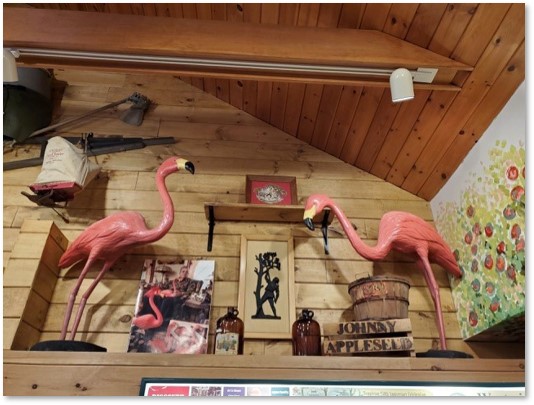
VISITOR CENTER: Our Johnny Appleseed Visitor Center in Lancaster has completed some renovations and upgrades to help improve the experience and better showcase the region to the more than 165,000 visitors that stop there each year.Renovations include new floors, rustic paneling on the walls, new rugs and new office furniture thanks to a generous donation from AIS.Handicap doors, new security cameras, a dog walking station, a water refilling station and new signage were also added.Matching funds to help support the project came from a grant from the Massachusetts Office of Travel and Tourism and from the City of Leominster.
NEW LOANS: The Chamber’s economic development arm – the North Central Massachusetts Development Corporation – has closed 15 micro-loans for a total of $561,500 since October 1, 2021. The loans were made to a mix of existing and start-up businesses and ranged from $6,000 to $150,000. There are another four loans totaling $458,500 that have been approved but have not closed yet.
TECHNICAL ASSISTANCE: During the last quarter, our team provided over 300 hours of direct technical assistance to small businesses. We also hosted several workshops and seminars geared towards supporting small businesses, including a webinar in Spanish on marketing, a workshop on digital marketing and a session on business planning and cost control. We also hosted a special client reception to thank our loan clients and connect them with resource partners.
FAÇADE AND POP-UP SHOP GRANTS: The North Central Massachusetts Development Corporation is partnering with ReImagine North of Main in Fitchburg and the City of Leominster to help fund façade improvements for a number of small businesses in both Cities and a pop-up shop program in Fitchburg. The project is funded through a state grant the development corporation received.
WELCOME SIGNS: The Chamber is sponsoring the construction of welcome signs at key entrances in the Cities of Fitchburg, Gardner and Leominster.The signs are intended to provide a positive first impression to visitors, potential investors and future residents, as well as boost civic pride.The new signs were designed to look like traditional New England style community welcome signs, except they are made of composite for their durability and longevity.Each sign is carved with the city’s seal and painted to match the official colors of the community. We are working with the three cities to identify key gateways for the signs.We have selected Leominster based company Add-A-Sign to design and construct them.
DIGITAL MARKETING: Traffic to our websites is averaging approximately 12,232 unique page views each month for FY2022.This represents a 2.3% increase over the prior year.We continue to be very active on social media, populating our Facebook, Instagram, LinkedIn, and Twitter platforms with our content.Our social media platforms have a combined 21,836 total followers.In CY2021, our social media platforms garnered an average of 217,000 impressions monthly and a total of nearly 2.4 million impressions for the year.That represents a 20% increase over the previous year.
JOBS BOARD: The Chamber continues to promote the WorkNorthCentral.com online jobs board as a resource to connect employers and job seekers in North Central Massachusetts.The jobs board has had over 8,000 jobs posted and more than 76,000 views since being launched. We encourage members to post any employment opportunities they offer on the jobs board or send them to us and we will post them for you.
ENERGY SAVINGS: From its inception in August 2014 through April 2022 the solar field on Pleasant St. has produced 10,960,426 kWh of Net Metering Credits to the manufacturers participating in the program. Total value of these credits is $2,404,344 and the collective savings to participants totals $2,043,692.
WORKFORCE DEVELOPMENT: Developing the pipeline of talent for our members and communities to compete continues to be a priority for the Chamber. As referenced in our last edition of this newsletter, the Chamber has commissioned a workforce study to assess and recommend ways to enhance the labor pool in the region. We are expecting the study to be completed this Summer and hope it will be a resource to help develop strategies to deal with the workforce challenges faced by employers. In addition, we continue to partner with Mount Wachusett Community College and the Spanish American Center on the national Equitable Credentialing Initiative that our region was selected for through the Association of Chamber of Commerce Executives and the American Association of Community Colleges.
Seventeen graduates, who were identified as up-and-coming employees and future leaders in the region, completed the nine-month program focused on education, government, health care, social services, the justice system, media, arts and culture, the environment and history. CLI is dedicated to providing participants with individual leadership skills and a deep understanding of the region.
“The Chamber developed CLIto inspire a new generation of community leaders to enthusiastically assume important roles in their community while motivating participants from diverse backgrounds to be influential in our region’s future,” said Roy M. Nascimento, President and CEO, North Central Massachusetts Chamber of Commerce.
Mike Greenwood, Ph.D., Professor of Business at Fitchburg State University and Chairman of the CLI Steering Committee, was impressed by the caliber of this year’s class. “For more than ten years, I’ve worked with the CLI class and each year I continue to be amazed with the dedication, creativity and motivation of our participants,” said Dr. Greenwood. “Programs like CLI are important to our community in an effort to ensure a continuity of leadership, community engagement and service as our region’s current leaders look forward to retirement.”
This year’s class completed several initiatives, including the establishment of a foundation and a successful community event.
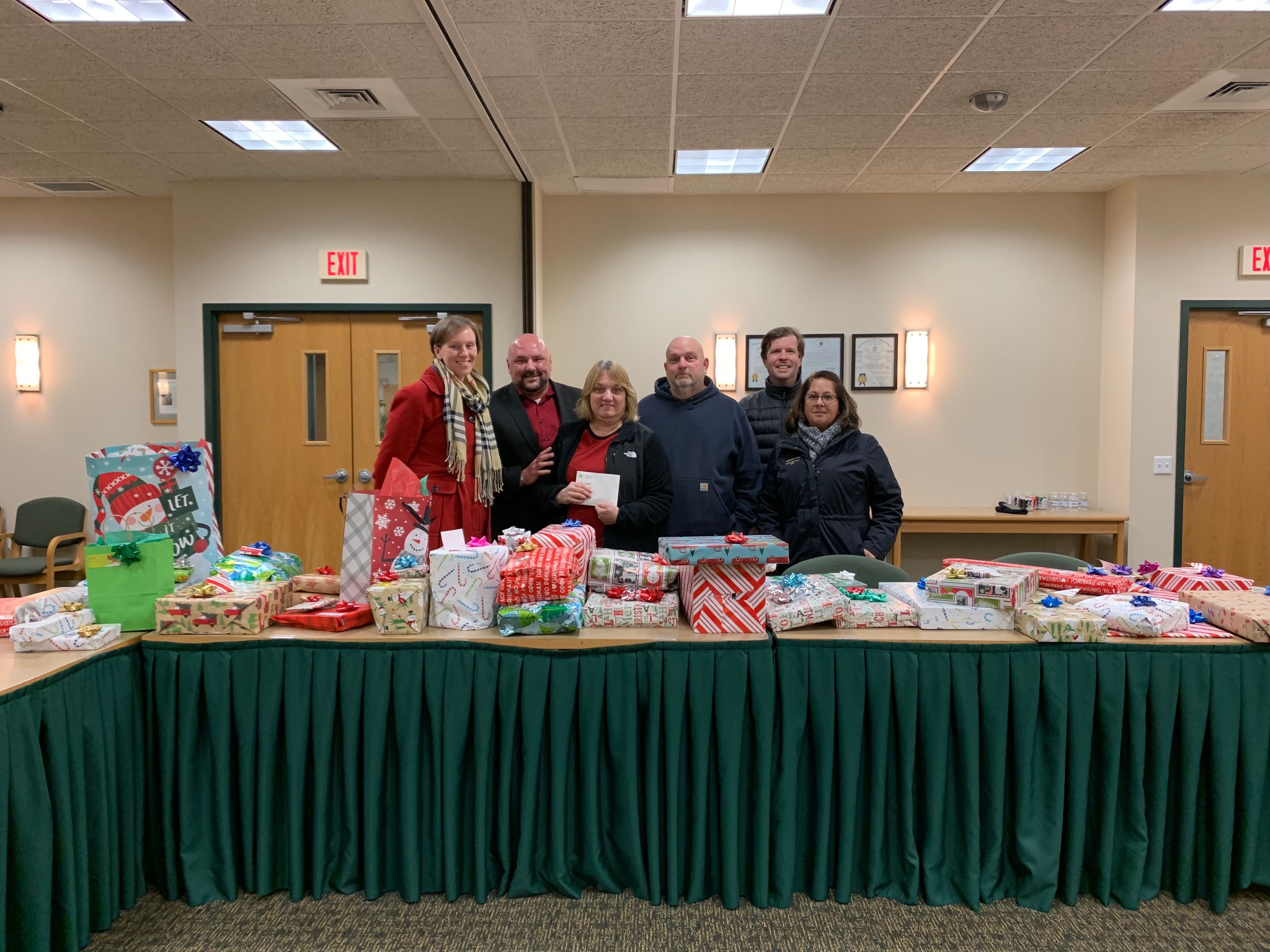
Austin Brooks, Small Business Relationship Manager for TD Bank, presented an idea to the CLI class to support local families affected by cancer during the holidays. “My father, Russell Brooks, was diagnosed with cancer and expressed his feelings to me one day before our last Christmas together that he couldn’t afford gifts for the family,” recalled Austin. “This experience made me think how I can help with gifts for families when a parent or loved one is undergoing cancer treatments.”
Following a discussion with the CLI class about his thoughts, and in just seven weeks’ time, the class established the Russell Brooks Foundation to help make the holidays brighter for deserving families in our community. “Everyone knows someone affected by cancer and we agreed to move forward. We helped a family who lost their mother just two weeks before Christmas last year and we fulfilled the wish list for three children.”
For Christian Lopez, Marketing Manager at the Fitchburg Art Museum, bringing community services and programs for families in need was top of mind. With the support of the class, Lopez created The Community Cuts Program, working in collaboration with local barbers and hairstylists to provide free haircuts before the summer for local youth. “With the support of my classmates, local businesses and organizations, more than 65 youth received a free hair cut at the event in June and also obtained helpful information for food, fuel and housing assistance.”
For both Lopez and Brooks, the CLI was a lifechanging experience. “One of the biggest takeaways from CLI is the relationships you develop with your class and also with those people you meet along the way when you visit businesses and organizations within the community,” said Brooks. Added Lopez, “We had such a diverse group of individuals who were all like-minded in wanting to learn about their community and do something positive to help people as well.”
Community Leadership Institute Class of 2022
Daisy Ayala, Enterprise Bank
Joshua Bedarian, RCAP Solutions, Inc
Austin Brooks, TD Bank
Joseph Ferguson, Fitchburg State University (ReImagine North of Main and TDI Partnership)
Justin Goettsch, The Arc of Opportunity
Ramon Gonzalez, Mount Wachusett Community College
Brittany Haley, Leominster Credit Union
Megan Heffernan, UMass Memorial Health HealthAlliance-Clinton Hospital
Kimberly LeBlanc, Resource Management, Inc
Bea Lee, North Central Massachusetts Development Corporation
Christian Lopez, Fitchburg Art Museum, Sponsored by AIS
Stephanie LoSasso, Avidia Bank
Hannah Pollan, Aging Services of North Central Massachusetts
Andrea Sampson, Aging Services of North Central Massachusetts
Melanie Sauvageau, Rollstone Bank & Trust
Patricia Wayrynen, Workers Credit Union
Marcus Williams, Mount Wachusett Community College
While the class of 2022 has officially graduated, their work continues. Class members are currently seeking a member of the community to assist with guidance related to expanding the development of the Russell Brooks Foundation. If you are interested in helping the Russell Brooks Foundation, please reach out to Kat Deal at the Chamber.
Applications for the class of 2023 will be accepted until August 26, 2022. Please contact Kat Deal, Events & Programs Manager, at 978.353.7600 x 235 or for more information.
MART to install new bus shelters throughout the City as a result
After joint lobbying efforts from Mayor Michael Nicholson and Ward 5 City Councilor Aleksander Dernalowicz, Gardner is welcoming a new fixture to its public transportation system in the form of a recently installed bus shelter in front of the old Prospect Street School. Working with the Montachusett Regional Transportation Authority (MART), the new bus shelter is the first of several to be added in Gardner.
Bruno Fisher, Administrator of MART, which serves the greater North Central Massachusetts area, said “The addition of this bus shelter to the fixed route bus service in the City of Gardner is an important first step to improving the overall services to our customers. We look forward to working with the City of Gardner on locating additional shelters for the benefit of our riders.”
“The impetus behind this bus shelter was South Gardner resident Bonnie Marabello. She saw a need in the area and reached out to see what could be done,” said Ward 5 City Councilor Alek Dernalowicz. “The real work was done by the City’s DPW crew and the team at MART who worked together to investigate, plan, and install the shelter. I can’t thank them enough for their hard work.”
The glass and metal structure provides a much-needed amenity for public transit riders in the South Gardner area as a safe place to wait for the bus, as well as protection from inclement weather. Additionally, it is hoped that the structure’s presence may help to further advertise the public bus route that serves the area. The shelter structure was provided by MART and the concrete foundation was installed by the Gardner Department of Public Works (“DPW”).
“I’m very excited to see how we can grow the services MART has to offer to the residents of our City,” said Gardner Mayor Michael Nicholson, who was also recently elected to serve as the Chair of MART’s Advisory Board. “Throughout the City, people rely on public transportation to be able to get to where they need to go and initiatives like these help connect the work we are doing to grow and develop Gardner as a whole, not just for the benefit of one specific area.”
“Access to transportation is essential for our community,” said City Council President Elizabeth Kazinskas. “ We are fortunate to have a reliable partner like MART right here in Gardner. The new bus stops will support our current residents and visitors, and the expected growth from residential and commercial development happening throughout the City.”
MART was recently awarded $180,000 by the Massachusetts Department of Transportation under their Shared Streets and Spaces Grant program, and will use the funds to install an additional twenty shelters on their lines in 2022 and 2023, 4 to 10 of which will be placed in Gardner.
“I’m very happy the City of Gardner and MART are able to team up and make these investments to use these funds,” said State Representative Jonathan Zlotnik. “Public transport is very challenging in rural areas but is nevertheless very important and investments like this will help improve those services.”
Echoing these sentiments, State Senator Anne Gobi stated, “Increasing ridership on MART requires, in part, ease of access. The new bus stops in the City of Gardner, including areas that have not had one before, are a welcome addition. Congratulations to MART and the City on obtaining this funding.”
The MART Advisory Board is comprised of one representative of the government of every municipality served by the MART system. Mayor Nicholson was elected by the representatives of the representatives of the 22 member communities to serve as the Board’s Chair in May of 2022, replacing Fitchburg Mayor Stephen DiNatale.
With 130 plus restaurants, 1,420 rooms to stay, 27 communities to visit and more than a million visitors annually, North Central Massachusetts is on the map as a growing drive destination for family fun, outdoor activities, and sporting events for those throughout New England and beyond.
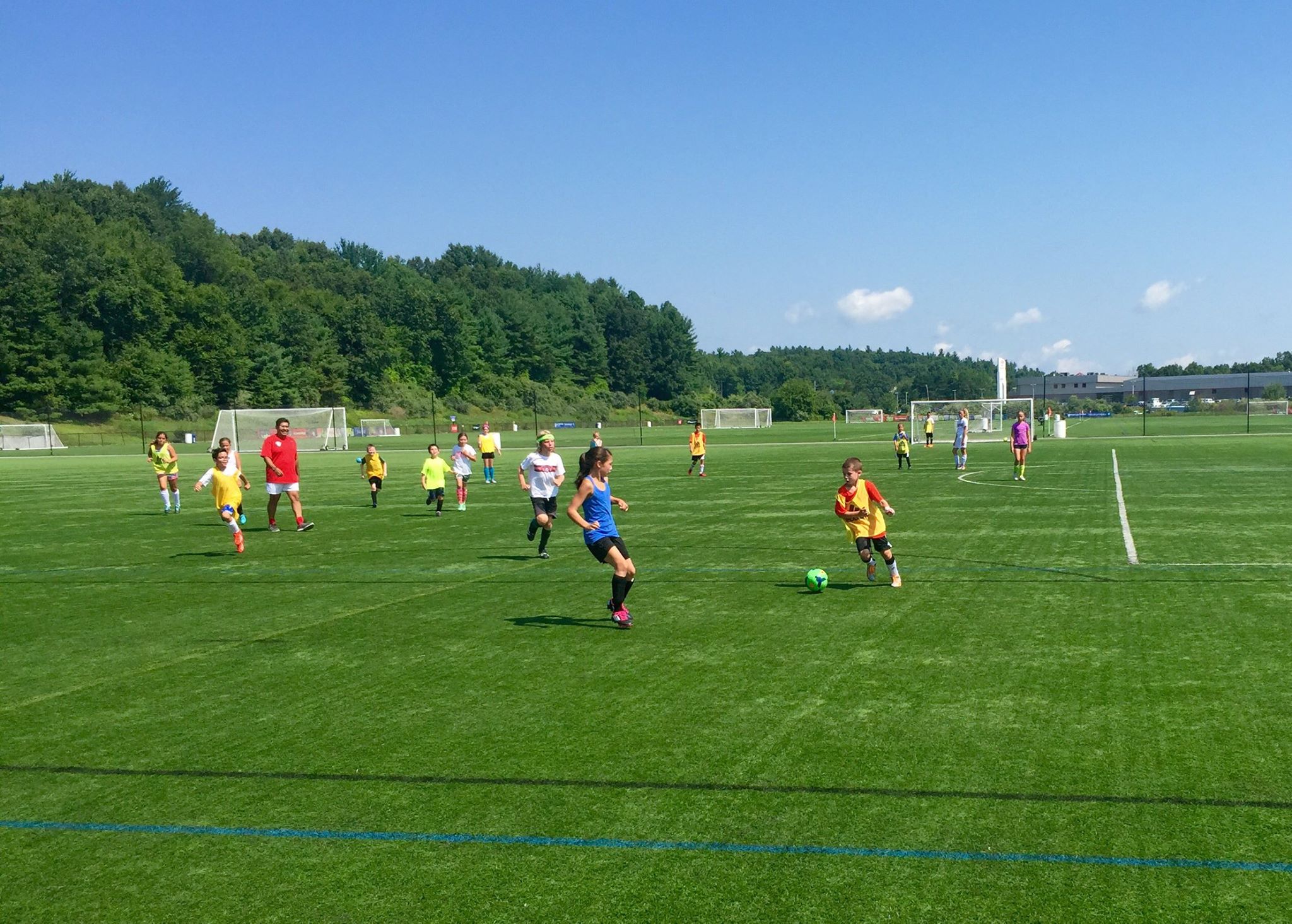
Want to take a walk?Hop on a bike? Or even a scooter? There’s a trail waiting for you. State and community parks, conservation areas, even former railroad routes make North Central a haven for those who like to move their bodies. Want to check out a soccer game or enjoy a night on the town with friends? We’ve got dozens of fields home to sporting events, and restaurants and breweries abound!
“We are confident in North Central Massachusetts’ ability to entice individuals and families to rethink their vacation plans. Easily drivable amenities, food and farm attractions, and arts and culture venues present an appealing and affordable alternative to hectic air travel to far-flung destinations in the U.S. and around the world,” said Henry Tessman, General Manager of Great Wolf Lodge, a family destination located in Fitchburg that attracts more than half a million people annually and employs more than 700 staff, known as Pack Members.
In 2020, a group of local business and community leaders, dignitaries and other key regional stakeholders got together to really understand what makes our region tick. The result is One North Central, a regional economic development plan to set a path forward for growth and opportunities. The group analyzed dozens of quantitative and qualitative data and factors to identify target industries as viable targets to invest in the region and grow their businesses.
One of the top industries identified was the tourism sector.
Prior to the pandemic, the Massachusetts Office of Travel and Tourism identified tourism as the third-largest industry in Massachusetts, providing more than 155,000 jobs and a payroll of $5.9 billion state-wide, with North Central Massachusetts offering the potential of more than 16,000 jobs in the industry and more than $185 million in direct visitor spending. Post-pandemic, tourism in in North Central Massachusetts is slowly rebounding, proving the region’s potential in the industry.
Rick Walton, President of Moon Hill Brewing Co., and the Gardner Ale House, knows a thing or two about hospitality. His businesses serve more than 150,000 customers annually, with approximately 50 full- and part-time jobs filled. “Right now, many businesses are experiencing crickets when it comes to hiring workers, but we are doing more to retain our current workers, including offering higher wages and providing opportunities for growth in the business,” said Walton. “Rather than having a revolving door of workers, we want to cultivate an evolving family of employees.”
Tessman echoed Walton’s thoughts as Great Wolf Lodge grapples with finding and retaining qualified workers. “While local companies must spend more money on training and developing employees to run their business, I’m fortunate to have strong corporate training programs to train someone on a skill if they have the drive to work at a family resort,” said Tessman. “We are also working with our local trade schools, high schools and colleges to seek employment, but it would be great if our educators would look to providing areas of hospitality for study so we can more clearly identify our future workers.”
For Dean Hirtle, Senior Vice President, Game On Sports and Performance Center in Fitchburg, running a tourism business is fairly new, as the facility formally opened in late 2021. “Businesses have a major opportunity to invest in North Central Massachusetts,” said Hirtle. “There is a lot of growth here and when people visit, they are surprised by what this region has to offer.”
Game On is situated in West Fitchburg on more than 100 acres of land, with only 40 acres currently developed—the additional 60 acres will be transformed into additional turf fields, parking areas, and there are plans to build a hotel to accommodate the more than 5,000 to 10,000 visitors at Game On during any given weekend. “Fitchburg is getting on the map, but we need to utilize marketing opportunities to make people aware of what is happening here. We live and work in a competitive youth sports market so the opportunity here to increase visitor spending will positively impact the economy for the region.”
In addition to hosting sporting events, such as soccer, lacrosse, and basketball for teams from across New England and up and down the East Coast, Game On also serves as the home field for Monty Tech and Fitchburg High School sports. “We take great pride in supporting local athletic departments to use our facilities.”
While Game On is fast becoming a sports destination for athletes, the region is also home to large athletic field complexes in Lancaster and Devens, which host a variety of soccer and lacrosse games, to name a few.
Tessman said the sporting complexes provide additional tourism dollars for all the local businesses in the region, including Great Wolf Lodge, which is located just minutes west on Route 2A from Game On. “With the current and future growth this region is experiencing, we will see more businesses expand or create additional opportunities to cater to these travelers,” he said.
Walton also believes the region has a lot to offer, where one can hike, ski, paddle, sit and relax all within the same day. “We are quintessential New England,” he said. “Every region in the world has its benefits, so it is necessary to compete with other areas to obtain the tourism dollars. We have a solid Chamber of Commerce and a solid regional tourism council, but we just need the funding to promote ourselves and get the word out about what we have to offer.”
Tessman agrees that state funding is critical to ensure success of the industry. “We have proven that tourism dollars stimulate all other business sectors, but we have to fight every year to expand or maintain marketing dollars,” he said. “Other states in New England spend more dollars on tourism and those states experience the benefits of it. While it’s unfortunate that most of the funding the state does spend on tourism marketing ends up in the Boston area, we need to start screaming a little louder here in North Central to prove our value.” Make no mistake, Tessman added, that Great Wolf Lodge has experienced eight years of success in North Central Massachusetts, with plans to invest upward of $40 million in upcoming renovations for the future. “We look forward to many, many more years of presence here in Fitchburg.”
Local business owners can help the tourism industry capitalize on the region’s assets to promote good health, happiness, and well-being. In addition to good jobs and a lower cost of living, the proximity to tourist amenities makes our region a beautiful place to live and work, which helps in the recruitment of hiring talent who do not call North Central home.
Rachel Lopez, Division President of Resource Management located in Fitchburg, was born and raised in North Central. As a local employer in the region who hosts colleagues and potential employees residing out of the area, Lopez utilizes the region’s amenities and assets to attract talent. “To attract and retain a talented workforce, you have to offer an appealing place for someone to call home,” she said. “While I am biased because I grew up here, I’m always thinking about ways to show my out-of-town colleagues and guests the best of what this region as to offer. I’d love to have someone visit the area and consider entertaining a job opportunity here because of the experience they had when they visited us.”
Lopez added she encourages out-of-town colleagues to make a family trip out of their visit by staying at Great Wolf or skiing at Wachusett Mountain, and looks to local museums, restaurants and farms when planning employee events. “While we have been on a hiatus for hosting large group functions due to the pandemic, I am really looking forward to bringing back employee outings and annual celebrations to share the local area with my colleagues in Florida.”
“I encourage our local business owners to take their employees out to local establishments,” said Walton. “Instead of going into Boston, do a brewery tour, take a dive at Great Wolf, go skiing, and frequent our many restaurants. Also, think about buying gift cards to support our businesses, too.”
The Chamber’s tourism arm, Visit North Central Massachusetts manages a robust collaborative regional marketing program to support the visitor and hospitality industry which includes paid digital marketing, social media campaigns, public relations, and participation in trade shows. Printed twice per year, The Guide to North Central Massachusetts promotes tourism and travel in the region with stories and a calendar of events that encompass some of the great events happening here. The Chamber also operates the Johnny Appleseed Visitor Center that welcomes 165,000 visitors each year.
Roy Nascimento, President and CEO of the Chamber, believes the region is well positioned to continue to benefit from tourism and placemaking efforts. “North Central Massachusetts is a very special place located right in the heart of New England,” he said. “It’s up to all of us to share the many opportunities and experiences our region offers with our friends, family and colleagues from outside the area to not only help our tourism industry succeed but to make our region shine.”
By the Numbers
Tourism in North Central Massachusetts
U.S. Adult Trips Annually
1,087,751
Jobs Benefiting from Tourism 16,000
Direct Visitor Spending
$185.4 Million
State Taxes Generated $9.4 Million
Local Taxes Generated $5 Million
Top Five Origin Markets
Boston, Providence/New Bedford Area, Connecticut, New York and Maine
*Data represents pre-pandemic numbers from CY2019 and is sourced from Arrivalist Travel Data, the Massachusetts Office of Travel and Tourism and the RKG Study conducted by the Chamber.
Golden Girl Granola’s Creative Cranberry flavor took third place in the “Granola” category at the 2022 Artisan Flave Awards. The annual competition is organized by International Flavor Awards, LLC and features specialty, craft-made artisan granola companies from around the world. Golden Girl Granola once again stood out on an international stage to become a Flave Award winner for the fourth year in a row.
The International Flavor Awards provides small- to medium-sized businesses a platform to stand on and be judged against similar sized food companies. The Artisan Flave Awards competition uses a blind-judging process with a variety of food professionals, including restaurateurs, purveyors, manufacturers, and members of the food-centric community. This was the first year that Creative Cranberry granola entered the competition.
“We are honored that Creative Cranberry was voted a Top 3 flavor in this year’s Flave Awards,” said Deborah O’Kelly, owner of Golden Girl Granola. “To have another flavor win an award for the fourth year in a row is remarkable. I’m proud of the Golden Girl Granola team for continuing to make some of the best-tasting granola on the planet.”
The Flave Awards strive to bring value to food-based competitions and work to promote the outstanding products and companies that set themselves apart by being known as a “Flave Award Winner.” This year over 400 products from 11 different countries were placed into 33 categories, including the “Granola” category. The other categories included, but were not limited to: spicy blends, chutneys, jams and jellies along with crunchy and sweet snacks.
About Golden Girl Granola: Golden Girl Granola™ is a family-owned and -operated business located in Shirley, Massachusetts that produces a branded line of gourmet granola products superior in taste and made from the highest-quality ingredients. Golden Girl Granola is a “Healthy Snack” alternative for health conscious consumers who appreciate good taste. Flavors include Forest Maple, Creative Cranberry, Bluesberry, Chocolate Decadence, Original, Home Sweet Honey, and Truly Tropical. Golden Girl Granola offers the complete line nationwide for chain supermarkets, independent supermarkets, gourmet food stores, club stores and convenience stores.
Servicio de Noticias de la Cámara de Representantes
Colin A. Young
The Department of Revenue is still counting, but the budget watchers at the Massachusetts Taxpayers Foundation expect that the Legislature will have a surplus of $3.6 billion when the final accounting of the fiscal year that ended last week is complete. Through May, the state had collected $36.969 billion in tax revenue for fiscal year 2022 — $2.666 billion or 7.8 percent ahead of expectations. Combined with two upgrades the executive branch made during the budget year, MTF said Massachusetts is $5.932 billion ahead of benchmark. But that’s not the anticipated surplus. Supplemental spending has wiped out about $1.6 billion of the overage, about $1.2 billion in above-benchmark capital gains will be statutorily bound for reserves and more than $250 million is due to the School Building Authority and MBTA. When all is said and done, including accounting for an addition $750 million in federal revenue, MTF said it anticipates the final FY2022 surplus will be roughly $3.588 billion, which it notes would be more than twice as large as the roughly $1.5 billion surplus of fiscal year 2021. “The primary reason the surplus is larger this year is because the original FY 2021 budget relied on close to $2 billion in one-time resources, including the Stabilization Fund. Much of last year’s excess tax revenue was used to eliminate the need for these temporary revenues. The original FY 2022 budget did not rely on the Stabilization Fund or other one-time resources, freeing up excess tax revenues for the surplus,” MTF wrote in its brief. The organization pointed out four things that could change its calculations: if June revenues come in above the $3.363 billion benchmark, the surplus will increase; a greater amount of above-benchmark capital gains would divert more to the state’s rainy day fund; an updated view of outstanding account deficiencies could eat away at some of the surplus; and significant reversions, or appropriated funds that go unspent, could increase the surplus. “The FY 2022 budget surplus will be historic and it will require careful planning to use it effectively and sustainably,” MTF said.In addition to any FY2022 surplus, the Legislature also has $2.3 billion in unspent American Rescue Plan Act money at its disposal and is expecting that the state will collect at least $36.915 billion in tax revenue in fiscal year 2023, which began July 1.
USA Luge announced the appointment of Lauren M. Howe to communications manager. In this role, she will serve as the liaison between the USA Luge organization and the media, providing noteworthy news and information about the sport’s athletes, programs and competitions. Howe is taking over for Sandy Caligiore who recently announced he will be moving on from his work with USA Luge.
For the past ten years, Howe has been a strong supporter of USA Luge and also calls Lake Placid her second home. Her first exposure to the sport was during her time working at Saint-Gobain, where she served as Manager of Communications and Community Relations for Norton, the company’s brand of abrasives. Norton Abrasives is the primary sponsor of USA Luge and has been a supporter for over 40 years. At Saint-Gobain, Howe played a critical role in strengthening the relationship between USA Luge and Saint-Gobain, resulting in award-winning work within the company, and increased exposure about the relationship both in the public and with employees.
“Lauren is a true professional and driven to make organizations succeed with her guidance, knowledge and expertise of the public relations industry,” said Gordy Sheer, director of marketing and sponsorship for USA Luge. “As we wish Sandy our best and thank him for his decades of service, we are excited to welcome Lauren to USA Luge after our many years working collaboratively together to elevate our brand to new heights.”
Howe founded empHowered PR in 2020 following an esteemed 23-year career in a variety of communications roles in the health care, manufacturing and non-profit industries. She currently serves a variety of clients around the region, the country and the world.
“The opportunity to lead communications for USA Luge is a dream come true,” said Howe. “There is much excitement as we gear up for the upcoming season, along with the 2026 Winter Games. I look forward to working in concert with USA Luge athletes and staff to share the journey leading up to Milan-Cortina with the media, supporters and dedicated fans.”
Howe holds both a master’s degree in Organizational and Professional Communication and a graduate certificate in Health Care Leadership Communications from Regis College. She received a bachelor’s degree in Journalism from the University of Massachusetts at Amherst and an associate degree in Liberal Arts from Mount Wachusett Community College.
As a result of her work and strong connections to the community, Howe was recognized as a member of the Worcester Business Journal 40 under Forty class of 2014 and is also a 2017 graduate of the Leadership Worcester program.
She currently serves as Chair of the Public Relations Society of America Independent Practitioner’s Alliance and is a member of the board at the American Red Cross of Central and Western Massachusetts. She also serves as the regular host of the North Central Massachusetts Chamber of Commerce “Good Morning North Central,” the region’s most popular morning gathering featuring high-profile guests discussing topics of interest with business, civic and community leaders. In June 2022, she was recognized by the North Central Massachusetts Chamber of Commerce as its Ambassador of the Year.
She resides in north central Massachusetts with her husband, daughter and stepdaughter, and will make frequent trips to Lake Placid in her new role.
Colleagues recognized for bringing Fidelity Bank mission, values to clients
Fidelity Bank announced it has recognized the following employees at its All-Hearts Meeting, the annual employee recognition meeting, held at Wachusett Mountain. Employees were recognized for bringing the Fidelity Bank values to clients and helping them get where they want to be.
Nancy Fioretti, Commercial Lending Assistant, received the 2022 Back Office Mission Accomplished Award. A resident of Leominster, Fioretti has been with Fidelity Bank for 15 years and was recognized for her work during the pandemic to ensure the Commercial team was able to function as business-as-usual during a very unusual time to ensure clients could have the clarity to move forward with confidence.
Tanya Quinn, Vice President, Digital Manager, received the 2022 Client-Facing Mission Accomplished Award. A resident of Athol, Quinn was recognized for her work throughout the bank’s digital transformation and traditional growth efforts while providing every aspect of the C.A.R.E. process to help clients meet their needs.
“Our Mission Accomplished Awards recognize those colleagues who lead by example in executing our LifeDesign approach to banking,” said Ed Manzi, Jr., Chairman and CEO, Fidelity Bank. “Nancy and Tanya bring our commitment of care, clarity and confidence to their colleagues and our clients alike with poise, professionalism, and positivity, which make them both worthy of this recognition.”
In addition to the Mission Accomplished Awards, colleagues were also recognized with Role Model Awards for representing the bank’s values of excellence, care, humility, integrity and positivity.
Amanda Prokowiew, Systems Analyst, received the Excellence Award. A resident of Leominster, Prokowiew has been with Fidelity Bank for 11 years and was recognized for embracing challenges and change with relentless commitment to precision and getting things done right the first time.
Terrence O’Kane, Human Resources Manager, received the bank’s Care Award. A resident of Shrewsbury, O’Kane has been with the bank for nearly seven years and was recognized for being thoughtful, responsive and caring for the concern of others and treating people the way they should be treated.
Marissa Vescovi, Loan Servicing Supervisor, received the Humility Award. A resident of Orange, she has been with the bank for seven years and was recognized for assistance with the development and training of the residential loan servicing team, and for implementing various process improvement initiatives.
Brett Finnell, Cash Management Implementation Support Specialist, received the Integrity Award. A resident of Leominster, he has been with the bank for six years and was recognized for his exceptional professional and ethical standards.
Amber McCreadie, Vice President, Area Manager, received the Positivity Award. A resident of Barre, she has been with the bank for six years and was recognized for her consistent positive attitude and outlook regardless of the challenges and opportunities that come her way.
“Our Role Model Awards are for those colleagues who continuously set an example by personifying Fidelity Bank’s guiding values and commitment to our LifeDesign Banking approach,” said Dee Sendrowski, Senior Vice President, Human Resources Director. “This year’s award recipients work across a variety of roles and place service above all else.”
Mount Wachusett Community College welcomed Senior Director of External Affairs, Marketing and Development at UMass Memorial Health – Health Alliance – Clinton Hospital, Patricia Pistone to its Board of Trustees after her appointment by Governor Charlie Baker.
“I am excited to welcome Tricia to the Board,” noted MWCC President James Vander Hooven. “I have worked closely with her over the last few years. She has been a committed liaison between her organization and our medical and health-related programs.”
Pistone joined UMass Memorial Health – Health Alliance – Clinton Hospital in April 2021, after a fourteen-year career in leadership roles at Making Opportunity Count, Inc. (MOC) in Fitchburg. Her history with MWCC dates to her time as Economic Development Director for Congressman John Olver, who was integral in sustaining grant funding for the construction of the colleges’ wind turbines.
“I am honored to join MWCC’s Board of Trustees,” stated Pistone. “I have had the privilege to work with MWCC in various capacities throughout my career and have always held the college in the highest regard as both an institution for higher education institution as well as an anchor organization in our region. I look forward to working closely with the Administration and Board of Trustees to continue that strong legacy into the future.”
“Ms. Pistone has been a great supporter of the college through her career, and it is a pleasure to have her with us,” stated Chairman of the Board of Trustees Robert Antonioni.
In addition to Chairman Antonioni, Pistone joins MWCC alumna Irene Hernandez Guzman, Leominster City Councilor Clair M. Freda, Weston Public Schools Director of Health Services Jamy Gaynor, Professor Emerita, Western New England University,Denise Kindschi Gosselin, CEO of GAAMHA, Inc. Tracy L. Hutchinson, President and CEO of Workers Credit Union Douglas Petersen, ACT, Inc. President Kenneth Tomasetti, and student trustee Cody Nathanson.
The North Central Massachusetts Chamber of Commerce will host a new member orientation and reception on Tuesday, June 28, 2022 from 3:00 p.m. to 5:00 p.m. at the Thirsty Robot Brewing Co. at 265 Summer Street, Fitchburg, MA.
Thirsty Robot brews a variety of beer with a “focus on aroma-packed and flavor-driven beers, with an emphasis on New England IPAs” states owner and brewer Bill diMario.The venue has ample indoor and outdoor seating along with an interesting menu, Thursday Trivia night and live entertainment from a variety of local musicians.
Chamber staff will explain the many benefits and programs of the North Central Massachusetts Chamber of Commerce including networking events, government affairs, educational workshops and seminars, advertising opportunities and health insurance, to name just a few.The orientation is geared towards new members, but is equally valuable for current members who want to get the most value from their membership, or those interested in learning if chamber membership is right for them.The orientation will be followed by a reception for new members to connect and engage with other business and community leaders.Light refreshments and appetizers will be provided.
“This is a great opportunity for members and non-members to learn about the dynamic nature of the North Central Massachusetts Chamber of Commerce,” said Roy Nascimento, president & CEO. “Attendees will learn about the important work that we do advancing the region as well as the tremendous resources we offer for businesses of all sizes and industries.”
There is no cost to attend the new member reception, but online pre-registration is encouraged.For more information or to register, please visitwww.northcentralmass.comor contact the Chamber at 978.353.7600 ext. 235.
Los dueños de negocios que no puedan asistir pero estén interesados en obtener más información sobre la membresía de la cámara pueden contactar a Tracy Gagnon al 978.353.7600 ext. 239 o por correo electrónico a para programar una breve introducción a los programas y servicios.
Servicio de Noticias de la Cámara de Representantes
Autor: Chris Lisinski
supervisores del Departamento de Transporte estamparon su aprobación el miércoles en un plan de capital quinquenal que propone destinar casi $15 mil millones a mejorar la confiabilidad, modernizar y ampliar el sistema de transporte del estado. La junta directiva del MassDOT votó por unanimidad a favor de una propuesta de $14.9 mil millones que abarca los años fiscales 2023 a 2027, adoptando un plan que, por primera vez desde que se desató la pandemia de COVID-19, tiene una visión a medio decenio en lugar de un solo año. Más de la mitad del gasto se destinaría a proyectos de confiabilidad, como el mantenimiento de rutina y las reparaciones. Un poco más de una cuarta parte se destinaría a iniciativas de modernización, incluidas las mejoras necesarias en materia de accesibilidad y seguridad. El resto se dividiría entre ampliaciones, reembolsos del Capítulo 90 para ayudar a los municipios con el mantenimiento de carreteras y puentes, y otros servicios de planificación. Entre los proyectos financiados por el plan se incluyen la importante obra de rehabilitación del Túnel Sumner, que ya está en curso; el reemplazo del Puente Rourke en Lowell; y el diseño y la obtención de permisos para la iniciativa, que ocurre una vez en una generación, de reorganizar la confluencia de la infraestructura de autopistas, ferrocarriles y vías peatonales en una estrecha franja de tierra en Allston. Las autopistas de todo Massachusetts constituyen el principal objetivo de inversión en el plan quinquenal —o, como lo expresó la directora de Planificación de Capital del MassDOT, Michelle Ho, “las autopistas se llevan la palma”—, con más de $10 mil millones destinados a la fiabilidad, modernización y ampliación de las carreteras del estado. Aproximadamente $1.4 mil millones del plan del MassDOT destinarían fondos estatales a la expansión de la MBTA y a proyectos de mantenimiento, y la agencia de transporte público también cuenta con su propio plan quinquenal de $9.6 mil millones para otros proyectos importantes, entre ellos el South Coast Rail.