Noticias y Eventos
Todas las últimas noticias
New Survey Highlights Continued Impacts to Businesses from COVID-19
Survey Data reveals decline in customers and cash
(Regional) — Results from a business impact survey issued to businesses located in North Central Massachusetts highlight the continued impacts to the local business community due to the COVID-19 pandemic. This new survey was conducted by the North Central Massachusetts Chamber of Commerce in partnership with the MassHire North Central Workforce Board, the Montachusett Regional Planning Commission, NewVue Communities and many of the cities and towns in North Central Massachusetts.
Nearly 250 responses were received, representing businesses from all twenty-seven cities and towns located in North Central Massachusetts. Respondents reflected the top industries in the region including health care, manufacturing, retail, food and beverages, financial services, education and agriculture among others.
Nearly 64% of the businesses and organizations reported losses when compared to 2019, with nearly 25% reporting losses of 50% or more. Nearly 54% reported that they expect it will be more than six months before their operations return to a normal level. Twenty-five percent of respondents estimated they could stay operational on current cash flow and reserves for six months or less. Forty-three percent of the businesses responded that they had difficulty getting employees to return to work citing health and safety concerns, child care and adult care as the top reasons. Some businesses noted falling behind on rent and other bills, while the vast majority reported increased costs due to additional sanitation or shifting operations online.
Over 50% of the respondents indicated that they were completely open, while 46% indicated that they were only partially open in a limited way and the remainder were still closed due to the pandemic. Of those closed, several cited they were closed for good while others reported that they were unsure if they would be able to reopen.
Financial programs to mitigate layoffs such as the Payroll Protection Program (PPP) was the top response when asked what businesses were using to mitigate the impact of the COVID-19 pandemic, followed by reduction in expenses and use of personal savings. Communications, marketing, and social media to reach their customers was the most requested resource when respondents were asked what resources,
beyond financial assistance, would be most helpful. For the respondents who had applied for PPP to support their business/organization, over 50% were approved for the full amount, and expected to be fully refunded.
“Our businesses have been working hard to operate safely, but the results show that many are still struggling from the economic impacts brought on by the pandemic” said Roy Nascimento, President & CEO of the North Central Massachusetts Chamber of Commerce. “This survey data will be very helpful to our efforts to help support our businesses and communities as they continue to navigate the pandemic.”
“Thank you to all of the business and community members who have responded to the Chamber’s survey” said Jeff Roberge, Executive Director of the MassHire North Central Workforce Investment Board “The feedback you have provided is vital to our collective economic and workforce development strategy development and our unwavering commitment to driving economic prosperity in the region.”
“We’re very impressed by the strong response this survey has garnered from businesses across the region,” said Glenn Eaton, Executive Director of The Montachusett Regional Planning Commission. “The information from this survey will be critical as we work closely with our partners to identify the tools and policies that will help to restore the growth and prosperity Montachusett’s economy enjoyed prior to the pandemic.”
“Thank you to all of the small businesses that responded to the survey’ said Marc Dohan, Executive Director of New Vue Communities “This information will help us better understand the challenges faced by small businesses during the pandemic so that we can help create a dynamic economy in North Central Massachusetts.”
This survey was conducted online between October 20, 2020 and November 11, 2020 and was a follow-up to an initial survey conducted by the Chamber in March during the early days of the pandemic. The goal of the survey was to collect some fresh data and dive much deeper into the continuing impact of the pandemic to local businesses. Although the survey results included large businesses, the vast majority of respondents would be considered small businesses by federal standards with less than 500 employees and gross revenues less than $10 million per year. More specifically, approximately 75% reported less than 20 full time employees and 64% reporting gross income of less than $1 million. The majority of the businesses that responded were also primarily established, existing businesses in the community with an average of 29 years of operations.
Click here to view the complete COVID-19 Business Impact Survey
Top Diversity & Inclusion Resources for Employers
Business leaders are having more open conversations about diversity and inclusion in the workplace. While this isn’t novel, the spotlight on racial, gender and other biases has rejuvenated talks about increasing workplace diversity and equal opportunities. The goal is to create a workplace with open communication channels that allow all employees can express their opinions and concerns. This is precisely what chambers of commerce like us seek to achieve.
We are an independent local association of employers and employees. Our goal is to promote the quality of life for all members through providing public/private education and economic opportunities.
What Is Diversity and Inclusion in The Workplace?
Managers have an objective to create a workplace environment that promotes the integration of employees from various walks of life. This is key to business success, even in regions with significantly lower diversity rates from the national averages. Diversity refers to the individual traits that make people unique, while inclusion deals with the social norms and behavior that make people feel welcome.
The goal of diversity and inclusion in the workplace is to promote the development and advancement of marginalized and underrepresented groups. This ensures an active, productive workplace environment free from bullying and harassment. Employers should enact measures to ensure their workforce is a true representation of the diverse populations and groups in the communities they serve.
Inclusion aims to create a thriving workplace environment where all employees and managers are treated fairly, with respect, and given equal opportunities and resources to contribute to the organization’s goals. Diversity and inclusion are often used in tandem, but remain two disparate concepts, with unique approaches and merits.
Benefits of Diversity and Inclusion
The top five merits of diversity and inclusion in the workplace include:
- Variety of perspective – You can benefit from faster decision making from teams comprised of varying backgrounds and work experiences.
- Attract skilled candidates – Many people are drawn to businesses that show value for workplace diversity and inclusion.
- Increased employee performance – Diversity results in more creativity, happy employees, equal distribution and resources and opportunities, which are vital in workplace performance.
- Market expansion – With a diversified workforce, you can target customers from different backgrounds and walks of life.
- Increased ROI – Better performance, motivation, reduced employee turnover, extended market, and other workplace diversity outcomes drive sales and return on investment.
Diversity and Inclusion Resources
Are you looking for new ways to ensure a genuinely diversified and integrated workforce that reflects your community?
There are several resources for managers and HR teams looking to augment diversity and inclusion in the workplace. The top recommendations include development courses, training programs and books. We encourage our employer-members to read as many diversity and inclusion books as possible to understand the different aspects of the workplace environment.
We aim to encourage employers to start internal conversations that emphasize the role of diversity and inclusion in workforce performance, employee requirements and other business practices.
Mass. Economy Should Be Well-Positioned for Rebound, Rating Agencies Say
Fuente del artículo: State House News Service
Article By: Colin A. Young
S&P: Numbers “Not As Weak As Feared”
NOV. 12, 2020…..As lawmakers debate the budget plan for the fiscal year that’s already underway and the state Treasury prepares to go to market next week to sell almost $1.4 billion in new debt, credit rating agencies taking notice of Massachusetts’s budget management and the outlook for an economic recovery here.
S&P Global Ratings and Fitch Ratings on Tuesday gave strong ratings (AA and AA+, respectively) to about $1.4 billion in bonds the state plans to sell next week and said the outlook on Massachusetts’s ratings is stable. The firms also commented on how Massachusetts has managed its pocketbook through the pandemic and what could be in store once a COVID-19 vaccine allows for more normal economic activity.
“To date Massachusetts has navigated the economic and fiscal disruptions of the pandemic without materially affecting its strong operating performance and remains well-positioned to continue doing so,” Fitch wrote in its rating statement.
Both agencies pointed out that Massachusetts and its economy were hit hard by the COVID-19 pandemic and the government mandates that limited economic activity as a means of slowing transmission of the virus.
The budget year that ended June 30 wound up about $700 million short of expectations and the Baker administration has forecast that state tax revenues for the current budget year will be about $2 billion less than in fiscal 2020. In June, Massachusetts had the highest unemployment rate in the country and the rate remains worse than the national average.
But the key anchors of the Massachusetts economy — namely higher education, health care, technology and finance — and the state’s economic fundamentals should put it in a good position to make a solid rebound once pandemic restrictions are lifted, the agencies said.
“We believe that Massachusetts’ economy, with a substantial tech sector presence in the Boston area, might be well-positioned to thrive when COVID-19 pandemic restrictions are fully lifted, although capital gains tax could be a weakness in this income tax-dependent state,” S&P wrote in its assessment.
Though a good deal of uncertainty remains, Dr. Anthony Fauci this week suggested that the return of more normal economic activity — unrestricted dining, shopping, and more — could come by the end of the fiscal year.
“The cavalry is coming,” Fauci told Good Morning America on Thursday. The country’s top infectious disease expert said that “the ordinary citizen should be able to get” vaccinated against COVID-19 by the “end of April, early May, May, June, somewhere around that time.”
The thoughts of the rating agencies hold a lot of weight with state budget managers and lawmakers because the ratings handed down from the firms are a huge part of what determines the state’s cost of borrowing. The better the rating, the more favorable borrowing terms the state can get.
Ways and Means Committee chairmen Rep. Aaron Michlewitz and Sen. Michael Rodrigues likely read the firms’ rating statements with a particular interest in the comments about using money in the state’s stabilization fund to plug holes in the fiscal year 2021 budget.
Gov. Charlie Baker proposed drawing $1.35 billion from the state’s $3.5 billion rainy day fund to help cover up a $3.6 billion decline in anticipated tax revenue. The House has been debating this week a budget that features a $1.5 billion withdrawal, and the budget the Senate will debate next week also calls for a $1.5 billion drawdown.
Neither agency commented specifically on the House and Senate plan to pull $1.5 billion out of the stabilization fund, but both commented on Baker’s idea of drawing $1.35 billion. S&P said the governor’s proposed withdrawal would leave $2.2 billion in the fund, “or what we would view as a still-good 4.5% of expenditures and other uses.”
S&P said that its stable outlook for the Bay State “reflects our view that Massachusetts’ strong [stabilization fund] provides a cushion allowing the state to ride out the current pandemic-related economic slowdown without significant liquidity pressure. This supposes that the commonwealth’s economy will rebound after fiscal 2021, and that Massachusetts will rebuild its [stabilization fund] once the economy is again in an expansionary mode.”
In June 2017, S&P lowered its rating for Massachusetts bonds to AA from AA+, largely due to the state diverting money from its stabilization fund while the economy was growing. In the years since, buoyed by a strong stock market and surplus state revenues, Massachusetts financial managers were able to sock away hundreds of millions of dollars into the rainy day fund and boost it to an all-time high ahead of the COVID-19 pandemic.
Last December, when Treasurer Deborah Goldberg was asked by the Ways and Means Committee whether she thought a credit rating upgrade could be in the offing, she told lawmakers that the rating agencies “still harbor a little bit of skepticism” of Massachusetts since the S&P downgrade.
Through four months of fiscal year 2021, state tax collections of $9.347 billion are trending $118 million or 1.3 percent ahead of receipts during the same period of time during fiscal 2020, the Department of Revenue said earlier this month. But by the end of June 2021, DOR expects tax revenues will land somewhere between $25.918 billion and $28.387 billion — which would be between $2.76 billion and $5.23 billion below the assumption agreed to before the pandemic upended the economy and a drop from final fiscal year 2020 collections of $29.596 billion.
“This is slower revenue growth than the commonwealth experienced in recent years, and could turn negative when the effects of federal stimulus wear off or if a new wave of coronavirus infections occur, but the numbers to date are not as weak as feared earlier in the year,” S&P said of year-to-date tax collections in Massachusetts.
Gardner Announces Waiver of Restaurant Liquor License Fees For 2021
Move Aims to Help Businesses during the Covid-19 Pandemic
GARDNER – November 10ta, 2020 – Gardner Mayor Michael J. Nicholson is pleased to announce the City of Gardner is suspending fees for liquor licenses for Gardner businesses that apply for on- premise consumption liquor licenses for the 2021 calendar year.
In the wake of the Covid-19 pandemic, businesses across the City have been forced to adapt to a difficult and ever changing set of circumstances. This was particularly hard for businesses in the restaurant industry that had to close for a portion of the year due to regulations put in place to curb the spread of the virus. It is Mayor Nicholson’s hope to lessen the burden these businesses are facing by temporarily suspending food and liquor license fees.
“I would like to sincerely thank Mayor Nicholson for finding new ways for the City to help alleviate the small business crisis precipitated by the pandemic,” said Rick Walton, owner of Gardner Ale House and Moon Hill Brewing Company “For so many of us, the cash flow just isn’t there; waiving the liquor license fee helps a lot.”
Under Massachusetts General Laws, fees for liquor licenses are set by vote of the License Commission. This group of three individuals are appointed by the Mayor with approval by the City Council. Mayor Nicholson presented the commission with his proposed order suspending these fees for the coming year at their meeting on November 10ta, and they voted unanimously to endorse the Mayor’s proposal.
“This has been a tough year for everyone in the City, particularly for our restaurants who had to close and then were only able to operate on a take-out basis for the majority of this past year. This has only been exacerbated by the cooler temperatures causing many locations to end their outdoor seating option” said Mayor Nicholson. “We are taking this move to help our local businesses get back on their feet and get through this pandemic even with the challenges that we are facing. Thank you to the License Commission for voting to approve this proposal, and I look forward to seeing how it can help our businesses during these trying times.”
Liquor license applications run annually with the calendar year with the License Commission voting to approve applications during the month of December. This proposal would only be in effect for the 2021 calendar year. “I think this is a great way for us to be able to help businesses who have been struggling,” Michael Fitzsimmons, chair of the Gardner License Commission said during the meeting.
Twenty-seven businesses in Gardner annually apply for liquor licenses- including restaurants, social clubs, cafes, and other food establishments across the City. This waiver does not extend for licenses for off- premise consumption, as those establishments were able to remain open during the COVID-19 shut down.
Wachusett Brewing Company launches new beer for the holidays to support Trees For Soldiers Project
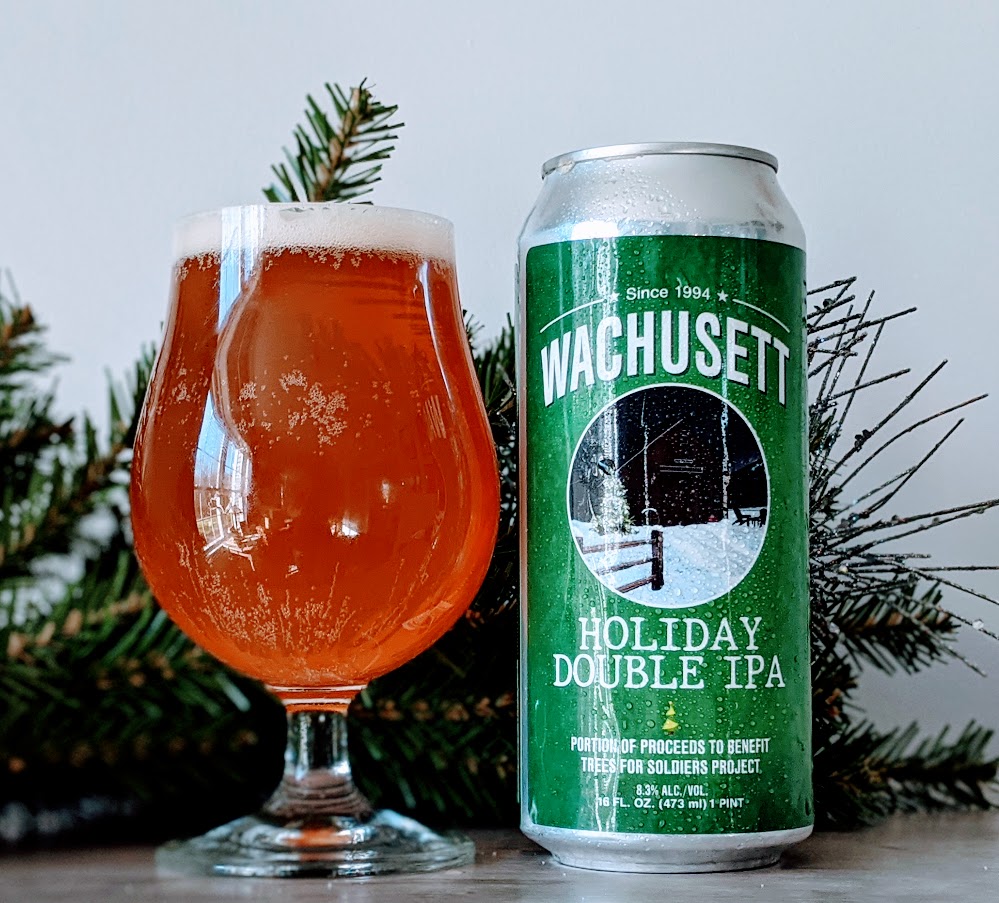
“Holiday” Double IPA features 2020 Veterans Hop Blend by Yakima Chief Hops

“We are so honored to be a part of this project”, said Valerie Brock, Director of Fermentation at Wachusett Brewing Company and a former Sargent in the Army National Guard. “The 2020 blend features five different hops from the Pacific Northwest including Idaho 7, HBC 692, Sabra, Mosaic, and HBC 630 that will give this Double IPA great tropical fruit aromatics and a wonderful citrus profile”.
“Since 2010, it has been our privilege to show our support toward our local US Servicemen, women, and their families by providing Christmas trees at no charge, and to be a conduit for others in our community to show their appreciation as well, for our hero’s. We are honored to have been chosen to participate in the roll out of the Wachusett Brewing Company’s new IPA, and grateful for their support toward our program. We could not ask for a better way to kick off our 10ta year of giving!” said Joe Firmani, Operation Service Director.”
Holiday Double IPA will be released the week of November 9ta on tap at all 3 Wachusett Brew Yards in Westminster, Worcester, and the newly opened Cambridge location and in 16oz cans in Westminster only. A portion of the proceeds at every location will go directly to the Trees For Soldiers Project.
For more information about Wachusett Brewing Company, visit www.wachusettbrew.com
About Wachusett Brewing Company
WBC produces a diverse, award-winning line of beers ranging from their best-selling Blueberry Ale to their highly-rated Wally New England IPA series.
Chamber Member Spotlight: Mount Wachusett Community College
Mount Wachusett Community College is the one place in North Central Massachusetts where you can earn an associate’s degree, see a show, send your child to camp, join the fitness center, complete a certificate program or get workforce training.
The Mount was founded in 1963 and was first located at the former Gardner High School on Elm Street, moving to its permanent location on Green Street about a decade later. It now sits on a 249-acre campus with satellite campuses in Leominster, Fitchburg and Devens, serving 29 communities. It offers 70-plus credit bearing degree and certificate programs, non-credit, personal enrichment classes for life-long learners and workforce development that includes custom, on-site training.
“Mount Wachusett Community College really is the regional center for affordable relevant higher education,’’ said MWCC President James Vander Hooven. “We work very closely with local businesses and industries, specifically the North Central Massachusetts Chamber of Commerce to make sure that what we’re doing for training, education and curriculum is relevant to the workforce of this region. We’re also a comprehensive community college.’’
Vaner Hooven pointed to its entire advanced manufacturing program as an example of a program that has been developed in conjunction with regional businesses and manufacturers.
In normal times, the main campus is a bustling hub of activity, including a fitness center that is open to the public, a well-respected community theatre, summer camps, and classrooms and labs filled with students.
But the COVID-19 pandemic has hit higher education hard. Enrollment is down about 15 percent, which Vander Hooven said is the median for colleges and universities all over the U.S. Most classes are online or remote and will continue to be through the spring semester.
“The community here, the faculty and staff have been phenomenal in rising to the challenges we’re facing to help make the students successful,’’ he said.
Community college enrollment typically increases a year after an economic downturn, which means more students could be returning next fall. While MWCC appeals to traditional high school graduates looking to get two years of higher education completed at bargain prices, it also serves older, displaced workers or those looking to make a career change.
“That’s where we’re going to see the biggest increase in the next year because of where the economy has been hit by COVID,’’ Vander Hooven said.
With a number of programs in high-demand fields like health care already in place, Vander Hooven said the college is well-positioned to help displaced workers transition to new careers. The biggest challenge the college will have, he said, is finding space to create expanded capacity for programs.
“Labs weren’t built with social distancing in mind,’’ he said. “They are physically attached to the floor with gas and water hookups so it’s not like you can just slide the tables apart. It really is an interesting time to figure out what the fall semester looks like.’’
For more information about Mount Wachusett Community College, visit https://mwcc.edu/.
MWCC’s main campus is located at 444 Green St., in Gardner. For admissions, call 978-312-9157.
Chamber Spotlight: Robert C. Alario, CPA
Whether you need your taxes done, a trust set up, an audit completed or a child heading off to college, Robert C. Alario Certified Public Accountants has a team of experts ready to help. The business, with office in Leominster and Worcester, prides itself on building personal relationships with its clients, said President Robert C. Alario, whose father, Anthony, started the business 66 years ago. Their business philosophy is to provide “Old Fashioned Main Street Service,” serving clients in a timely and cost-effective manner.
“I think we try to get to know the client and dig deeper,’’ said Alario, who joined the company in 1980. “We believe in the philosophy of asking questions – what keeps you up at night? It’s our connection to the clients that sets us apart.’’ Of course the pandemic has impacted their ability to sit down face to face with clients, but Alario said they’re doing their best to maintain a personal connection with clients over the phone and Zoom. “We’re meeting with some clients but we have to be respectful to our staff,’’ Alario said. The pandemic has impacted many businesses, leading to more financial planning and structuring. Some industries, like restaurants and hotels have been hit hard, while construction is booming. With 20 full-time employees, its size allows the company to offer a variety of services to clients such as tax preparation for individuals, partnerships, estates, trusts and corporations. They also provide tax planning, retirement planning, educational planning, business evaluations, auditing and payroll.
“We’re a full-service CPA firm,’’ Alario said. “We’re the largest CPA firm in North Central Massachusetts and the seventh largest in Worcester County.’’ Alario said business often picks up around election time as the outcome may lead to tax law changes. He said clients will come in to plan and prepare for any changes that may impact their family or business. Another area of growth is among baby boomers, many of whom are approaching retirement age, Alario said. “Years ago, with the GI Generation, there was a big transfer of wealth so there was a big focus on estate planning,’’ he said. “We’re seeing that again with the boomers so there are a lot of opportunities. You react to the environment.’’ The ability to remain flexible and adapt to changes in the economy and government and events that impact people’s lives and finances is imperative, Alario said. “The one word in business is change,’’ he said. “You constantly have to change and do things a little differently. It’s a different field than it was when I started with an adding machine. It’s different and dynamic.’’
Robert C. Alario Certified Public Accountants, PC, is located at 75 North Main St. in Leominster, 978-534-1999 and 67 Millbrook St. Suite 501, Worcester, 508-755-7575.
For more information, visit https://www.robertalario.com/.
John W. Reedy, appointed to Leominster Credit Union Board of Directors

Prior to his appointment to the board, Reedy has served on the LCU Advisory Committee and also as an LCU Board member from 1999 to 2011.
“John will be a great addition to the Leominster Credit Union Board of Directors. His skills, involvement with the Advisory Board and his experience as a prior Board Member will be a valuable asset to our community and our members,” stated Chairman of the Board Giulio Greco.
Reedy is a Certified Public Accountant in Harvard, MA and a graduate of University of Scranton, PA. He is involved with the Woodlands Homeowners Association as part of their Finance Committee and the Treasurer of the Clinton Republican Town Committee. Reedy currently resides in Clinton, MA with his wife Helen.
Why It’s Important to Buy Local First
When you shop local, you do far more than get the items that you want quickly and conveniently. Buying local actually stimulates the economy in our community, helps benefit local schools and charities — and it even helps the environment.
Take a look at some of the many reasons why it’s important to shop and buy locally.
Buying Local Keeps Money in Our Community
When you buy locally, the small business you’re making your purchase from certainly benefits, but the benefits keep growing. A small business that does well is likely to hire more people, who then spend more money in the community.
Buying locally also pours money into the local institutions who need it. Taxes are paid locally, boosting the community’s libraries, schools, and infrastructure. Local businesses are also more likely to donate to charities in the local community, helping make improvements that all can enjoy.
In fact, when independent think tank The New Economics Foundation compared similar purchases made at chain stores vs. those made with local businesses, the experts determined that buying locally puts double the money into the community than occurs when you make a purchase at a chain store.
Buying Local Is Better for the Environment
Whether you buy online or from a major chain store, it typically requires some major effort to get your item to you. Trucks have to haul products across the country, burning up fossil fuel and contributing to pollution.
In addition, products that have to be packaged for shipping typically end up requiring extra packaging to survive the journey intact. Compare buying, say, a pre-packaged set of nails at a big box store — with your purchase sealed in one of those packages that practically require power tools to open — to picking out just the nails you need at your local hardware store, with the friendly local owner popping them into a simple paper bag (or even into the bag you brought yourself). All that extra packaging typically ends up in landfills or the ocean, adding to environmental damage.
Buying Local Results in More Diverse Choices for Customers
When you go to one big box store after another, you’ll see the same product choices, over and over. The only real difference is in price — and often that difference is a matter of pennies.
Buying locally is a whole different experience. Each small business in our community is unique, offering a true connection with customers and a real understanding of their visitors’ needs. Think about the diversity of stepping into a local boutique to do some clothes shopping versus perusing the offerings at chain stores, which all seem to look the same. Local artisans and craftspeople can show off their wares and build a following when you shop locally.
In addition, local businesses are typically far more flexible, adjusting to meet the immediate needs of customers much more quickly than giant national chains can do. They can also do a better job of stocking the products our community members want, since they’re part of the community.
Buy Local to Help Keep Our Community Unique
Related to the previous reason to buy locally is the idea that those unique products lead to a one-of-a-kind shopping experience. No one goes to a big box store to browse or to enjoy recreational shopping. But when your local shopping district is filled with local retailers, you create a sense of self-image that help defines our community. Our unique businesses are something to be proud of, and when we all support them, they create a reason for other shoppers to come visit our community.
By supporting local businesses, we can also help entrepreneurship thrive, which adds to local prosperity and innovation. Every local retailer is one of our neighbors who has taken a risk to try to make our region a better, stronger place, boosting the economy and helping lift friends and neighbors into the middle class.
When we all look for ways to buy local, we tell all our neighbors that we believe our community is worth investing in. We put our money into things we care about, including our local schools, and we enjoy a better purchasing experience overall personally. Shopping and buying locally is a win-win for you, for small businesses, and for our community as a whole.
Fidelity Bank Allocates $45,000 over 3 years to Partnership with EforAll

EforAll is a nonprofit that focuses on helping all individuals start a business with an emphasis on women, people of color, immigrants, and people who were previously unemployed. “Fidelity Bank is a leader in the business community in Worcester, Fitchburg and North Central Massachusetts,” says John Esler, Founding Committee Chair for E for All’s Greater Worcester program. “With their help, we will be able to reach and mentor a larger group of entrepreneurs who want to start a business.” Applications for the first Greater Worcester Business Accelerator program are due November 12 and the first class will start in January of 2021. Entrepreneurs selected for the 12-month free program receive immersive business training, dedicated mentorship, and access to a professional network. In addition to providing financial support, selected Fidelity Bank colleagues will serve as mentors.
Since it was founded ten years ago, EforAll has helped launch more than 500 startup businesses that have created more than 700 local jobs. Among the businesses started by EforAll participants, 74 percent are owned by women, 58 percent are owned by people of color, 46 percent are owned by immigrants and 39 percent are owned by people who were previously unemployed. They are on track to help start 240 new businesses in the next year including 30 in Greater Worcester.
Fidelity Bank’s financial support for EforAll comes from the Fidelity Bank LifeDesign Community Dividend, which donated more than $330,000 to more than 250 worthy organizations in Central Massachusetts last year. Fidelity Bank has given out more than $2 million since the dividend program was formally named in 2013.
Founded in 1888, Fidelity Bank is one of the strongest independent community banks in Central and Eastern Massachusetts. Fidelity Bank’s unique LifeDesign approach to banking provides the care and clarity needed to make informed decisions with confidence. The Bank offers a range of personal and business banking solutions to clients in 14 full-service offices in Leominster, Worcester, Fitchburg, Needham, Gardner, Stow, Shirley, Barre, Millbury, Paxton, Princeton, and Winchendon. Fidelity Bank has been voted Worcester Telegram & Gazette Best Bank in Central Massachusetts and Best Financial Services, Best Bank by both Leominster Champion and Baystate Parent, and it has been recognized by the Worcester Business Journal as a Top Workplace. In 2019 Fidelity Bank was named to the Boston Globe’s Top Places to Work list for the fifth time. As of September 30, 2020, the bank had total assets of approximately $1.15 billion. For more information, visit www.fidelitybankonline.com o www.facebook.com/fidelitybankma
About EforAll
Entrepreneurship for All (EforAll) is a nonprofit organization that partners with communities nationwide to help under-represented individuals successfully start and grow a business through intensive business training, mentorship, and an extended professional support network. To date, EforAll alumni have launched more than 500 businesses and created more than 700 local jobs. Programs are available in both English and Spanish. EforAll is currently available in the following MA communities: Berkshire County, Cape Cod, Fall River/New Bedford, Worcester, Holyoke, Lawrence, Lowell, Lynn, and Roxbury as well as Longmont CO. To learn more about EforAll, please visit eforall.org.
North Central Massachusetts Chamber Releases 2021 Public Policy Agenda
(Regional) – The North Central Massachusetts Chamber of Commerce unveiled its Public Policy Agenda for the new fiscal year today outlining the Chamber’s legislative priorities on issues important to businesses and the advancement of North Central Massachusetts. The agenda was developed to serve as a blueprint for the Chamber’s government affairs efforts and have been reviewed and approved by the Chamber’s Government Affairs Committee and Board of Directors.
“The North Central Massachusetts business community continues to face unprecedented challenges in this COVID-19 landscape. We are working closely to address the ongoing pandemic and recovery needs of the community while remaining actively engaged in important, pro-business policy issues,” said Roy Nascimento, President & CEO of the North Central Massachusetts Chamber of Commerce. “Our public policy agenda is focused on navigating the recovery, supporting a strong business climate and ensuring that North Central Massachusetts has access to the crucial resources it needs to remain a great place to live, work and grow a business.”
The North Central Massachusetts Chamber of Commerce advocates on behalf of businesses across the region, and the new Public Policy Agenda outlines a platform which builds upon the area’s competitive advantages while addressing this difficult time. The agenda is focused around six priority areas: novel coronavirus and economic reopening; economic competitiveness; small business; manufacturing; education; and transportation.
“Our 2021 public policy agenda is meant to serve as a roadmap to help spearhead economic recovery for the region and builds off of our successful advocacy efforts in past years,” said Travis Condon, the Chamber’s Public Affairs Manager. “We look forward to continuing to work with our members during these difficult times to engage elected officials on the critical issues that matter most to local businesses and the advancement of North Central Massachusetts.”
For more information or to view the Chamber’s Public Policy Agenda please visit www.northcentralmass.com or contact Travis Condon, Public Affairs Manager at 978.353.7600 ext. 224.
About the North Central Massachusetts Chamber of Commerce
The North Central Massachusetts Chamber of Commerce (northcentralmass.com) is a business advocacy, economic development organization working to create and sustain relationships among businesses and between businesses and the community. The Chamber is working to foster economic opportunity in Fitchburg, Leominster and the twenty-five other communities that comprise North Central Massachusetts. Find the Chamber online at northcentralmass.com or on Twitter at @NCMChamber.
Building Businesses. Building Communities.