What will become your legacy?

Why did you open the doors to your business? Today’s business owners often say it’s because they want to make a difference, fill a need, solve a problem, or support their community. There’s little doubt that business ownership isn’t just about making money; it’s about making a difference. What role will your business play in supporting, molding, and developing our community? That’s left up to your goals.

Our Members Make a Difference Daily

Our members make a difference in many ways. There are countless ways and opportunities to support our community, give back, or open doors for those living here. We’ve seen members take on incredible challenges or offer simply support.

Creating Important Jobs

Your business is already doing so. For example, you’re creating jobs for the community, which ensures that people can find a way to support their families and to work towards reaching their financial goals. Sometimes, the jobs our members offer can provide new opportunities not otherwise present in the community.

Empowering Employees

Our members also empower their employees. Imagine the opportunities to learn, grow, and expand. Some help to support the educational goals of their employees by supporting flexible scheduling, tuition reimbursement, or continuing education access. This can change the future path of an individual, allowing that individual to achieve his or her goals. Many times, they come back to the community to use those new skills to better it as well. It’s comprehensively worth the investment from all sides.

Contributing to the Positive Culture of the Community

Our members also contribute to the positive culture of the community in many ways. As an independent local association, we help facilitate opportunities to do this by communicating needs. However, many of our members find ways to contribute on their own. They may help to support a sports team by contributing financially or purchasing uniforms. They may help to sponsor an event taking place to raise money for a charity. Though some do so through well-recognized events, festivals, and programs, others do so behind the scenes. They contribute because they believe in supporting the efforts of the organization, residents, employees, or just the community as a whole.

Are You Building a Legacy?

Some entrepreneurs build their businesses themselves as their legacy. They work hard to grow and scale. Others view their greatest impact as what they leave behind within the community. It is the steps they take to make the community better than they found it. Do you hope to leave an imprint? Do you plan to achieve incredible goals?

Many of our members look to find the good and praise it. They volunteer, give away their time, providing discounts on products or services, or simply give their knowledge. They work to support charities, children’s activities, and seniors. They listen, learn, and act to help others in our community to achieve their goals or meet their needs.

As the Chamber of Commerce, we’re proud of the business’s efforts to take these steps. We encourage every member to take another look inside to find out they can build a legacy.

Governor Baker Signs $16 Billion Transportation Bond Bill

Today, Governor Charlie Baker, Lieutenant Governor Karyn Polito, and Acting MassDOT Secretary of Transportation Jamey Tesler joined legislators, municipal leaders, and other stakeholders in a virtual ceremonial signing of the $16 billion Transportation Bond Bill legislation. This legislation was signed into law on January 15, 2021, and authorizes funding across all modes of transportation to support and facilitate the ongoing continual efforts of MassDOT and the MBTA to invest in and modernize the Commonwealth’s transportation system.

“The Transportation Bond Bill builds upon our Administration’s ongoing commitment to create a 21st-century mobility infrastructure that will prepare the Commonwealth to capitalize on emerging changes in transportation technology and behavior,” said Governor Charlie Baker. “MassDOT and the MBTA have continued to implement widespread improvements throughout the transportation system and this new bond authorization will further support capital investment planning to rebuild, modernize, and expand the capacity of the Commonwealth’s transportation infrastructure.”

“Our Administration continues to work closely with our statewide municipal partners to help identify ways in which they can make further improvements to their transportation infrastructure,” said Lieutenant Governor Karyn Polito. “This bill includes authorization for municipally-focused programs, such as the new Municipal Pavement program, which will support the continual efforts of municipalities to provide connectivity and healthy and safe transportation options for community members.”

The legislation includes nearly $5.1 billion to continue modernizing the MBTA, $100 million to improve the pavement condition on state numbered municipal roads, $50 million to ensure municipalities have resources needed to continue efforts to build ‘Complete Streets’ infrastructure to encourage the public to travel more on foot and by bicycle. The bill also includes $70 million for the Municipal Small Bridge Program and expands the use of designated bus lanes and transit signal priority through two new grant programs. Additionally, the bill authorizes the MBTA to use well-established procurement methods such as Job Order contracting for smaller projects.

“The Transportation Bond Bill supports our efforts to rebuild, modernize, and expand the capacity of the Commonwealth’s transportation system,” said Acting Secretary of Transportation and CEO Jamey Tesler. “We are grateful to the members of the Legislature and the advocates who worked so hard to get this bill approved.”

The bill also responds to the needs of municipal partners by reauthorizing or creating five funding partnerships to supplement and complement the Chapter 90 program, and reauthorizes the popular Municipal Small Bridge Program and Complete Streets Program. In addition to local bottleneck reduction program already mentioned, a third municipal funding initiative would improve the condition of roadways by authorizing $100 million for a municipal pavement partnership program to help cities and towns care for state-numbered routes that are locally owned.

Highlights of the Transportation Bond Bill are as follows:

  • $4.4 billion for use as funding for Highway federal aid projects
  • $3 billion for Transit System Modernization Investments (MBTA)
  • $1.25 billion in Non-Federal Aid for use as funding in Highways projects that are not eligible for federal funding
  • $1.25 billion for the new Next Generation Bridge program
  • $70 million for the popular Municipal Small Bridge Program
  • $50 million for the popular Complete Streets program
  • $20 million for ‘public realm’ COVID-related Shared Streets and Spaces program
  • $100 million for a new Municipal Pavement program for pavement projects on locally owned but state numbered roads
  • $100 million in four new programs to provide financial assistance for municipalities seeking to improve infrastructure, such as bus lanes or bus signal prioritization projects, and connectivity
  • $350 million for the Cape Cod Bridges approaches project
  • $825 million for South Coast Rail
  • $595 million for Green Line Extension
  • $89 million for Aeronautics Division
  • $760 million to support the Regional Transit Authorities and Rail & Transit’s Mobility Assistance Program and Rail improvements
  • Construction Zone Speed Limits that allows posting of speed limits in construction zones and doubling of speeding fines for violations

North Central Mass Development Corp Provides Financing to Dogfather Vending

The North Central Massachusetts Development Corporation (NCMDC) recently approved a $20,000 loan to Mark Gallant, owner of Dogfather Vending LLC at 67 Main Street in Boylston, MA, a new food-truck center and commercial kitchen.

Mark Gallant has owned and operated Dogfather Vending, a family-owned food-truck, since January of 2010. Mark recently relocated and expanded his business to include a commissary kitchen and food-truck center, which functions as a base of operations for food truck vendors to prepare food, replenish supplies, and store their food trucks.  Dogfather Vending  is conveniently located in Boylston, just over the Worcester line and with nearby access to highway 190 and 290. The $20,000 loan helped with equipment and fit-up cost for the new location. This micro loan created one part time position, retained six seasonal part-time and three full-time jobs. For more information on Dogfather Vending visit www.thedogfathertruck.com.

As a microloan lender, NCMDC can provide loans to small businesses up to $150,000 for working capital, equipment, inventory, expansion and working with our banking partners to provide gap financing for the final piece of a project.

Designing the first 15 feet of your store

They say that you only get one chance to make a first impression, and nowhere is that more important than in the retail industry. You’ll need to draw customers into your store from the moment they step foot inside, and this requires care and attention to detail when planning the entrance to your shop. Here’s what you’ll need to consider.

Cleanliness

Of course, you want to keep your entire store clean, but you should pay particular attention to the entrance. If prospective customers see dust and dirt when they first walk into your store, they’ll likely turn around and walk back out again. From their perspective, how can they expect you to offer quality wares when you can’t even care for your store? Dust the shelves and sweep or vacuum the floors daily, and clean any permanent fixtures, like lighting and ongoing displays, at least weekly. Depending on your location and the local weather conditions, you may need to clean more often.

Window Displays

Your store’s front windows are your most powerful tools for drawing in prospective customers. Aim to display your best offerings right at the front so that customers will want to come in to see more. When placing those products inside your store, though, you’ll want to place them near the back so that customers have to walk by all your other wares to find what they are looking for. This encourages impulse purchases, making it more likely that customers will buy more than just the single item they originally sought.

Product Placement

You’ll need to carefully consider the placement of the rest of your products as well. The front of your store should show off some of your most desirable items, but you don’t want the best things to be up front. Aim for a mix of popular items and those that don’t sell as frequently. By dispersing your best products throughout the store, you can guide customers through the aisles so that they’ll see as much as possible.

Be Prepared to Make Changes

Over time, you’ll likely discover that some products do better in particular areas of your store. Try to identify any patterns that emerge so that you can make adjustments to your displays as needed. Take note of customer feedback in this area as well. After all, it is your customers who matter most when it comes to making decisions about purchasing your products. Listen to what they are telling you.

Of course, none of this matters if you don’t offer the products your customers are looking to buy, so take care in choosing the products you offer. Look to strike a balance between quality and affordability. If you notice that the quality of the products from a particular supplier seems to be diminishing over time, it may be time to find a new supplier. Design your store to draw in customers in the first place, and keep up the quality of your products to keep those customers coming back again and again.

Barbara Mahoney joins Chamber Board

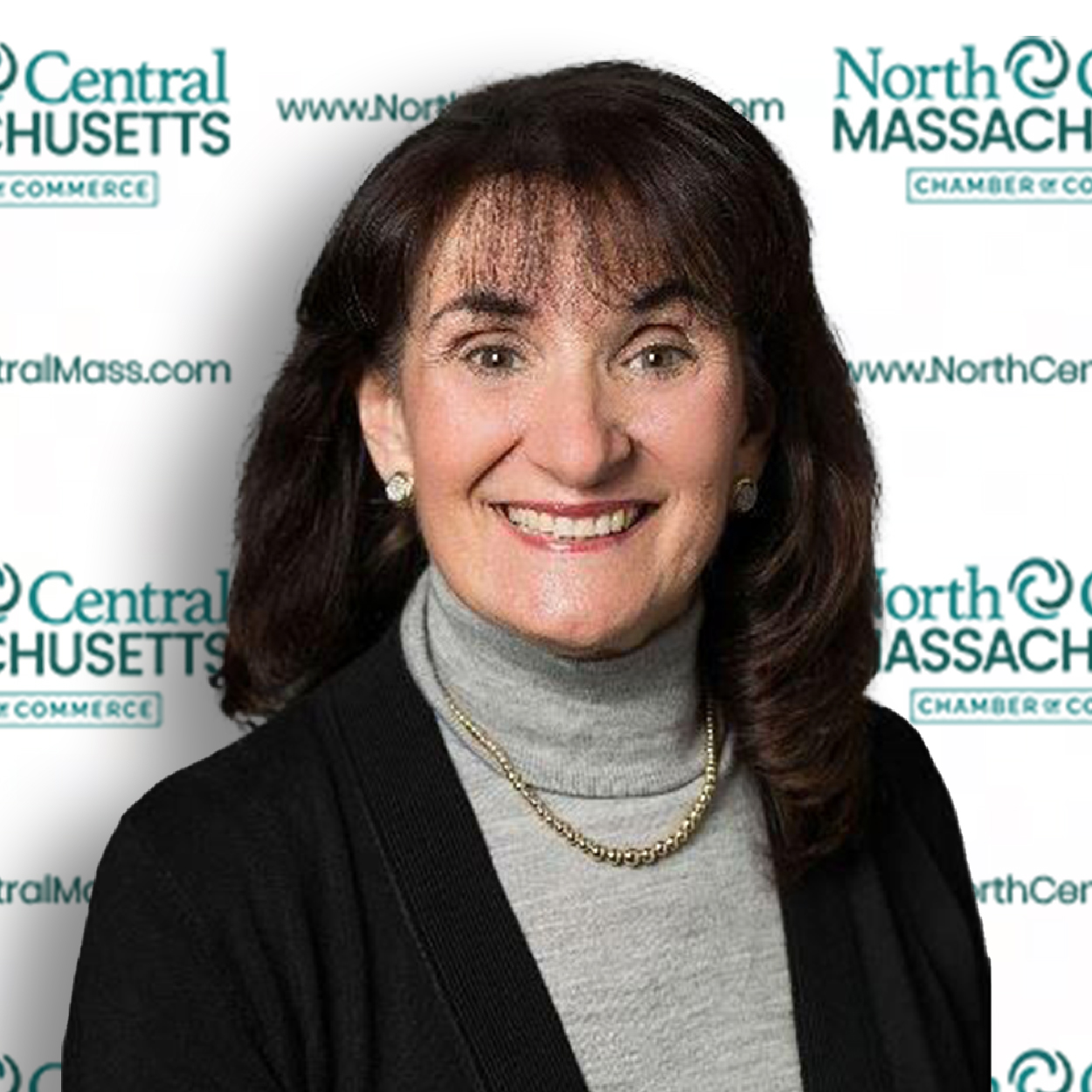
The Chamber’s Board of Directors selected Barbara Mahoney, President & CEO of Leominster Credit Union to fill the vacancy on the Board caused by the retirement of John O’Brien for the remainder of his unexpired term that runs through June, 2022. In accordance with the Chamber’s by-laws, vacancies on the Board caused by resignation or otherwise shall be filled by the Board for the unexpired term or until the succeeding election of Directors. 

Ms. Mahoney has been active in the Chamber and community since she joined Leominster Credit Union in 2003. Her community involvement has included serving on the Chamber’s Economic Development Taskforce, serving as Chair of the MassHIre North Central Workforce Investment Board and serving on the Board of the St. Bernard’s High School Foundation. 

Chamber Welcomes Cruz and Keating to Professional Staff

The Chamber is pleased to announce the addition of Maribel Cruz as Community Business Advisor and Scherrie Keating as Membership Specialist.  

Ms. Cruz will be responsible for supporting the Chamber’s economic development and small business efforts. Her role will include engaging and supporting the Latinx business community in North Central Massachusetts. She is bilingual in Spanish, Brazilian Portuguese and English. She joins the Chamber from the City of Gardner, where she served as Economic Development Coordinator since 2017. Prior to working for the city, Ms. Cruz worked in banking for nearly twenty years, rising through the ranks from Teller to Small Business Relationship Manager at Bank of America and Santander. She is a resident of Leominster and is active in the community, including serving on the Boards of Community Health Connections, the Montachusett Regional Planning Commission, Square II in Gardner, and the MassHire North Central Workforce Board. She is also a graduate of the Chamber’s Community Leadership Institute and has served on our Loan Committee.

Ms. Keating will support the Chamber’s member recruitment and retention efforts on a part-time basis. She comes to the Chamber with a unique background, experience and skill set. She is an owner of a small business founded in 2016 called Diabetes Kare Consulting, which focuses on providing education and training in the healthcare industry. She has been a very active member and a passionate champion of the Chamber. She has often credited the Chamber with helping her grow her small business. She serves on our Ambassadors Committee, has Chaired our Connect North Central program this past year and is currently enrolled in our Community Leadership Institute. She is a registered nurse by training, graduating from Fitchburg State University and holds numerous professional health care certifications. She is also a Cancer survivor and health care advocate. She lives in Ashby and is active in the community.

“We are thrilled to have these two talented professionals join our team. Scherrie’s experience as a business owner and Chamber member, as well as her passion, energy, communication skills and her inspiring personal story make her a unique fit to help support our efforts to engage business leaders,” said Roy Nascimento, President & CEO of the Chamber, and “Maribel’s experience in economic development and banking, along with her communication skills and strong roots in the community make her the perfect fit for this new role in helping to support small businesses throughout North Central Massachusetts.”

State House News Service Weekly Roundup: Riding Shotgun

Fuente del artículo: State House News Service

Author: Matt Murphy


FEB. 12, 2021…..Grandma never had so many friends.

Kids, grandkids, neighbors. Strangers online. Suddenly everyone this week was craving a little quality time with the older and wiser among us, looking to get out of the house and go for a drive … maybe to Gillette Stadium, or the Eastfield Mall.

The sudden popularity of the so-called Silent Generation had to do with Gov. Charlie Baker’s new policy on vaccinating the 75-and-older cohort. Beginning Thursday, Baker said that anyone who accompanied an eligible senior citizen to a state-run vaccination site could get the shot as well, regardless of their age or health.

The new policy was Baker’s latest attempt to turn around his administration’s much-critiqued COVID-19 vaccine program and get more shots in the arms of the most vulnerable residents. The companion policy was packaged with the announcement of new mass vaccination sites opening this month at the Natick Mall and former Circuit City in Dartmouth as Baker spent a good part of the week touring vaccination clinics.

Later in the week, the administration announced improved features on the state’s appointment website and the expansion of call center hours to include evenings and weekends.

Joan Hatem-Roy, CEO of Elder Services of the Merrimack Valley and North Shore, said the companion policy would be a “game changer,” making elderly citizens more likely to reach out for help and be willing to go somewhere like Fenway Park, which may seem like an overwhelming proposition otherwise.

But Baker and Health and Human Services Secretary Marylou Sudders had no sooner articulated the details of the new policy than the criticism came pouring in. There were, of course, the family members who had just brought their loved ones in for a shot and felt they missed their chance at getting vaccinated themselves (they can still get a first dose when the 75+ person gets their second).

There were also people who felt making the young and healthy eligible before, say, teachers or people aged 65 to 74, was a major miscalculation. And others still thought the policy, while well-intentioned, would exacerbate an equity problem that already exists in the distribution of vaccines, favoring the elderly who have children or family that can take time off of work and have access to a car.

The scammers on Craigsllist didn’t help, either.

The Department of Public Health reported Thursday that 232,900 shots were administered over the previous seven days, but the new supply of about 108,000 doses a week is still not enough to meet demand.

Long lines at mass vaccination sites in Springfield and Danvers led to the deployment of small teams of National Guard to handle logistics, and people were reportedly hanging around for leftover shots at the end of the day.

The administration also said it was slowing distribution to hospitals in favor of “high throughput locations, like mass vaccination sites, retail pharmacy sites, and community health centers until more vaccines are made available by the federal government.”

“All patients and hospital staff with existing appointments will get their first and second shots, and the administration is hopeful more vaccines will arrive soon for more providers, including hospital systems,” a COVID-19 Command Center spokeswoman said.

Everyone’s got an opinion on Baker’s vaccine rollout these days, and most of them concern his management of the effort or personal belief systems about what is the fairest way to go about the massive project. Former state Sen. Benjamin Downing had his own thoughts.

The 39-year-old East Boston transplant from Pittsfield announced Monday that he would be running for governor, starting early ahead of what could be a crowded 2022 Democratic primary after eight years of Baker.

“I think the vaccine rollout has been fumbled pretty badly, and I think there are surprisingly simple solutions to the position that we’ve found ourselves in, and you see that in other states, you see that in some of our own communities,” Downing told the News Service in an interview announcing his campaign.

Even though Baker hasn’t said whether he’ll seek a third term, if he doesn’t run surely Lt. Gov. Karyn Polito will, and she’ll have to do so on this administration’s record. Which means the 2022 campaign is on.

And by the time voters go to the polls, mail-in balloting and same-day voter registration may be a permanent part of the election landscape in Massachusetts. Secretary of State William Galvin said he would be filing a bill to do just that, and Sen. Cynthia Creem and Rep. John Lawn filed separate bills that were similar to Galvin’s proposal.

Sen. Becca Rausch also wants to see vote-by-mail and same-day registration enshrined in law, but she went further than anyone, proposing to make Election Day a holiday and push the relatively late September primary up to June.

The contest to become the next speaker of the House is also on. Speaker Ron Mariano said so himself the day he succeeded DeLeo in the top post.

Mariano and Senate President Karen Spilka rolled out their leadership teams and committee assignments Friday. Spilka’s top advisors are unchanged, with Majority Leader Creem holding down the number two slot.

The same is not true in the House where a change at the top trickled down through the ranks. As had been rumored, Mariano tapped Rep. Claire Cronin for majority leader after the Easton Democrat guided the House through debates on policing accountability and abortion access last year as Judiciary Committee chair.

Mariano has also surrounded himself with Rep. Kate Hogan, who takes over as speaker pro tempore, Assistant Majority Leader Michael Moran and Second Assistant Majority Leaders Joseph Wagner and Sarah Peake.

Mariano, 74, has already made clear he won’t be around for as long as former Speaker Robert DeLeo, who occupied the speaker’s office for 12 years, and the next speaker could come from among that group, or returning Ways and Means Chairman Aaron Michlewitz.

Undersecretary for Climate Change David Ismay won’t be returning at all. The former Conservation Law Foundation attorney resigned after the Massachusetts Fiscal Alliance released a video of him telling the Vermont Climate Council that there were no more big polluters to “turn the screws on” in Massachusetts, therefore it would be the consumers whose “will” would need to be broken.

Few even tried to argue that what Ismay said was wrong, but his clumsy choice of wording left him with few defenders. He carried the metaphor too far, and not even Gov. Baker stuck up for him. So he quit.

And speaking of quitting, Boston Mayor Marty Walsh got a little closer to the day he will resign to become U.S. secretary of labor after a Senate committee voted 18-4 to send his nomination to the full Senate for confirmation.

In anticipation of that moment, Rep. Chynah Tyler filed the home rule petition approved by the City Council and signed by Walsh to call off the special election that would be triggered if the mayor resigns before March 5.

The Boston delegation had a Zoom call Monday to discuss, and were in agreement that they would recommend it to the speaker. Now the question is how quickly can the House, and Senate, act. It doesn’t hurt that Rep. Dan Ryan, a Charlestown resident, is the new chair of the Committee on Election Laws.

The week started with Congressman Richard Neal at the State House joining Gov. Baker to talk up their shared desire for another federal stimulus package.

With the Senate engaged in its impeachment trial, Neal’s Ways and Means Committee is working to turn President’s Biden $1.9 trillion stimulus package into legislation that he said Congress could pass by mid-March, before enhanced unemployment benefits for millions of Americans expire.

But it’s not just the unemployed who need the help, Baker said.

“The feds can play a huge role with respect to vaccinations, testing, school reopenings for both K through 12 and higher education, food insecurity, housing, rental, energy and water assistance, small business support, and support for states, local governments and territorial governments…..,” the governor said.

Baker welcomed Neal to the State House a day after Tom Brady won another Super Bowl ring, only this one for the Tampa Bay Buccaneers.

Sunday, it turned out, was also the day Baker would return the climate bill to the Legislature with a slew of amendments, hoping lawmakers feel like being team players.

The Weekly Download: 5 Management Keys for Effective Virtual Leadership

Managers and leaders have been forced to adapt to the rapid changes unraveling at the workplace. As the world races to stop the spread of Coronavirus, many companies have been left to rely on remote workers and flexible positions that combine in-person days with work from home schedules. For managers, the challenge is to find effective ways to motivate and lead their teams remotely in what is referred to as virtual leadership. The Chamber has put together these five management keys for effective virtual leadership:

Use Challenging Objectives

Leaders can often spot talent in their employees. The challenge is to find effective ways to nature and develop these skills, especially in a virtual workspace where traditional approaches are obsolete. However, thanks to modern technology, managers can develop strategies to ensure each employee gets their share of challenging objectives that propels them to the next level. The challenges should also focus on developing individual talents while fulfilling daily scoreboard expectations.

Constant Feedback and Virtual Meetings

Communication is vital for productivity and collaborations, which is why open office plans, shared time and breakrooms were workspace highlights pre-COVID. In the new virtual world, leaders must ensure adequate communication frameworks that allow for constant feedback and meetings. The continuous back-and-forth communications help to cultivate a direct approach where issues are aired and resolved quicker. Feedback also allows managers to clear confusions and rally the team towards common goals.

Attack Problems as They Emerge

Watching from afar is no longer an option in virtual workspaces. With no direct contact and analysis, leaders have found it harder to predict employee issues as we shift from a time of random crisis to long-term crises with varying impacts. For leaders, this means problems should be identified and resolved as soon as they emerge, and several issues may arise. Emotions, communication problems, breaking company culture and codes, poor judgment and wrong decisions must all be tackled early so the team can grow.

Personal and Professional Harmony

Leaders in the virtual world are facing a test to ensure personal and professional lives are in congruence. Employees working from home have no supervision present, which opens a window for distractions. Managers are responsible for leading by example, ensuring professional dress codes during virtual meetings and encouraging home setups that promote better focus. Balancing personal and professional life is the ultimate milestone of managing remote workers.

Encourage Self-Knowledge and Self-Motivation

Self-knowledge and self-motivation are vital for career success. During these COVID times, employees are expected to acquire more soft skills to perform better. Leaders must encourage employers to continue learning new skills, building confidence and shaping their careers. The leader should be outright decisive, respectful, kind, inclusive and reliable as employees can pick up on these traits for their motivation.

As a leadership organization, ourselves, we agree that the task at hand isn’t an easy one for leaders in the virtual environment. However, there are various changes and tools available for managers. Here at the Chamber, our goal is to be a catalyst for positive change, convene leaders and influencers, and be a champion for the community. Virtual leaders must adapt to the needs of their teams and customers while maintaining an increased level of communications for the foreseeable future.

Where to find your next key employee

If your business were a car, your key employees would be the engine. These are your superstars, the heavy hitters who apply their talents and skill sets in their positions and generate massive results every time.

As most managers already know, however, the reason why key employees are so in-demand is precisely because they don’t grow on trees. If you’re hunting for your next key employee, here is some of our best advice on where to look.

  1. Professional Recruiters

The thing about key employees is that they’re generally either employed or snatched up very quickly during the brief times they’re unemployed and looking for a position.

So who better to help you find your next key employee than someone whose business it is to match companies with excellent clients day in and day out?

Professional recruiters have the relationships, experience, and the avenues needed to find candidates and find them quickly.

  1. Referrals

Although the saying, “It’s not what you know but who you know” gets thrown around at job-seekers a lot, the same logic also applies to employers who are searching for talent.

You may not be immediately aware of anyone who could fill a key position, but perhaps a colleague you met at a seminar or a fellow professional association member might know someone. Or maybe instead of a professional peer it’s a friend of yours who knows a recent college grad or a veteran who would be perfect for your position.

All of this is to say that your professional and personal network is a resource that just might surprise you.

  1. Internally

Do you have any high-flying talent in your organization? Is there an employee who seems to have all the knowledge and personality traits needed to step in and do a fantastic job?

Sometimes your future key employee is standing right in front of you.

A lot of companies get so caught up in internal policy and creating a rigid system for potential advancement that they overlook the talent and potential for growth that’s already there. An added bonus with this approach is that the candidate’s familiarity with you and your company’s culture are a potentially easy way to guarantee a relatively smooth transition.

  1. Online

The Internet has long been used for research, networking, and business. Now, with the help of sites like LinkedIn, Indeed, and even Facebook, finding talent is literally just a few clicks away.

As effective as these relatively mainstream sites can be, companies don’t have to resign themselves to these relatively mainstream avenues.

Forums, Twitter, specialized job boards, and Internet hotspots like Reddit are all places where employers can find and discover talent with relative ease. Some locations might have regional jobs boards where you can post your job opening and find the best candidate in your area.

When you’re searching for your next key employee, you don’t want just anybody to take the wheel. You want the best person for the job. However finding that future key employee is often easier said than done. Online sources, tapping into your existing network for possible referrals, promoting internally, and hiring professional recruiters are all options that can make finding your next key employee easier. Try one of these options and see how it works for you.

Legislative Update: More Fed Aid Critical to Rebuilding Economies

Fuente del artículo: State House News Service

Author: Collin A. Young

GOP Guv Lists Ways $$$ Can “Beat Down the Pandemic”

FEB. 8, 2021…..As Democrats in Washington, D.C. began rolling out the various components of President Joe Biden’s $1.9 trillion COVID-19 relief proposal Monday, U.S. House Ways and Means Chairman Richard Neal was in Boston to promote the package alongside Republican Gov. Charlie Baker.

Billions of dollars have already flowed during the pandemic from the federal government to Massachusetts and its residents, but Baker said another round of funding is essential as states take on vaccine distribution and economic reopenings while facing many of the economic problems that have lingered for the better part of a year. In Massachusetts, there are about 330,000 fewer jobs compared to a year ago, many businesses are struggling to stay afloat and the state projects it will miss out on about $1 billion in tax revenue this year, compared to pre-pandemic expectations.

“As cities and states ramp up their vaccination recovery efforts, support from D.C. will continue to be a critical part of how we get from here to there. The feds can play a huge role with respect to vaccinations, testing, school reopenings for both K through 12 and higher education, food insecurity, housing, rental, energy and water assistance, small business support, and support for states, local governments and territorial governments … , ” Baker said.

State and local officials, he said, are going to do the “hard work that’s going to be associated with trying to rebuild their economies and especially to deal with the dramatic changes that have taken place with respect to how and where people work since this pandemic began,” He added, “I can’t understate how big a challenge that is going to be for everybody as we move through this pandemic and on into the future.”

Congress is in the early stages of advancing Biden’s massive relief package, which is expected to include billions of dollars for virus testing, vaccinations, stimulus checks, unemployment benefits, and could send as much as $350 billion in federal aid to state and local governments.

Neal, a Springfield Democrat who is playing a key role in the development of Biden’s plan and will help shepherd it through Congress, said his committee will work from Wednesday morning through Friday to write the legislation to enact $941 billion worth of the president’s proposals.

The full package — a blueprint of which will become publicly available at 6 p.m. Monday, Neal said — will include direct payments of up to $1,400 for individuals to “make good on our promise of $2,000 checks” that began with $600 payments last year, provide between $300 and $400 in weekly unemployment insurance supplements, make $130 billion available to help schools reopen, and would establish an enhanced child tax credit that would provide eligible families with $3,600 per child younger than 6 and $3,000 per child up to age 17, split into monthly payments over a year, Neal said.

“We want to make it easier for the unemployed to afford their health insurance through premium subsidies. We’re going to expand opportunities for COBRA. We’re going to provide an enhanced premium tax credit for those receiving forms of unemployment insurance that will reduce their out-of-pocket costs. We plan to assist the most vulnerable, who typically aren’t offered health insurance, through extending opportunities for them as well. The unemployment insurance supplement also will be embraced once again,” Neal said. He added, “We intend to create a national vaccination program and speed up the distribution … We provide expanded testing and contact tracing programs across the country, and $130 billion for schools to be reopening. Everybody sees that as a clear priority.”

Since the COVID-19 pandemic took hold almost a year ago, Massachusetts and its residents have received $52.3 billion from the federal government in the form of loans, direct aid to residents, unemployment assistance and funding for other federal programs, according to the Peter G. Peterson Foundation, which has tracked federal distributions to states.

That total includes $5.24 billion in economic impact payments, $14.31 billion through the Paycheck Protection Program, $2.67 billion from the Coronavirus Relief Fund, $1.4 billion through FEMA’s Disaster Relief Fund, $3.54 billion in emergency injury disaster loans, $3.344 billion in provider relief funds, and a combined $15.075 billion in unemployment compensation, assistance and funding.

Baker, who has long talked about how helpful more federal money would be, last month filed a state budget that would pull $1.6 billion from the state’s cash reserves, but the governor has said he could limit that rainy day fund withdrawal if additional federal dollars come in.

“There are still substantial financial challenges that we face as a commonwealth and that other states across the country are facing as well. And it would be critical from our point of view for Congress to pass significant relief swiftly to help us beat down the pandemic and, just as importantly, help get our economy back on track,” the governor said Monday.

The Ways and Means Committee chairman said the president’s package “is certainly going to pass,” and while he said Democrats remain open to suggestions and new ideas as they roll out their plans, Neal said Biden “is not coming off of $1.9 trillion and I agree with him.”

If Biden and the Democrats plan to stand pat at $1.9 trillion, it could mean passing the package through Congress without support from Republicans, some of whom have taken issue with the package’s price tag or provisions.

“I think it would be very helpful for them to fully participate,” Neal said. “I think when you look at the polling data on our proposal — it’s pretty wild where it comes down — three-quarters of the American people support what we’re about to try to do, what, in fact, we’re going to do.”

The goal, Neal said, is to pass Biden’s package by the second or third week of March to have it in place by the time unemployment benefits would expire for millions of Americans in mid-March.

Online: Full Press Conference