When opportunity knocked, the owner of Doughboys Pizzeria opened the door. After being in the culinary industry for over 25 years, Brad Druckenbroad made the decision to open up Doughboys Pizzeria, located in Fitchburg, Ma.
Although classically trained Mexican cuisine, Brad Druckenbroad expanded his culinary palette to a broad range of cuisine, including the American classic: pizza.
“Every chef [I know] wants to own a restaurant one day,” he said, “so when the opportunity came to own one, I took it.”
The process for opening the business started in January 2020 and although COVID-19 slowed it down slightly, Doughboys Pizzeria officially opened in September 2020 and has quickly become a local favorite to Fitchburg State students.
“It’s been tough [since COVID-19], but we’ve done pretty well throughout. Delivery has increased and indoor dining is getting there.”
Brad Druckenbroad mentioned that they are more than just classic pizza, however.
“We do have your classic pepperoni or cheese, of course, but we are so much more than just pizza – sandwiches, salads, and more to come,” he said. “We plan love experimenting with new things, and plan on adding some nice New England flavors and eventually finish adding a patio and bar by next spring [2022].”
Doughboys looks to the future to be on the forefront of changemakers. They are currently growing options with health conscience and fitness-inclusive meals, and also waiting for their alcohol license to get finalized with the city of Fitchburg to provide variety to locals.
As a new member of the North Central Massachusetts Chamber of Commerce, Brad Druckenbroad and Doughboys Pizzeria has greatly appreciated how welcoming everyone has been. He said the events are really helpful to meet other local businesses in the Central Massachusetts area.
To order online and learn more about Doughboys Pizzeria, visit their website at http://doughboysonmain.com/, or stop in at any time at 150 Main St, Fitchburg, MA 01420.
As the new year begins, small businesses are celebrating with employees and families alike. Holiday preparations go beyond planning parties and gatherings though as the new year starts and brings new opportunities that can be capitalized upon. Working within our community has shown that creating a marketing plan is the foundation for successful campaigns and new businesses. We’ve put together some of the key pillars of marketing plans to help boost our region’s businesses to new heights.
It All Begins With a Proper Budget
Creating a budget may seem like a straightforward endeavor but many businesses can struggle determining what’s worth being added to the marketing plan. One of the most common mistakes we see is setting expectations far too high and investing a large portion of the budget into various expenses that don’t create a return. It’s important to focus on the primary market that truly drives the business.
Once a budget is established the next difficult step is staying within the limits of that budget. Going over budget can stop a marketing plan in its tracks and have a negative impact on the other areas of the business an owner has to manage. Pulling funds between different projects can be a useful tactic but not if that money is being used for a fruitless endeavor. Making a marketing plan helps keep it contained without spilling over into other responsibilities.
Review Business Goals and How They Can Be Achieved
The bones of a marketing plan are simple as they’re simply the milestones an owner wants to hit regarding sales, digital presence and product launches. While many sales endeavors can be carefully calculated using traditional tools, creating a strong presence online takes a unique touch that often requires outside assistance from a professional marketer or agency. Building upon existing networks can then add more eyes to every event, new product and sale that goes on.
Passing down details on the new goals and how resources will be allocated to reach them can keep all employees on the same page. Making sure they understand why certain team members are responsible for new tasks will create confidence in the new marketing plan. When employees can get behind the goals, it adds extra motivation and drive to achieve the goals set for the business as a whole.
Determine Processes and Marketing Avenues
It may seem tedious to outline processes for every aspect of a marketing plan but the value created goes beyond successful marketing. Processes help remove redundancies, improve productivity and save hours of unnecessary leg work that can be spent working on implementing the plan itself.
To create processes, an owner has to work with their team to decide on the channels being used to deliver ads and marketing material. Researching a target demographic can uncover how they primarily obtain their information. It could be a traditional source such as radio and local television or a digital delivery through social media platforms.
Keep in mind that every part of a marketing plan needs to be deliberate in planning and execution in order to maximize return on investment. When done right, a brand’s voice can shine through with every ad to create more meaningful connections. Following these basics to get started can give any business owner a strong start in the new year.
Debbi Mallinson, founder of Magic Lamp Consulting Inc, a nonprofit business consulting and grant writing service in Leominster, was selected as the top prize winner in EforAll Greater Worcester’s Pitch Contest. In a “Shark Tank” style event, entrepreneurs were given 10 minutes to pitch their business to a panel of judges, followed by 10 minutes of intensive questioning. Magic Lamp Consulting was the top prize winner, receiving $2,500 in prize money.
Magic Lamp Consulting’s mission is to strengthen communities through innovative work with small to mid-sized nonprofit partners, helping them attain the financial support needed to fulfill their mission. Since being founded in 2020, Magic Lamp Consulting has raised over $2.1 Million for local nonprofit organizations.
After months of hedging about the health of the state fund that pays jobless benefits, Baker administration officials have released a report showing three outstanding obligations on the $2.94 billion unemployment insurance trust fund leave it with a structural deficit.
El independent assessment of the fund, conducted for the state by KPMG, also found that a combination of early pandemic changes, including new programs, rapidly evolving guidance, and a new claims processing system and ad-hoc internal reporting, “ultimately fractured the connection between operational and financial functions” of the trust fund.
The fund is overseen by the state Executive Office of Labor and Workforce Development, and the KPMG report, released on New Year’s Eve, examines some of the fallout from a system overloaded with claims from March 2020 through May 2021. To highlight demands on the fund that stemmed from forced business closures, KPMG analysts estimated that total benefits paid in 2020 were nearly seven times more than all benefits paid in 2018 and 2019 combined.
The assessment, described by state officials as a “reconciliation project,” will inform ongoing deliberations about how much state government will need to borrow to keep the system solvent and benefits flowing. Gov. Charlie Baker in April 2021 signed a bill authorizing up to $7 billion in borrowing.
The report estimates the fund’s balance as of Nov. 30 at $2.94 billion, but highlights three issues – federal loan obligations, outstanding employer credits, and a reimbursement due to the federal government – that collectively push the fund into a $115 million structural deficit.
Outstanding federal loans loom as the largest outstanding obligation on the fund. KPMG estimates that Massachusetts owes $2.3 billion, due in November 2022, to the federal government to repay necessary borrowing during the pandemic.
The balance also includes $415 million in credits due to employers because of mid-2021 rate adjustments. The legislation providing employers with some relief from COVID-related charges was enacted in May 2021, after most employers had already paid their first quarter contributions. The credits will be applied to future employer assessments, reducing those contributions.
And independent analysts also identified the need for a one-time transfer of $300 million from funds currently held in the UI system to the federal government “to reconcile state and federal accounts now that emergency programs implemented under federal authority in 2020 and 2021 have come to a close.” State labor officials are awaiting guidance from the federal labor department “regarding administrative procedures to process this reconciliation.”
The assessment does not factor in $500 million in American Rescue Plan Act funding approved by the Legislature and Baker in December as a means of delivering some relief to employers who ultimately pay the assessments required to pay benefits and cover borrowing costs.
KPMG said testing will continue beyond the report’s issuance “to inform the corrective actions related to process and reporting.”
As we get ready for 2022, it is important to be aware of several changes to laws and policies that will have an impact on the business climate. Laws pertaining to minimum wage and PFMLA take effect at the start of the year. In terms of COVID-19, enforcement of a federal mask and vaccination requirement for large employers will depend on court proceedings slated for January 7, while several policies put in place at the height of the pandemic will expire in the first few months of 2022.
Minimum Wage/ Premium Pay: On January 21, 2022, several changes related to minimum wage are set to take effect as part of the Grand Bargain legislation.
The Commonwealth’s minimum wage experiences a 75-cent bump when it rises from $13.50 an hour up to $14.25 an hour.
The wage for tipped employees is also facing an increase of 60-cents, bringing it from $5.55 an hour to $6.15 an hour.
The Retail Premium Pay mandate reduces to 1.1 times the employee’s regular hourly rate for work.
Just a reminder that Juneteenth Independence Day (June 19) was designated by the legislature in 2020 as a new annual state holiday. In 2022, the Juneteenth holiday falls on a Sunday and under state law must be observed on Monday. As a legal holiday, there are certain new legal obligations for some employers. Specifically, premium pay and voluntariness of employment requirements apply.
OSHA issued an Emergency Temporary Standard (ETS) requiring a vaccine-or-test mandate for private employers with more than 100 employees. Under the ETS:
Employers must have an up-to-date log with all employees’ vaccination status.
Employers must have a vaccination/testing policy in place.
Employers must support vaccinations, including: pay up to four hours to travel to get vaccination and provide sick leave for a reasonable time (two days) to recover from vaccination side effects.
Employees must immediately provide any notice of a positive COVID-19 test or diagnosis, and they must be removed from the workplace.
Employees who are not fully vaccinated must wear face coverings when indoors or when occupying a vehicle with another person for work purposes.
Work-related COVID-19 fatalities must be reported to OSHA within eight hours and work-related COVID-19 inpatient hospitalizations within 24 hours.
Records must be available for OSHA inspection.
Employers must ensure that employees who are not fully vaccinated are tested for COVID-19 at least weekly (if in the workplace at least once a week) or within seven days before returning to work (if away from the workplace for a week or longer).
Employers may require employees to pay for any costs associated with testing; however, state/local laws or regulations, collective bargaining agreements, or other agreements may require employer payment.
OSHA has indicated that it will not issue citations for failure to comply with the ETS vaccine mandate until Jan. 10, 2022, and they will not issue citations for noncompliance with the ETS testing requirements before Feb. 9, 2022, so long as an employer is exercising reasonable, good-faith efforts to come into compliance with the standard.
The U.S. Supreme Court is scheduled to hear expedited oral arguments in challenges to the mandate on January 7.
CDC Isolation and Quarantine: Responding to pressure over their recent shortened isolation period recommendations, the CDC updated its guidance to include a testing component. The CDC is now telling people that if they have access to a Covid-19 test to take it at the end of their five-day isolation period. If the test is positive, isolated people are advised to continue their isolation until 10 days after their symptoms started. If the test is negative, isolated people can end their isolation but are advised to wear a mask around other people until day 10. The recommendations advise people who are isolating to avoiding immunocompromised people and staying away from places where they can’t wear a mask, such as restaurants and gyms, and to avoid eating around others until day 10.
Mask Advisory: Last month, the Massachusetts Department of Public Health released an advisory that recommends all individuals, regardless of vaccination status, wear a mask or face covering in indoor, public spaces.
COVID-19 Emergency Paid Sick Leave: The state’s COVID-19 Temporary Emergency Paid Sick Leave program is set to expire on April 1, 2022.
Open Meeting Law: public bodies are permitted to accommodate remote participation through April 1, 2022.
Outdoor Dining: Enables outdoor dining to continue through an expedited permit process through April 1, 2022.
Please note that municipalities retain authority locally to issue, suspend, or terminate such permits
To-Go Cocktails/Drinks: Allows establishments with on-premise licenses to sell alcoholic beverages (i.e. wine, beer, mixed drinks, etc.) for off-premise consumption until May 1, 2022.
Join us on January 12, 2022 for the next edition of the Chamber’s Human Resources Council series. The January edition will feature a legal update from Attorney Corey Higgins, Partner at Mirick O’Connell. He will review changes occurring concerning employment, benefits, and more! This event will be online and recorded
The Baker administration on Tuesday night announced its adoption of new federal guidance governing isolation and quarantine periods for people infected with COVID-19 or exposed to the virus.
“The Department of Public Health is adopting updated guidance from the Centers for Disease Control and Prevention (CDC) regarding isolation and quarantine periods for the general population, effective immediately,” said Department of Public Health spokesperson Katheleen Conti. “For the general public, this updated guidance shortens the recommended time for isolation and quarantine from 10 days for people with COVID-19 to 5 days, if asymptomatic, followed by 5 days of wearing a mask when around others.”
The CDC issued its updated guidance on Monday, saying the change was “motivated by science” demonstrating that the majority of COVID-19 transmission “occurs early in the course of illness, generally in the 1-2 days prior to onset of symptoms and the 2-3 days after.”
“The Omicron variant is spreading quickly and has the potential to impact all facets of our society,” CDC Director Dr. Rochelle Walensky said on Monday. “CDC’s updated recommendations for isolation and quarantine balance what we know about the spread of the virus and the protection provided by vaccination and booster doses. These updates ensure people can safely continue their daily lives. Prevention is our best option: get vaccinated, get boosted, wear a mask in public indoor settings in areas of substantial and high community transmission, and take a test before you gather.”
State public health officials said they are reviewing updated CDC guidance regarding isolation and quarantine for health care workers and “will have more to share soon.”
The adoption of the updated guidance comes as the state’s testing infrastructure is overwhelmed, with people waiting in long lines, stores running out of rapid tests, and the cost of tests creating additional obstacles. Infections are soaring and the numbers largely do not reflect cases confirmed through rapid tests.
With K-12 students on holiday break, Elementary and Secondary Education Commissioner Jeff Riley has not announced yet whether he will extend the state’s school mask mandate, which is scheduled to end on Jan. 15.
“The medical community’s asked for some additional time so that we have better facts on the ground. They’re learning a lot very quickly about the omicron variant. We’ll wait and see, and see what the situation looks like in early January for a decision,” Riley said on Dec. 17.
Several schools have met state vaccination thresholds and dropped their mask mandates, but state public health officials have also issued a general advisory recommending that people wear masks in indoor public spaces.
In gratitude for the support shown from the local community EXIT New Options Real Estate real estate brokerage recently collected gifts for NCMAR Holiday Helping Hands. Every Holiday the Realtor Board, gathers lists from Seniors, Homeless, Veterans and Childrens services organizations. This season NCMAR helped 234 children, seniors, and adults with gifts. EXIT New Options Real Estate with IC Federal Credit Union helped provide toys, clothing, and books for 52 children!
Head Elves Do It Again!
“We appreciate being a part of this wonderful community and welcome the opportunity to give back,” says Denise Wortman & Susan Wright, Owners of EXIT New Options Real Estate.
About EXIT Realty: EXIT Realty is a company founded and built on human potential. A full service, forward-thinking, real estate franchisor with offices across North America, EXIT has to-date paid out more than a half a billion dollars in single-level residual income to its associates. The Expert Marketing Suite™ including geolocation Smart Sign™ technology gives sellers an edge in a competitive marketplace. A portion of every transaction fee received by EXIT Realty Corp. International is applied to its charitable fund, and to-date, $6 million has been allocated to charity. For more information, please visit www.exitrealty.com y www.joinexitrealty.com.
EXIT New Options Real Estate is located at 12 Main St. For more information, please call 978-852-7955 or visit our website www.exitnewoptions.com.
This Advisory has been updated as of December 21, 2021.
COVID-19 vaccines and vaccine boosters are highly effective at protecting against serious illness, hospitalization and death and every individual who is eligible and works, studies or resides in Massachusetts is strongly urged to get vaccinated and boosted. The Department of Public Health urges all eligible residents to get vaccinated against COVID-19 because vaccination provides the most effective protection from severe illness associated with COVID-19.
In response to the spread of the Delta variant and the emerging Omicron variant, the Department of Public Health now advises that all residents, regardless of vaccination status, wear a mask or face covering when indoors (and not in your own home). The DPH particularly urges this recommendation if you have a weakened immune system, or if you are at increased risk for severe disease because of your age or an underlying medical condition, or if someone in your household has a weakened immune system, is at increased risk for severe disease, or is unvaccinated.
Your primary care physician can advise you whether you are at increased risk. Information from the Centers for Disease Control regarding the conditions that may put you at increased risk can be found here:https://www.cdc.gov/coronavirus/2019-ncov/need-extra-precautions/people-with-medical-conditions.html.
All people in Massachusetts (regardless of vaccination status) are required to continue wearing face coverings in certain settings, including transportation and health care facilities. Please see www.mass.gov/maskrules for a complete list of venues where face coverings have remained mandatory since May 29, 2021.
The Massachusetts Department of Elementary and Secondary Education’s current mask requirement and Policy on Vaccination Rate Threshold issued on September 27th, 2021 is not impacted by this advisory. As a result of the most comprehensive and robust school testing program in the country, with 99% of public, collaborative and charter districts enrolled, Massachusetts elementary and secondary schools remain open and safe for children and youth to engage in learning, with over 325,000 school days saved. Only schools who can demonstrate they have high vaccination rates of over 80% of all individuals vaccinated are able to remove masks for vaccinated individuals upon a written attestation.
The Commonwealth of Massachusetts
Executive Office of Health and Human Services
Department of Public Health
250 Washington Street, Boston, MA 02108-4619
For individuals who are not fully vaccinated, it is especially important that you wear a face covering or mask any time you are indoors and not in your own home to reduce the chance that you may spread COVID-19 to other people. People who show no symptoms of illness may still be able to spread COVID-19.
An individual is fully vaccinated two weeks after their second dose in a two-dose series, such as the Pfizer or Moderna vaccines, or two weeks after a single-dose vaccine, such as Johnson & Johnson’s Janssen vaccine. However, if a fully vaccinated individual becomes symptomatic, they should be tested and wear a mask until receiving test results.
When you wear a face covering or cloth mask, it should:
· Fit snugly but comfortably against the side of the face,
· Be secured with ties or ear loops,
· Include multiple layers of fabric,
· Allow for breathing without restriction, and
· Be able to be laundered and machine dried without damage or change to shape. For more information, please refer to the CDC at: https://www.cdc.gov/coronavirus/2019-ncov/vaccines/fully-vaccinated-guidance.html
This advisory may change based on public health data and further guidance from the CDC.
Mount Wachusett Community College, with generous support from the Shannon Grant, has launched a new program aiming to connect with students and provide them with support, coaching and workshops in academic, employment, and life readiness. The program is intended for high school seniors and HiSet participants or graduates who are interested in attending MWCC in the fall for either credit degree or certificate programs, or non-credit training programs.
Once accepted into the program, students will participate in various workshops including study strategy techniques, selecting college courses, completing career assessments, building self-esteem, preparing to transition to college, college admissions procedures, and completing financial aid forms.
“Through this program, I’ll be providing coaching, accountability and training to students,” noted Senior Success Program manager, local personal growth and development specialist, and MWCC outreach counselor Maria Vazquez. “I work to make sure these students are getting what they need through the completion of their senior year, on through the summer, and into their first semester at the Mount. My goal is to ensure that they are reaching their full potential.”
Students must reside in Fitchburg, Leominster or Gardner, be a first-generation college student, and meet one or more other risk factors (low-income, single parent household, etc.) in order to be eligible. Individuals interested in the program can visit mwcc.edu/senior-success to complete the application questionnaire.
About the Shannon Grant
Funded by the Executive Office of Public Safety and Security’s Office of Grants and Research, the Charles E. Shannon Community Safety Initiative (Shannon) is modeled after the Office of Juvenile Justice and Delinquency Prevention’s Comprehensive Gang Model. Shannon is a multi-sector approach used to address a community’s gang and youth violence problem. Each community receiving Shannon funding demonstrates the presence of risk factors for youth and gang violence.
Aging Services of North Central Massachusetts (ASNCM), which serves as the region’s Aging Services Access Point (ASAP) is pleased to welcome three new members to its Board of Directors: Susan McCarthy, Director of the Pepperell Council on Aging; Michael Ellis, Director of the Gardner Senior Center; and Ellen Birchander, Graduate Program Director, Management of Aging Services Program, University of Massachusetts, Boston.
Lori A. Richardson, Chief Executive Officer of ASNCM commented, “We are excited to have Susan, Mike and Ellen, each a proven leader in aging services join our Board of Directors. Their unique and tremendous practical experience will support our mission of providing comprehensive information and quality services so that older people, individuals with disabilities and their families are empowered to make personalized choices to ensure a life of dignity, safety and respect.”
ASNCM is also pleased to announce the appointment of new Clerk, Jennifer Conrad. Current Board Officers include President Christine Dixon; Vice President, Peter MacDonald; Treasurer, William McSheehy; Mary Mathieu, Julie Johnson, Esq., and Donald Parker.
To learn more about the Aging Services of North Central Massachusetts—including programs and services being offered, ways you can donate or volunteer, please visit www.AgingServicesMA.org or contact David Ginisi, Chief Marketing Officer, at (978) 466-1571 or by email at .
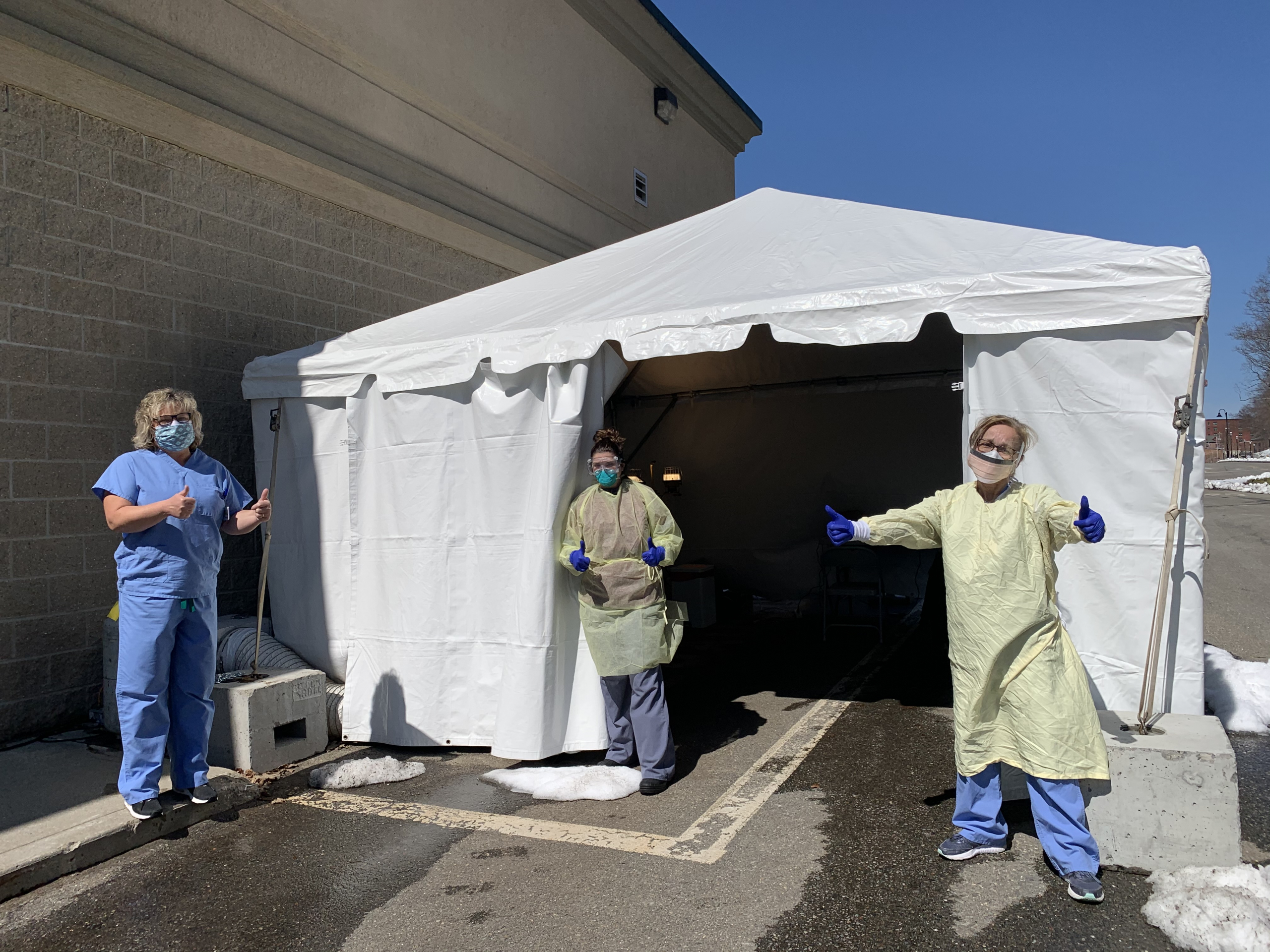
In North Central Massachusetts, we are fortunate to have three excellent health care organizations providing quality care and services to the more than 275,000 residents who call our region home. Even with their great reputation, our region’s hospitals are experiencing challenges with staffing shortages and retention, responding to the unique needs of an aging population and providing increased mental health services, all of which are compounded with a global pandemic. But, despite these challenges, our hospitals are rising above, providing unique opportunities for recruitment and retention while investing in their facilities and giving back to their communities.
In September, the North Central Massachusetts Chamber of Commerce released the results of our Regional Economic Development Plan, which placed health care as one of the top industries with a strong market to retain and expand toward the future.
“We certainly have market strength in the region,” said Steve Roach, President, HealthAlliance-Clinton Hospital. “Health care is one of the most interesting business models because people will always need health care, but we are also at the mercy of an extremely tight labor market.”
Roach leads HealthAlliance-Clinton Hospital, a full service, acute care 163-bed community hospital serving North Central Massachusetts and Southern New Hampshire. He said the hospital is navigating the recent COVID-19 vaccine mandate, which is putting an already tight labor market to its breaking point. “We are looking at our staffing levels to ensure our nurses are performing at the top of their game and also researching alternative staffing models to provide the continuity of care the community expects and deserves from our hospital,” he added.
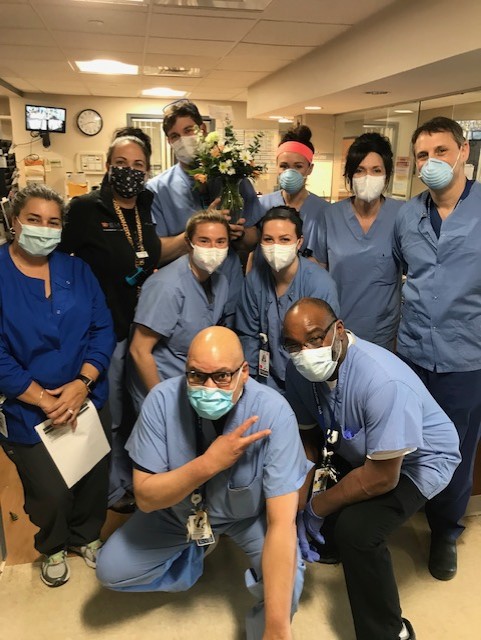
Nashoba Valley Medical Center employees
Even with the renovated Emergency Department opening in 2019, which resulted in a total of 42 beds up from 24 beds, Roach said the hospital is continually over capacity due to mental health cases in the emergency room waiting for a bed at another facility. “We will always be here to provide care to all of our patients, and we are working daily to resolve these challenges,” he said. “We want our patients to receive treatment and care as quickly as we can.”
Heywood Hospital is also experiencing staffing challenges; however, Winfield S. Brown, President and CEO, said the hospital has a variety of strategies in place to retain its dedicated staff and improve the overall health of the community despite the challenges from the pandemic.
A non-profit, community-owned 134-bed hospital located in Gardner, Heywood Hospital welcomed 60 new staff members in various roles in September and is also offering sign-on bonuses for certain positions. “We see health care as a growth market for the region and we are growing as a health care system while also identifying ways to improve economy and equality among our workforce,” said Brown.
In addition to being unique in size and geography, Brown said the hospital has relationships with local colleges and universities to provide development opportunities to current employees while also filling the talent pipeline for years to come. In fact, Mount Wachusett Community College (MWCC) partners with Heywood Hospital to provide 40 to 50 students a training ground for practicum in pharmacy and radiology technology. And, through a workforce development grant with MWCC, Heywood Hospital can have up to 20 employees who are interested in pursuing a clinical track for nursing obtain education at the college with clinical experience at the hospital.
For current employees, the hospital has a variety of strategies in place to retain staff, such as providing a robust award and recognition program and daily “huddles” for staff to check-in with each other. “We have the hardest working staff around and we need to make sure they feel appreciated, understood and heard,” said Brown. “We established a President’s Advisory Council to learn the staff’s pulse on the institution and we listen and then act to make sure our employees know we heard their feedback.”
Heywood Hospital also boasts a robust behavioral health services program, with 20 geriatric psychiatric beds and a partial outpatient program that provides up to 40 participants with mental health support. In November, the hospital received approval from the Public Health Council to begin construction of a new surgical pavilion, which will replace the existing operating room suite built in the 1960s. The pavilion will include six operating rooms, support state-of-the-art technology and provide an exceptional patient experience. “Our patients deserve first-class health care in a first-class facility,” added Brown.
Nashoba Valley Medical Center, a community hospital serving 16 communities in North Central Massachusetts, experienced tremendous growth this year as more people chose to obtain health care locally during the pandemic instead of going into the city.
Sal Perla, DrPH, President and CEO of Nashoba Valley Medical Center, said as the hospital experiences an increase in patient capacity, it is responding by growing its physician roster. “This year, we’ve expanded the Steward Medical Group in all of our locations,” said Perla. “We’ve recruited ten medical doctors this year, including a board-certified orthopedic surgeon, several new primary care physicians and several other sub-specialists.”
HealthAlliance-Clinton Hospital community based initiatives
While the use of emergency room services increased by 11 percent in 2021, Perla said the hospital has the lowest wait times in the region, which he attributes to a website where those seeking care can check on current wait times in the emergency department. “We are so proud of our staff,” added Perla. “And our five-star patient satisfaction results on Google prove that we are creating sustainable care models that reinforce our dedication to quality of care.” In fact, Perla said approximately 25 percent of their patients hail from the Leominster and Fitchburg area. Perla is also thrilled to announce that Nashoba Valley Medical Center earned an “A” Leapfrog Hospital Safety Grade for fall 2021. This national distinction recognizes the hospital’s achievements in protecting patients from harm and error in the hospital.
With a niche in physical therapy, the medical center welcomes approximately 100 patients a day to its aquatics center in Groton for total joint replacement therapy. Recently, Nashoba Valley Medical Center was recognized with a 5-star rating for treatment of hip fracture and pneumonia outcomes by Healthgrades, the leading resource that connects consumers, physicians and health systems. Additionally, the medical center reports that its GI center is performing colonoscopies and endoscopies within 1-2 weeks of initial requests which helps in the aid of detection of early stages of cancer.
Although the Regional Economic Development Plan reported that health care offers a variety of wages, with more than half of the 17,000 region health care workers paid less than $55,000 annually, Perla said the medical center instituted a minimum wage of $15 per hour in 2019.
As the aging population continues to increase in the region, all of the hospitals stand ready to provide care and services to keep individuals at home as long as possible. Nashoba is proud to offer a 20-bed geriatric-psychiatric inpatient behavioral/medical unit which addresses higher level of care for individuals with Dementia/Alzheimer’s associated disease.
Roach said HealthAlliance-Clinton Hospital is well-equipped to respond to the needs of the aging population as the hospital operates HealthAlliance Home Health & Hospice (HAHHH), which aims to keep patients in their own homes. “We can offer a level of care, comfort and compassion and are available to assist 24/7 with physical and emotional support,” added Roach. “We want our community to age in home versus aging in nursing homes.”
Perla agrees. “We are learning about the future every day,” he said. “We want to make sure people can retire and live out their years where they want to be and need to be.”
In spite of the challenges and opportunities our hospitals must face now and in the coming years, all of the hospitals remain committed as engaged members of their respective communities.
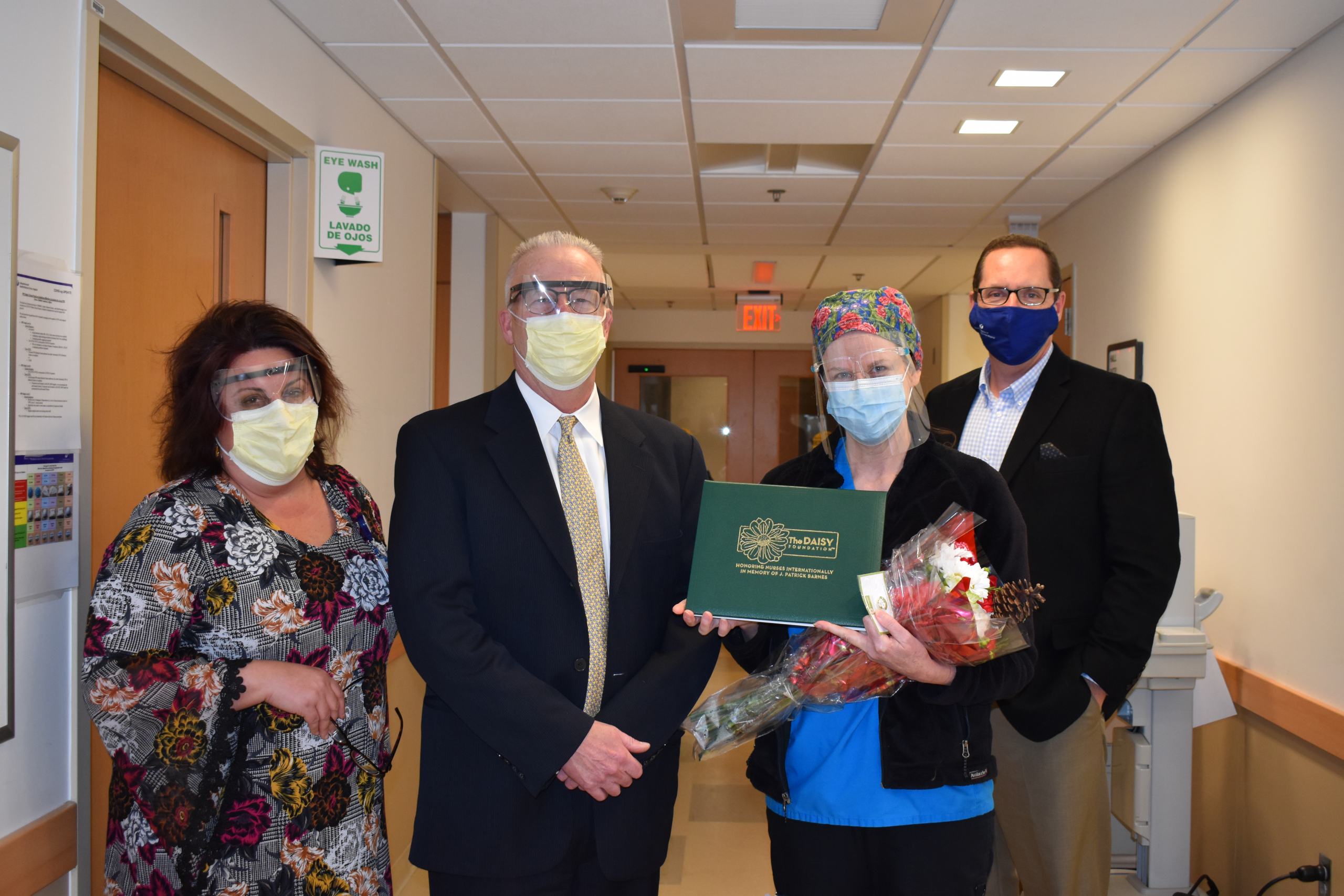
Heywood Hospital ICU Nurses
At Heywood Hospital, Brown said they are dedicated to improving the health of the community, with special consideration of disadvantaged populations, by working collaboratively with community partners to increase prevention efforts, address social determinants of health, and improve access to care. Their Backpack Food Program supports more than 400 youth and their families with nutritious, non-perishable, easy-to-prepare food choices over the weekend. “The Backpack programs provide more than just food,” said Brown. “They also bring a sense of security economic empowerment, healthy food access and social inclusion for children.”
HealthAlliance-Clinton Hospital recently invested more than $700,000 to fund community-based initiatives to support the urgent health challenges presented by food insecurity, substance abuse and workforce development. In 2019, the hospital also provided an investment of $750,000 in the Fitchburg Arts Community, a 62-unit mixed housing project on the site of the former BF Brown School in downtown Fitchburg to aid in the pre-development phase of the project.
And, as a public health doctor, Perla is giving back to the community through volunteering and expertise as an epidemiologist to local businesses and organizations to ensure a safe environment for social gatherinDgs during the pandemic. “As a public health doctor, my job is to improve public health above all else,” said Perla. “By providing risk assessments via surveys to help businesses thrive lowers the risk and establishes a comfort level and safe environment based on the survey feedback from the participants.”
The pulse of any community rests on the trust it places in its residents and institutions. Through calm times and crisis, North Central Massachusetts’ array of healthcare systems, administrators and physicians stand ready to keep that pulse alive and help it thrive. Their dedication and investment go far beyond business and hits at the heart of what makes this region a great place to live and work: people caring for people working together, not just to survive but to thrive.
The Fall continues to be one of the busiest times when it comes to legislative engagement and advocacy on behalf of our members at the North Central Massachusetts Chamber of Commerce. In September, over 80 local, state, and federal officials and candidates engaged our members during our Annual Legislative and Candidates Reception at the Chocksett Inn in Sterling. The municipal elections earlier this month saw the region’s three mayors successfully fend off challengers while new blood was appointed to all three city councils. Fitchburg resident Sally Cragin mounted a successful run for Councilor-At-Large, while Derrick Cruz won the seat for Ward 6; Gardner saw City Council President Elizabeth Kazinskas move up to Councilor-At-Large and Dana Heath fill her seat in Ward 2; while in Leominster, Todd Deacon became the newest Councilor-At-Large and Bill Brady was elected to Ward 1. The Chamber will continue to engage these newly elected officials with regards to Chamber activities and priorities.
In addition to discussions with our newly elected city officials, the Chamber continues to monitor municipal affairs across the region. Monthly mayor’s meetings with Fitchburg Mayor Stephen DiNatale and Leominster Mayor Dean Mazzarella have resumed, and a joint meeting including Gardner Mayor Mike Nicholson is scheduled for December. In October, the Fitchburg City Council voted in favor of maintaining the single tax rate. Data presented by the Assessor’s office indicated investment in the City is helping it to continue to diversify its tax base. Earlier this month, the Chamber ventured out to Sterling for a presentation on broadband internet now being offered by the Sterling Municipal Light Department. The new broadband offering will serve as a great economic development tool to attract businesses to their main artery through town, and will also prove to be a benefit for area residents.
After months of negotiations in Washington D.C., the House passed their $1.2 trillion-dollar infrastructure bill that includes $550 billion in new federal investments to the country’s infrastructure over the next 5 years including funds for airports, bridges, mass transit, ports, rail, roads, and waterways. Sixty-five billion has been set aside for investments aimed at improving America’s broadband infrastructure, and additional dollars have been set aside to improve the electric grid and water systems. Prior to its passage, Congressman Jim McGovern and Congresswoman Lori Trahan engaged the region’s officials and Chamber members during the annual Congressional Luncheon. After being held virtually last year due to the pandemic, the two spoke to a full room at Great Wolf Lodge in Fitchburg about a number of issues impacting our members including the infrastructure bill, the American Rescue Plan, taxes and political division.
On Beacon Hill, the House and Senate developed their $3.82 billion ARPA spending proposals. The two versions had some common ground on two major areas including a $500 million payment toward the state’s unemployment insurance trust fund, half the amount requests by Governor Charlie Baker, and a $500 million program to offer one-time bonuses to low-income essential workers who continued to provide in-person services during the COVID-19 crisis. Despite those commonalities, the bills differed too much for an agreement to be reached in conference committee before the end of formal session, and as of this writing, no compromise has been reached. The Chamber spent time advocating with the region’s delegation in both branches on workforce development, tourism recovery and education priorities. We also advocated for multiple initiatives contained in the Uno del norte central regional economic development plan including the proposed business investment fund and education compact, the latter of which made it into the Senate version.
U.S. Census data released earlier this year was used to develop proposed redistricting maps for the House, Senate, and Congressional Districts. On a statewide level, population increases led to House and Senate representation shifting further eastward. The 27 communities represented by the Chamber and its affiliates will retain the same total amount of state representation, however, there will be some shifts within who falls into each district. On the federal level, Chamber members will continue to be represented by both Congressman Jim McGovern and Congresswoman Lori Trahan.
If you have any questions or concerns, please feel free to contact Travis Condon, the Chamber’s public affairs manager, at 978.353.7600, ext. 224; or via email at .